

 English
  日本語
日本語  Tiếng Việt
  简体中文
简体中文  한국어
한국어 Extended Producer Responsibility (EPR) is emerging as a central policy instrument in the transition toward a circular economy in Vietnam.

05Mar2026
Latest News & Report / Vietnam Briefing
Comments: No Comments.
Abstract
Extended Producer Responsibility (EPR) is emerging as a central policy instrument in Vietnam’s transition toward a circular economy. EPR mandates producers and importers to take responsibility for the collection, recycling, and treatment of post-consumer products and packaging. The current situation surrounding EPR is analysed, as well as its impacts on the packaging, FMCG, electronics, and retail sectors, and implementation challenges are presented.
Overview of the situation in Vietnam
Waste situation
Vietnam faces mounting waste management pressures due to rapid urbanization, industrial growth, and rising consumption. Plastic packaging waste is a particular concern. In 2025, the report Plastic Overshoot Day by Earth Action focused on mismanaged plastic waste (well-managed plastic waste is collected and then either recycled, incinerated, or deposited in a sanitary landfill). Vietnam ranked 7th globally in the amount of mismanaged plastic waste, reaching 2.1 million tonnes[1].
Top 10 countries with highest amount of mismanaged plastic waste in 2025
Unit: million tonnes
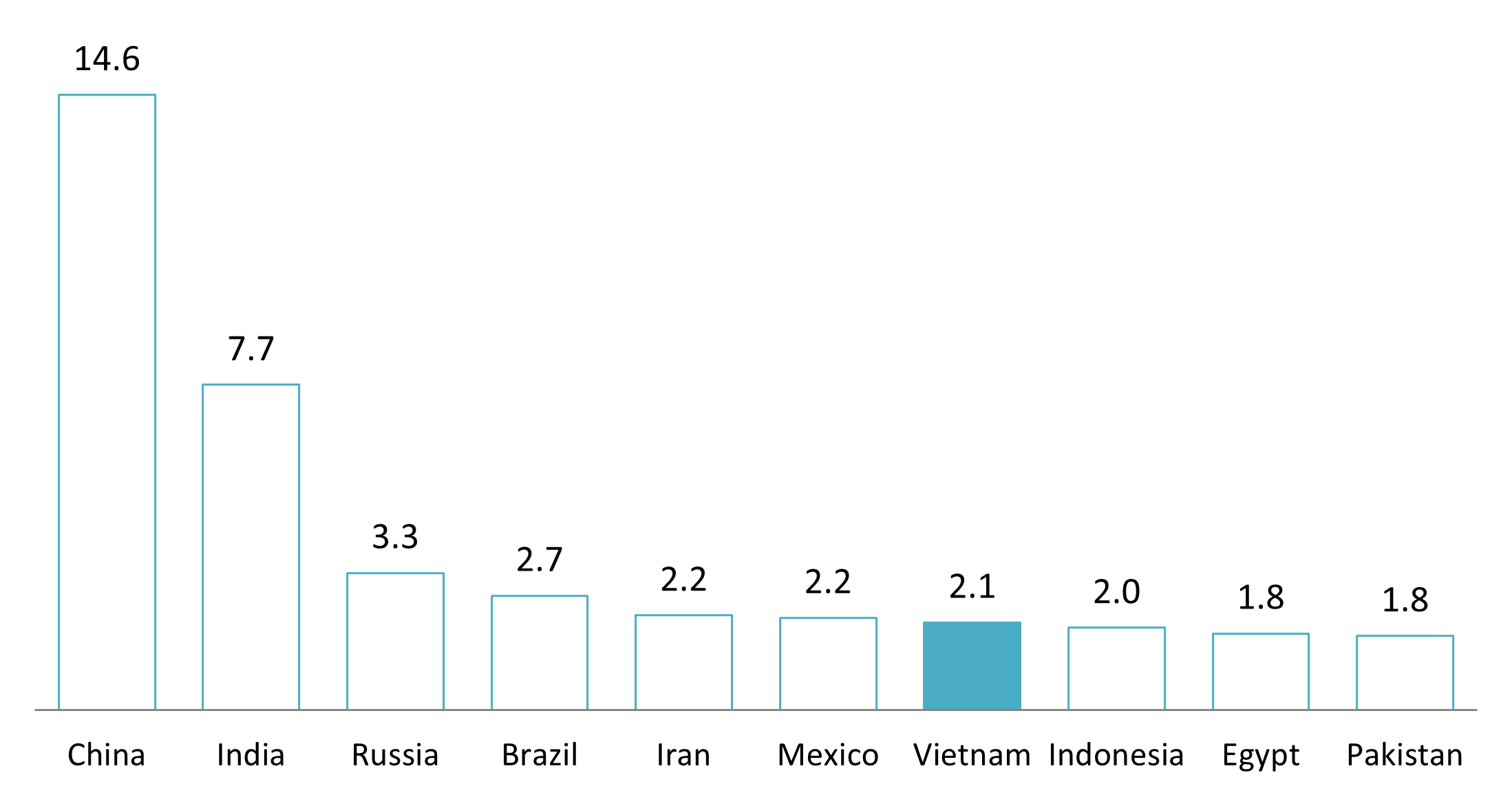
Source: Earth Action (EA)
Electronic waste (e-waste) is another fast-growing waste stream. According to the Global E-waste Monitor, Vietnam’s e-waste reached 516 thousand tons in 2022, with a CAGR of 20.5% from 2014. Vietnam also ranked 4th among ASEAN countries in the amount of e-waste generated. E-waste is expected to increase due to the rapid growth of the electronics market and shorter product lifespans[2].
Looking ahead, the Ministry of Transport has set a target that 30% of cars and 22% of motorbikes will be powered by electricity by 2030[3]. This transition to electric mobility will create an additional wave of e-waste, particularly from end-of-life lithium-ion batteries used in electric vehicles (EVs). Countries with large EV markets are already facing this challenge. For example, China is projected to generate millions of tons of retired EV batteries in the coming decades as early electric vehicles reach the end of their lifecycle[4].
| Electronics waste generated in Vietnam (2014-2022)
Unit: thousand tons
|
Electronics waste generated among ASEAN countries in 2022
Unit: thousand tons
|
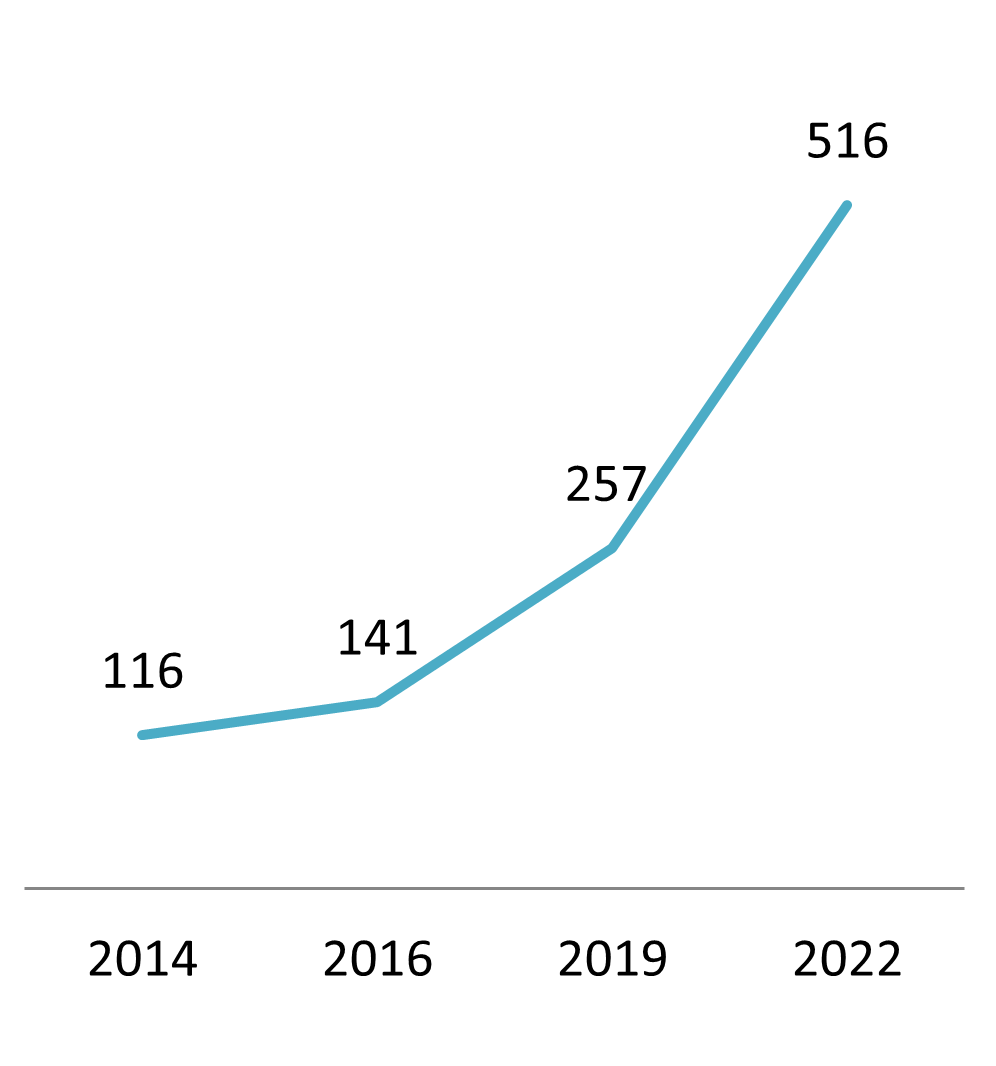
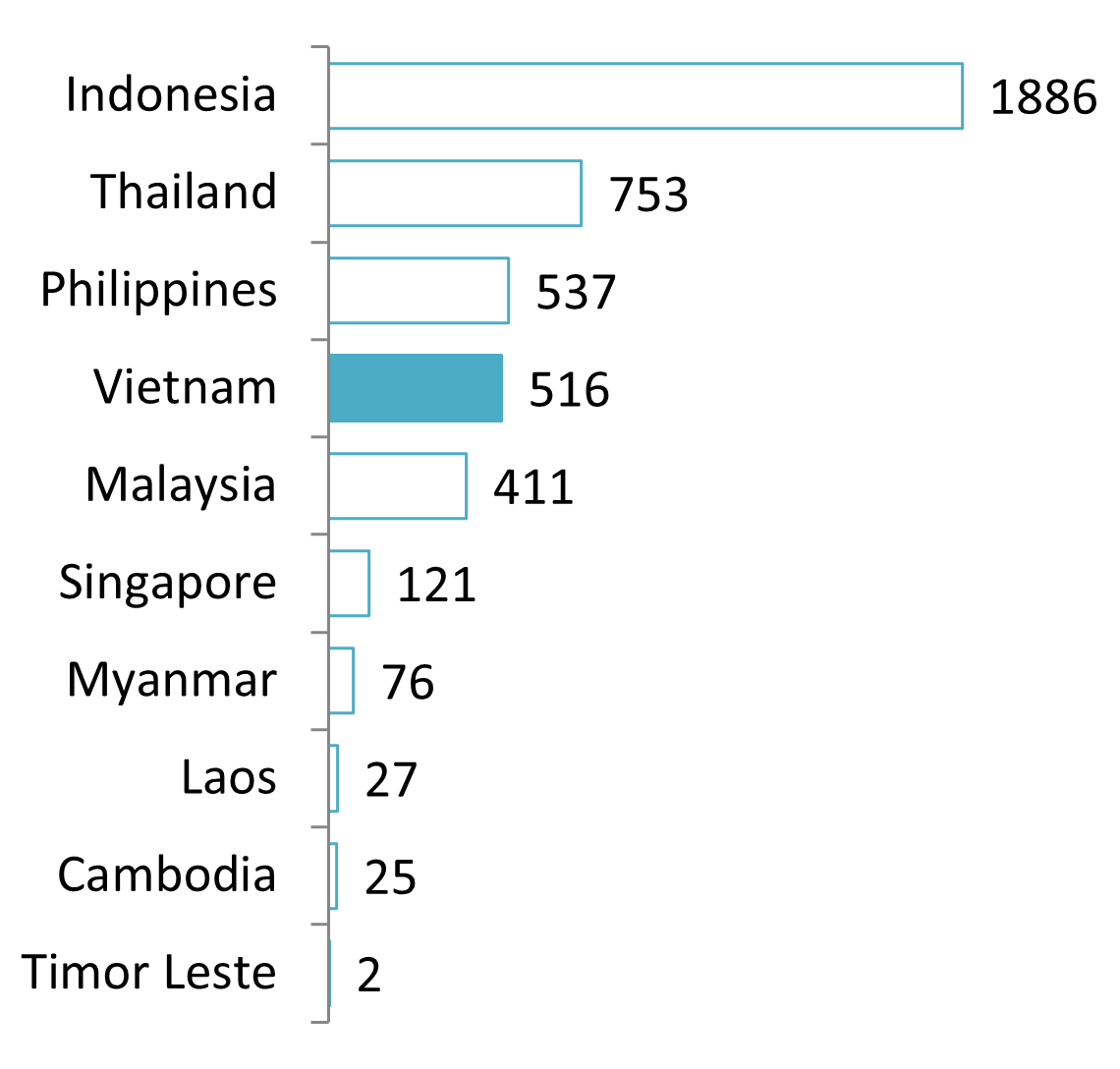
Source: Global E-waste Monitor
Extended Producer Responsibility (EPR) in Vietnam
Vietnam’s Extended Producer Responsibility (EPR) framework is primarily established under the Law on Environmental Protection 2020, further detailed in Decree 08/2022/ND-CP and Decree 05/2025/ND‑CP.
Under the regulations, producers and importers of packaging, batteries, lubricants, tires, electrical and electronic equipment, and vehicles must either organize recycling themselves or make financial contributions to the Vietnam Environmental Protection Fund to support nationwide recycling and waste treatment. Entities have to collect and reuse their packaging at rates equal to or above the mandatory recycling threshold. Currently, the mandatory recycling rate for Aluminum packaging is highest (22%), and the rate for Motorized road vehicles is lowest (0.5%). These rates are expected to adjust by a 3-year interval[5].
EPR implementation timelines
| Product type | Starting implementation time |
| Packaging and products such as batteries, lubricants, and tires | January 1, 2024 |
| Electrical and electronic products | January 1, 2025 |
| Means of transportation | January 1, 2027 |
Source: Decree 08/2022/ND-CP
Vietnam’s Ministry of Agriculture and Environment considers EPR still new and complex, covering many stakeholders. A standalone decree is intended to consolidate fragmented provisions and enhance compliance clarity[6].
Impact on industries
Packaging Industry
The packaging sector is at the center of EPR implementation. This results in inevitable increased costs for packaging producers. However, EPR also acts as a catalyst for innovation and long-term transformation.
A representative case of an innovative solution is the Tetra Recart developed by Tetra Pak. Tetra Recart is a carton-based packaging designed for shelf-stable foods such as vegetables, beans, soups, and ready meals, offering a lighter and more recyclable alternative to traditional metal cans. The packaging reduces transportation weight and carbon emissions while maintaining a long shelf life without preservatives[7]. In Vietnam, this solution has been introduced to support agricultural product processing and export, helping local food producers package products such as processed vegetables and ready-to-eat foods[8].
Tetra Recart production line installed at Doveco (Dong Giao Foodstuff Export JSC)
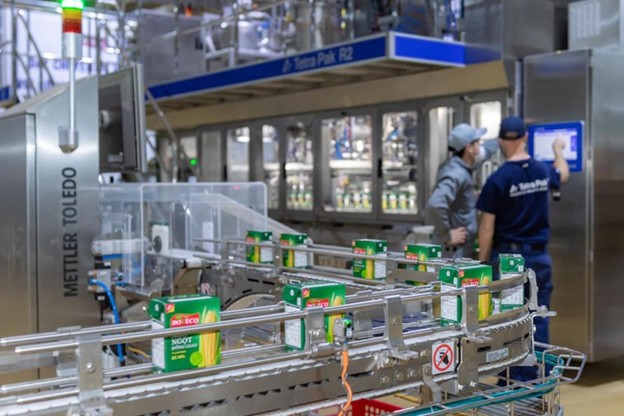
Source: Tetra Pak
Fast-Moving Consumer Goods (FMCG) industry
The FMCG sector is among the most directly affected by EPR in Vietnam because it places large volumes of packaging onto the market every year. As FMCG products are characterized by high turnover and thin margins, even small increases in packaging costs can significantly affect profitability. At the same time, consumer awareness of sustainability is rising in urban Vietnam, creating both pressure and opportunity for brands.
A notable case is Unilever Vietnam, with the commitments: 75% of their bottle packaging will be recyclable, the use of virgin plastic in packaging production will be reduced by 87%, and the amount of plastic waste they collect and recycle will be equal to the amount of packaging they bring to market[9]. Many products from many Unilever Vietnam brands have been using PCR (Post-Consumer Recycled) plastic.
Sunlight packaging is 100% made from PCR plastic

Source: Unilever Vietnam
Electronics Industry
The electronics industry faces distinct and complex difficulties due to the hazardous and high-value materials. Compared to packaging, e-waste management demands higher technical capacity, specialized treatment facilities, and strict environmental controls. However, formal recycling infrastructure remains limited, and much of the dismantling is handled by informal operators.
The need to collect e-waste after electronics products complete their use cycle is realized fairly early in Vietnam. In 2015, HP and Apple in Vietnam launched the Vietnam Recycles program, establishing free collection points for used electronic products, including laptops, printers, mobile phones, and related accessories[10]. Consumers could return end-of-life devices at designated locations without charge, ensuring that products were transported to certified recycling facilities for environmentally responsible treatment. The program has run for over 10 years with around 10 collection points in Hanoi and Ho Chi Minh City[11].
However, the program is confined to 2 major cities and faces competition from informal facilities that purchase scrap metal from scrap collectors. With the effectiveness of EPR, this model is expected to be invested in and expanded nationally.
Retail Sector
The retail sector plays an intermediary role in the implementation of EPR in Vietnam, positioned between producers and end consumers. Retailers are increasingly expected to support collection systems, promote environmentally friendly products, and influence consumer behavior.
A leading example is Mega Market of Central Retail. They became the first supermarket chain in Vietnam to stop providing free plastic bags at checkout counters. Instead, it offers alternatives such as carton boxes, reusable shopping bags, and biodegradable plastic bags[12]. The supermarket chain also installs collection bins for used milk cartons, aluminum cans, and plastic bottles. Through these initiatives, Mega Market aims to help consumers develop the habit of sorting waste at source within their households, thereby raising environmental awareness and encouraging long-term behavioral change.
A comprehensive waste sorting system for plastic bottles, aluminum cans, milk cartons, electronic waste, and glass bottles in Mega Market An Phu

Source: Mega Market
Challenges in Applying EPR in Vietnam
Despite policy progress, implementation challenges remain significant.
Limited participation beyond large companies and large cities
Currently, EPR engagement is concentrated among large corporations and foreign-invested enterprises. The recycling programs are mainly held and welcomed in major cities such as Hanoi and Ho Chi Minh City. Many small and medium-sized enterprises (SMEs) lack awareness, technical capacity, or financial resources to comply effectively.
Fragmented recycling infrastructure
Vietnam’s waste collection remains fragmented, dominated by informal workers. Industrial-scale recycling infrastructure is insufficient. Scaling up requires substantial capital investment and regulatory coordination.
Limited consumer trust and participation
Consumer behavior is critical for source separation and proper disposal. Vietnamese consumers are increasingly willing to sort waste, yet they are concerned that different waste bins will end up in the same place[13]. Transparency and public trust are essential to ensure social support for EPR systems.
Cost pressures
Cost pressure is inevitable as companies must invest in recyclable packaging, compliance systems, and recycling contributions. Sustainable packaging costs more but often results in a less visually attractive look to customers. Moreover, in a highly price-sensitive market, the additional cost may pass to customers by increasing price[14].
Difficulties in enforcement and monitoring
Strict enforcement remains challenging. Tracking volumes, verifying recycling rates, and applying penalties require digital systems and inter-agency coordination. Current sanctions may not be strong enough to deter non-compliance from companies.
Read more
Vietnam’s technology of Sustainable industrial waste, compostable waste, and recycling materials
* If you wish to quote any information from this article, please kindly cite the source along with the link to the original article to respect copyright.
| B&Company
The first Japanese company specializing in market research in Vietnam since 2008. We provide a wide range of services including industry reports, industry interviews, consumer surveys, business matching. Additionally, we have recently developed a database of over 900,000 companies in Vietnam, which can be used to search for partners and analyze the market. Please do not hesitate to contact us if you have any queries. info@b-company.jp + (84) 28 3910 3913 |
[1] Earth Action, Plastic Overshoot Day – Report 2025, https://plasticovershoot.earth/wp-content/uploads/2025/09/EA_POD_report_2025_HD.pdf
[2] Sai Gon Times, Electronic waste and gaps in EPR policy in Vietnam, https://thesaigontimes.vn/rac-dien-tu-va-khoang-trong-trong-chinh-sach-epr-tai-viet-nam/
[3] Decision No. 1191/QĐ-BGTVT, Plan to mitigate Greenhouse Gas Emissions in the Transportation Sector by 2030, https://thuvienphapluat.vn/van-ban/Tai-nguyen-Moi-truong/Quyet-dinh-1191-QD-BGTVT-2024-Ke-hoach-Giam-nhe-phat-thai-khi-nha-kinh-linh-vuc-giao-thong-629175.aspx
[4] The State Council Information Office, China’s EV battery recycling boom fuels green transition, taps global market, http://english.scio.gov.cn/m/in-depth/2025-06/05/content_117912829.html
[5] Decree No. 08/2022/ND-CP, Elaboration of several articles of the Law on Environmental Protection, https://thuvienphapluat.vn/van-ban/Tai-nguyen-Moi-truong/Nghi-dinh-08-2022-ND-CP-huong-dan-Luat-Bao-ve-moi-truong-479457.aspx
[6] Ministry of Agriculture and Environment, Vietnam moves to strengthen legal framework for extended producer responsibility, https://en.mae.gov.vn/vietnam-moves-to-strengthen-legal-framework-for-extended-producer-responsibility-9037.htm
[7] Tetra Pak, Tetra Recart, https://www.tetrapak.com/en-vn/solutions/packaging/packages/food-packages/tetra-recart
[8] Tuoi tre, Breakthrough in the Vietnamese agricultural market with Tetra Recart packaging solutions, https://tuoitre.vn/but-pha-thi-truong-nong-san-viet-voi-giai-phap-bao-bi-tetra-recart-20250724101335164.htm
[9] Unilever, Sustainability, https://www.unilever.com.vn/sustainability/cai-thien-suc-khoe-hanh-tinh/
[10] Environment Magazine, HP and Apple officially introduce a free electronic product return and recycling program in Vietnam, https://tapchimoitruong.vn/
[11] PRO Vietnam, How is electronic waste processed?, https://provietnam.com.vn/tin-tuc-chung/rac-dien-tu-duoc-xu-ly-the-nao/
[12] Cong Thuong Newspaper, Building a green distribution system at MM Mega Market Vietnam, https://congthuong.vn/xay-dung-he-thong-phan-phoi-xanh-o-mm-mega-market-viet-nam-271404.html
[13] PRO Vietnam, PRO Vietnam announces 2026 Roadmap: System Transparency – Strengthening social trust, https://provietnam.com.vn/tin-pro-viet-nam/thong-cao-bao-chi-pro-viet-nam-cong-bo-lo-trinh-2026-minh-bach-he-thong-cung-co-niem-tin-xa-hoi/
[14] VnEconomy, Vietnamese businesses increase their responsibility for recycling, https://vneconomy.vn/doanh-nghiep-viet-tang-trach-nhiem-tai-che.htm
Related article





















Log in / Register
SUBSCRIBE NEWSLETTER