

 English
  日本語
日本語  Tiếng Việt
  简体中文
简体中文  한국어
한국어 Vietnam's electronics industry has grown rapidly, becoming a key economic pillar and global manufacturing hub.

25Sep2025
Latest News & Report / Vietnam Briefing
Comments: No Comments.
Vietnam’s electronics industry has grown rapidly, becoming a key economic pillar and global manufacturing hub. With strong export performance, it shows great potential but remains reliant on assembly, low domestic value added, and FDI.
Recently, more Vietnamese firms have joined the supply chains of major players like Samsung, marking progress in localization though still in lower-value stages. The government is pushing forward with clear policies, especially in semiconductors. To move up the value chain, Vietnam needs bold actions to overcome systemic challenges and shift from being a “factory” to a high-value global supply chain destination.
Overview of scale and economic contribution
The electronics industry has become one of Vietnam’s key economic growth drivers, accounting for 17.8% of the entire manufacturing industry (based on report of VCCI in 2023), affirming its position as a spearhead field[1]. The export scale of the industry has witnessed remarkable growth, officially surpassing the 100 billion USD mark in 2024, the highest level since 2013. Specifically, the total export turnover of the electronics industry in 2024 reached nearly 126.5 billion USD, up 15.53% compared to 2023, contributing more than one-third of the country’s total export turnover.
Among them, the computer, electronics, and components sector reached 72.58 billion USD in 2024, an increase of 26.6% compared to 2023; while phones and components reached 53.9 billion USD, up 2.9% compared to 2023.[2]
Export value of electronic products, computers, and components in the period 2014-2024
Unit: billion USD
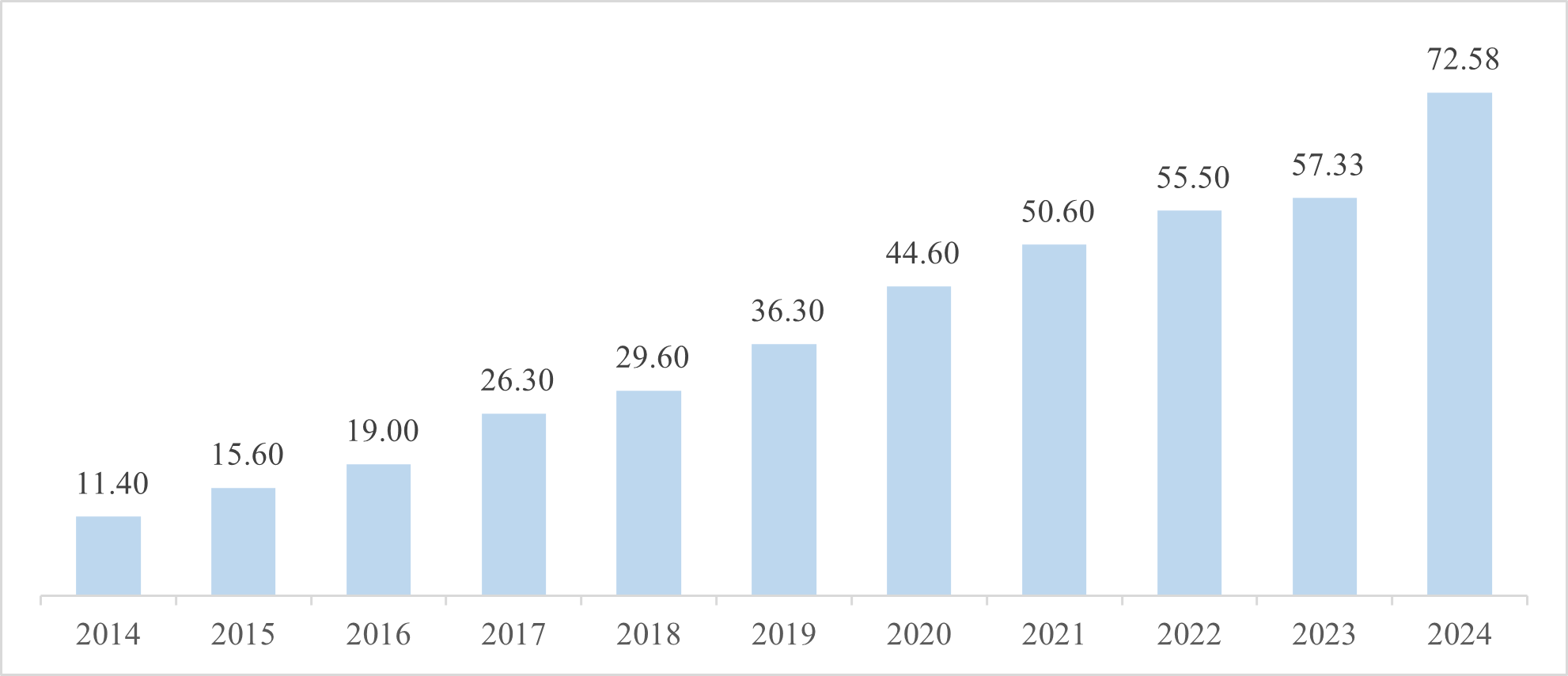
Source: General Statistics Office of Vietnam (GSO), Vietnam Customs
This reality shows that the electronics industry has become an important pillar, maintaining a high growth rate even in the context of achallenging global economy. According to data from the General Statistics Office, the export turnover of computers, electronic products and components led with 6.9 billion USD, up 29.1% over the same period in 2024. This strong growth rate is partly driven by the shift in the global supply chain and the presence of leading global technology corporations in Vietnam. However, growth in scale does not mean an increase in domestic value. Industry reports indicate that about 95% of the industry’s export value still belongs to the FDI sector, showing that growth mainly comes from assembly and processing activities rather than core technology capabilities. Core activities that bring the highest value, such as R&D, chip design, and brand development are still retained by these corporations in their home countries.[3]
However, a strategic shift has begun to take place. Aware of the limitations of the current growth model, Vietnam is taking deliberate steps to move up to higher value stages.
Localization level situation of Vietnam’s electronics industry
Despite strong progress in export turnover, the localization rate of Vietnam’s electronics industry remains very low, only about 5-10%[4], showing great dependence on the global supply chain.
Localization in Vietnam’s electronics industry
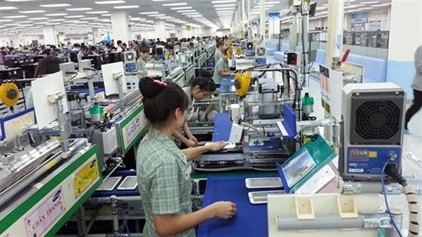
Source: Vietnamnews.vn
Vietnam currently has over 2,000 enterprises participating in the electronics industry, accounting for 54.8% of the total number of enterprises, but most of them are small and medium-sized enterprises, mainly performing simple processing steps and have not really mastered the technology or design.[5] The big difference between “being able to produce” and “being able to master” the technology is a core issue. Domestic enterprises can produce finished electronic products such as televisions and phones[6], but most of them are still assembled from imported components.[7]
Domestic enterprises participate in the supply chain of large FDI corporations such as Samsung but with a modest role. There are currently a total of 340 Vietnamese enterprises in Samsung’s supply chain, but only about 35 to 39 enterprises are tier 1 suppliers. In addition, Vietnamese enterprises mainly supply consumables, packaging, and printing products, with a supply value very small compared to the needs of components and spare parts of these corporations.[8]
The dependence of Vietnam’s electronics industry on imports is huge. The import turnover of computers, electronic products and components exceeded the 102 billion USD mark in 2024, surpassing the 100 billion USD mark for the first time and increasing by 21.4% compared to the previous year.[9] This category accounts for nearly 36% of the country’s total import turnover in the first 8 months of 2025. The largest import supply comes from China, reaching 33.48 billion USD in August 2025.[10]
One of the most important import categories is semiconductor chips. Domestic enterprises are almost unable to be self-sufficient in chip research, design, and production, but must completely depend on imported sources. The shortage of processing chips has caused difficulties for many manufacturing industries in Vietnam, from consumer electronics to automobiles.[11]
Current Policies and Support Mechanisms
Decision No. 68/QD-TTg set an ambitious target of meeting 45% of domestic demand by 2020 and 65% by 2025, but recent expert analysis indicates that the actual localization rate in the electronics industry is only around 5-10%. This gap highlights the need for a new and more realistic approach.
The government’s current strategy has shifted the focus from product localization to value addition, with a more modest but strategic target of achieving 10-15% value addition in the electronics and semiconductor industry by 2030.[12] This shift reflects a more mature policy-making mindset, focusing on capturing high-value stages in the global supply chain (such as design, packaging and testing), rather than chasing surface metrics.
Vietnam’s semiconductor and electronics industry
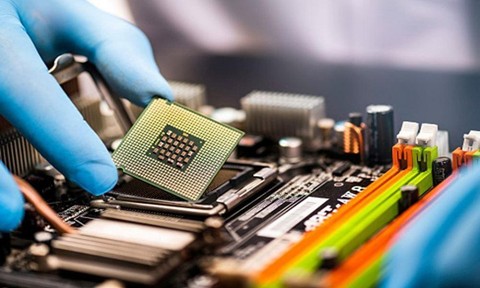
Source: Government News
Vietnam’s semiconductor and electronics industry development strategy to 2030, with a vision to 2050, is built on the breakthrough formula C = SET + 1.[13] This formula focuses on developing specialized chips (Specialized), high-quality human resources (Talent), and building an ecosystem (Ecosystem) to make Vietnam a safe destination (+1) in the global semiconductor supply chain. Instead of trying to compete with powerhouses in chip manufacturing (which is too costly and complex), Vietnam is choosing a more practical path, focusing on stages such as design, packaging, and testing, where knowledge and geographical location play decisive roles.[14]
Specific support policies include preferential tax rates. For example, investment projects in high technology can enjoy a preferential corporate income tax (CIT) rate of 10% for 15 years.[15] In addition, the Government is researching and establishing an Investment Support Fund to attract strategic investors and multinational corporations. Another important mechanism is the establishment of a “One-Stop Service” mechanism to simplify administrative procedures, creating a more favorable investment environment for enterprises in the semiconductor sector. [16]
Conclusion and Strategic Recommendations
Vietnam has successfully positioned itself as a global electronics manufacturing hub, particularly in assembly and processing, and is now moving toward higher-value stages. The growing participation of Vietnamese enterprises in FDI supply chains demonstrates strong localization momentum, though challenges remain in human resources, R&D, and supporting industries.
For FDI investors, this presents both opportunities and advantages. The Vietnamese Government has laid out a clear strategic vision, including ambitious targets such as $140 billion in electronics exports by 2025 and long-term plans for semiconductor development. To achieve this, Vietnam is prioritizing:
– Human resource breakthroughs through joint training with FDI corporations and universities, ensuring a skilled high-tech workforce.
– Stronger R&D incentives with supportive policies, tax benefits, and IP protection to foster innovation.
– Supply chain enhancement so domestic firms can better meet global standards and integrate into higher-value processes.
– Selective FDI attraction that emphasizes not only capital but also meaningful technology transfer and local R&D development.
Vietnam is “ready” in vision and policy, and is building the intrinsic capacity to become not just a “factory” but a strategic, high value-added destination for FDI in the global technology map.
[1] VCCI-HCM, Current status of Vietnam’s electronics industry (https://vcci-hcm.org.vn/hien-trang-cua-nganh-cong-nghiep-dien-tu-viet-nam/ )
[2] Baodautu.vn, Electronics exports aim for 140 billion USD mark (https://baodautu.vn/xuat-khau-dien-tu-huong-toi-moc-140-ty-usd-d239625.html)
[3] Ministry of Industry and Trade of The Socialist Republic of Vietnam, The electronics industry has shifted its value chain (https://moit.gov.vn/tin-tuc/phat-trien-cong-nghiep/cong-nghiep-dien-tu-can-tao-buoc-dot-pha-de-phat-trien.html )
[4] Ministry of Industry and Trade of The Socialist Republic of Vietnam, Vietnam’s electronics industry has many advantages and development potential (https://moit.gov.vn/tin-tuc/phat-trien-cong-nghiep/nganh-cong-nghiep-dien-tu-viet-nam-nhieu-loi-the-va-tiem-nang-phat-trien.html )
[5] Congnghieptieudung.vn, Electronic support industry and the problem of deep participation in the supply chain (https://congnghieptieudung.vn/cong-nghiep-ho-tro-dien-tu-va-bai-toan-tham-gia-sau-vao-chuoi-cung-ung-dt48176 )
[6] GSO, Export and import of electronics, computers and components – growth drivers and expectations for 2024 (https://www.nso.gov.vn/tin-tuc-thong-ke/2024/10/xuat-nhap-khau-dien-tu-may-tinh-va-linh-kien-dong-luc-tang-truong-va-ky-vong-nam-2024/ )
[7] Ministry of Industry and Trade of The Socialist Republic of Vietnam, Vietnam’s electronics industry has many advantages and development potential (https://moit.gov.vn/tin-tuc/phat-trien-cong-nghiep/nganh-cong-nghiep-dien-tu-viet-nam-nhieu-loi-the-va-tiem-nang-phat-trien.html )
[8] Ministry of Industry and Trade of the Socialist Republic of Vietnam, The localization rate of some industries in Vietnam has improved (https://moit.gov.vn/tin-tuc/phat-trien-cong-nghiep/ty-le-noi-dia-hoa-cua-mot-so-nganh-cong-nghiep-tai-viet-nam-da-duoc-cai-thien.html )
[9] Kinhte.congthuong.vn, Vietnam’s imports of computers, electronic products and components reached over 102 billion USD (https://kinhte.congthuong.vn/nhap-khau-may-vi-tinh-san-pham-dien-tu-va-linh-kien-cua-viet-nam-dat-hon-102-ty-usd-366133.html )
[10] VnEconomy.vn, Vietnam imports the most computers and components from China (https://vneconomy.vn/viet-nam-nhap-khau-nhom-hang-may-tinh-va-linh-kien-nhieu-nhat-tu-trung-quoc.htm )
[11] Vietnamplus.vn, Shortage of processing chips, many manufacturing industries in Vietnam face difficulties (https://www.vietnamplus.vn/thieu-hut-chip-xu-ly-nhieu-nganh-san-xuat-tai-viet-nam-gap-kho-post713522.vnp )
[12] Vjst.vn, Vietnam’s semiconductor industry development strategy to 2030, vision to 2050 (https://vjst.vn/chien-luoc-phat-trien-cong-nghiep-ban-dan-viet-nam-den-nam-2030-tam-nhin-2050-69695.html )
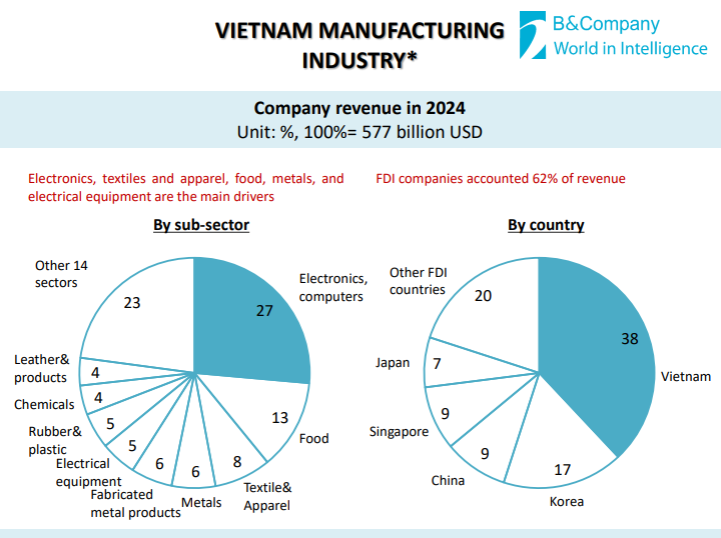
[13] B&Company Vietnam, Computer & Electronics Manufacturing in Vietnam: Overview of companies and Foreign Investment trends – B&Company (https://b-company.jp/computer-electronics-manufacturing-in-vietnam-overview-of-companies-and-foreign-investment-trends/ )
[14] Congly.vn, Vietnam is gradually entering the high-value segment of the semiconductor industry (https://congly.vn/viet-nam-tung-buoc-tien-vao-khau-gia-tri-cao-trong-nganh-ban-dan-492852.html )
[15] B&Company Vietnam, Computer & Electronics Manufacturing in Vietnam: Overview of companies and Foreign Investment trends – B&Company (https://b-company.jp/computer-electronics-manufacturing-in-vietnam-overview-of-companies-and-foreign-investment-trends/ )
[16] Baochinhphu.vn, Perfecting mechanisms and policies to promote the development of the semiconductor industry (https://baochinhphu.vn/hoan-thien-cac-co-che-chinh-sach-thuc-day-phat-trien-nganh-cong-nghiep-ban-dan-102250106210838727.htm )
* If you wish to quote any information from this article, please kindly cite the source along with the link to the original article to respect copyright.
| B&Company
The first Japanese company specializing in market research in Vietnam since 2008. We provide a wide range of services including industry reports, industry interviews, consumer surveys, business matching. Additionally, we have recently developed a database of over 900,000 companies in Vietnam, which can be used to search for partners and analyze the market. Please do not hesitate to contact us if you have any queries. info@b-company.jp + (84) 28 3910 3913 |
Related article
























Log in / Register
SUBSCRIBE NEWSLETTER