

 English
  日本語
日本語  Tiếng Việt
  简体中文
简体中文  한국어
한국어 For investors eyeing the “smart manufacturing” space in Vietnam, the country offers compelling opportunities, and also, practical challenges.

19Dec2025
Latest News & Report / Vietnam Briefing
Comments: No Comments.
Driven by government initiatives promoting Industry 4.0 adoption, rising labor costs, and substantial foreign direct investment, Vietnam is rapidly transforming into a high-tech manufacturing hub. For investors eyeing the “smart manufacturing” space, the country offers compelling opportunities: the smart manufacturing market is forecast to grow strongly, underpinned by government support, rising labor costs, and FDI flows. At the same time, investors must navigate challenges around workforce readiness, high implementation costs, and regulatory nuances. Strategic entry through joint ventures, focus on high-value sectors like electronics and semiconductors, and alignment with government priorities can maximize investment success in this dynamic market.
Market Overview
Manufacturing plays a crucial role in Vietnam’s economy, with the Industrial Production Index in the first quarter of 2025 surging by 7.6% compared to the previous year[1]. Among this, the manufacturing and processing sector grew by 9.5% (up 6.0% in 2024), contributing 7.9 percentage points to the overall growth.
Vietnam’s smart manufacturing market represents one of Southeast Asia’s most dynamic industrial transformation stories. The market value reached USD 116.8 billion in 2024, exhibiting a growth rate (CAGR) of 10.7% compared to Southeast Asia’s 8.04% during the 2025-2033 period. This positions Vietnam as a significant player in the global smart manufacturing ecosystem, with the country rapidly evolving from traditional labor-intensive manufacturing to technology-driven production systems[2].
Vietnam’s Smart Manufacturing Market Size (2025 – 2033)
Unit: billion USD
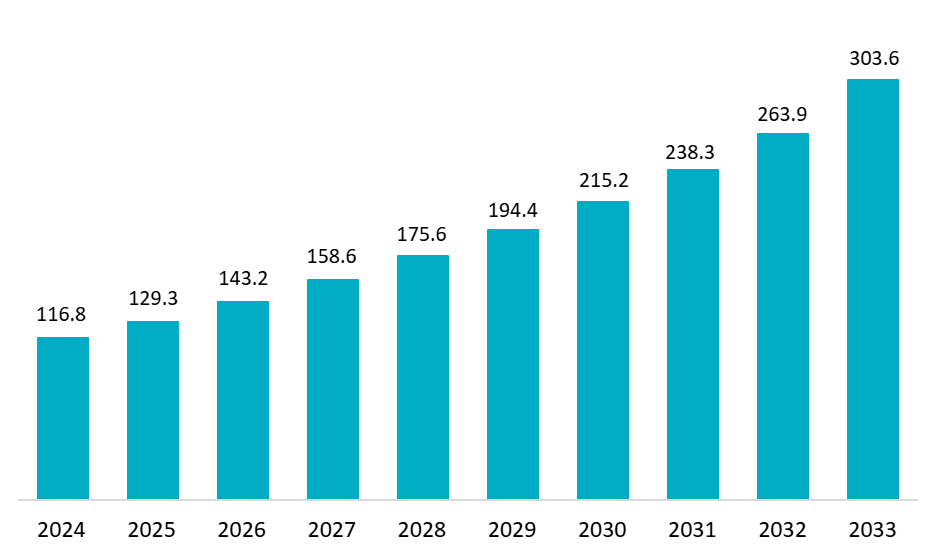
Source: Imarc
According to Ernst & Young Vietnam’s 2023 report, key trends in the adoption of digital technologies for Smart Manufacturing 4.0 in Vietnam include: 5G connectivity infrastructure, unmanned aerial vehicles (UAVs), smart sensors, machine learning, big data, blockchain, virtual reality (VR), and 3D printing, among others[3].
Geographically, smart manufacturing adoption concentrates in key industrial hubs. Ho Chi Minh City and Hanoi dominate the market due to their robust industrial base, availability of skilled labor, and significant foreign direct investment. These urban centers serve as magnets for both domestic and international companies seeking to leverage advanced manufacturing technologies for improved operational efficiency and global competitiveness. The electronics and semiconductor industries lead adoption rates, followed by automotive, pharmaceuticals, food and beverage processing, and textiles sectors[4].
Main Players
The landscape is increasingly shaped by a group of manufacturers that have already adopted advanced automation, digital twins, MES, IoT monitoring, and robotics at scale. Leading foreign-invested factories such as Samsung, Intel, Foxconn operate some of the most technologically advanced production lines in the country, while major Vietnamese players like VinFast, Vinamilk have accelerated digital transformation through smart factories with integrated data systems, autonomous logistics, and AI-enhanced quality control.
| Company Name | Year Founded
(in VN) |
Country | Main Products / Operations | Short Profile |
| Samsung Electronics Vietnam | 2009 | South Korea | Consumer electronics, smartphones, semiconductor components | Largest foreign investor in VN (USD 22.4B by 2024); operates advanced smart factories in Bắc Ninh & Thái Nguyên; applies AI-powered inspection, MES, robotics, digital twin to optimize production[5]. |
| Intel Products Vietnam | 2006 | United States | Semiconductor chip assembly & testing, ICs, processors | One of Intel’s largest chip assembly facilities globally operates digitalized manufacturing lines with automated quality control, data analytics, and global integrated supply chain systems[6]. |
| Foxconn Technology Group | 2007 | Taiwan | Electronics manufacturing, semiconductor assembly, smart manufacturing systems | Expanding heavy investment in Bac Giang & Bac Ninh; adopts high-automation SMT lines, robotics, and real-time monitoring systems; key supplier for Apple and major tech brands[7]. |
| VinFast Manufacturing | 2017 | Vietnam | Electric vehicles, batteries, automotive components | Operates one of SEA’s most automated automotive plants; applies robots (KUKA), digital twin, advanced QA systems, AI-based predictive maintenance[8]. |
| TAiLG Vietnam | 2024 | China | Electric vehicles, battery production, automated assembly | New smart manufacturing hub in Hung Yen (40,000 m²); output 350,000 units/year; heavy deployment of integrated automation and digital control systems[9]. |
| Nestlé Vietnam | 1995 | Switzer-land | Coffee (Nescafé), beverages (Milo, Nestea), dairy & nutrition (Nan, Lactogen), culinary products (Maggi), bottled water (La Vie), and breakfast cereals. | Investing over 770 million USD in four factories and two distribution centers, with the Tri An plant recognized as its most advanced smart factory. Uses highly automated assembly lines with robotics, vision inspection, and lean digital systems for operational efficiency[10]. |
| Vinamilk | 1976 | Vietnam | Dairy products, Nutrition products for children & adults, Functional beverages, Fresh milk from high-tech dairy farms | Largest dairy producer and one of the region’s most advanced adopters of smart manufacturing. The company operates highly automated production lines and a world-class smart warehouse system capable of fully autonomous logistics using AGVs and real-time data integration[11] |
B&Company’s compilation
Complementing these users is a rapidly expanding ecosystem of solution providers such as FPT, ABB, Siemens, Bosch Rexroth, Mitsubishi Electric,… These firms supply the core technologies that enable digitalized production, from robotics, PLCs, and SCADA systems to AI inspection, digital twins, and industrial IoT platforms.
| Company Name | Year Founded(in VN) | Country | Main Solutions | Short Profile |
| FPT Corporation | 1988 | Vietnam | AI manufacturing solutions, digital transformation, IoT, cloud computing | Leading tech conglomerate; developed Intelligent Inspection achieving 99% defect-detection accuracy; strong Industry 4.0 implementation partner for manufacturing firms[12]. |
| ABB Group | 1993 | Switzer-land | Robotics, electrification, industrial automation, SCADA | Major SCADA supplier in Vietnam (150 systems for EVN); provides robotics & automation for manufacturing, utilities, and energy sectors[13]. |
| Siemens AG | 1993 | Germany | Industrial automation systems, digital twin, SCADA, MES | Strong contributor to Vietnam’s smart factory transformation; provides MindSphere, SIMATIC, advanced automation for electronics & automotive industries. |
| Bosch Rexroth AG | N/A | Germany | Drive & control tech, hydraulic systems, automation components | Supplies comprehensive Industry 4.0 automation solutions; strong presence in automotive and machinery manufacturing sectors. |
| NVIDIA Vietnam | 2024 | United States | AI computing platforms, GPU software, deep learning frameworks | First R&D center in VN; collaborates with government & large enterprises to accelerate AI adoption in manufacturing, healthcare, and finance. |
| General Electric (GE) | 1993 | United States | Industrial IoT, automation software, predictive analytics | Provides digital industrial solutions for power, aviation, and healthcare; strong IIoT and automation deployments across VN, have a smart factory in VSIP Binh Duong. |
| Rockwell Automation | 2007 | United States | PLCs, MES, industrial automation, smart factory integration | Provides FactoryTalk, ControlLogix systems widely used in Vietnam’s automotive, F&B, and electronics manufacturing[14]. |
| Mitsubishi Electric Vietnam | 1990 | Japan | FA equipment, PLCs, robotics, industrial automation | Key supplier of automation and robotics systems for Japanese factories in Vietnam (especially automotive and electronics). |
B&Company’s compilation
International dominance with Local capability building
This player landscape reveals several important insights about Vietnam’s smart manufacturing market structure. First, international corporations dominate the market, particularly South Korean, American, German, and Taiwanese companies with decades of global manufacturing expertise. These multinationals bring advanced technologies, substantial capital investment, and integration into global supply chains.
Samsung’s position as the largest foreign investor with USD 22.4 billion demonstrates a sustained long-term commitment, while its 306 domestic suppliers and smart factory consulting programs actively develop local manufacturing capabilities[15]. The company’s USD 62.5 billion revenue in 2024 illustrates the massive scale of operations, with approximately half of Samsung’s global smartphone production now concentrated in Vietnam. They have had 2 billion mobile handsets since 2009, and the new USD 1.8 billion OLED factory investment signals continued expansion into higher-value display technologies.
Domestic Champion emergence
Domestic Vietnamese companies like FPT Corporation are rapidly developing competitive capabilities in software, artificial intelligence, and digital transformation services. These local champions understand Vietnamese market dynamics and regulatory environments while building technical competencies comparable to international standards.
For example, FPT’s establishment of Vietnam’s first AI Factory equipped with thousands of NVIDIA H100 and H200 GPUs represents a quantum leap in indigenous AI infrastructure. The company’s USD 2.47 billion revenue and position as Southeast Asia’s largest IT services company, listed in Fortune Southeast Asia 500, demonstrate scale and credibility. FPT’s partnerships with global leaders like NVIDIA, Microsoft, Landing AI, and Mila-Quebec AI Institute provide access to cutting-edge technologies while maintaining sovereign AI capabilities[16].
Their commitment to training 50,000 AI specialists and 10,000 semiconductor engineers by 2030 directly addresses Vietnam’s workforce development priorities. The USD 30 million multi-year AI transformation MoU with a major Southeast Asian industrial conglomerate validates FPT’s technical capabilities and market positioning.
Accelerating Investment momentum
The smart manufacturing market shows increasing diversification in terms of technology focus areas. While hardware manufacturing remains dominant, software solutions, cloud platforms, artificial intelligence applications, and data analytics services are gaining prominence. This shift reflects the market’s maturation from basic automation toward comprehensive digital transformation. Recent market entries by companies like NVIDIA and TAILG indicate sustained foreign investor confidence in Vietnam’s smart manufacturing potential. These new entrants bring cutting-edge technologies in artificial intelligence, electric vehicles, and advanced manufacturing systems that will accelerate the market’s technological sophistication.
Actionable Implications
Joint ventures with Local partners
Successfully entering Vietnam’s smart manufacturing market requires strategies tailored to the country’s unique regulatory, technological, and workforce context – conditions that are strongly shaped by Vietnam’s rapid industrial transformation. Forming joint ventures or partnerships with local enterprises remains advantageous, even though most manufacturing sectors allow 100% foreign ownership under the Law on Investment 2020[17]. Only specific service-related industries (such as telecoms and logistics subsegments) retain 49% foreign ownership caps. Companies that collaborated with Vietnamese partners reported faster licensing, better government engagement, and improved market access – advantages that are crucial in a competitive and rapidly evolving industrial landscape.
Focus on High-value segments
Investors should prioritize high-value, technology-intensive segments that align with national development strategies. Vietnam’s government has explicitly identified smart manufacturing, AI-driven automation, semiconductors, and advanced digital technologies as priority sectors, as stated in Decision 667/QĐ-TTg (2024) and the national Industry 4.0 Strategy. The National Digital Transformation Program further targets 45% of manufacturing enterprises to adopt high technologies by 2030[18], indicating a strong policy-driven push toward advanced production systems. This direction is already visible in FDI trends: in 2023, 64.2% of registered FDI capital flowed into manufacturing projects, according to the Foreign Investment Agency[19]. Investors that emphasize technology transfer, training, and supply-chain integration consistently receive more favorable evaluations and support from provincial authorities.
Workforce development investment
Investing in Vietnam’s workforce capabilities is another critical success factor, especially given the country’s structural skills gap. Workforce development initiatives such as partnerships with technical universities, in-house academies, and apprenticeship programs address this gap while building long-term employee loyalty. Leading cases demonstrate the effectiveness of such investments: Samsung’s collaboration with MOIT has trained 200+ Vietnamese engineers in advanced manufacturing and productivity improvement, significantly enhancing local capabilities and operational performance[20].
Leverage Free Trade Agreements
Vietnam’s extensive free trade agreements provide another strategic lever for foreign manufacturers. With 15 active FTAs, including CPTPP, EVFTA, and RCEP, Vietnam now enjoys preferential access to markets representing 60% of global GDP (MOIT FTA Report)[21]. The EVFTA alone helped increase EU-Vietnam trade by 14.8% within its first two years, with notable growth in electronics and machinery exports. Structuring supply chains and production flows to maximize these tariff advantages can substantially boost competitiveness, especially for companies in electronics, machinery, and high-tech component manufacturing.
Engage with Industrial zones
Engagement with Vietnam’s industrial zones and economic authorities further strengthens market entry. As of 2024, Vietnam operates 400 industrial zones, with 300 active, and occupancy rates in key provinces like Bac Ninh and Binh Duong exceeding 80%[22]. These zones offer tax incentives, ready-built infrastructure, and streamlined administrative procedures. Importantly, the 2024 amendment via Vietnam’s Resolution 57-NQ/TW introduced special investment mechanisms that shorten approval times for high-tech, semiconductor, and strategic manufacturing projects in industrial zones and high-tech parks[23]. Selecting the right zone and engaging early with management boards can significantly reduce operational barriers.
* If you wish to quote any information from this article, please kindly cite the source along with the link to the original article to respect copyright.
| B&Company
The first Japanese company specializing in market research in Vietnam since 2008. We provide a wide range of services including industry reports, industry interviews, consumer surveys, business matching. Additionally, we have recently developed a database of over 900,000 companies in Vietnam, which can be used to search for partners and analyze the market. Please do not hesitate to contact us if you have any queries. info@b-company.jp + (84) 28 3910 3913 |
[1] https://www.nso.gov.vn/en/data-and-statistics/2025/04/index-of-industrial-production-in-march-of-2025/.
[2] https://www.imarcgroup.com/vietnam-smart-manufacturing-market
[3] https://vr360.com.vn/vi-du-ve-nha-may-thong-minh
[4] https://www.kenresearch.com/industry-reports/vietnam-smart-manufacturing-market
[5] https://vneconomy.vn/samsung-dua-du-an-1-8-ty-usd-moi-ve-bac-ninh.htm
[6] https://vir.com.vn/intel-reveals-plans-to-expand-operations-in-vietnam-139498.html
[7] https://www.redsunland.vn/foxconn-tap-doan-khkt-hong-hai-la-cong-ty-gi-suc-anh-huong-cua-foxconn-tai-viet-nam/
[8] https://vinfastauto.us/investor-relations/news/vinfast-inaugurates-electric-vehicle-plant-in-ha-tinh
[9] https://www.tailg.com/newsinfo-166.html
[10] https://baochinhphu.vn/nestle-viet-nam-tang-toc-chuyen-doi-so-dong-hanh-cung-nghi-quyet-so-57-10225071817281604.htm
[11] https://sbiz.vn/blog/case-study-5/case-study-mo-hinh-quan-ly-kho-thong-minh-au-tien-va-lon-nhat-tai-viet-nam-cua-vinamilk-94
[12] https://fptsoftware.com/services/digital-technologies-and-platforms/artificial-intelligence
[14] https://www.rockwellautomation.com/en-us/products/software/factorytalk/operationsuite/mes/automotive.html
[15] https://www.vietnam.vn/en/nha-dau-tu-nuoc-ngoai-lon-nhat-viet-nam-cung-viet-nam-vuon-minh
[16] https://fptsoftware.com/services/digital-technologies-and-platforms/artificial-intelligence
[17] https://english.luatvietnam.vn/legal-news/understanding-the-legal-framework-for-foreign-investment-in-vietnam-4729-100126-article.html
[18] https://vietnam.acclime.com/podcasts/transforming-vietnams-manufacturing-sector-from-low-cost-to-high-productivity/
[19] https://www.mpi.gov.vn/en/Pages/2023-12-29/FDI-attraction-situation-in-Vietnam-and-Vietnam-s-fh2c25.aspx
[20] https://vietnamnews.vn/economy/1654984/nic-partners-with-samsung-vietnam-in-developing-tech-talent.html
[21] https://en.baochinhphu.vn/ftas-facilitate-viet-nams-deeper-participation-in-global-supply-chain-111230803105008762.htm?
[22] https://www.vietnam-briefing.com/news/vietnams-industrial-zones-2025-2030-growth-outlook.html/
[23] https://vietnamnews.vn/economy/1666585/viet-nam-s-new-fast-track-policies-to-boost-high-tech-investment-environment-set-for-approval.html
Related article































Log in / Register
SUBSCRIBE NEWSLETTER