

 English
  日本語
日本語  Tiếng Việt
  简体中文
简体中文  한국어
한국어 With the government's efforts in addressing the shortage of high-quality workers, many universities now offer semiconductor training programs.

05Mar2025
Latest News & Report / Vietnam Briefing
Comments: No Comments.
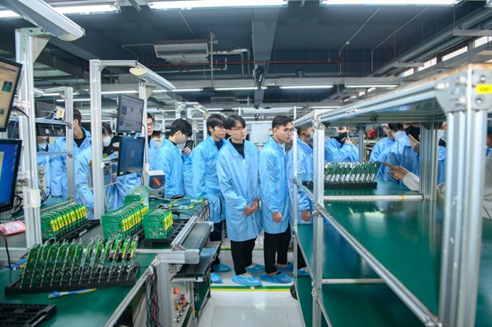
In order to keep up with the rapid growth of the semiconductor industry, the government has introduced support measures to address the challenge of a limited supply of high-quality workers in the industry, leading to many universities now offering semiconductor training programs.
Vietnam’s Workforce Landscape
As of 2024, Vietnam remains in its “golden population structure” phase[1], with the labor force aged 15 and older reaching 53 million in 2024, maintaining a stable level of 67% of the total population over the past five years since 2019. The workforce is mainly from rural and suburban areas, accounting for 61%, while urban workers comprise the remaining 39%[2].
However, the proportion of highly skilled and degree-holding workers in Vietnam remains relatively low. In 2024, only around 28% of the population had completed vocational training or higher education[3]. The semiconductor industry faces a similar situation, as a professional economist in Vietnam points out, for the next 5 – 10 years, the semiconductor industry will demand 20,000 to 50,000 high-skill workers[4]. Meanwhile, Vietnam now only has around 6,000 chip design engineers, mostly in Ho Chi Minh City[5].

Source: Nhan Dan Newspaper
Government Initiatives to Strengthen the Semiconductor Workforce
On September 21, 2024, the government issued Decision No. 1017/QĐ-TTg: Developing human resources for the semiconductor industry by 2030, with a vision to 2050. This decision outlines specific objectives and tasks aimed at fostering the growth of Vietnam’s semiconductor workforce.
Decision No. 1017/QĐ-TTg: Semiconductor workforce development plans
| Focus sector | Objective until 2030 | Objective until 2050 |
| Human resource | Vietnam aims to develop 50,000 highly skilled professionals with at least a university degree in fields related to the semiconductor industry, including:
· At least 42,000 engineers, 7,500 master’s degree holders, and 500 doctoral researchers. · A minimum of 15,000 professionals specializing in chip design and research and 35,000 workers engaged in assembly, testing, packaging, and manufacturing. · At least 5,000 experts in artificial intelligence (AI) applications specifically serving the semiconductor industry. |
· Meeting Vietnam’s demand for both the quantity and quality of human resources in the semiconductor industry
· Training institutions and higher education institutions/Universities in Vietnam are fully capable of providing high-quality human resource training to serve the semiconductor industry |
| Infrastructure | · Constructing, upgrading, and modernization of four national-level semiconductor laboratories, with 2 in Hanoi, 1 in Ho Chi Minh City, and 1 in Da Nang.
· Semiconductor laboratories at 18 educational institutions nationwide will be built and upgraded[6]. |
|
| Training program | · Coordinating with domestic and international organizations and enterprises to provide specialized training for 1,300 professors at research institutes, universities, training support centers, and businesses.
· Developing and implementing exchange programs and scholarship initiatives for semiconductor-related fields. |
Source: Vietnam Government Portal
University Efforts in Expanding Semiconductor Training Programs
Related article



































Log in / Register
Continue without an account
Log in / Register
SUBSCRIBE NEWSLETTER