
 English
  日本語
日本語  Tiếng Việt
  简体中文
简体中文  한국어
한국어 
10Sep2024
Highlight content / Industry Reviews / Latest News & Report
Comments: No Comments.
Overview of the Agricultural Sector in Vietnam
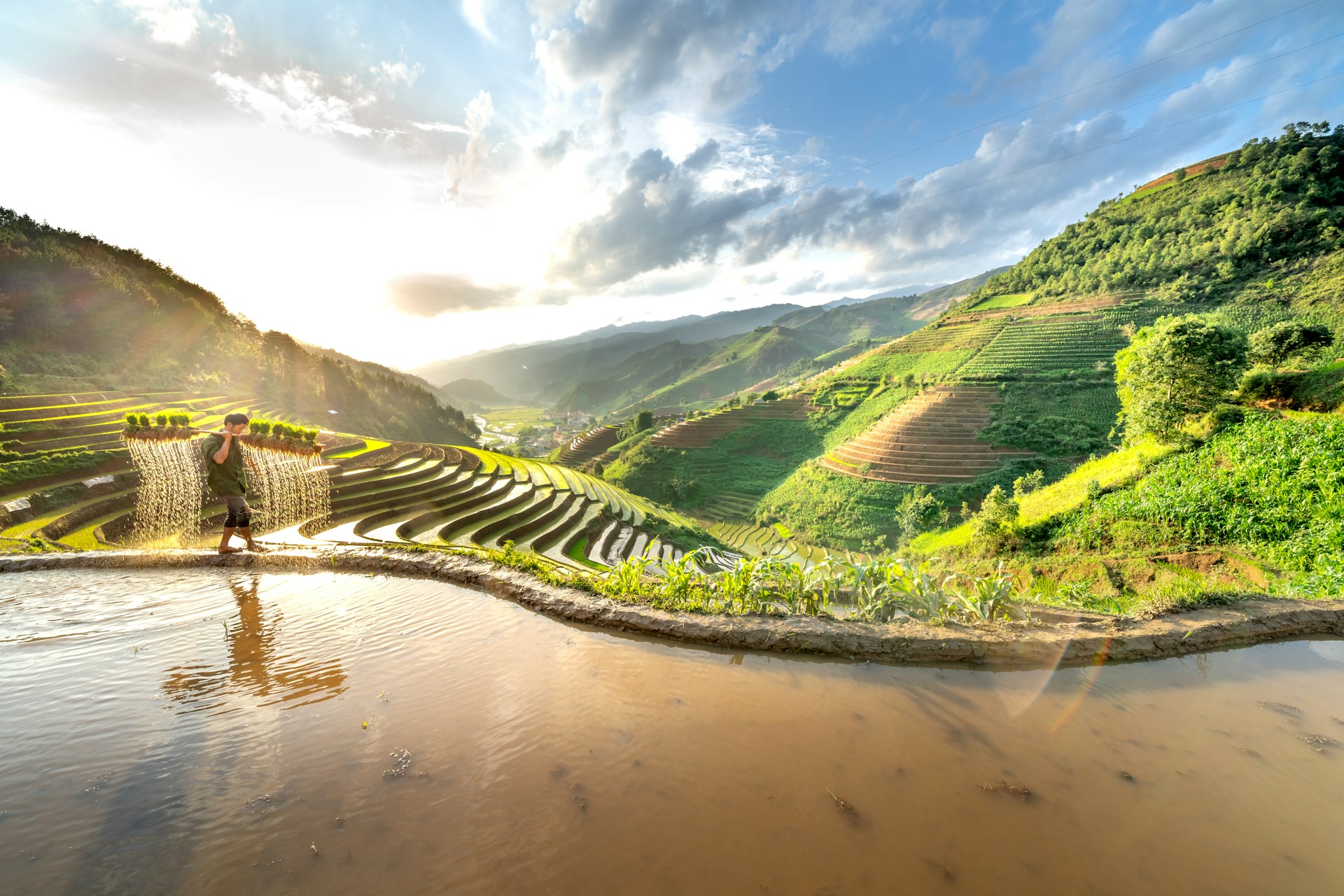
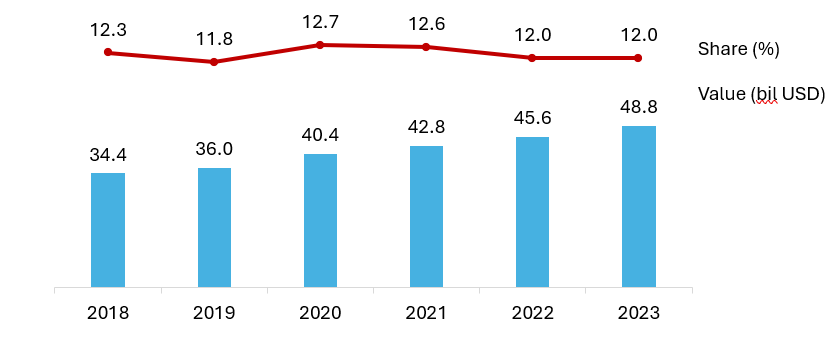
The agricultural[1] sector is one of the main pillars of the economy in Vietnam. Although there are still some limitations and the contribution to GDP tends to slightly due to Vietnam’s shift from agriculture to industry and services, this sector has continued to grow, with a CAGR of 7.2% from 2018-2023, reaching 48.8 billion USD and accounting for 12% of GDP in 2023.
Figure 1. Contribution to GDP of Agriculture in Vietnam
Source: GSO (2024)
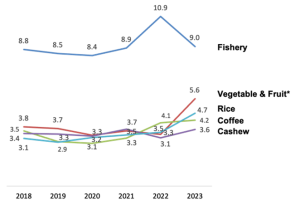
In addition, the significant role of this sector is also reflected in Vietnam’s agricultural products export situation. Vietnam is currently ranked 2nd in Southeast Asia and 15th globally in agricultural exports[2]. In 2023, Vietnam’s agricultural products recorded a trade surplus of over $12 billion[3], with major items such as fishery products, fruits and vegetables, coffee, cashews, rice, etc.
Figure 2. Some key agricultural export products
Unit: Tril. USD
Source: GSO (2024)
Alongside the bright points, Vietnam’s agriculture sector still faces certain limitations. Firstly, the agricultural sector is still managed in a small-scale farming manner, leading to high risks and low efficiency, as well as low added value and competitiveness of goods. Currently, agricultural exports are mainly based on price competitiveness in the low-quality segment, not on the advantage of quality competitiveness. This requires changes in production, especially in the context of increasingly high standards for food safety, traceability, and technical barriers related to the environment (e.g. Japan, EU, etc.) in both domestic and foreign markets[4].
Secondly, Vietnam’s agriculture is facing major challenges from climate change. It is forecasted that if the sea level rises by 1 meter, the productivity of rice cultivation in the Mekong River Delta could decrease by 40.5%. Furthermore, most of the Red River Delta and Mekong River Delta could be submerged by rising sea levels by 2070, affecting the fisheries sector[5].
Thirdly, there is a shortage of high-quality labor in the agricultural sector. As by MARD in 2021, 57%[6] of the labor force is still unskilled, working based on experience and seasonality, lacking highly skilled workers. Regarding the working age, the majority are still elderly, with the number of workers aged 50 and above accounting for 42.8%[7] in 2021. This leads to difficulties in training, technology transfer, etc.
The Trend of Smart Agriculture in Vietnam
Smart agriculture can be considered as one optimal solution to address the aforementioned challenges of agriculture sector in Vietnam. There is currently no official concrete definition but smart agriculture can be widely perceived as the application of ICT technologies such as precision devices, IoT, sensors, big data management, etc. into agricultural processes. Applying smart agriculture helps related stakeholders to (1) add value by making more effective exploitation and management decisions, (2) increase the connectivity between producers and information, and better manage production; and (3) improve investment efficiency and reduce environmental harm.