
 English
  日本語
日本語  Tiếng Việt
  简体中文
简体中文  한국어
한국어 
15Sep2019
Industry Reviews
Comments: No Comments.
Vietnam’s healthcare factor is developing but there are still a lot of challenges.
According to GSO, their GDP per capita was increased to USD 2,587 in 2018, raised 8.3% over 2017. Along with that, Vietnam healthcare expenditure per capita has increased over the years, in 2016 it reached around USD 123, increased 5% comparing to 2015 and 38% compared to 2011. This expenditure also accounted for 5.66% of the GDP. Besides, up to May 2019, the number of people participating in public health insurance has reached a rate of 89% of the population, exceeding 2.2% over the Government’s goal. Those indexes may indicate that the citizens’ awareness of health has increased.
Moreover, Vietnam’s population officially entered an ‘aging phase’ in 2011 and is among the most rapidly aging countries in the world, led to the rapid growth in health-care demand. The proportion of above 60-year-old people in the total population in 2011 is 9.9%, but it already rose11.95% in 2018 and expected to be 17.5% in 2030. This increase is much faster than neighborhood countries such as Indonesia (8.2% in 2015 and 13.2% in 2030), Philippines (7.3% in 2015 and 10.3% in 2030). According to WHO, healthcare system must be developed more in order to take care of the elderly people as the number of cancer cases, dementia, etc. increases in older age.
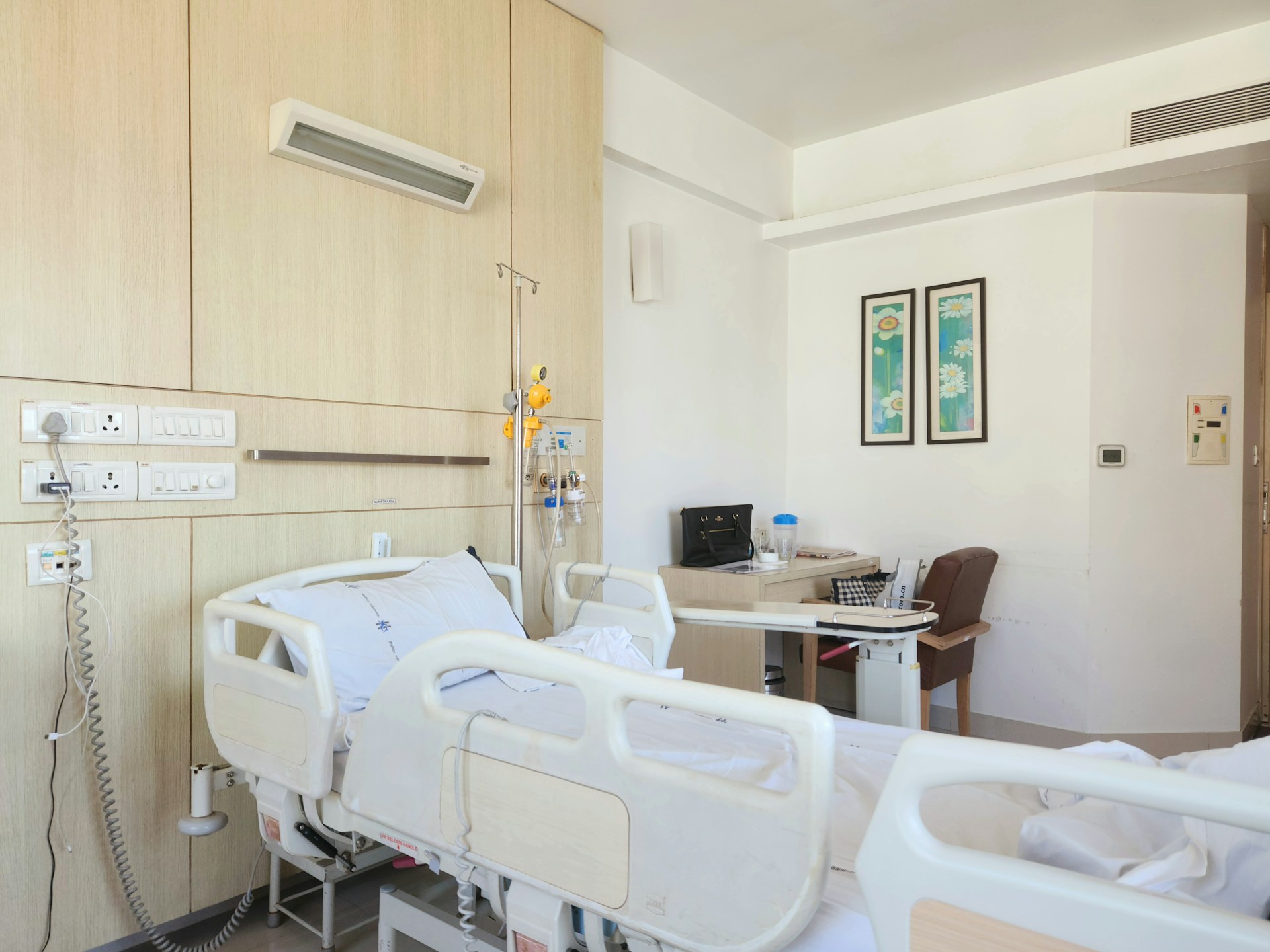
Regarding supply factor, overcrowding in hospitals is also a huge problem. In 2016, Vietnam was reported to have 1161 public hospitals and 185 private hospitals. Their ratio of beds per 10,000 inhabitants was 26.5 in 2018, exceed the target (26) was assigned by the National Assembly and the Government for 2018. However, the overcrowding cases in central hospitals are still happening. According to reports in recent years, there are some central hospitals still have the capacity of hospital beds used over 100% such as University Hospital of “Medicine and Pharmacy” and “K” Hospital, some exceed 120% like “Children I” Hospital and “Cho Ray” Hospital. Especially, this ratio in “Bach Mai” Hospital is bigger than 160%.
The overcrowding causes not only patients’ dissatisfaction for long waiting-time but also not good enough attitude from doctors and nurses who work under stressful conditions. In July 2019, Ho Chi Minh City Department of Health published a survey of patients’ dissatisfaction when they came to the examination and there were 3,693 dissatisfied feedbacks, increased 27% comparing to the previous month (2,914); the most popular reason for the dissatisfaction was still registration procedures, attitude, long waiting-time.
According to general statistics on human resources for health sector, the number of doctors per 10000 population in 2017 was 7.44, decreased 4% in comparison with 2016 (7.75). This index is much lower than Singapore (24), Thailand (18) and Malaysia (15). Moreover, most doctors choose to work in higher-level hospitals and urban areas of Vietnam, where the medical facilities and resources are more advanced. This has led to a shortage of available medical treatment in rural areas, lower-level hospitals, and local hospitals. The latest survey of the Ministry of Health at medical stations in 26 communes shows in 2018 that only 3 provinces and cities including Hanoi, Ho Chi Minh City, and Yen Bai have adequate doctors at the medical stations, around 30% of those stations don’t have doctors, or traditional medicine physicians or pharmacists.
An onward trend in overseas treatment
Despite of the high demand in healthcare, the overcrowding, shortage of medical staff, obsolete equipment for surgery and intensive care cases which happen quite often in medical units have forced Vietnamese people spend approximately USD 2 billion to travel abroad for high-quality medical service in 2017, twice as 2013 (USD 1 billion) and higher than Indonesia’s number in the same year (USD 1.4 billion).