
 English
  日本語
日本語  Tiếng Việt
  简体中文
简体中文  한국어
한국어 
15Jun2020
Industry Reviews
Comments: No Comments.
As of May 3rd, 2020 | Consolidated by B&Company Vietnam & BEAN Survey team
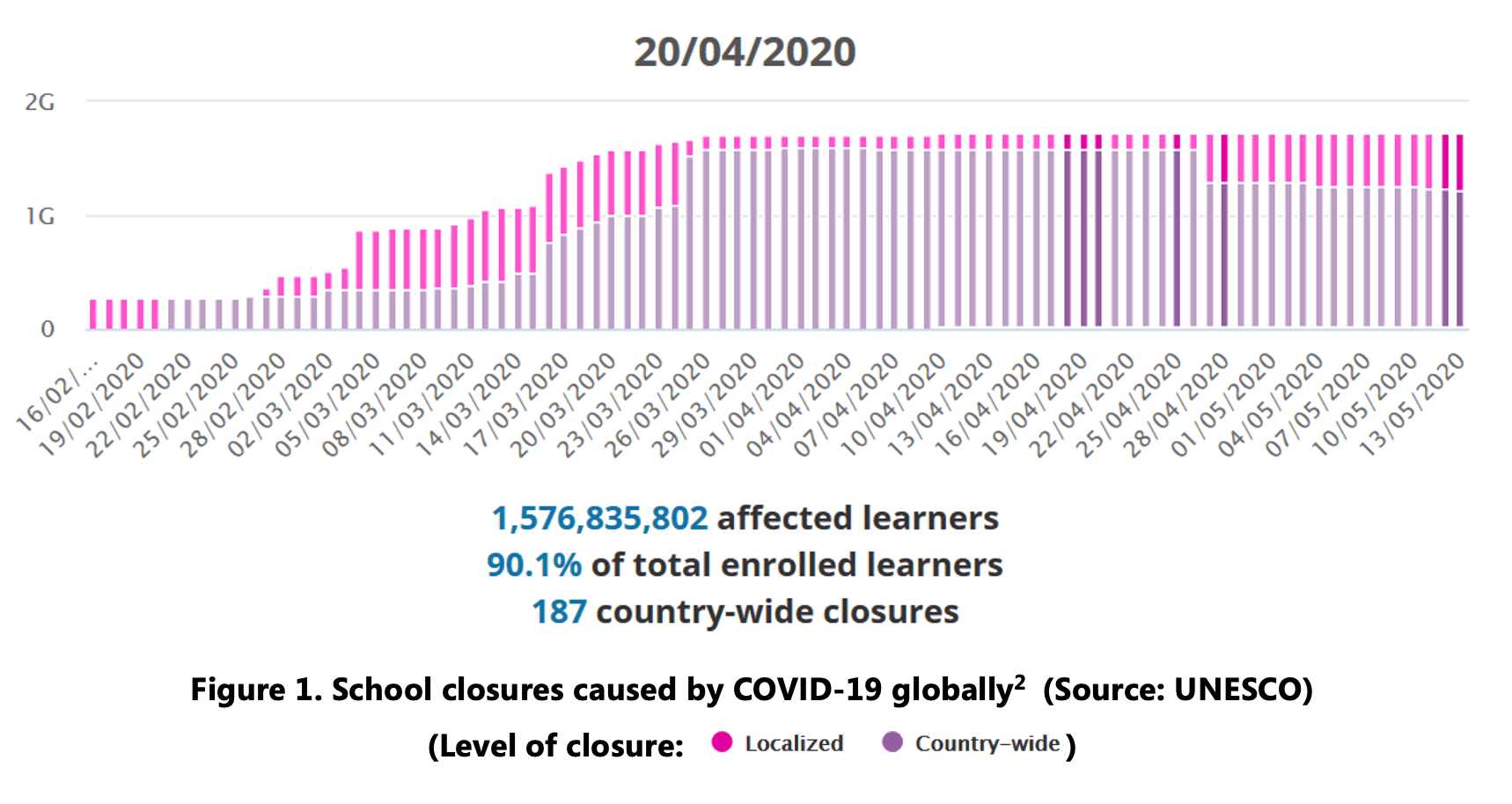
By 20th April 2020, more than 200 countries have been fighting against COVID-19 outbreak, with most countries applied nationwide closures (Source: WHO). This incident has heavily impacted more than one billion students, or over 90% of the world’s student population according to UNESCO’s estimation. Facing this unprecedented event, governments, schools, teachers and students have found ways to stay positive for education and keep learning. The most widely used alternative form of on campus study during this time of uncertainty is online learning.
Online learning overview
According to Petersons, a well-known US publisher, distance learning has a history tracing back in the 19th century, evolving over time from mail exchanging, radio listening, to on-TV and Internet learning. Since then, technology advancement has totally changed the education industry at an unstoppable pace, with global online education market growing at CAGR of 9.2%, increasing from US$187.9 billion in 2019 to US$319.2 billion in 2025E (Source: researchandmarkets.com).
According to Ken Research, Vietnam e-learning industry also holds an enormous growth potential with double-digit CAGR of 20.2% (2019-2023E), and market size of 3 billion USD (2023E) (in comparison with the Philippines’ CAGR of 21.7%, market size of 2.7 billion USD, and Malaysia’s CAGR of 16.1%, market size of 2 billion USD (2023E)).
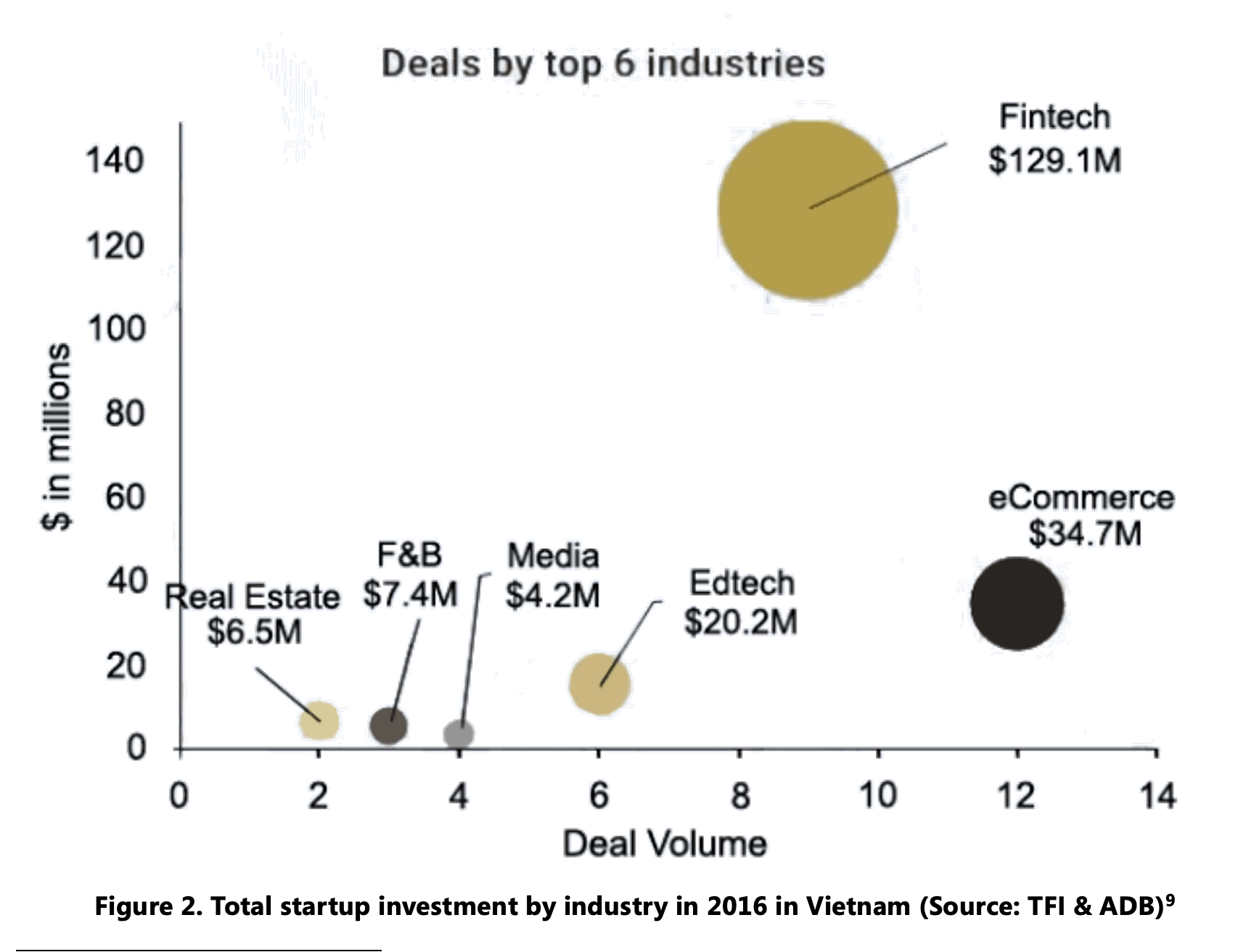
On the other side, as part of the growing start-up ecosystem in the country, Ed-tech also receive big interest and attention by domestic and foreign investors, only after Fintech and eCommerce.
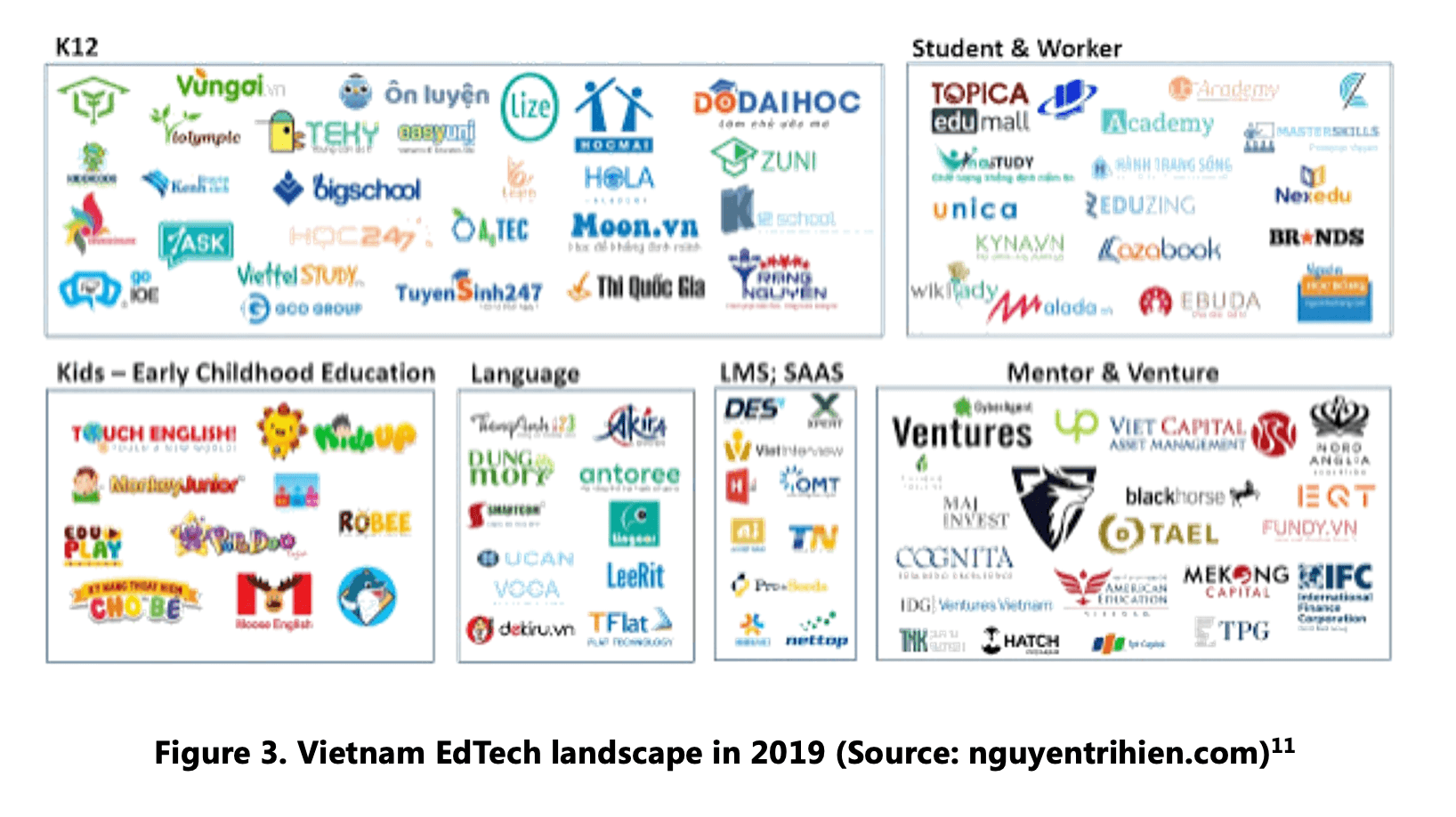
By September 2019, statistics from tracxn.com indicates 109 Ed-tech start-ups in the market with different content offers – from language study courses, exams preparation to technical and life skills, targeting different B2C and B2B segments.
The COVID-19 impact
Since the first case of the novel coronavirus found in Vietnam in late January 2020, the Government had made an assertive decision of temporarily closing educational institutions. As a responsive strategy, online learning was rolled out by schools and universities for official courses and curriculums.
To many students, that was their first exposure to this form of distance learning. According to online BEAN Survey conducted in April 2020, 56.4% of 218 students only tried online learning due to the impact of this pandemic. This ratio is particularly high among high-school students (58.8%) in comparison with those who are taking undergraduate & vocational programs (58.4%) and post graduate programs (39.1%). (Students: Those who are taking official courses including high-schools, undergraduate & vocational schools and postgraduate programs).
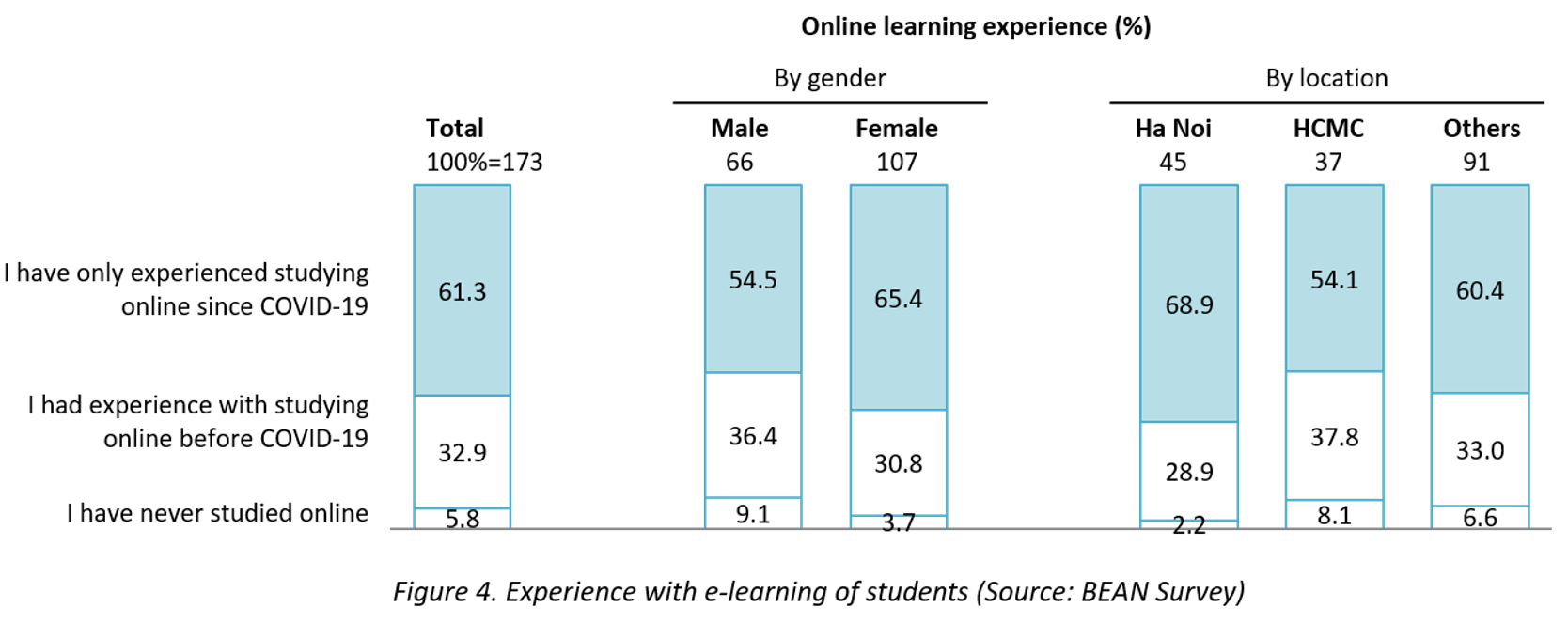
The survey also pointed out that approximately one third of studying respondents had experience with e-learning before COVID-19. Among those, 76.5 % had experience with recorded lessons, and 62.4% reported past experiences with video conferencing type of classes. The majority of them took courses of foreign language (67.1%), computer skills (45.9%) and soft skills (35.3%) online.
 The same survey gives out result that Zoom, Microsoft Team, and Google Meet are the three main streaming platforms that schools are using. However, due to its recent security and privacy issues, Zoom is facing great challenges of losing its market share in Vietnam as the Department of Information Security and Ministry of Education raises caution against using Zoom, leaving out opportunities for other platforms and solution systems such as the international Microsoft Team and Google Meet, as well as domestic Viettel’s and VNPT’s.
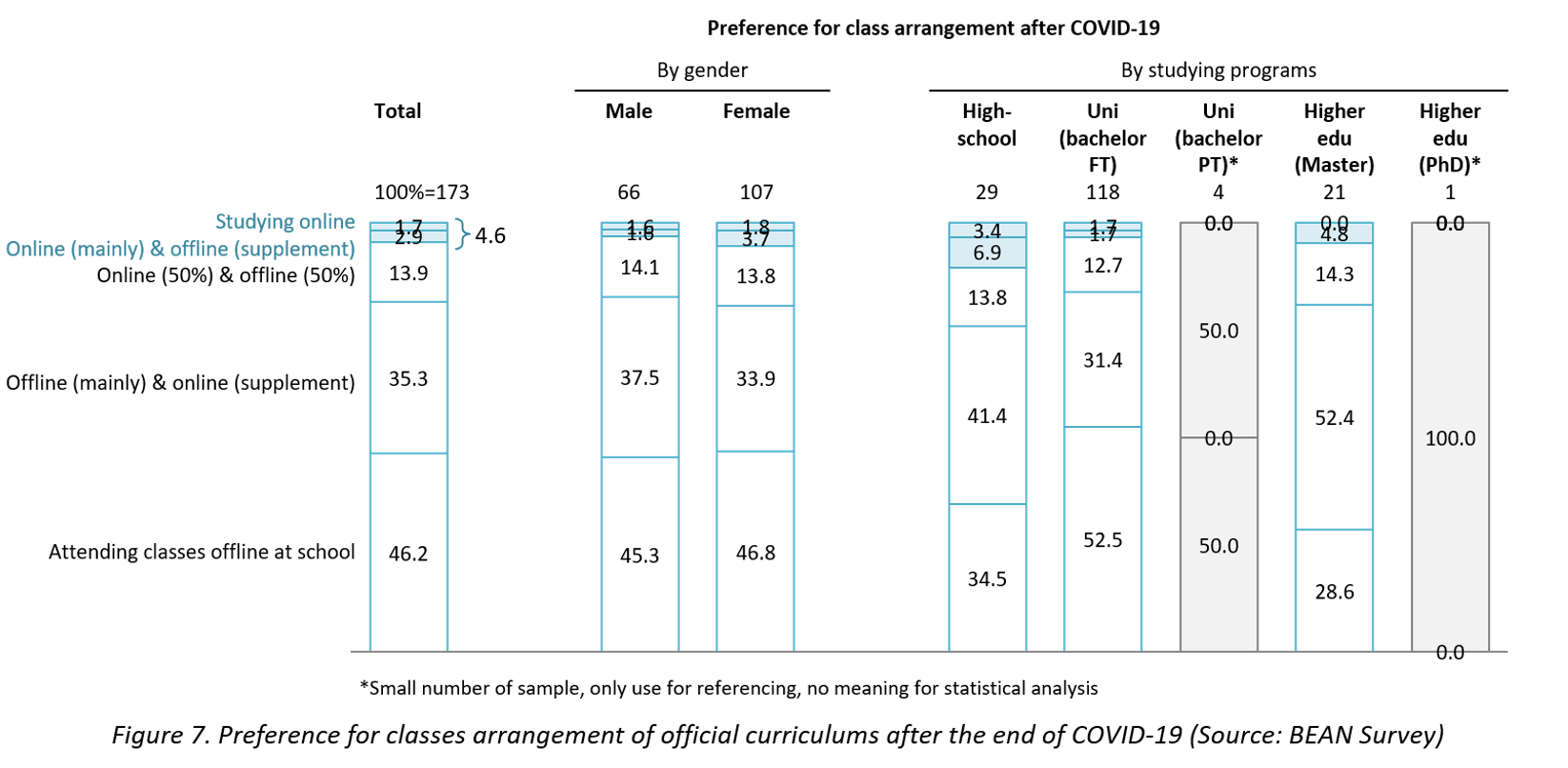
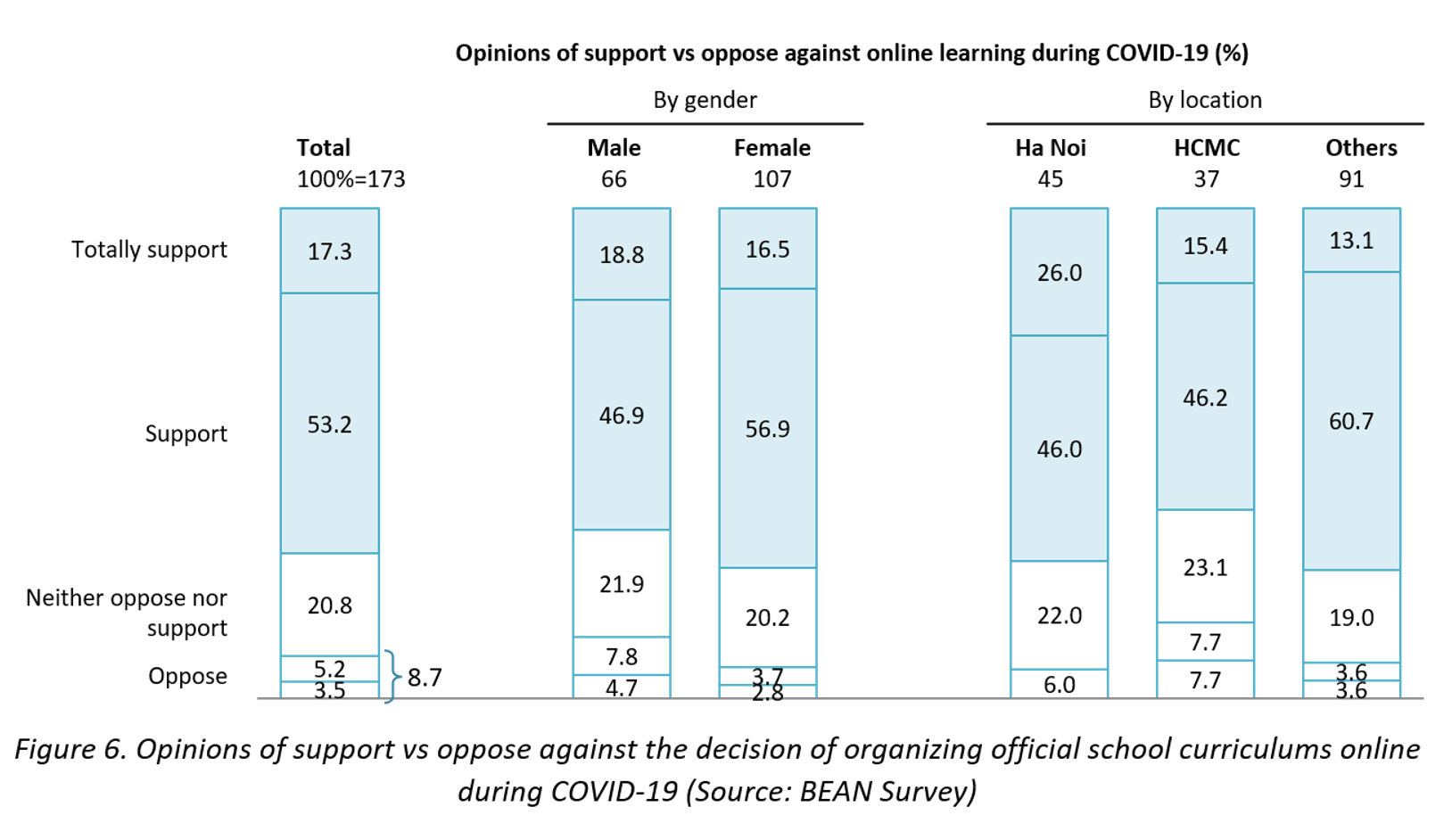 However, when being asked to compare the effectiveness of online learning and attending offline classes at school, offline option won the preference. 67.6% vote for offline classes as being more effective. 46.2% of surveyed respondents desire to study on campus (without online classes) after COVID-19 is under control, and 35.3% prefer to have a blended-learning option of attending classes at school (mainly) and online classes (supplementary) combined. Only 4.6% give higher preference for online studying.