

 English
  日本語
日本語  Tiếng Việt
  简体中文
简体中文  한국어
한국어 This article reviews Hanoi Metro’s current operating status, major projects under construction, key challenges and implications for urban development
04Aug2026
Latest News & Report / Vietnam Briefing
Comments: No Comments.
Hanoi’s metro system is moving from early operation to large-scale network development. After the opening of Line 2A and the elevated section of Line 3, the city is now preparing a much broader urban railway program, including new lines linked to the airport, Hoa Lac, Ocean Park and future growth centers. This article reviews Hanoi Metro’s current operating status, major projects under construction, key challenges and implications for urban development, mobility and Japanese businesses.
Current development progress
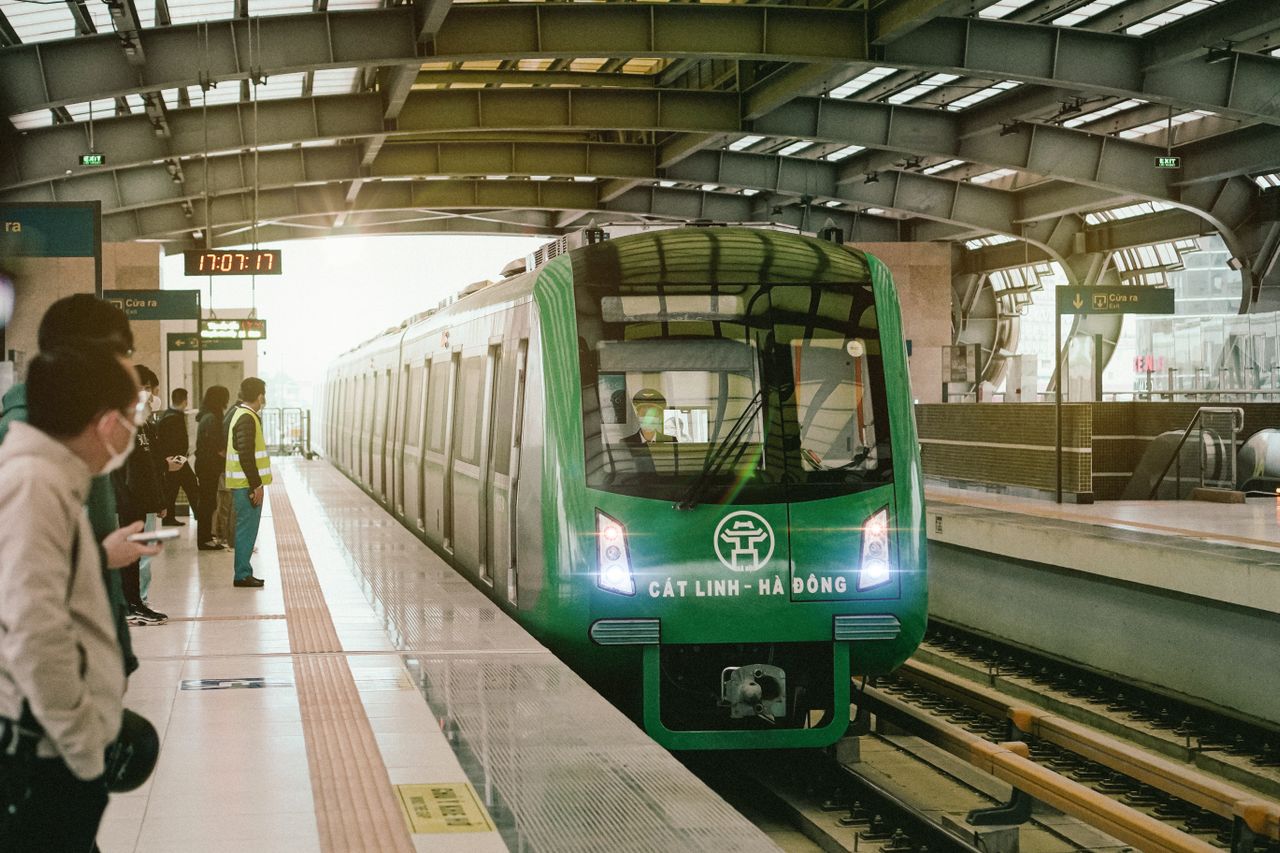
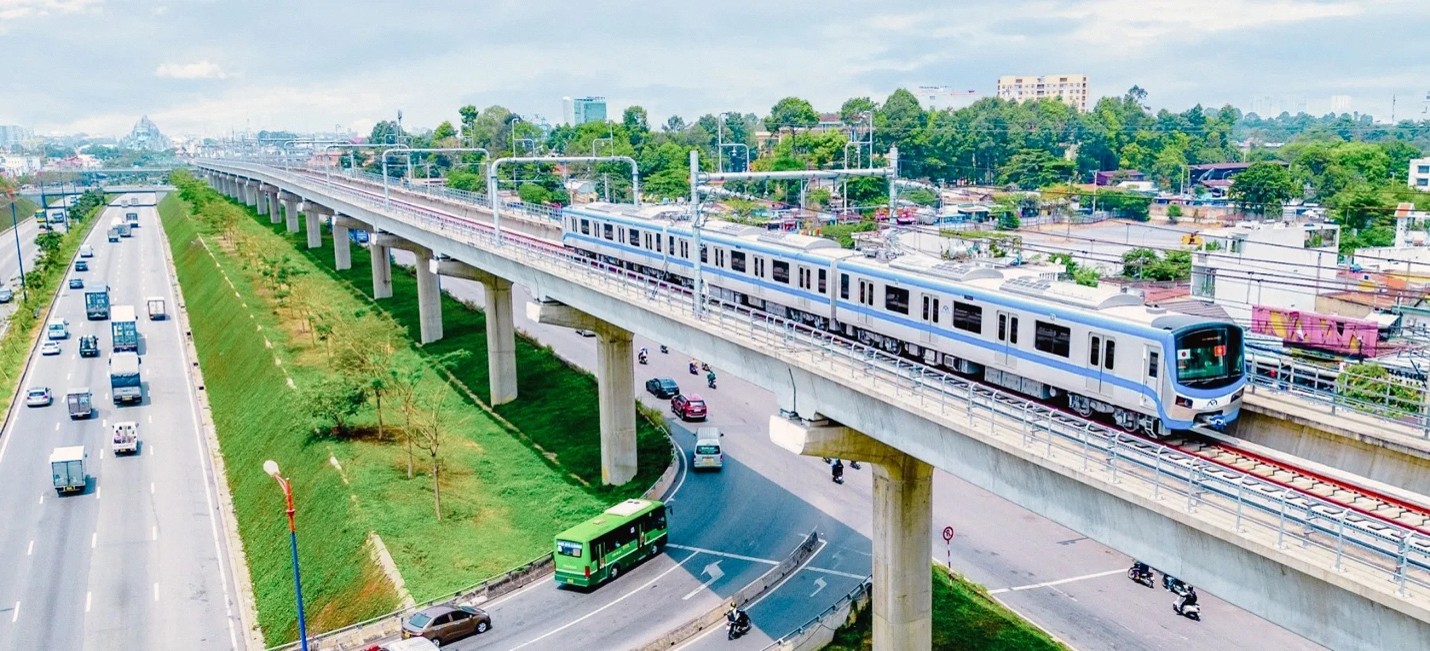
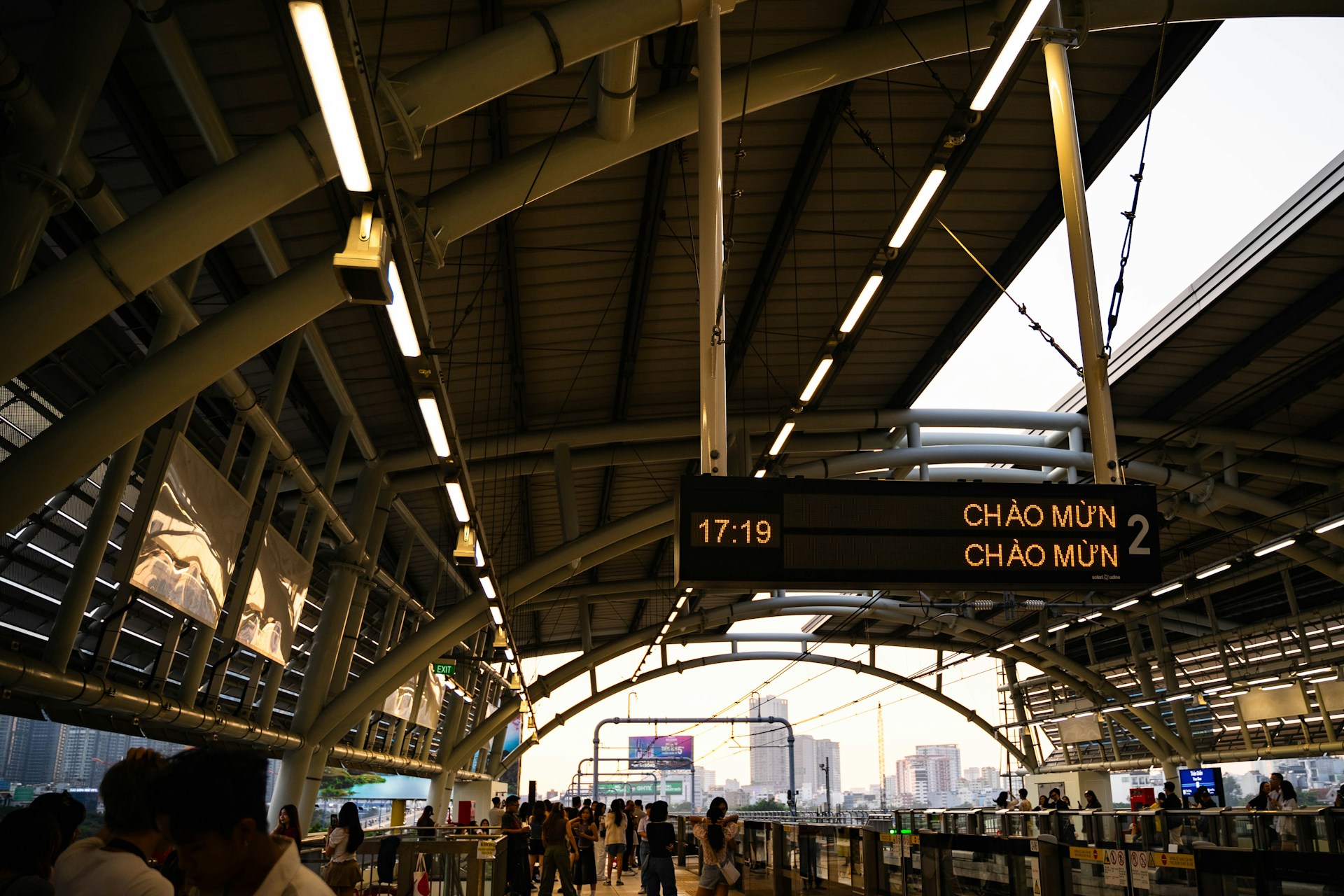
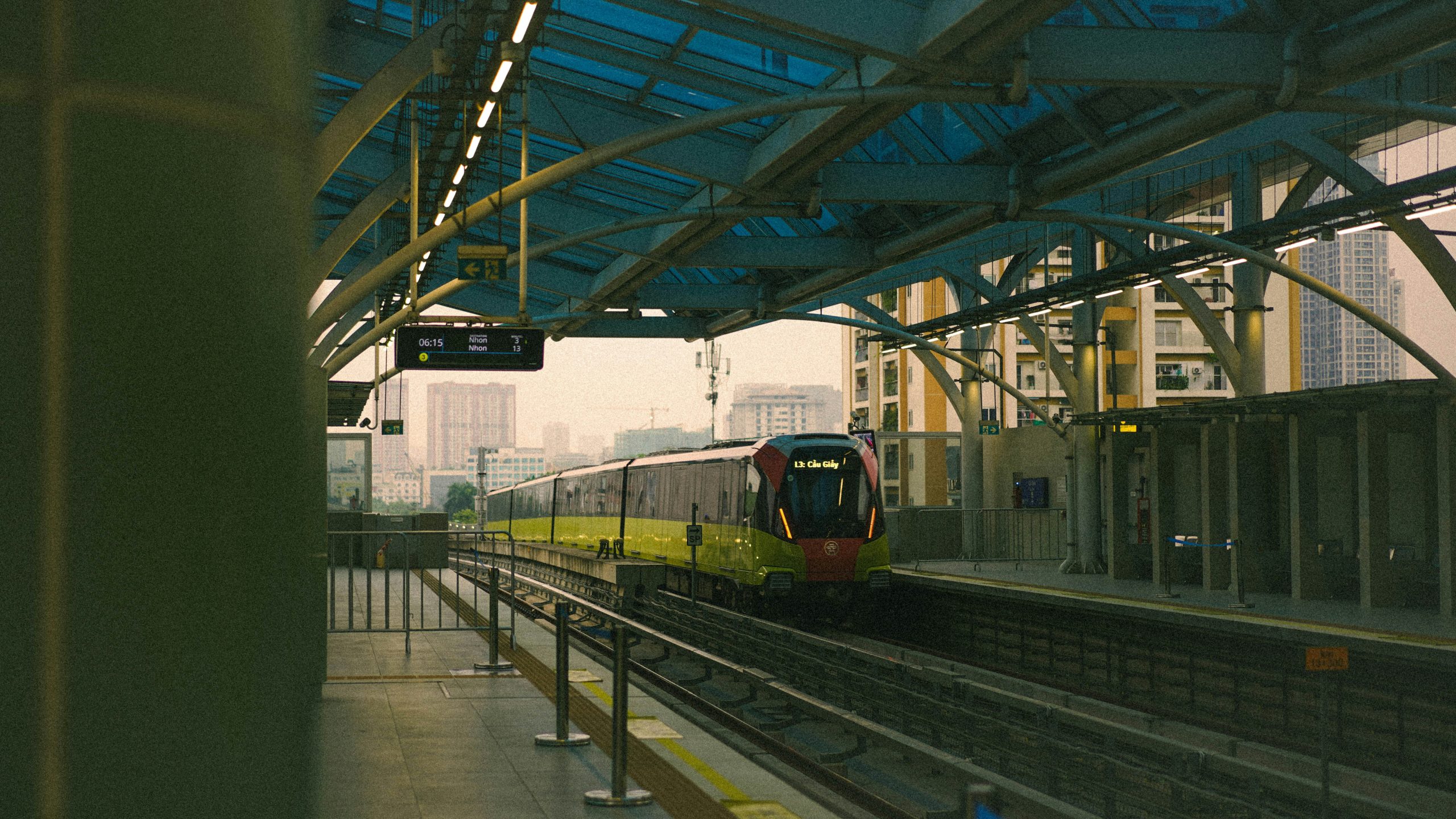
As of mid-2026, Hanoi’s metro system is still in an early operating stage. The city has only 21.6 km of metro in commercial operation, consisting of Line 2A (Cat Linh- Ha Dong) and the elevated section of Line 3 (Nhon-Cau Giay). These lines mainly cover selected western and southwestern corridors, but they have already formed Hanoi’s first urban railway operating base, with more than 493,000 train trips and over 62.2 million passenger journeys by 30 April 2026; in the first four months of 2026 alone, the system carried nearly 6.6 million passengers.
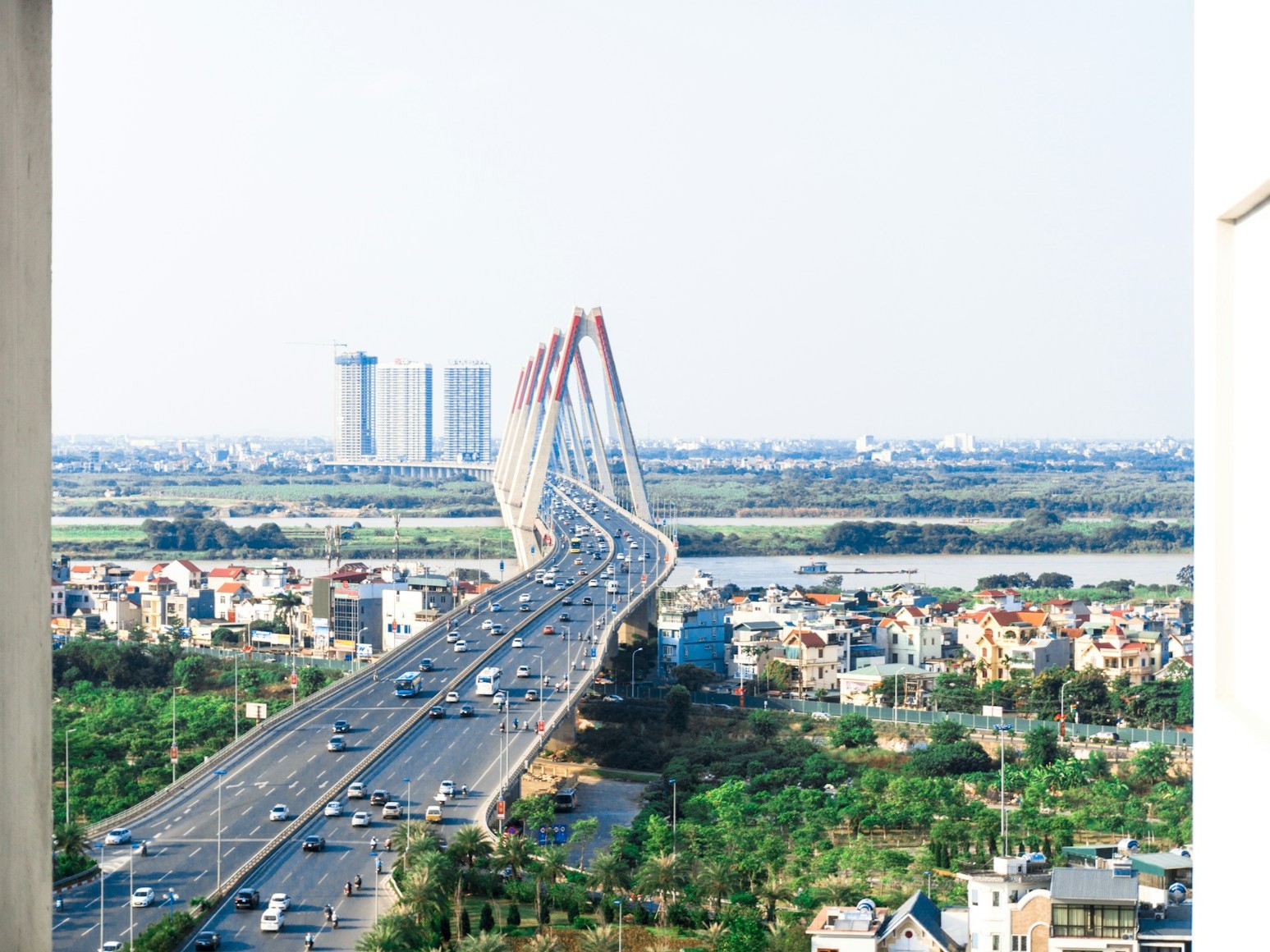
Line 2A (Cat Linh- Ha Dong)
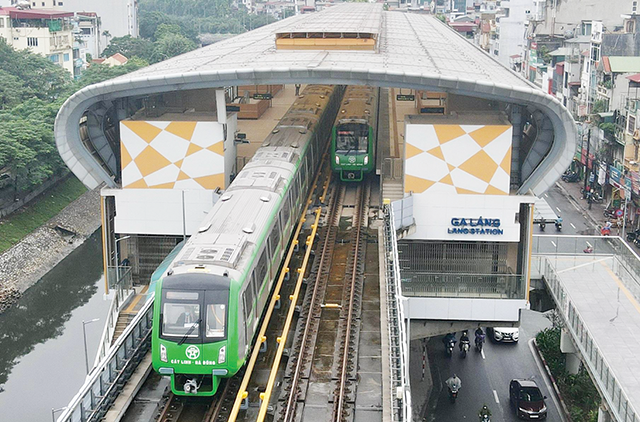
Source: Vneconomy
The pipeline is now moving on three levels: completion of the remaining Line 3 underground section, construction of Lines 2 and 5, and the five-line 2026-2030 expansion program. If implemented as announced, Hanoi would move from a limited two-section network to a multi-corridor metro system by around 2030, connecting the city center with Hanoi Railway Station, Noi Bai International Airport, Ngoc Hoi, Hoa Lac, Dong Anh, Gia Lam, Thu Lam/Co Loa and other growth areas. Official ridership forecasts for the full 2030 network have not been consistently disclosed, so the table below focuses on confirmed ridership, announced coverage and expected service roles.
| Phase | Lines / projects | Scale | Coverage and service role |
| Operating | – Line 2A: Cat Linh- Ha Dong (since 2021)
– Line 3: Nhon- Cau Giay elevated section (since 2024) |
21.6 km total | Selected western/southwestern corridors. The two lines had carried over 62.2 million passengers by 30 Apr 2026 and nearly 6.6 million in Jan-Apr 2026[1]. |
| Under construction | – Line 3 underground to Hanoi Railway Station (target 2027)
– Line 2 Nam Thang Long-Tran Hung Dao (target 2029); – Line 5 Van Cao-Ngoc Khanh-Lang-Hoa Lac (target 2030) |
Approx. 54-55 km additional core pipeline | Extends the network into the central railway hub, strengthens the northern-inner city corridor, and opens the western backbone toward Hoa Lac Hi-Tech Park, universities and new urban areas. |
| Planned/ newly launched | Five-line 2026-2030 expansion program: Lines 1, 2, 8, 10 and 14 (launched on 22 Jun 2026, completion target by 2030) | Approx. 303.5 km; preliminary investment of VND 1.315 quadrillion | Expands coverage toward Noi Bai, Ngoc Hoi, Hoa Lac, Dong Anh, Gia Lam, Thu Lam/Co Loa and key north-south/east-west growth corridors; intended to connect with ongoing Lines 3 and 5. |
B&Company’s synthesis
Why is Hanoi accelerating now after years of delay?
This acceleration is driven by the need to close a significant gap between the existing network and the city’s long-term transport targets. As of early 2026, Hanoi had only around 21 km of operational metro lines after nearly 17 years of development[2]. However, under the city’s long-term urban rail strategy, the network is expected to expand to approximately 410.8 km by 2035 and 616.9 km by 2045, supporting public transport’s share of passenger travel to 50–55% by 2035 and 65–70% thereafter[3]. More recently, Hanoi has updated its development vision and further expanded the planned urban railway network to approximately 979 km as part of a 1,200-km multi-level rail system[4]. Therefore, to achieve these targets, the government requires a substantially faster pace of project delivery than in previous years.
Metro and Transit-Oriented Development
Hanoi’s new rail strategy is closely linked to Transit-Oriented Development, or TOD. In simple terms, TOD means concentrating housing, offices, retail, services and public facilities around mass transit stations so that people can live and work with less dependence on private vehicles.
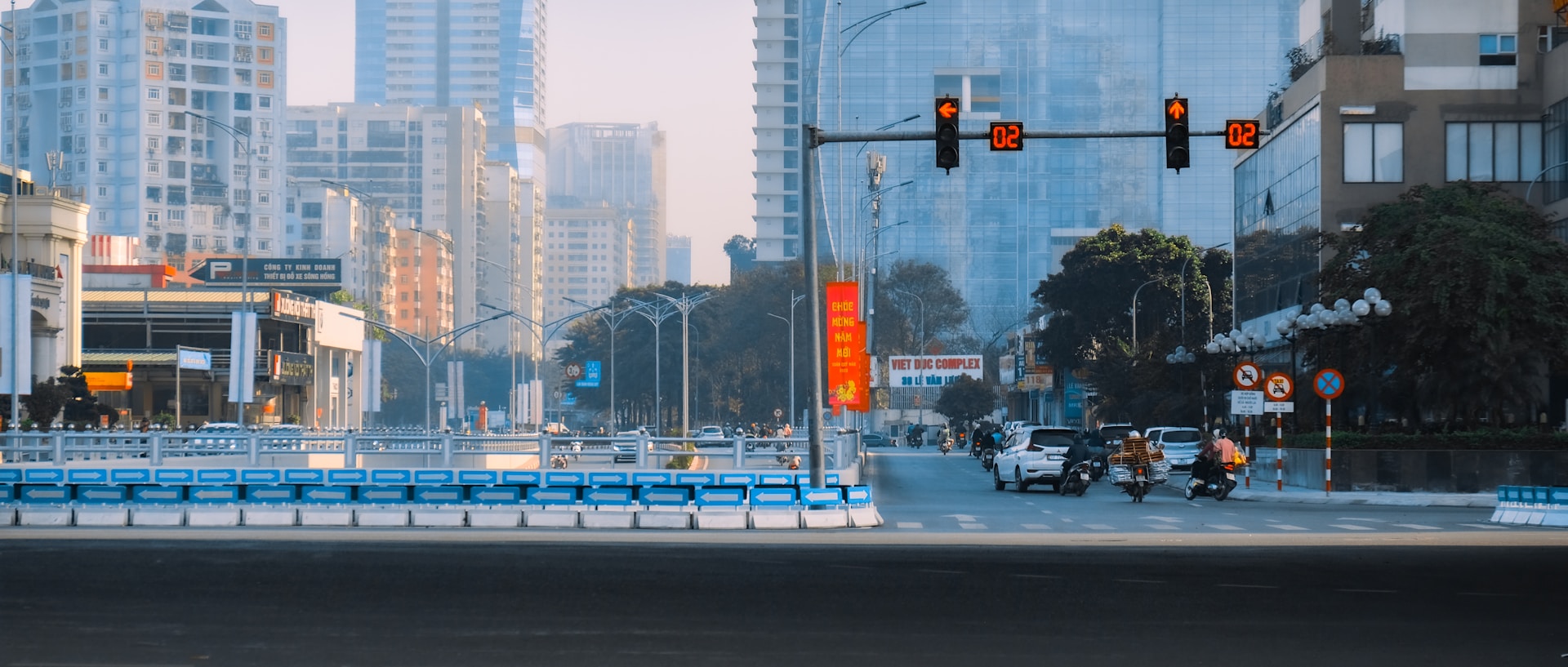
Hanoi’s official portal states that urban railway is now seen as the strategic backbone for a modern public transport system and an essential tool for reorganizing urban development space. The city’s master plan aims to develop a multi-polar, multi-center model, with new growth hubs connected by modern infrastructure.
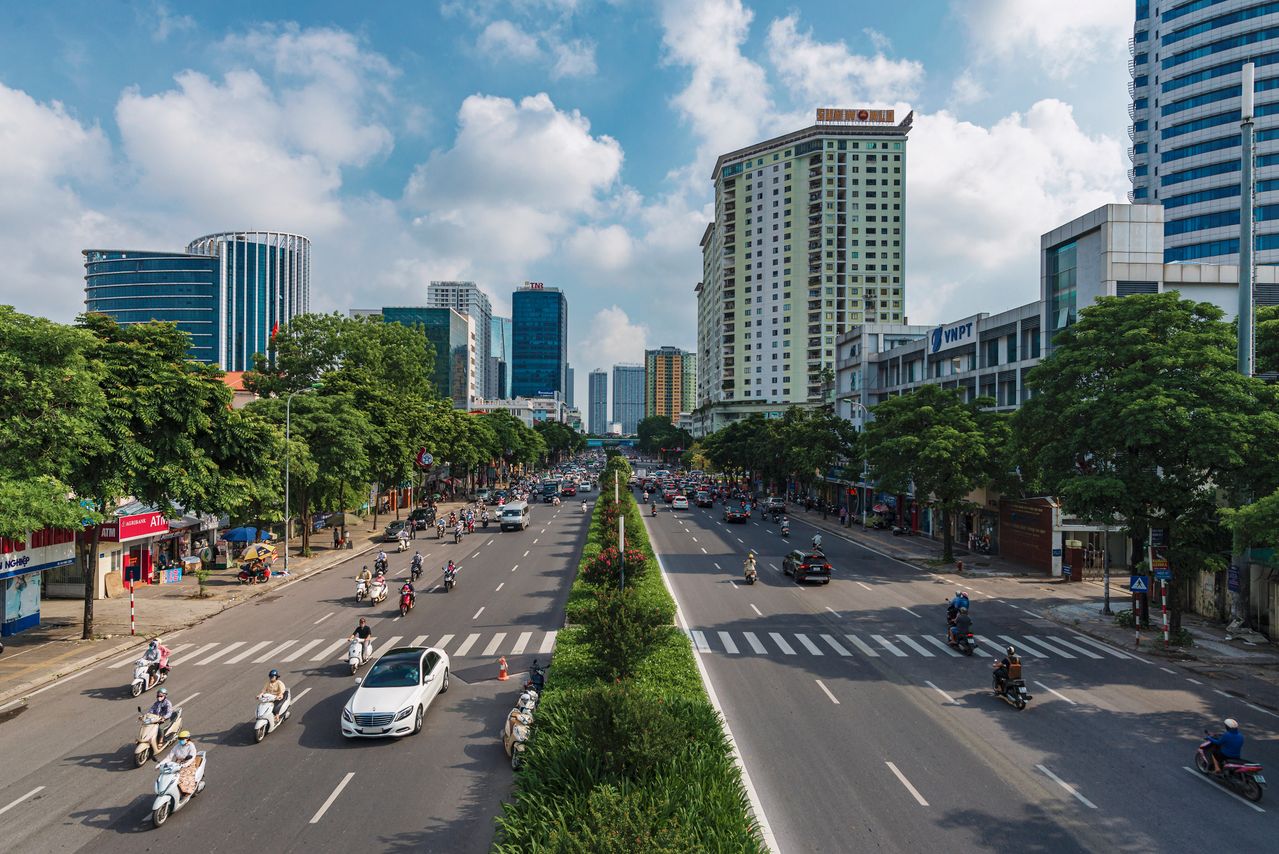
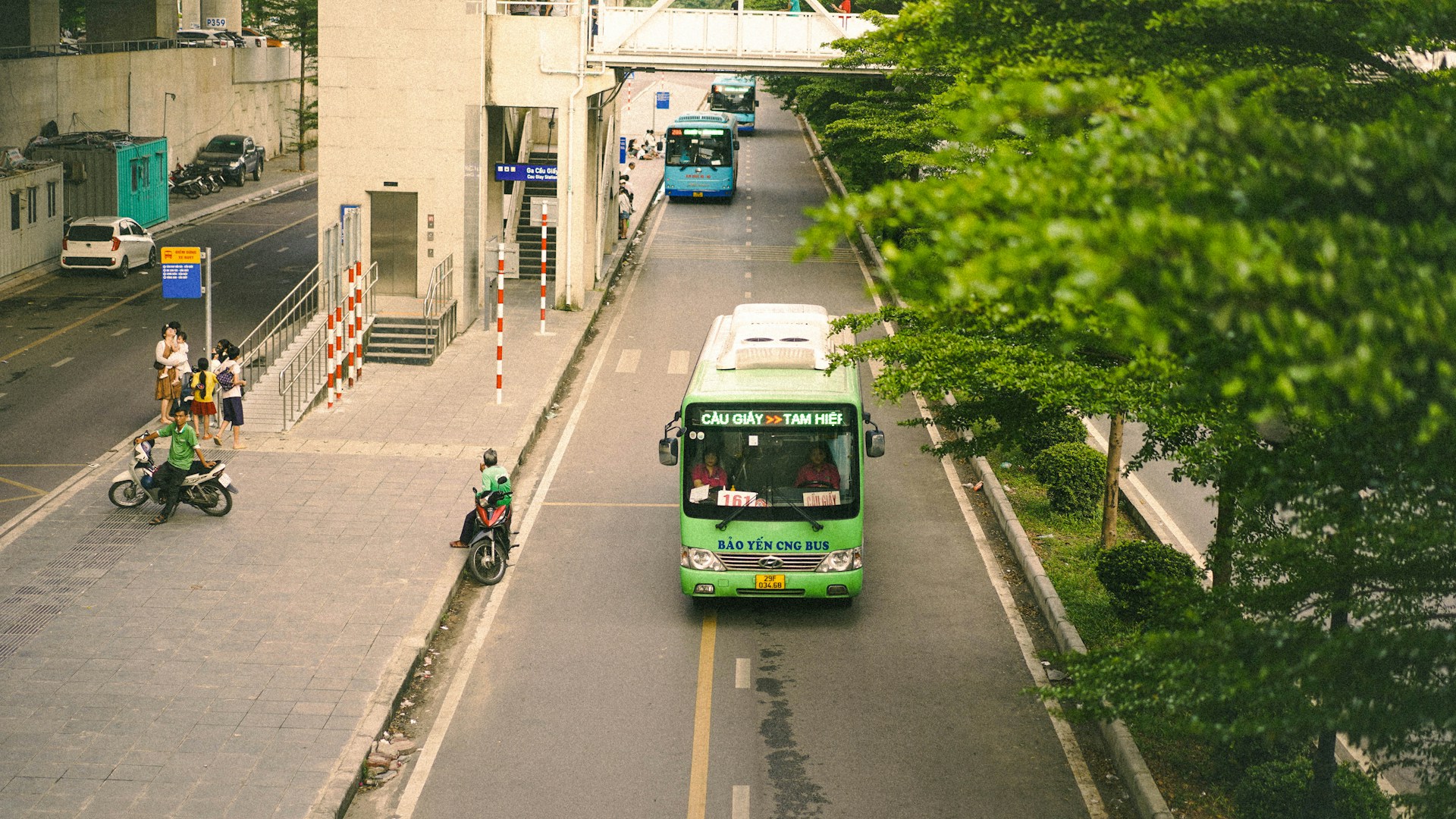
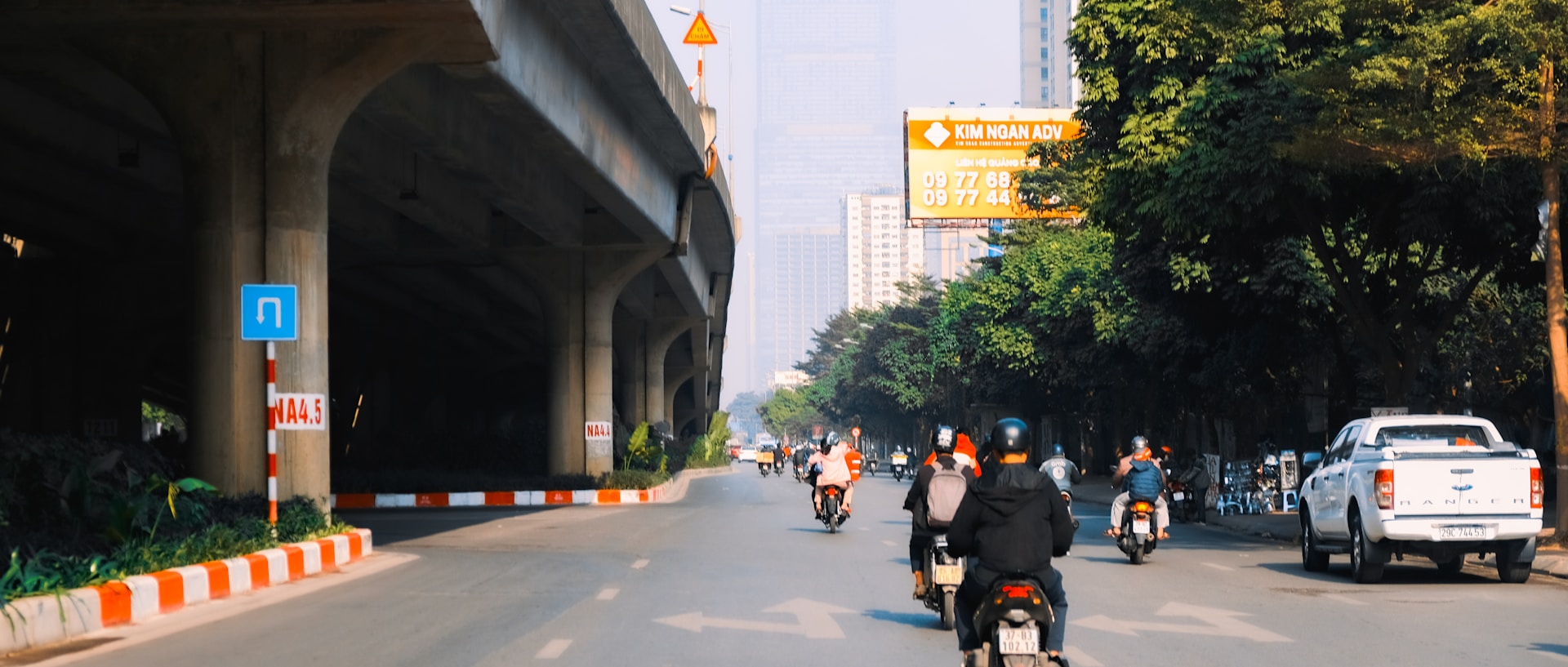
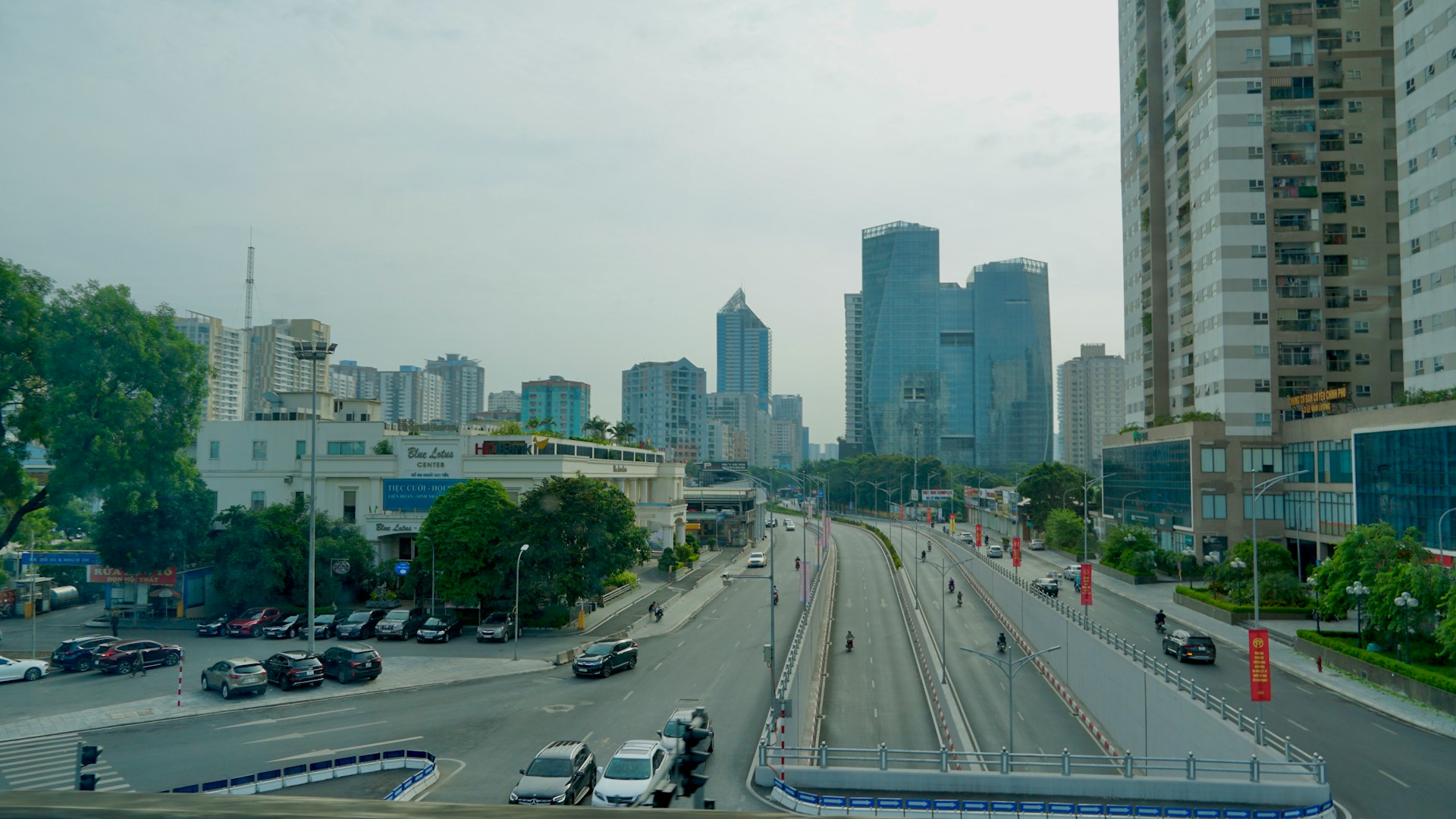
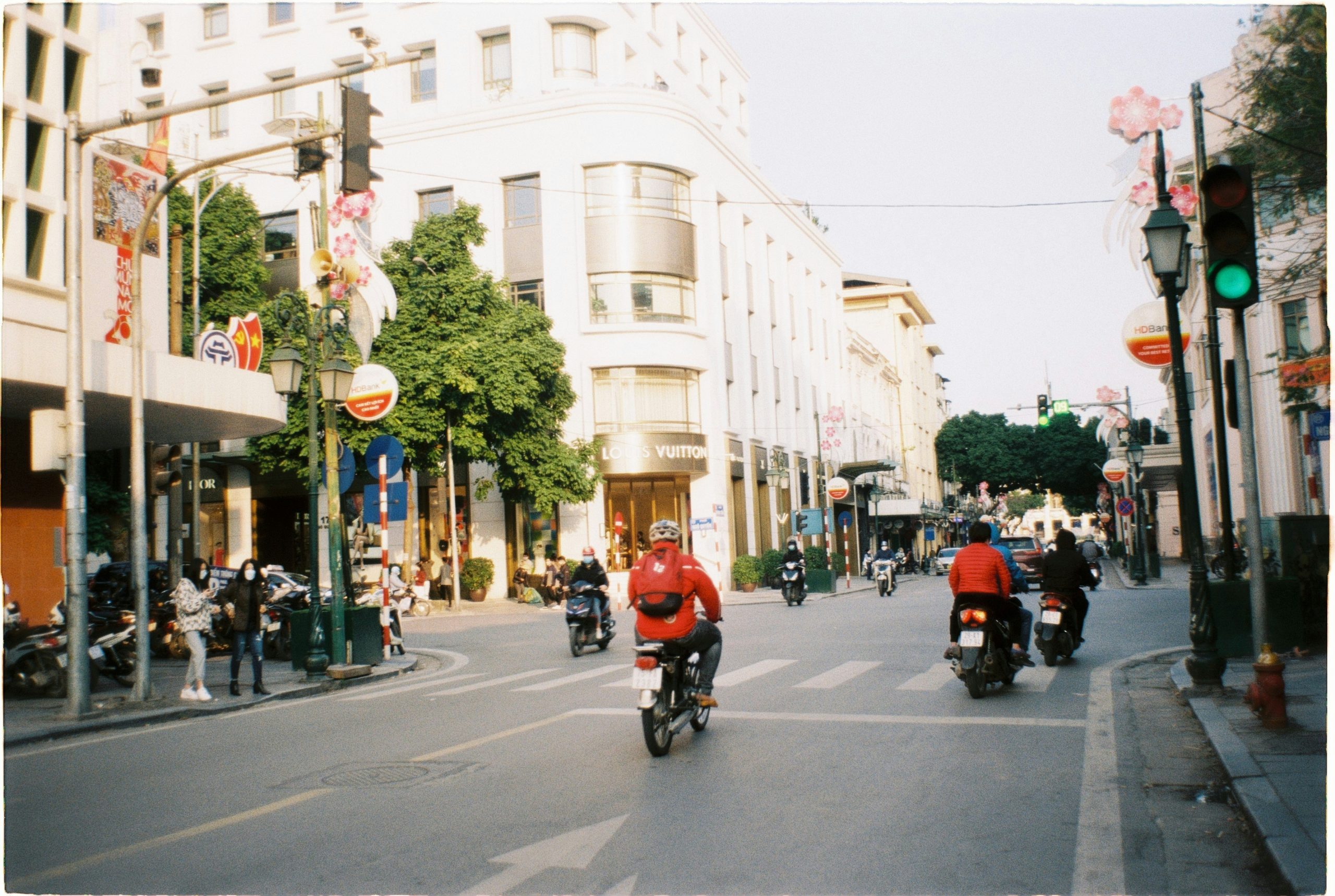
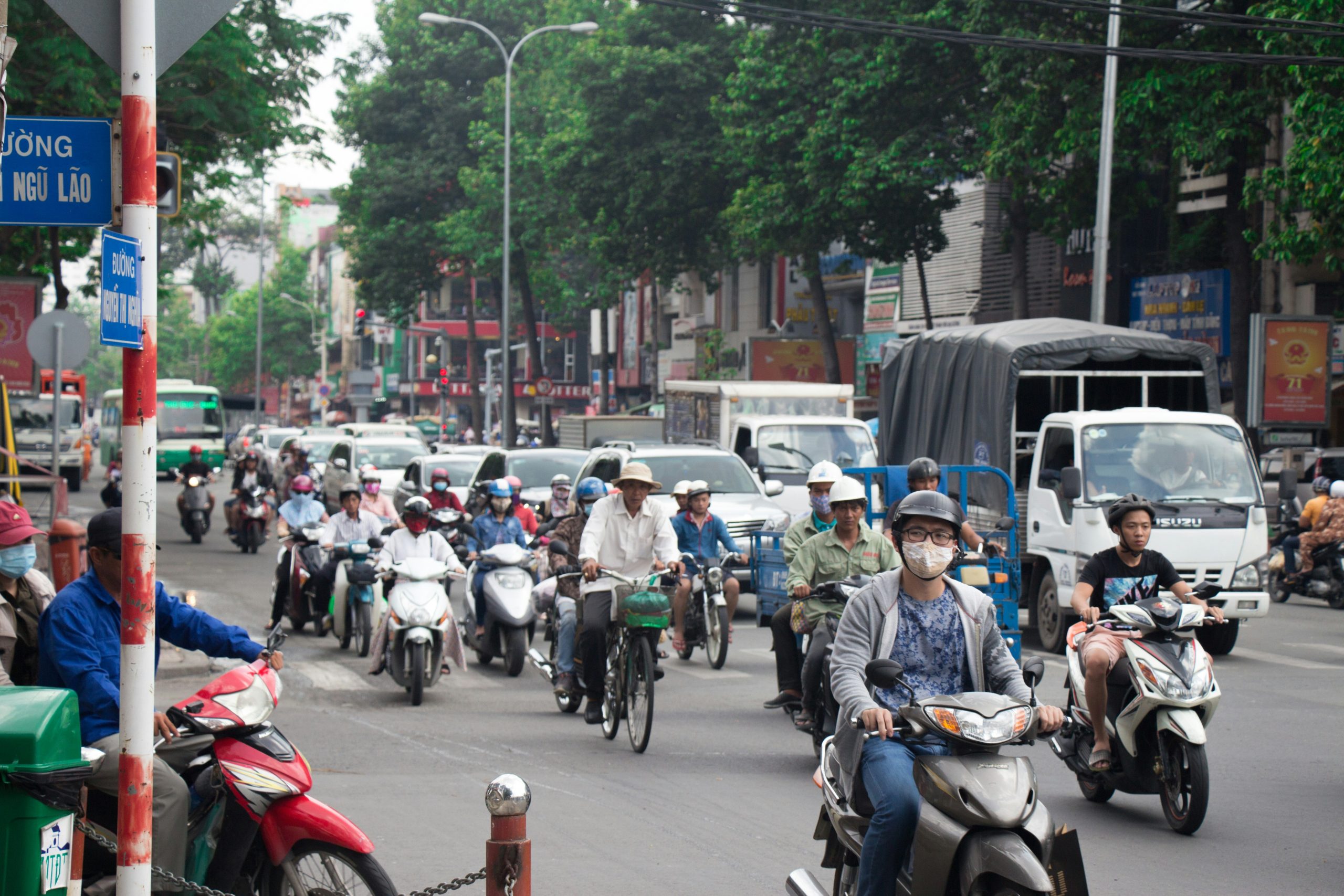
Hanoi in the rush hour
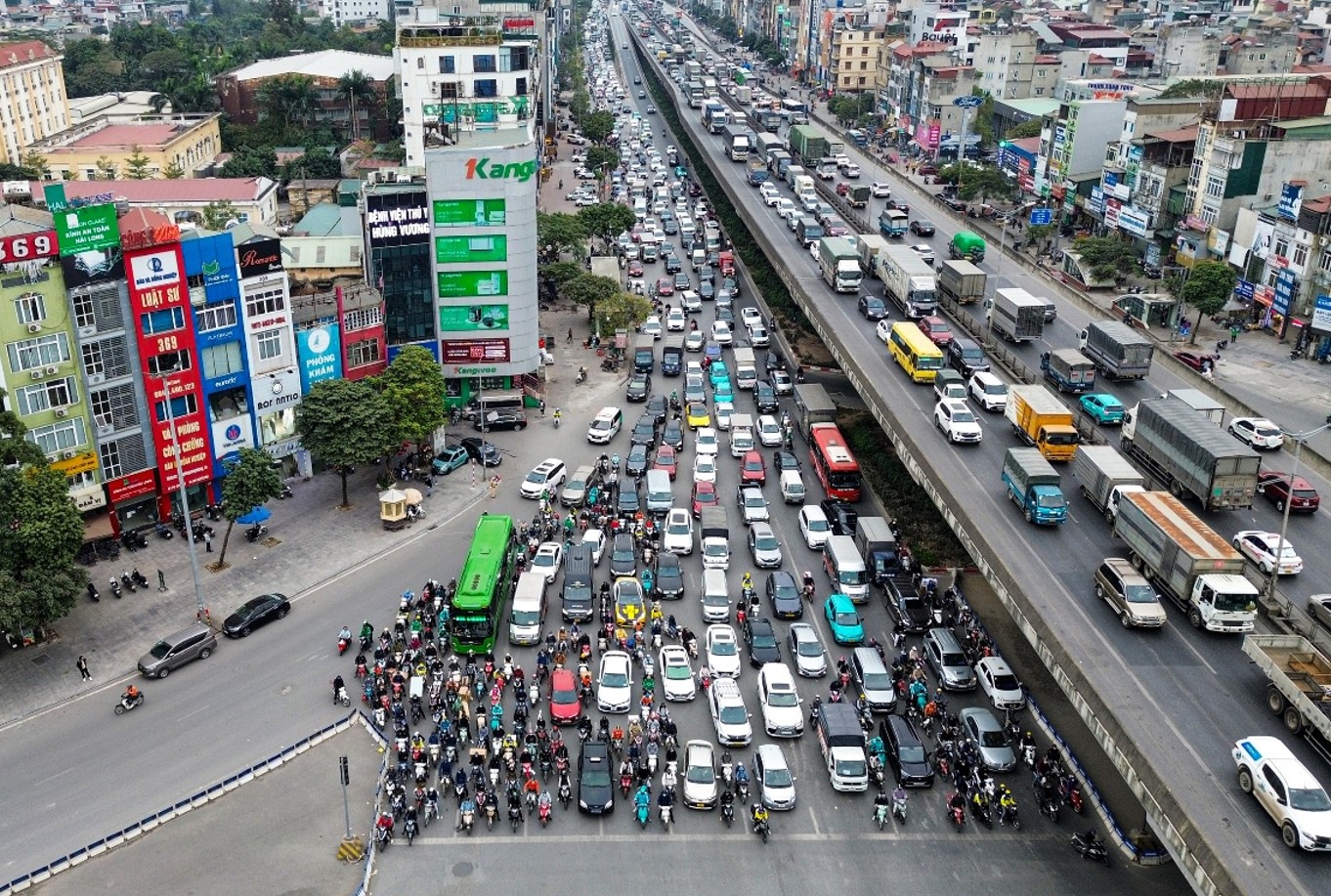
Source: thanhnien
This is important for investors. Metro lines can change the attractiveness of districts, retail sites, residential areas and office locations. In the short term, construction may create disruption. In the long term, station areas may become new commercial nodes. This is already visible in other Asian cities, where rail stations often support shopping centers, residential projects, offices and mixed-use development.
For Hanoi, the TOD model is especially relevant because the city is expanding beyond its traditional core. New growth centers such as Hoa Lac, Dong Anh, Gia Lam and Ocean Park will need stronger public transport links if they are to become functional urban clusters rather than car- and motorbike-dependent suburbs.
Implications for mobility and business
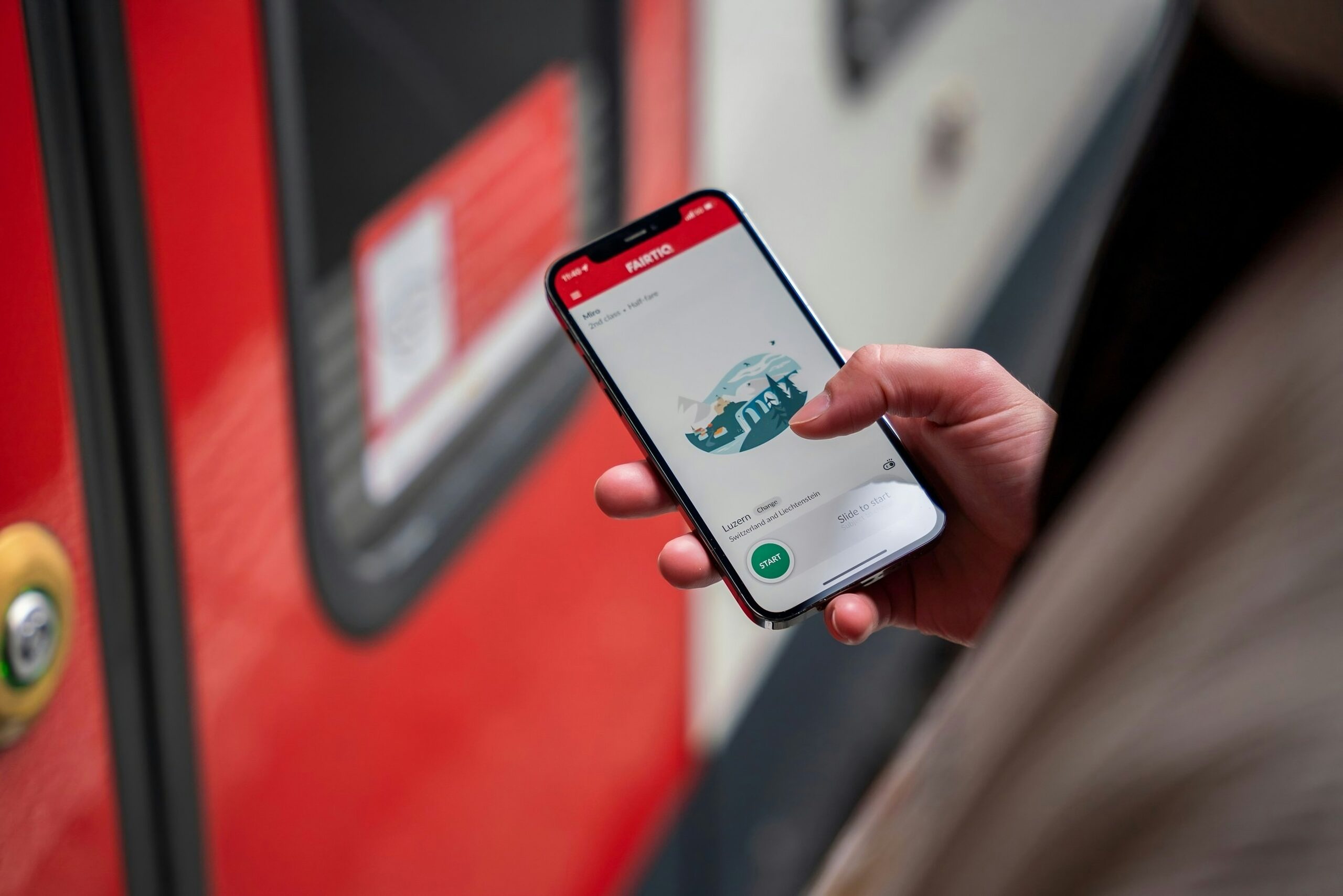
The metro will not immediately replace motorbikes in Hanoi. Motorbikes remain flexible, affordable and deeply integrated into daily life. However, Metro can gradually change mobility behavior if supported by convenient feeder buses, park-and-ride facilities, pedestrian access, digital ticketing and last-mile transport.
For businesses, the implications are broader. Retailers and food and beverage operators should monitor station-area development because foot traffic patterns may shift over time. Real estate developers will need to evaluate land value not only by road frontage, but also by walking distance to future stations. Logistics and service companies may need to consider how new rail corridors affect access to labor, customers and urban centers.
For Japanese companies, Hanoi Metro has several angles of interest. Japan has long been involved in Vietnam’s urban rail development, including the Nam Thang Long–Tran Hung Dao section of Line 2, which uses Japan International Cooperation Agency official development assistance and Hanoi counterpart funding. This project has nearly 11 kilometers of route length, including about 9 kilometers underground and 10 stations.
Tokyo Metro also established Vietnam Tokyo Metro to provide consulting services on operational techniques and human resource development for urban rail systems. This shows that Japanese involvement is not limited to construction financing, but can extend to operation, maintenance, training and service quality.
Future opportunities may include railway systems, signaling, rolling stock components, station equipment, safety systems, maintenance services, passenger information systems, digital ticketing, station retail and TOD-related advisory. However, companies should also consider procurement models, local partner requirements, public-private partnership structure and the role of large domestic groups in new projects.
Remaining challenges
Hanoi’s metro development faces three main challenges.
First, project execution remains difficult. Underground construction in dense urban areas creates risks related to geology, land clearance, utilities, heritage protection and contract disputes. Line 3’s long delay is a reminder that construction timelines should be treated carefully.
Second, ridership depends on integration. A metro line does not function well if passengers cannot reach stations conveniently. Feeder buses, walking routes, parking, ticket integration and real-time information are necessary to convert occasional users into daily commuters.
Third, the financial model is still evolving. Metro systems usually require large capital investment and operating support, especially in early years. Hanoi’s 2025 ticket revenue improvement is positive, but long-term financial sustainability will depend on ridership growth, operating efficiency, land value capture and TOD development.
B&Company support
Hanoi Metro is entering a new phase. The city already has operating lines and rising ridership, but the larger business impact will come from the next stage: network expansion, station-area development and transit-oriented urban growth.
B&Company supports Japanese companies in Vietnam through market research, policy monitoring, infrastructure and real estate analysis, partner search and business matching. For metro-related projects, B&Company can support assessment of station-area potential, TOD opportunities, supplier and contractor mapping, public transport user behavior, retail site analysis and local partner identification.
For companies considering Hanoi’s future market, the metro should not be viewed only as a transport project. It is becoming part of the city’s long-term urban structure, and may gradually reshape where people live, work, shop and invest.
Read more
The challenges and opportunities of Metro development in Hanoi and HCMC
Analyzing How Vietnamese Commuters Use Public Transport Apps
* If you wish to quote any information from this article, please kindly cite the source along with the link to the original article to respect copyright.
| B&Company
The first Japanese company specializing in market research in Vietnam since 2008. We provide a wide range of services including industry reports, industry interviews, consumer surveys, business matching. Additionally, we have recently developed a database of over 1,000,000 companies in Vietnam, which can be used to search for partners and analyze the market. Please do not hesitate to contact us if you have any queries. info@b-company.jp + (84) 24 3978 5165 |
[1] https://english.hanoi.gov.vn/hanoi-news/hanoi-leaders-inspect-metro-operations-speed-up-underground-station-construction-2655260511125235325.htm
[2] https://baochinhphu.vn/thu-tuong-toc-do-trien-khai-duong-sat-do-thi-thoi-gian-toi-phai-gap-hang-chuc-lan-nhung-nam-qua-102260222124336475.htm
[3] https://baochinhphu.vn/tp-ha-noi-den-nam-2035-hoan-thanh-hon-410km-duong-sat-do-thi-102241230154924529.htm
[4] https://quydautuphattrien.hanoi.gov.vn/ban-tin/cong-bo-quy-hoach-tong-the-thu-do-ha-noi-tam-nhin-100-nam-va-xuc-tien-dau-tu-nam-2026-10643.html
Related article















Log in / Register
SUBSCRIBE NEWSLETTER