

 English
  日本語
日本語  Tiếng Việt
  简体中文
简体中文  한국어
한국어 2025 showed measurable progress of Hanoi in public transport, metro operations and traffic safety, creating the basis for the stronger infrastructure push.
06Jul2026
Latest News & Report / Vietnam Briefing
Comments: No Comments.
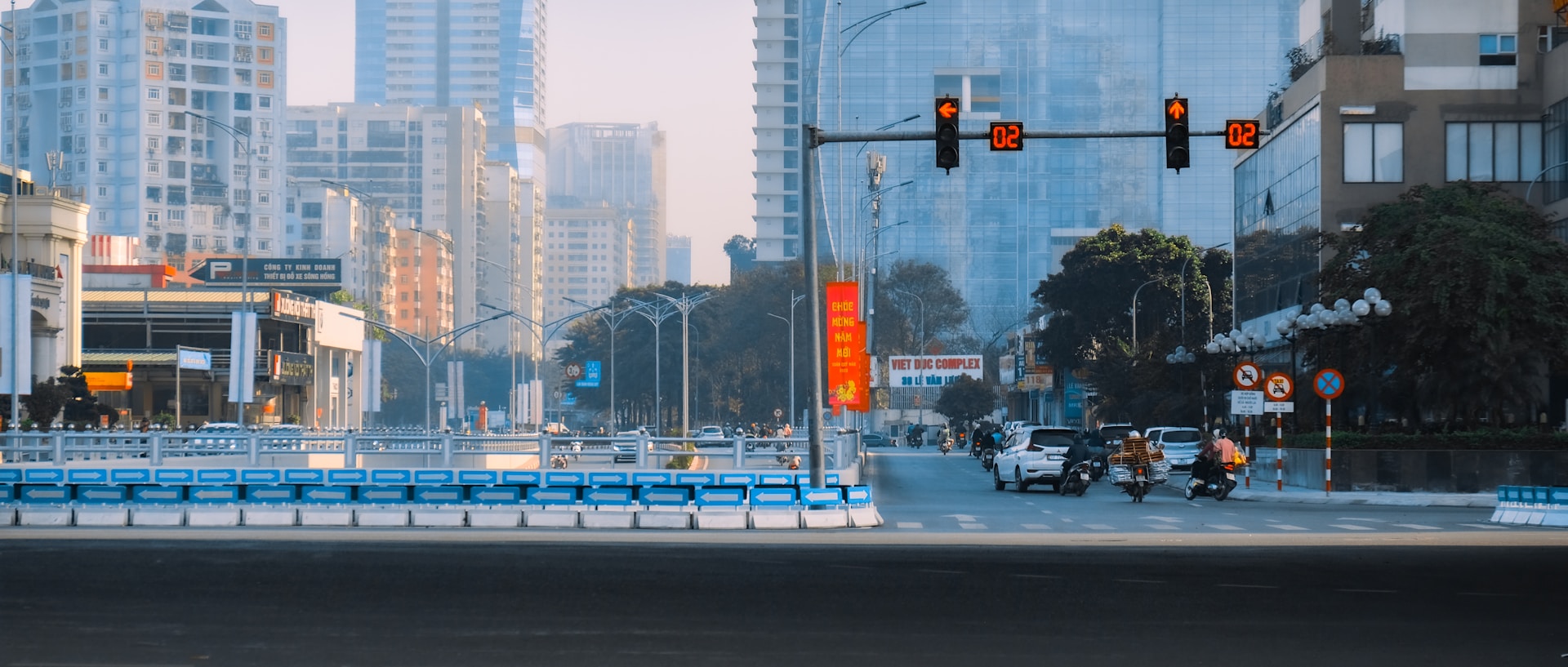
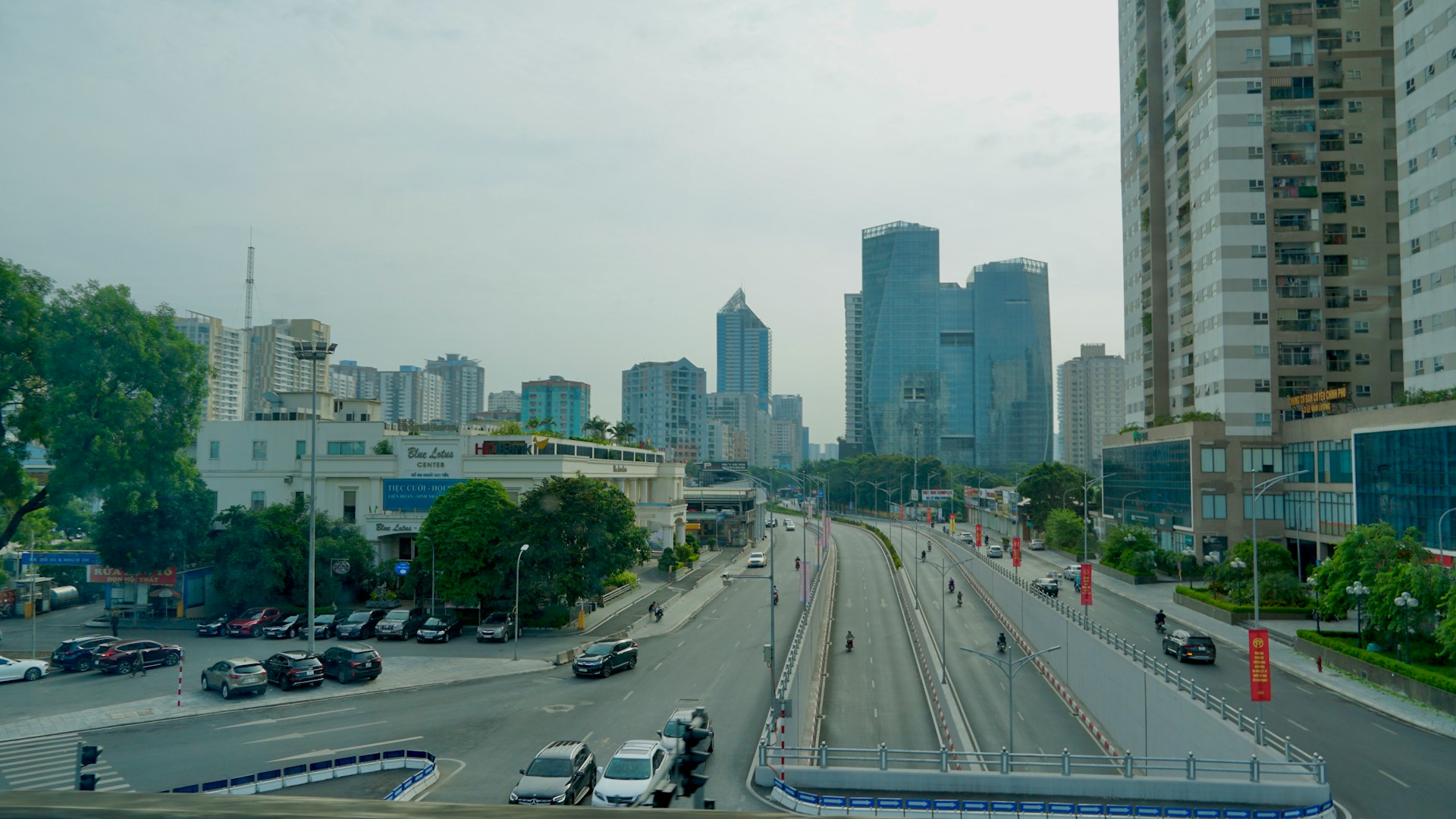
Hanoi entered 2025 with clear pressure on its transport system, as the city was managing more than 8 million vehicles while road infrastructure had not expanded fast enough to meet rising travel demand[1]. However, 2025 also showed measurable progress in public transport, metro operations and traffic safety, creating the basis for the stronger infrastructure push seen from late 2025 to 2026.
Looking back at achievements and limitations in Hanoi’s transport in 2025
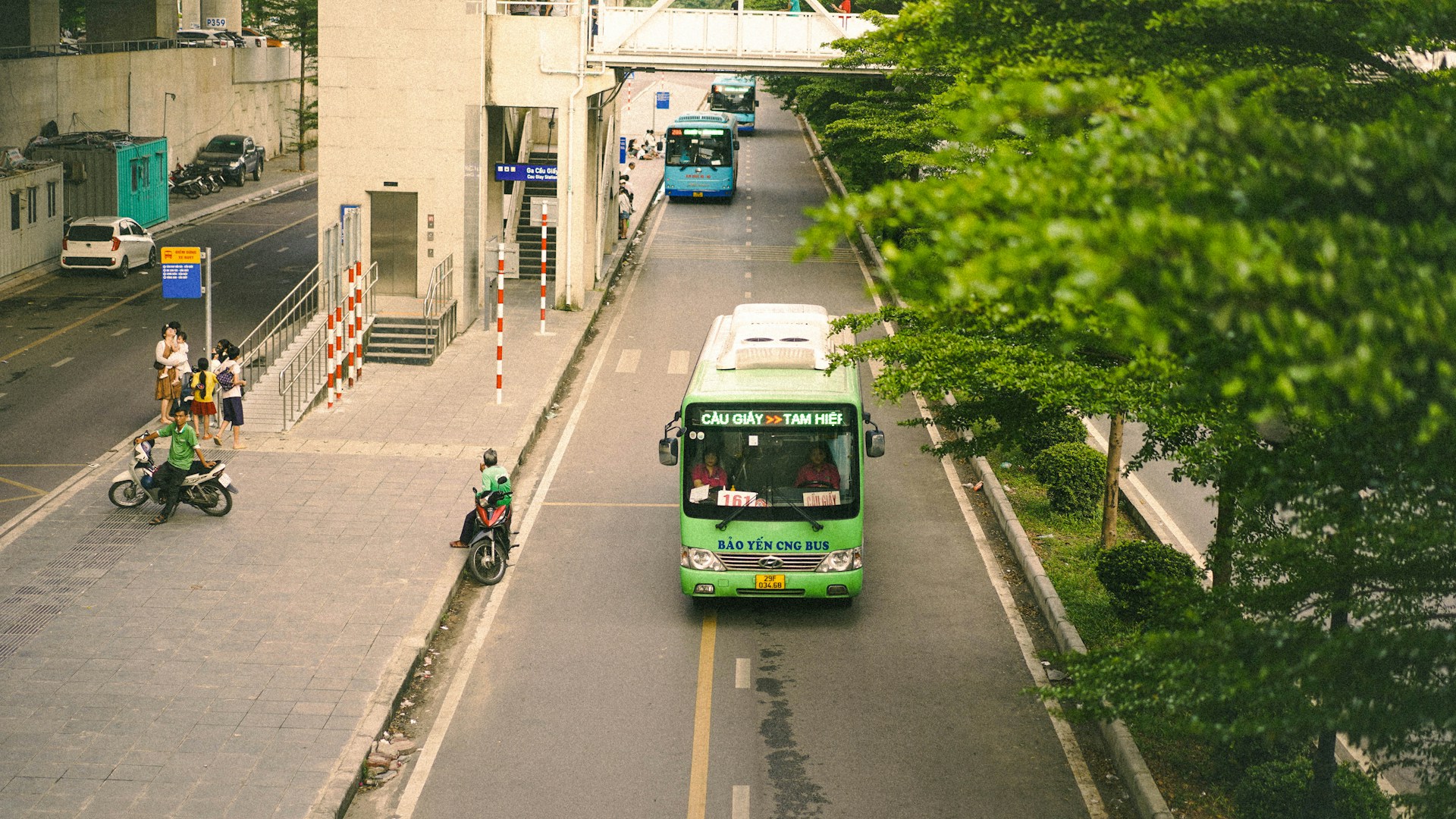
In 2025, Hanoi’s public transport recorded several positive results. Buses remained the backbone of the city’s public passenger transport, with Transerco operating more than 3.2 million trips and serving around 240 million passengers, up 2.5% from 2024. The city’s green bus transition also became more visible, as Transerco introduced 63 electric buses on four routes and installed nearly 300 charging points at eligible locations.[2]
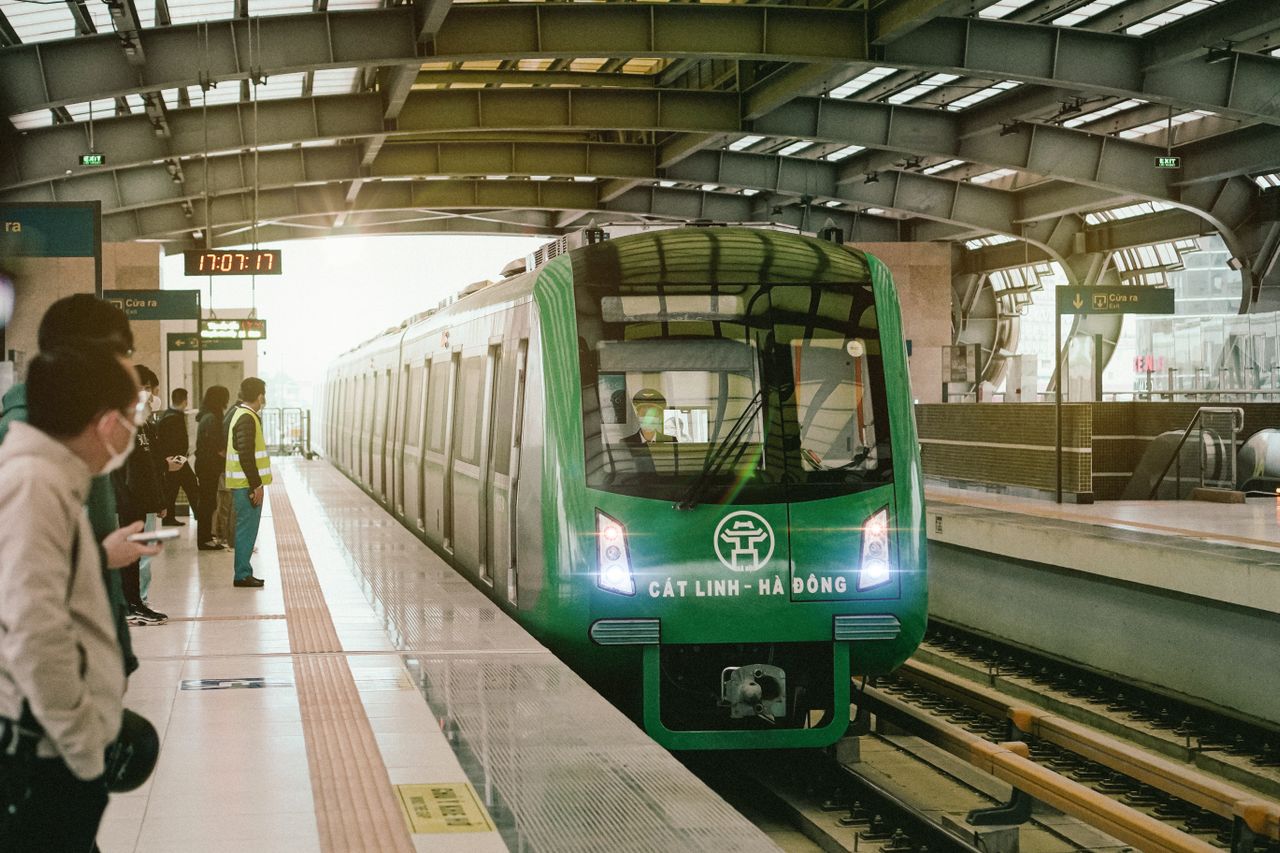
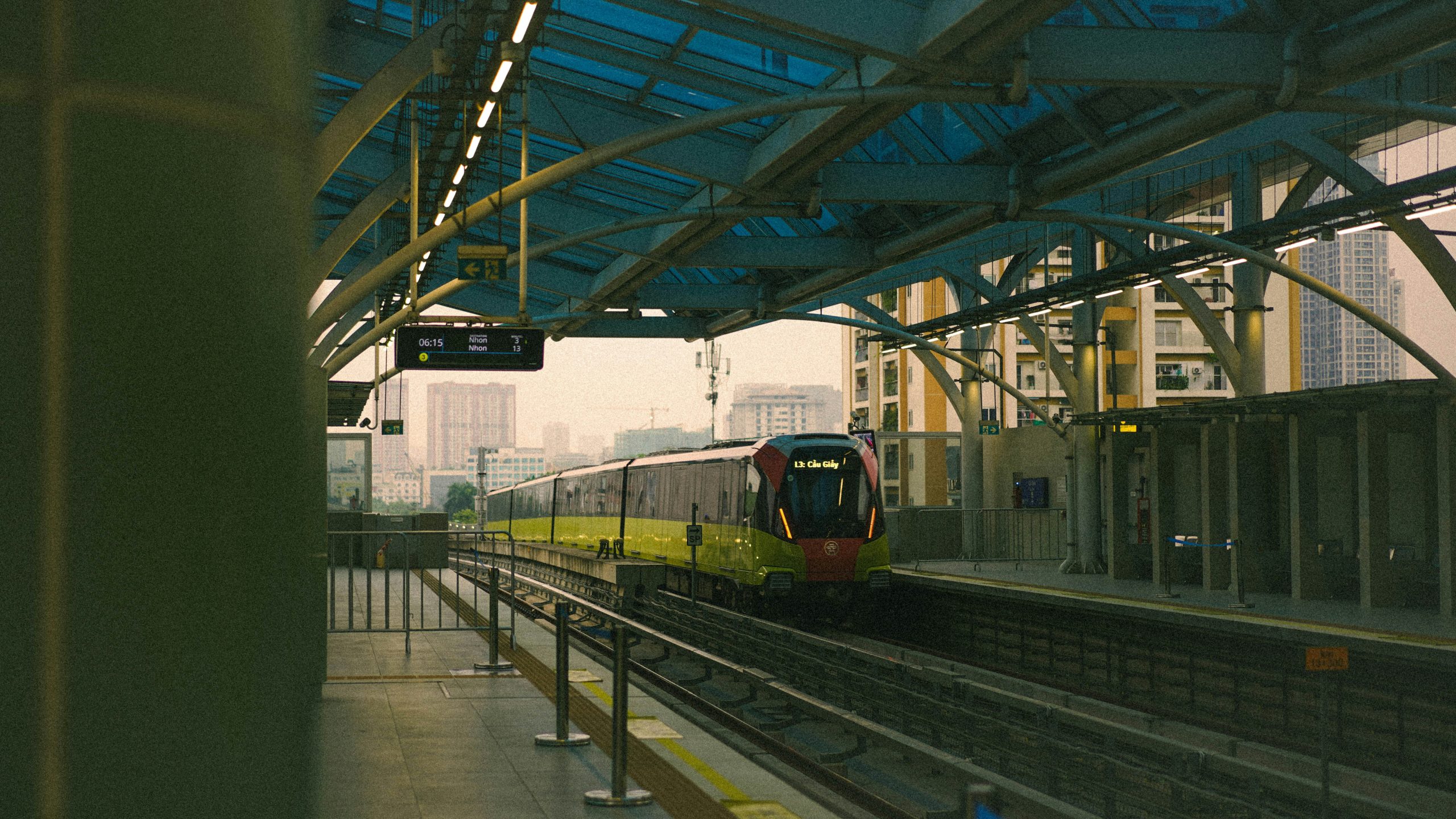
Urban rail also showed stronger performance. Hanoi Metro carried more than 20.68 million passengers in 2025, exceeding its target by 7.13%. The Cat Linh–Ha Dong line alone served over 13.68 million passengers, up 15.3% year-on-year, while total ticket revenue exceeded VND 143 billion, 29.09% above the assigned target.[3]
However, these improvements were still partial and did not fully resolve Hanoi’s structural transport bottlenecks. Many major infrastructure projects had been delayed for years due to land clearance or slow implementation, while some large projects in 2025 remained mainly at the preparation stage. For example, the Hoang Cau–Voi Phuc section of Ring Road 1, approved in 2017 and originally expected to be completed in 2020, was delayed by land clearance issues.[4] Similarly, Hanoi’s five new metro lines were still largely under procedural preparation in 2025, despite the urgent need for metro development to reduce the economic and social costs of congestion.[5]
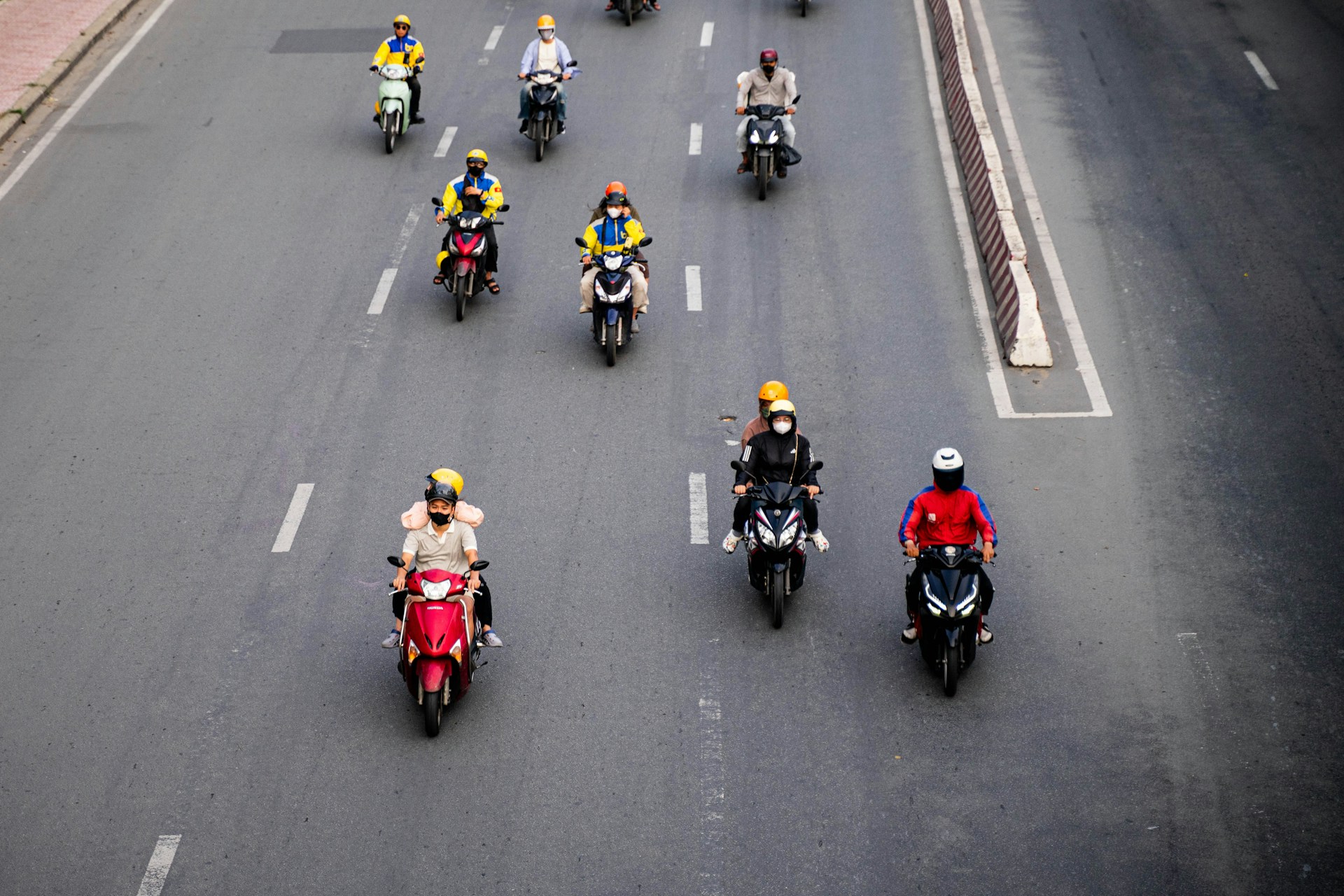
Congestion and uneven urban development also remained key challenges. At the beginning of 2025, Hanoi managed more than 8 million vehicles, including around 1.1 million cars and 6.9 million motorbikes, while road infrastructure had not kept pace with vehicle growth[6]. The city’s average congestion level reached 49.2% in 2025, up 2.8 percentage points from 2024.[7]
Moreover, unsynchronized transport infrastructure has also limited Hanoi’s ability to redistribute population growth and develop suburban areas. Hanoi’s satellite urban model was already set out in the 2011 General Construction Plan for the Capital, but satellite city development has so far shown limited results, partly because transport links between the central city and satellite areas remain insufficiently integrated[8]. As a result, development pressure continues to concentrate in the inner city, while suburban areas have not yet fully played their role in reducing urban pressure and expanding Hanoi’s development space.
Current acceleration: Major projects are moving from planning to implementation
However, entering 2026, Hanoi has started to push forward a series of major transport infrastructure projects more decisively, moving several long-planned roads, rail lines and urban connectivity projects into commencement or near-term implementation.
Table 1. Selected major transport projects in Hanoi are moving into implementation from 2026 onward
| Type | No. | Key project | Commencement date | Latest update | Main significance |
| Urban rail | 1 | Five new metro lines | 22 Jun 2026 | Hanoi simultaneously broke ground on five urban railway lines on 22 June 2026, with a total length of about 303.5 km and a preliminary investment of about VND 1,315,256 billion | Marks a shift from individual metro-line development toward a more integrated urban rail network |
| Expressway | 2 | Hanoi–Thai Nguyen–Cho Moi Expressway, CT.07 | 30 Jun 2026 | ~100 km; total investment of more than VND 21,000 billion under PPP/BOT | Strengthens Hanoi’s northern connectivity, reduces reliance on National Highway 3 and supports industrial/logistics links with the northern midland and mountainous region |
| Road | 3 | Road connecting Tu Lien Bridge with Hanoi–Thai Nguyen Expressway | 16 Jan 2026 | ~5.66 km, 60 m cross-section, total investment of nearly VND 5,000 billion | Connects the future Tu Lien Bridge with the national expressway network, supporting cross-river urban expansion |
| Inner ring road | 4 | Remaining sections of Ring Road 2.5 | 20 Mar 2026 | ~ 2.64 km, more than VND 8.4 trillion allocated for land clearance and construction of the three missing sections | Helps complete Hanoi’s inner ring-road network and reduce pressure on radial roads passing through the urban core |
| Regional connectivity | 5 | National Highway 1A spatial-axis project, from Ring Road 1 to Cau Gie interchange | 19 May 2026 | ~ 36.3 km, passes through 18 communes/wards, total investment of nearly VND 162,000 billion | Upgrades Hanoi’s southern gateway, improves regional connectivity and creates new space for logistics, services and urban redevelopment |
| Tunnels / underpasses | 6 | Tay Thang Long–Ring Road 3 underpass | Expected Aug 2026 | Total investment of more than VND 1,156 billion | Targets a major bottleneck at the northwest gateway and improves connectivity along the Tay Thang Long corridor |
B&Company’s synthesis
Hanoi is accelerating and decisively pushing forward the commencement of many key projects, including several that had been stalled or remained at the planning stage for many years. The simultaneous implementation of transport infrastructure projects, including urban railways, expressways, provincial roads, inner ring roads and underpasses, could help create a more integrated transport network. If implementation continues as planned, these projects could reduce traffic pressure in the inner city, improve connectivity between Hanoi and neighboring provinces, and create new development opportunities in suburban and gateway areas.
Groundbreaking ceremony for five urban railway lines and three rental housing projects in Hanoi
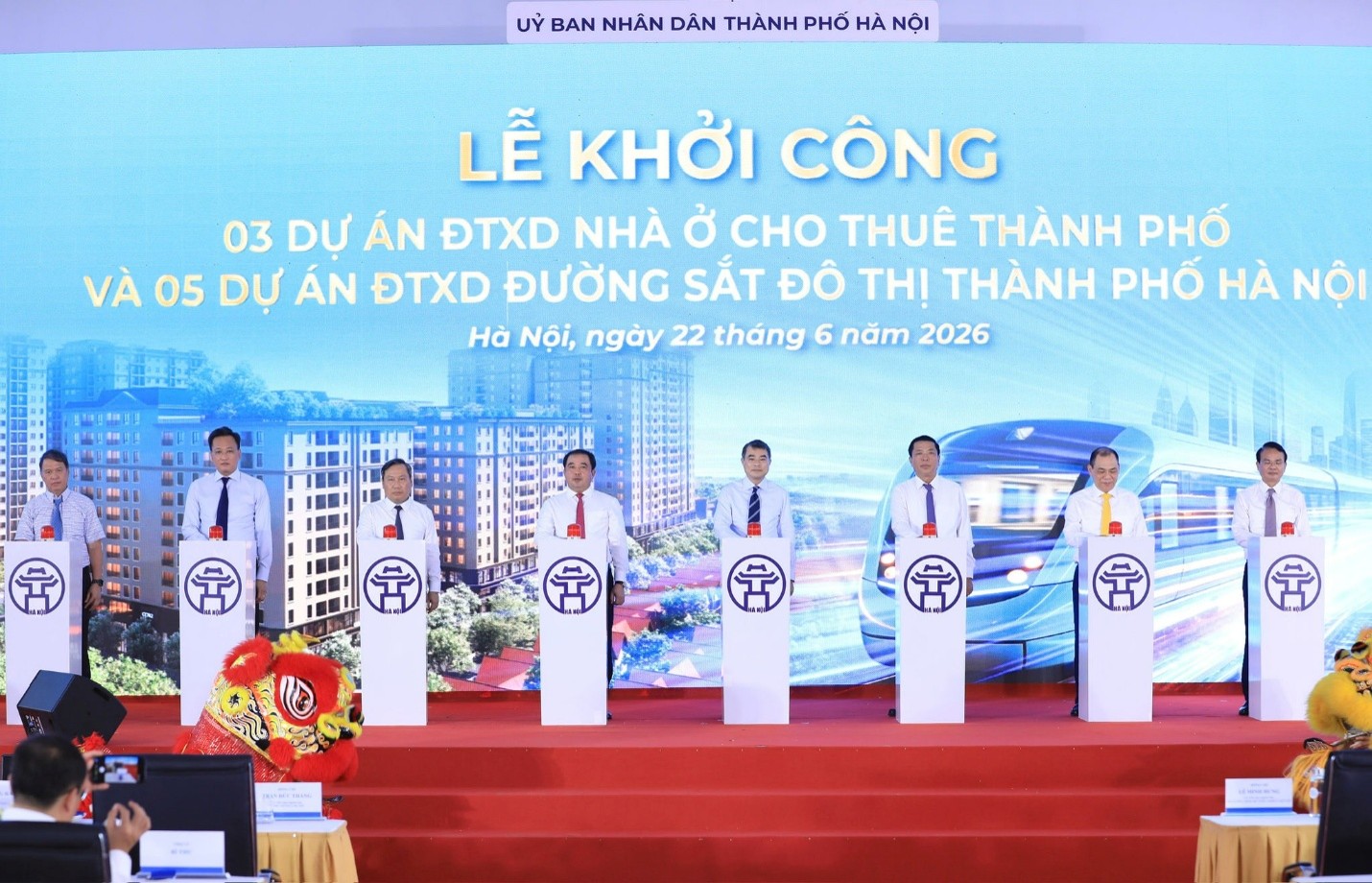
Source: Hanoimoi
Policy updates: from infrastructure delivery to mobility management
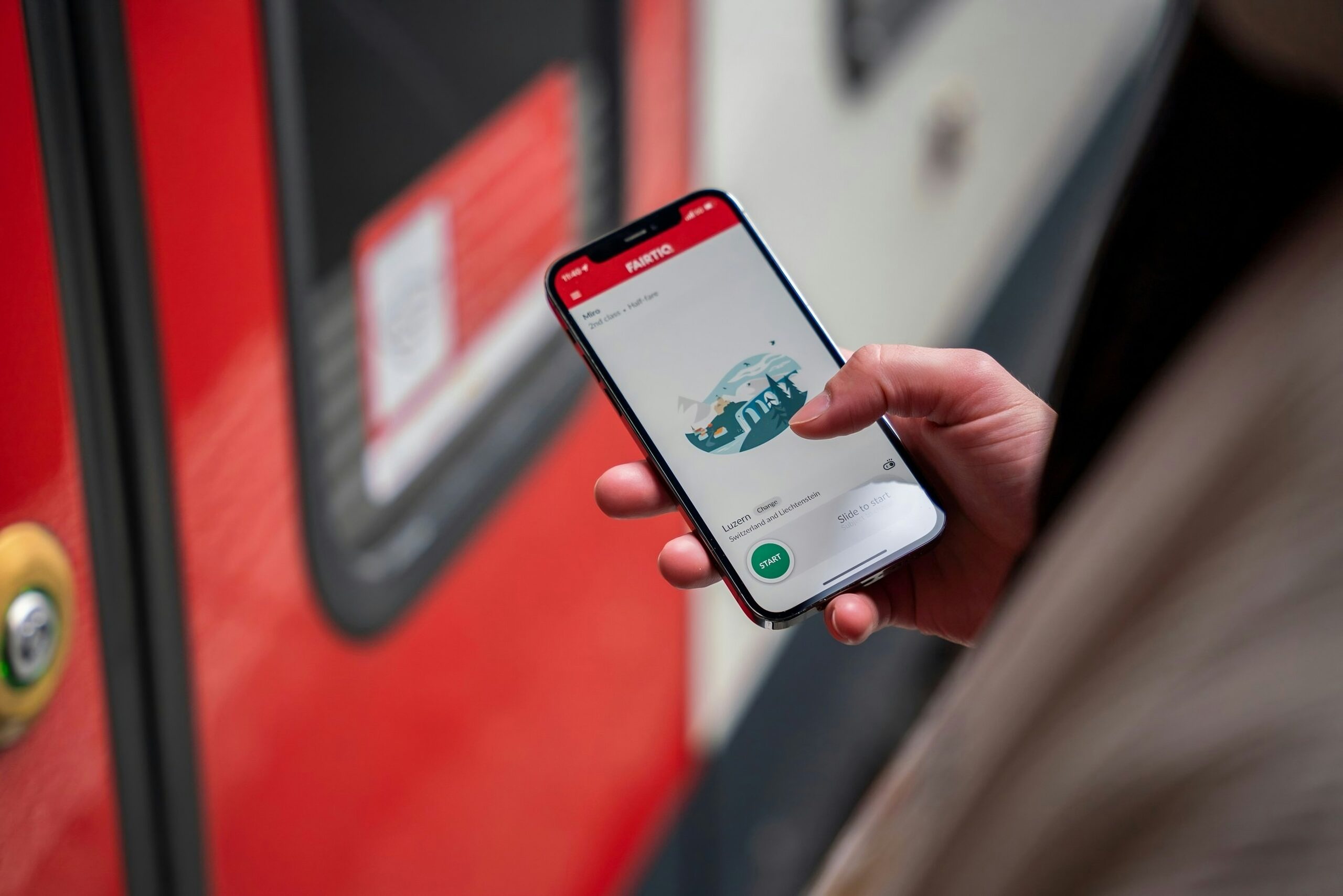
Alongside the acceleration of major transport projects, Hanoi is also updating its policy framework to make public transport more integrated. Decision 3316/QĐ-UBND, issued on 27 June 2025, set out a multi-modal ticketing scheme for public passenger transport, aiming to unify ticket products and diversify payment methods[9]. From 25 June 2026, Hanoi officially launched the integrated e-ticketing system across the public transport network.[10]
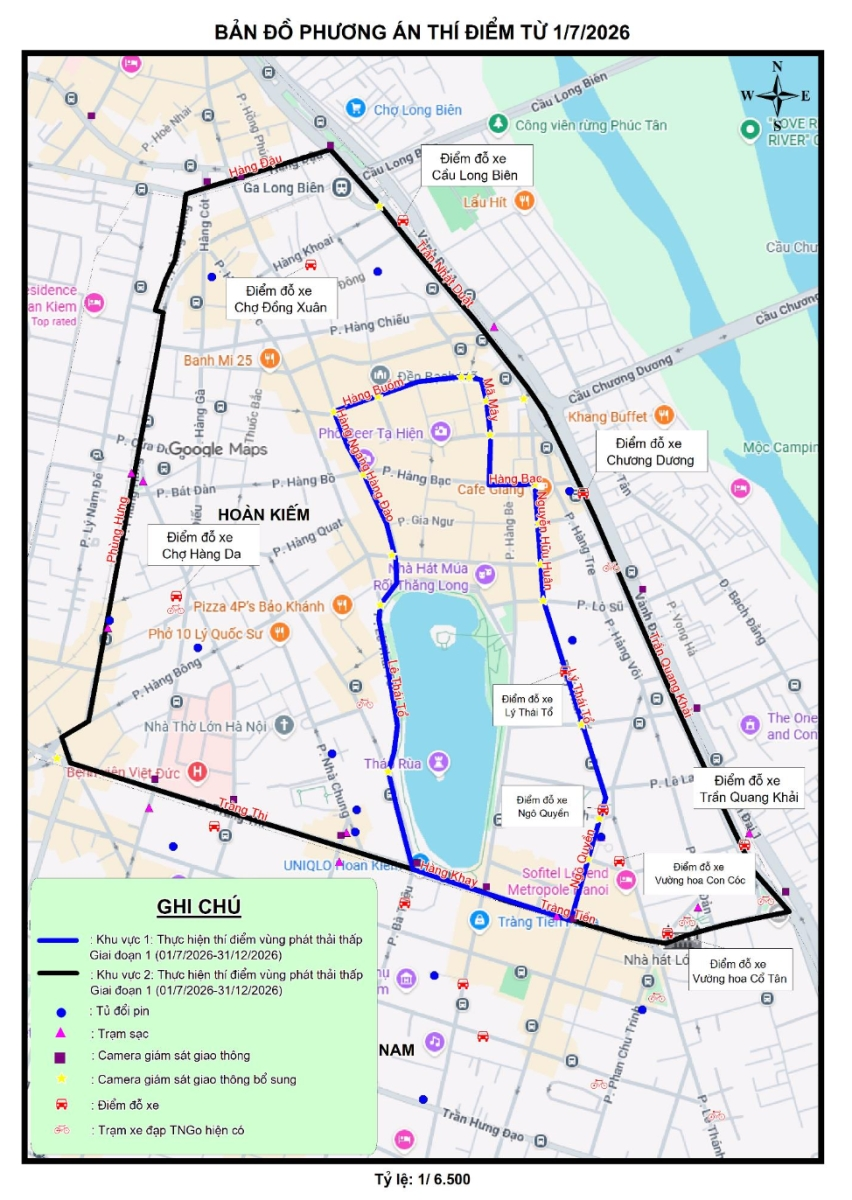
Hanoi is also starting to use environmental policy as a traffic-management tool. Hanoi’s low-emission zone pilot will start on 1 July 2026 across nine wards inside Ring Road 1, but does not impose a blanket ban on petrol and diesel vehicles. Until the end of 2026, restrictions apply only to two areas in Hoan Kiem Ward; in Area 1, all road vehicles are banned from 19:00–24:00 on Fridays to Sundays, while larger passenger vehicles face separate time-based restrictions.[11]
Pilot Low-Emission Zone Map in Hanoi (Effective from 1 July 2026)*
Source: VOV.vn
(*) Note:
Area 1 (blue boundary) refers to the inner pilot zone around the Hoan Kiem Lake / Old Quarter core area.
Area 2 (black boundary) refers to the broader pilot zone surrounding Area 1.
Both areas are included in Phase 1 of Hanoi’s low-emission zone pilot, implemented from 1 July 2026 to 31 December 2026.
Another policy to watch is the proposed fee for vehicles entering inner-city areas. Under the draft plan, Hanoi is considering charges inside Ring Road 1 from 2028, Ring Road 2 from 2030 and Ring Road 3 from 2032[12]. Although this remains a proposal, together with e-ticketing and the low-emission zone, it shows a shift from simply building infrastructure to managing demand, emissions and travel behavior.
Implications for businesses and foreign investors
First, improved transport infrastructure could expand viable business locations beyond Hanoi’s old urban core. Projects such as new roads and new regional corridors can support multi-centered urban development, reduce pressure on the inner city, and make suburban or gateway areas more attractive for offices, logistics, retail and urban services.
Second, better connectivity could improve access to industrial and supply-chain networks around the Capital Region. Stronger links between Hanoi, Hung Yen, Bac Ninh, Thai Nguyen and key expressway corridors may help foreign manufacturers, distributors and service providers consider a wider range of site-location options.
Third, metro development could create new opportunities around station areas. Urban railway systems can support transit-oriented development, opening potential for real estate, retail, mixed-use projects, advertising, facility management and mobility services near major stations.
Finally, new policies such as integrated e-ticketing, low-emission zones and proposed congestion charging may affect how businesses operate in the inner city. Companies in logistics, delivery, retail, tourism and office services should monitor these policies because they may influence vehicle access, delivery schedules, fleet choices and operating costs.
Conclusion
Overall, Hanoi’s transport system is entering a new phase, shifting from partial improvements in 2025 to more decisive infrastructure implementation from 2026 onward. If major projects and supporting policies continue as planned, they could help ease inner-city pressure, improve regional connectivity and unlock new development opportunities beyond the traditional urban core. For businesses and foreign investors, Hanoi’s transport transformation should be viewed as a medium- to long-term driver of improved market access and urban growth potential.
Read more
Public Transportation Usage behavior of users in Vietnam from a Demographic perspective
Pizza 4P’s Phan Ke Binh to close: What road widening means for Hanoi’s “Little Tokyo”
* If you wish to quote any information from this article, please kindly cite the source along with the link to the original article to respect copyright.
| B&Company
The first Japanese company specializing in market research in Vietnam since 2008. We provide a wide range of services including industry reports, industry interviews, consumer surveys, business matching. Additionally, we have recently developed a database of over 1,000,000 companies in Vietnam, which can be used to search for partners and analyze the market. Please do not hesitate to contact us if you have any queries. info@b-company.jp + (84) 24 3978 5165 |
[1] https://vtv.vn/xa-hoi/ha-noi-qua-tai-ha-tang-giao-thong-voi-hon-8-trieu-phuong-tien-cac-loai-20250120070819316.htm
[2] https://hanoi.gov.vn/tin-so-nganh/transerco-phuc-vu-240-trieu-luot-hanh-khach-di-xe-buyt-nam-2025-tang-25-4260110141227659.htm
[3] https://metrohanoi.vn/ha-noi-metro-to-chuc-hoi-nghi-trien-khai-nhiem-vu-cong-tac-nam-2026/
[4] https://baolamdong.vn/vanh-dai-1-hoang-cau-voi-phuc-day-nhanh-giai-toa-mat-bang-409800.html
[5] https://dantri.com.vn/thoi-su/khong-phat-trien-metro-ha-noi-va-tphcm-ton-that-2-3-ty-usd-moi-nam-20240117135159516.htm
[6] https://vtv.vn/xa-hoi/ha-noi-qua-tai-ha-tang-giao-thong-voi-hon-8-trieu-phuong-tien-cac-loai-20250120070819316.htm
[7] https://www.tomtom.com/traffic-index/city/ha-noi/
[8] https://viup.vn/vn/Do-thi-ve-tinh-n118-Lien-ket-giua-do-thi-trung-tam-va-cac-do-thi-ve-tinh-phuc-vu-phat-trien-ben-vung-thanh-pho-moi-d11758.html
[9] https://vietnamnet.vn/en/hanoi-to-launch-integrated-fare-system-for-buses-and-metro-2416216.html
[10] https://www.vietnam.vn/en/ha-noi-chinh-thuc-dung-ve-dien-tu-lien-thong-cho-giao-thong-cong-cong-tu-25-6
[11] https://vov.vn/xa-hoi/tu-17-ha-noi-thi-diem-vung-phat-thai-thap-cac-phuong-tien-di-lai-nhu-the-nao-post1311202.vov
[12] https://vietnamnet.vn/en/hanoi-congestion-charge-plan-raises-concerns-over-fairness-and-readiness-2522634.html
Related article









Log in / Register
SUBSCRIBE NEWSLETTER