

 简体中文
简体中文  English
  日本語
日本語  Tiếng Việt
  한국어
한국어 越南凭借其可再生能源资源,正在将自己定位为绿色氢能和绿色氨能产业的重要参与者。

094 月2025
最新新闻与报告 / 越南简报
评论: 没有评论.
随着全球能源转型加速,绿氢和绿氨正成为实现碳中和的关键解决方案。越南凭借丰富的可再生能源资源,正将自身定位为绿氢和绿氨产业的重要参与者。.
越南对绿氢和绿氨发展的需求
越南当前的温室气体(GHG)排放对其到2050年实现净零目标的承诺构成重大威胁。根据全球大气研究排放数据库(EDGAR),越南在2023年温室气体排放量全球排名第18位,排放总量超过5.24亿吨二氧化碳2eq,占全球排放量的1%[1]. 电力行业产生了该国总排放量的超过 30%,2000年至2023年的复合年增长率(CAGR)为 12%。该行业严重依赖燃煤火力发电[2], ,国际能源署(IEA)的报告强调,煤炭占其二氧化碳排放量的超过 90%2 ,总排放量达1.273亿吨。根据净零情景下将能源部门排放削减至每年仅1.01亿吨的规划[3], ,该国正面临能源部门脱碳以及开发传统燃煤电厂替代方案的压力。.
2000年至2023年越南分部门温室气体排放
单位:%
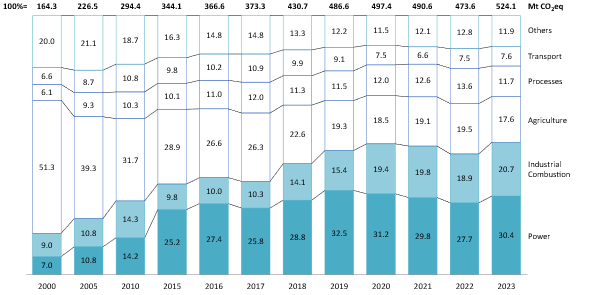
来源:B&Company Vietnam 综合自 埃德加’的报告
绿色氢和绿色氨在越南的发展正逐渐成为该国脱碳努力和向可持续能源转型的关键组成部分。绿色氢通过可再生能源生产,绿色氨则通过哈柏-博施工艺合成,正日益受到重视,并有望作为可持续能源载体用于电力行业和工业燃烧[4], ,这两者也是温室气体排放量最大的两个行业。此类绿色替代方案也有望推动难以减排行业脱碳,例如水泥、铁和钢铁生产[5]. 。目前这些行业每年生产50万吨灰氢[6], ,向绿色氢和绿色氨转型最多可将该国的温室气体排放减少650万吨二氧化碳2当量,从而进一步推进其可持续发展目标[7].
越南绿氢和绿氨的发展现状与增长潜力
绿氢和绿氨主要用于化工和制造业,而其在能源部门的作用仍处于试验阶段[8]. 。这一趋势在越南同样适用,不过目前该国正围绕绿氢和氨的生产与应用开展重大布局,作为更广泛清洁能源转型举措的一部分,这一进程既受到国内倡议推动,也受全球脱碳趋势影响。.
就绿氢而言, ,越南是最早宣布《氢能发展战略》的50个国家之一,并于2024年通过2024年签署的第165/QD-TTg号决定予以实施[9]. 。目前,每年生产的50万吨灰氢和棕氢主要用于炼油(36%)和化肥制造业(64%),仅有0.5%分配至钢铁、食品和电子等其他行业[10].
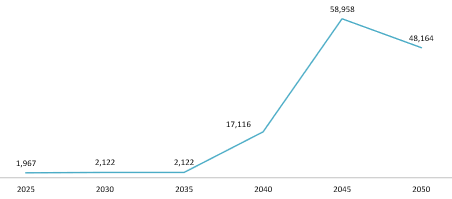
根据第165/QD-TTg号决定,将优先发展利用可再生能源以及碳捕集/利用(CCS/CCUS)技术生产绿氢,2030年和2050年的国家产量目标分别为10万至50万吨和1,000万至2,000万吨。未来应用将重点集中于发电(69%)和交通运输(28%),标志着向可持续能源解决方案的重大转型。随着国内产量不断提升及全球需求持续增长,绿氢出口具有较高可行性,预计2050年出口总量将超过760万吨。.
表1:越南在不同情景下2030年和2050年的氢需求
相关文章

















登录 / 注册
无需账户继续
登录 / 注册
订阅新闻通讯