

 English
  日本語
日本語  Tiếng Việt
  简体中文
简体中文  한국어
한국어 Vietnam rooftop solar market is entering a more practical phase, allowing up to 50% of surplus output to be sold has attracted attention.
09Apr2026
Latest News & Report / Vietnam Briefing
Comments: No Comments.
Abstract
This article aims to explain why Vietnam’s proposed 2026 changes to rooftop solar rules matter from a market and investment perspective, rather than only from a legal one. It is written for industrial and commercial roof owners, corporate energy users, EPC contractors, equipment suppliers, investors, and other businesses tracking distributed energy opportunities in Vietnam. The article first clarifies the difference between the current effective framework and the draft amendment now under discussion, then examines which user groups could benefit most if the export threshold for surplus power rises to 50%, and finally highlights the legal and implementation issues that market participants should monitor before making investment decisions. As of March 27, 2026, the current effective framework remains Decree 58/2025/NĐ-CP, while the “up to 50% surplus sales” rule is still part of the Ministry of Industry and Trade’s draft amendment package rather than a final law.
Why This Draft Matters
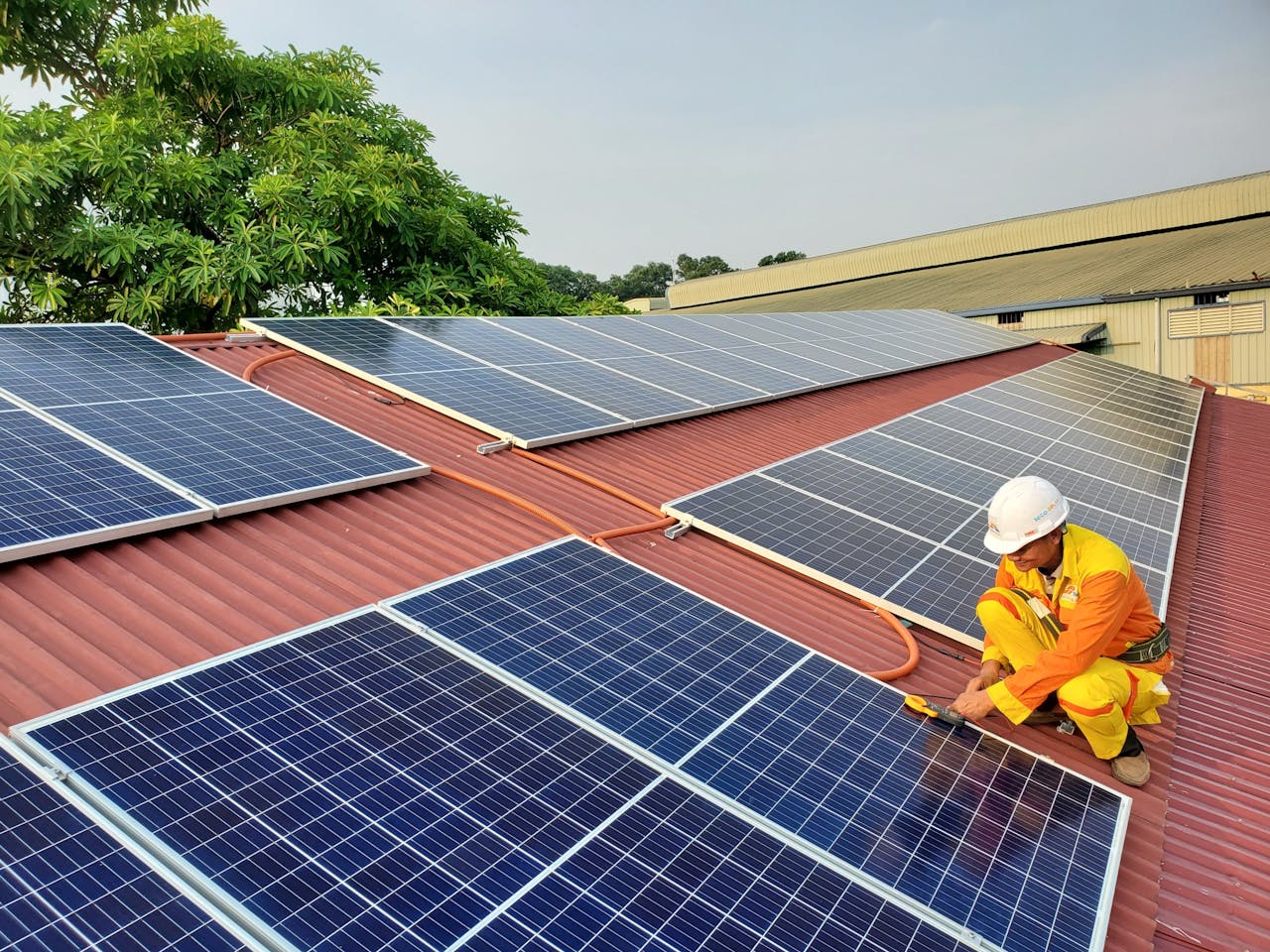
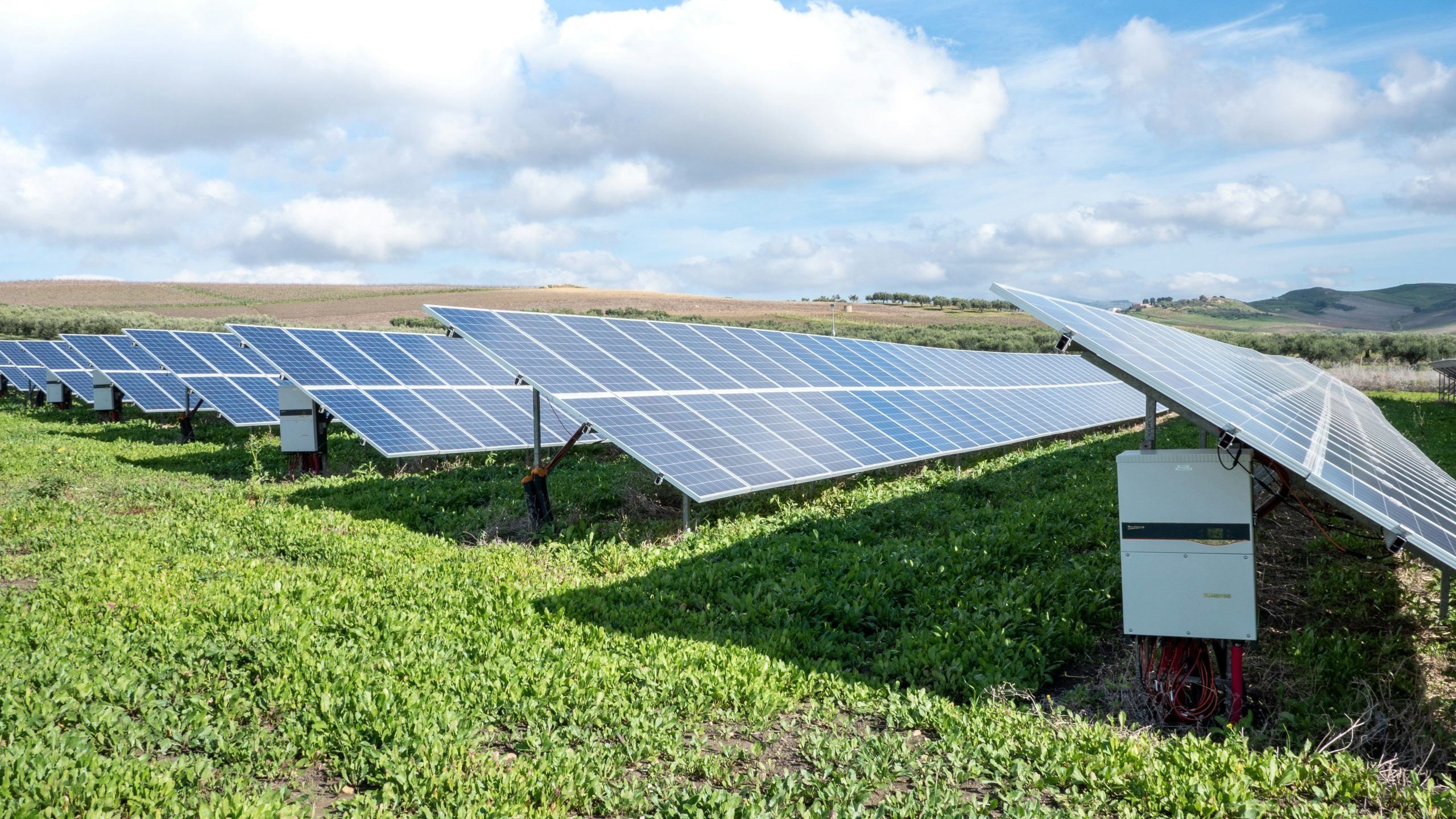
Vietnam’s rooftop solar market is entering a more practical phase. The current Power Development Plan VIII (PDP 8) policy conversation was largely about encouraging self-consumption and reducing pressure on the power system. The next phase is more commercial: whether rooftop solar can become financially attractive enough for a wider range of users to install larger systems, especially when their generation profile does not perfectly match on-site demand. That is why the draft rule allowing up to 50% of surplus output to be sold has attracted attention. It does not simply change a technical ratio. It could materially improve project economics for users with large roofs, daytime generation peaks, and some unavoidable excess power.
At the same time, the policy backdrop remains cautious. Vietnam’s revised Power Development Plan VIII still frames rooftop solar primarily as a self-produced, self-consumed resource, and it keeps the 2030 ambition that 50% of public office buildings and 50% of homes should use rooftop solar for on-site consumption. In parallel, recent government guidance has continued to encourage rooftop solar, stand-alone solar, and energy storage as part of a broader push for energy efficiency and power system modernization. This means the state is clearly supportive of rooftop solar growth, but it still wants that growth to fit within a controlled logic system rather than a fully liberalized power-trading model.
The Current Framework Still Prioritizes Self-Consumption
Under Decree 58/2025/NĐ-CP, eligible self-produced, self-consumed rooftop solar systems connected to the grid may sell surplus electricity, but the payment mechanism is limited. In practice, if the amount exported to the grid exceeds 20% of the calculated monthly output threshold, the payable amount is capped at 20%. The purchase price is linked to the previous year’s average electricity market price and cannot exceed the maximum price in the ground-mounted solar price bracket. The decree also explicitly states that surplus electricity from rooftop solar installed on public assets may not be sold under the current framework.
The current procedural structure also matters. Under Decree 58, the procedural treatment of grid-connected self-produced, self-consumed rooftop solar depends on both user type and capacity. Detached-house households with systems below 100 kW follow a special light-touch route and mainly submit a notice, even when they sell surplus electricity. For all other organizations and individuals below 1,000 kW, the key distinction is whether surplus electricity is sold: projects that do not register surplus sales generally follow a notification route, while those that do register surplus sales generally fall into the development registration process. Once capacity reaches 1,000 kW or more, organizations and individuals must register development in all cases. In other words, even before the draft amendment, the legal framework already distinguishes sharply between small residential users and more commercially oriented projects.
Operating Principle of a Rooftop Solar Power System
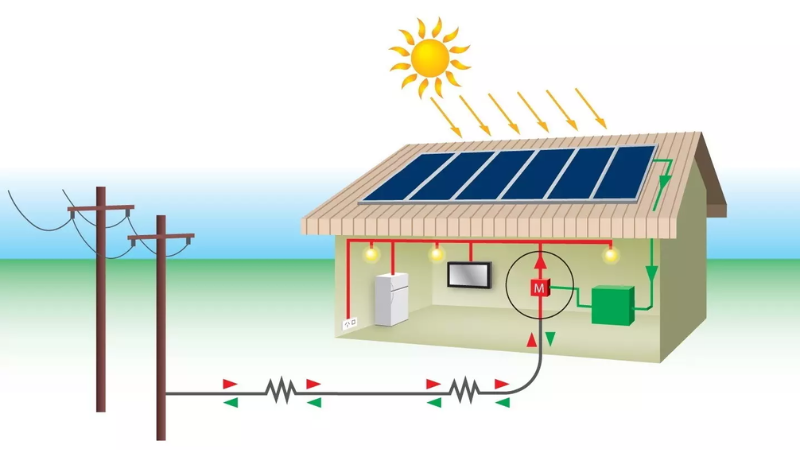
Source: Maysun Solar
The Draft 2026 Proposal Could Expand the Commercial Case
The Ministry of Industry and Trade’s January 2026 consultation and explanation file points to a meaningful policy shift. In the revised draft language, the ministry states that eligible rooftop solar sellers may sell surplus electricity to the buyer under an agreement between the two parties, but not exceeding 50% of the electricity generated at the output. More importantly, the same draft explanation indicates that, from the effective date of the amended decree until December 31, 2030, the seller and buyer could agree on a ratio exceeding 50%, after which the standard 50% ceiling would apply. This is a notable signal that policymakers are considering a transitional window to accelerate rooftop solar uptake before 2030.
The draft also appears to broaden the practical pathways for surplus power and direct power transactions. Under the current Decree 58 framework, formal surplus-power buyers are still defined mainly as EVN-affiliated electricity companies. At the same time, under the current Decree 57 framework, retail electricity units in industrial and similar zones already play a limited role in grid-based DPPA when authorized by large electricity users, but the private-wire DPPA model still centers mainly on renewable generators and large customers. The draft goes further by explicitly expanding direct participation to retail electricity units in industrial parks, economic zones, export-processing zones, industrial clusters, and several other zone-based models, while also shifting private-wire DPPA pricing from a negotiated-but-capped framework to one based on direct negotiation between buyer and seller. If retained, this could make project structuring more flexible and improve commercial upside for multi-tenant industrial and zone-based projects, although actual gains would still depend on bargaining power, end-user tariff benchmarks and local implementation conditions.
The draft also suggests a more flexible approach for projects installed on public assets. In its explanation, the ministry states that self-produced, self-consumed rooftop solar installed on public assets may sell surplus electricity, provided the arrangement also complies with the legal framework on management and use of public assets and remains consistent with the seller’s public functions and duties. If this provision is retained in the final decree, it would widen the potential rooftop solar market beyond private factories and homes to include a broader category of public-sector buildings.
In addition to the higher surplus sales threshold, the draft also points to a more streamlined implementation process. While the current framework already requires electricity units to provide technical guidance within five working days in certain cases, that timeline mainly applies to a specific procedural step rather than the full process. The draft appears to go further by making the grid management entity responsible not only for guiding applicants, but also for updating and signing revised grid-connection and power-purchase documents within the same five-working-day period where applicable. This is important because in distributed energy markets, project momentum is often slowed not only by pricing uncertainty but also by unclear or fragmented administrative procedures.
Who Benefits Most If the Draft Becomes Final
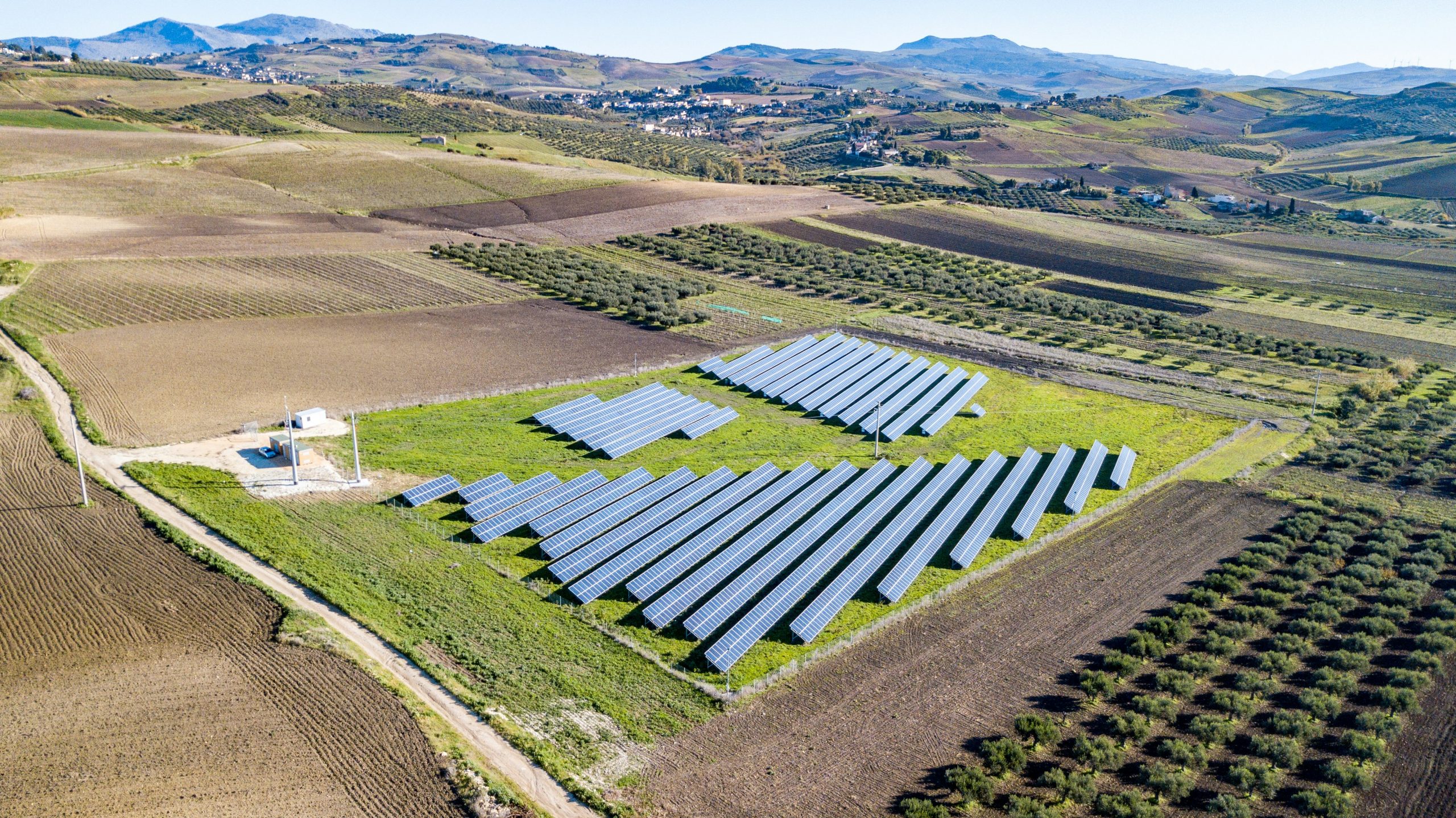
The clearest beneficiaries would likely be industrial and commercial users with large roofs and meaningful daytime loads. Factories, warehouses, logistics facilities, commercial buildings, and export manufacturers often have sufficient roof area to support sizeable systems, but not all of their midday output can be consumed instantly on-site. Under a 20% compensated surplus threshold, the optimal system size may be artificially constrained. A 50% threshold—or a temporarily higher ratio through 2030—would make larger systems more viable and improve the case for on-site solar as a medium-term cost-management tool.
Implementation of Solar Rooftop
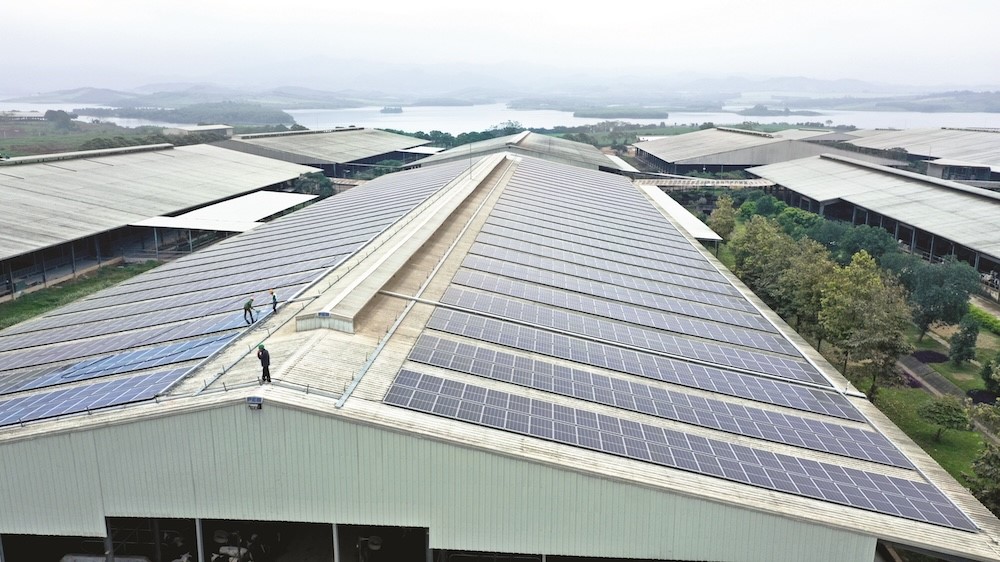
Source: The Saigon Times
Households could benefit as well, though more selectively. The current legal framework already gives detached-house households under 100 kW a comparatively simple route to participate. Separately, the Ministry of Industry and Trade submitted a draft support policy for households installing self-produced, self-consumed rooftop solar together with storage, with a proposed policy period running from the beginning of 2026 through December 31, 2030. The draft support package includes concessional loans, installation support, and technical guidance. If these household-support measures move forward alongside the surplus-sale amendment, the economics for residential rooftop solar could improve, especially for higher-consuming households or those willing to pair solar with batteries.
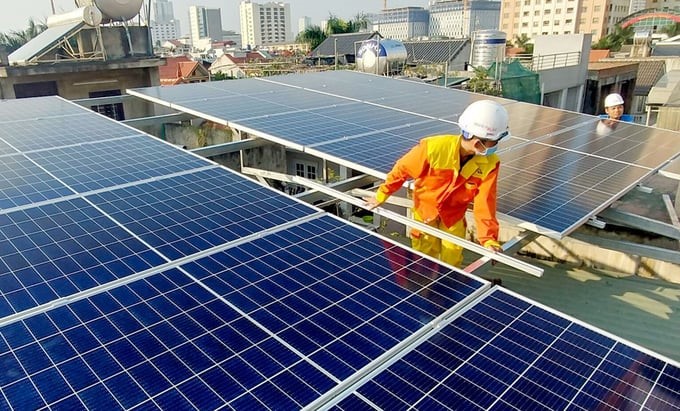
Source: Corporate Finance Magazine
A third beneficiary group would be the wider rooftop solar ecosystem. EPC contractors, inverter suppliers, battery providers, financing partners, and energy-service firms all stand to gain if the rooftop solar investment case becomes easier to justify for mid-sized and large projects. This is particularly relevant because recent government guidance also points to stronger interest in storage deployment and smarter power-system integration, which could create more room for bundled solar-plus-storage offerings rather than standalone rooftop systems.
The Draft Improves Economics, Not Necessarily Full Commercial Freedom
One point should be made very clearly. Even if the export threshold rises, Vietnam is not signaling a full liberalization of rooftop solar into an unrestricted resale market. In February 2026, the Government Portal reaffirmed that self-produced, self-consumed electricity is defined as power generated and consumed at the user’s own site, mainly for that user’s own needs. On that basis, it explained that a rooftop solar setup developed under the “self-produced, self-consumed” concept cannot simply be treated as a general commercial resale model. This means some third-party rooftop arrangements may still face legal limits or require careful structuring.
This distinction is important because market enthusiasm can sometimes move faster than legal definitions. The draft looks more favorable for project bankability, but it does not automatically transform rooftop solar into an open merchant-power business. The likely winners are therefore not every conceivable rooftop model, but rather those whose projects remain clearly anchored in on-site consumption, with surplus sales functioning as a balancing mechanism rather than the project’s sole revenue logic.
What Businesses Should Watch Next
For businesses evaluating rooftop solar in Vietnam, four issues deserve close attention. First, the final wording of the amended decree matters because the 50% rule is still at the draft stage. Second, the temporary “above 50% until 2030” concept is promising, but it is also not final and may still be revised. Third, local implementation—especially connection conditions, technical guidance, and grid constraints—will continue to determine which projects move first.
Conclusion
Vietnam’s draft rooftop solar amendment points to a more commercially realistic framework, but not a fully liberalized one. If finalized broadly along current lines, it could make rooftop solar significantly more attractive for industrial and commercial roof owners, selected households, and the wider solar-plus-storage ecosystem. At the same time, the real opportunity will depend less on the headline number alone and more on how the final decree handles export ratios, pricing, procedural simplification, and the continued legal emphasis on self-consumption. For market participants, the message is positive—but it is a policy opportunity still taking shape, not yet a settled rulebook.
Read more
Vietnam Solar power energy: Market overview and investment insights
Vietnam’s Solar cell manufacturing market: Investment moves from Japanese enterprises
* If you wish to quote any information from this article, please kindly cite the source along with the link to the original article to respect copyright.
| B&Company
The first Japanese company specializing in market research in Vietnam since 2008. We provide a wide range of services including industry reports, industry interviews, consumer surveys, business matching. Additionally, we have recently developed a database of over 900,000 companies in Vietnam, which can be used to search for partners and analyze the market. Please do not hesitate to contact us if you have any queries. info@b-company.jp + (84) 28 3910 3913 |
References
– Decree No. 57/2025/ND-CP Mechanisms For Direct Power Trading Between Renewable Energy Generation Units And Large Electricity Consumers <Access>
– Decree No. 58/2025/ND-CP Elaborating The Law On Electricity Pertaining To Development Of Renewable Energy Power And New Energy Power <Access>
– Draft Decree amending and supplementing Decree No. 57 on the direct power purchase mechanism between renewable energy generators and buyers, and Decree No. 58 detailing the implementation of the Electricity Law on the development of renewable and new energy. <Access>
– Compilation and explanation of stakeholder feedback on the draft Decree amending and supplementing several provisions of Decree No. 57 (direct power purchase mechanism) and Decree No. 58 (implementation of the Electricity Law on renewable and new energy development). <Access>
– Decision No. 768/QD-TTg Approving Amendment To National Electricity Development Planning Of 2021 – 2030 Period And Vision To 2050 <Access>
– The Government Portal’s clarification on self-produced and self-consumed rooftop solar <Access>
– The MOIT’s draft household-support policy for rooftop solar and storage <Access>
Related article






































Sidebar:
SUBSCRIBE NEWSLETTER