

 English
  日本語
日本語  Tiếng Việt
  简体中文
简体中文  한국어
한국어 With Vietnam's rising electricity demand, the government is exploring efficient alternatives, such as nuclear power.
11Mar2025
Latest News & Report / Vietnam Briefing
Comments: No Comments.
Vietnam’s primary energy supply has largely depended on fossil fuels and renewable sources. However, with the country’s rising electricity demand, the government is exploring efficient alternatives, such as nuclear power.
Overview of Nuclear Power in Vietnam
Vietnam has yet to establish a nuclear power plant and continues to rely heavily on fossil fuels and renewable energy to meet its growing electricity demand. As of 2024, fossil fuels remain the dominant energy source, accounting for 43% of total energy production. Hydropower contributes 28%, while renewable sources, including wind and solar, make up 27%. The remaining 2% consists of imported energy from neighboring countries[1].
Vietnam energy production in 2024 by types
Unit: 100% = 84,360 MW
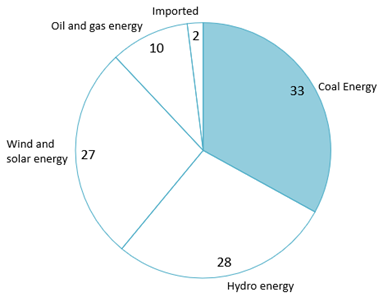
Source: Vietnam Energy Online
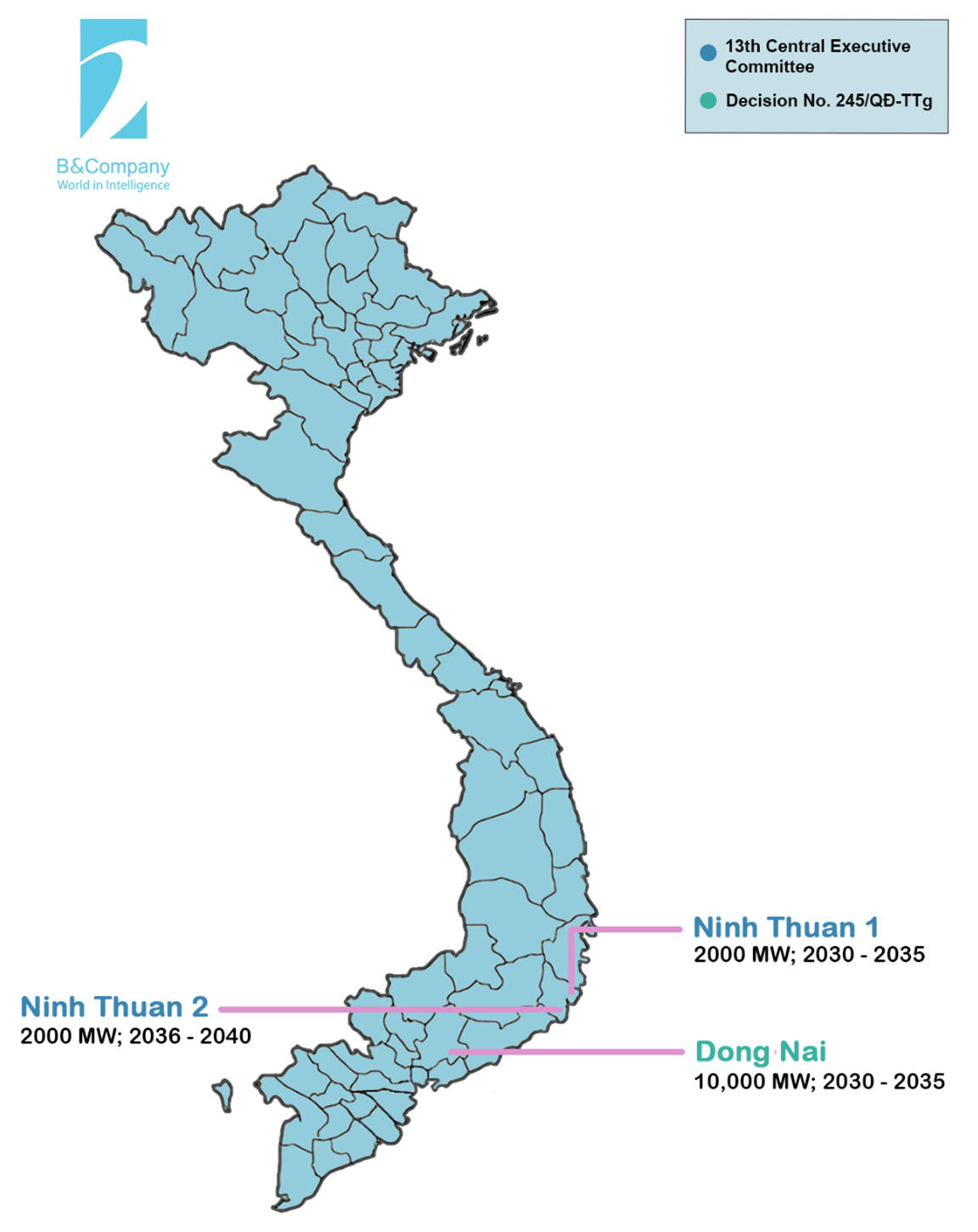
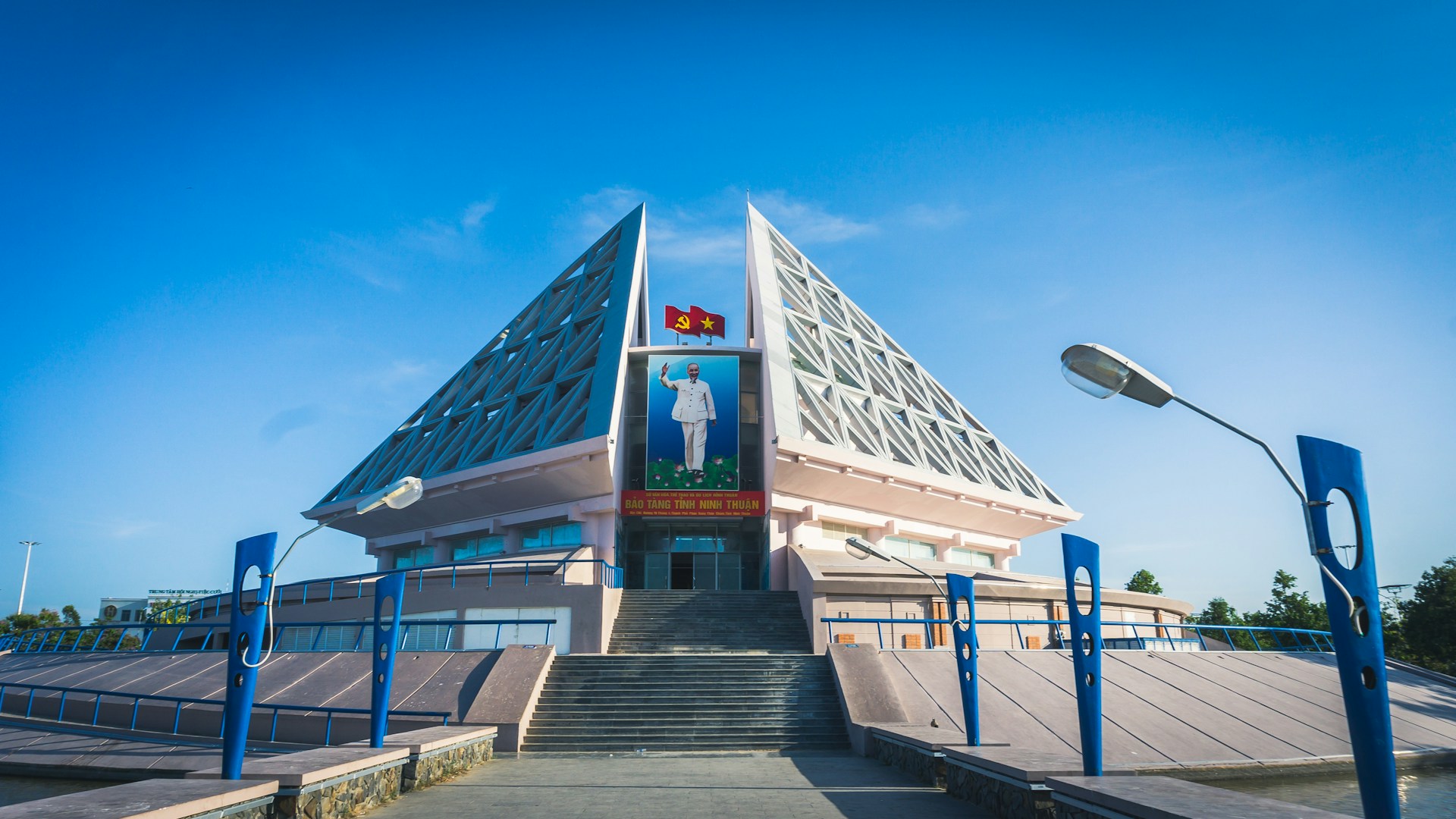
However, the 13th Central Executive Committee convened in November 2024, called for the revival of nuclear power projects that have been on hiatus since the second session of the 14th National Assembly in 2016[2]. Specifically, this revival emphasizes the construction of two nuclear power plants in Ninh Thuan province, with a total installed capacity of 4,000 MW[3].
Government Orientation to Utilize Nuclear Energy
On February 5, 2025, the government issued Decision 245/QĐ-TTg, approving the Master Plan for Nuclear Energy Development and Application for the period up to 2030, with a vision toward 2050. The policy emphasizes the urgency of completing and expanding the nuclear power infrastructure, particularly the Ninh Thuan nuclear power project. It aims to have two nuclear power plants operational by 2036 while continuing preparations for subsequent projects
Additionally, this decision sets key objectives for integrating nuclear energy more extensively into various sectors such as healthcare, agriculture, industrial, etc. In order to accelerate industry growth.
Decision No. 245/QĐ-TTg: Master Plan for Nuclear Energy Development and Application for the period up to 2030, with a vision toward 2050
| Application sector | Objective until 2030 | Objective until 2050 |
| Healthcare[4] | · 50–60% of provinces and cities have oncology departments equipped with radiotherapy devices
· 45–50% of provinces and cities have nuclear medicine departments. |
· Vietnam keeps pace with the average level of application in developed countries.
· Science, technology, and the use of nuclear energy in healthcare achieve international standards. |
| Natural resources and Environment | · Developing nuclear and radiation technologies in meteorology, hydrology, water resources, geology, mineral exploration, environmental protection, and climate change adaptation.
· Investing in the construction of laboratories for analyzing radioactive isotopes in soil, water, and air. |
· Advanced nuclear technologies are widely applied in research, meteorological and hydrological monitoring, water resource management, environmental protection, and ocean acidification studies.
· Radiation technology is used to treat certain types of waste that cause environmental pollution from industrial and daily activities. |
| Agricultural | · Investing in the construction of research facilities for radiation and radioactive isotope applications in key agricultural regions.
· Applying radiation and radioactive isotopes in crop breeding, microbiology, plant protection, livestock farming, and veterinary medicine. |
· Established some leading nuclear agriculture centers in the Asia-Pacific region.
· Nuclear energy is applied in plant breeding and hybridization at an international level, with technologies transferred to countries in the region. |
| Industrial | · Applying radiation and radioactive isotopes in industrial sectors and developing radiation equipment to reduce reliance on imports.
· Expanding production and accelerating the commercialization of radiation-based products and materials. |
· Radiation and radioactive isotope applications are widely adopted, contributing to industry growth and driving socio-economic development. |
| R&D and Human Resource | · Upgrading modern laboratories for nuclear technology research and applications.
· Establishing a nuclear science and technology research center in Dong Nai, featuring a 10MW nuclear reactor. · Providing undergraduate and postgraduate training both domestically and internationally. · Developing educational institutions, medical infrastructure, and research facilities related to nuclear energy. |
· Vietnam’s nuclear science and technology capabilities have developed to match the average level of developed countries.
· Modern infrastructure and a highly skilled workforce support the advancement of radiation applications, radioactive isotopes, and nuclear power development. |
Related article














Log in / Register
Continue without an account
Log in / Register
SUBSCRIBE NEWSLETTER