

 English
  日本語
日本語  Tiếng Việt
  简体中文
简体中文  한국어
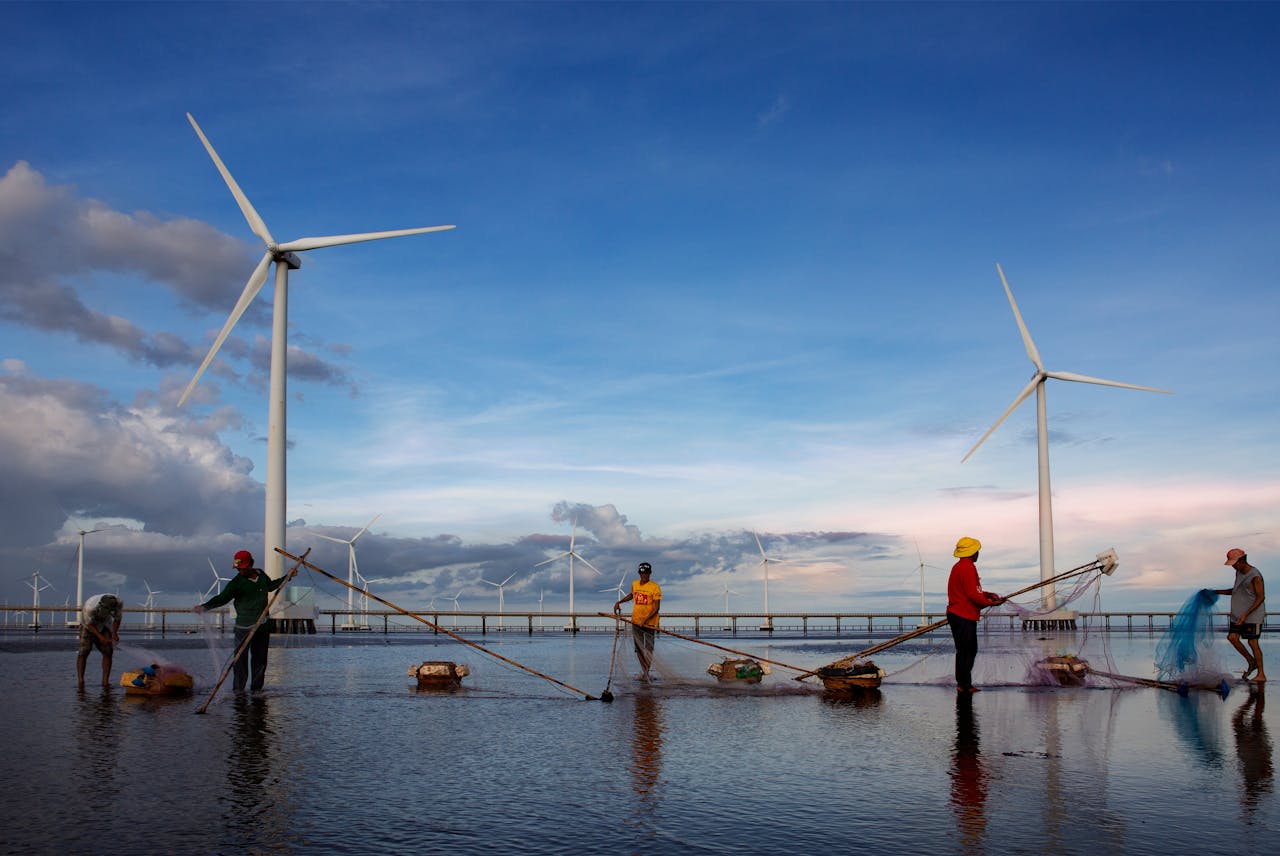
한국어 Renewable energy capacity expanded from nearly zero in 2017 to 20 GW by 2025, establishing the foundation for a clean energy economy.
14Sep2026
Latest News & Report
Comments: No Comments.

The path to reducing dependence on fossil fuels and transitioning to renewable energy is shifting from Feed-in Tariff (FiT) to competitive markets. Disputes stemming from the sloppy implementation of FiT permits still linger, making foreign investors cautious, but the emerging market offers broad entry opportunities.
Historical Achievements of the FiT System
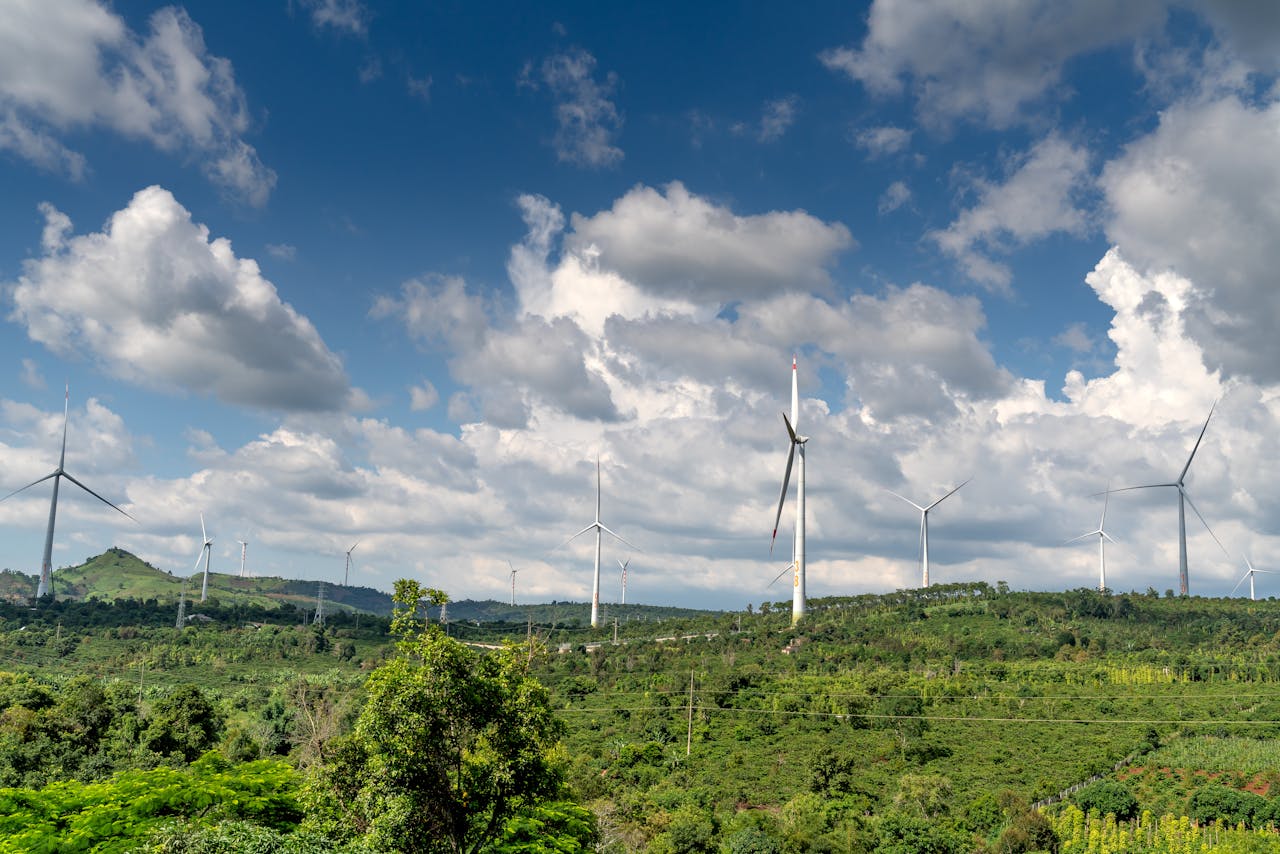
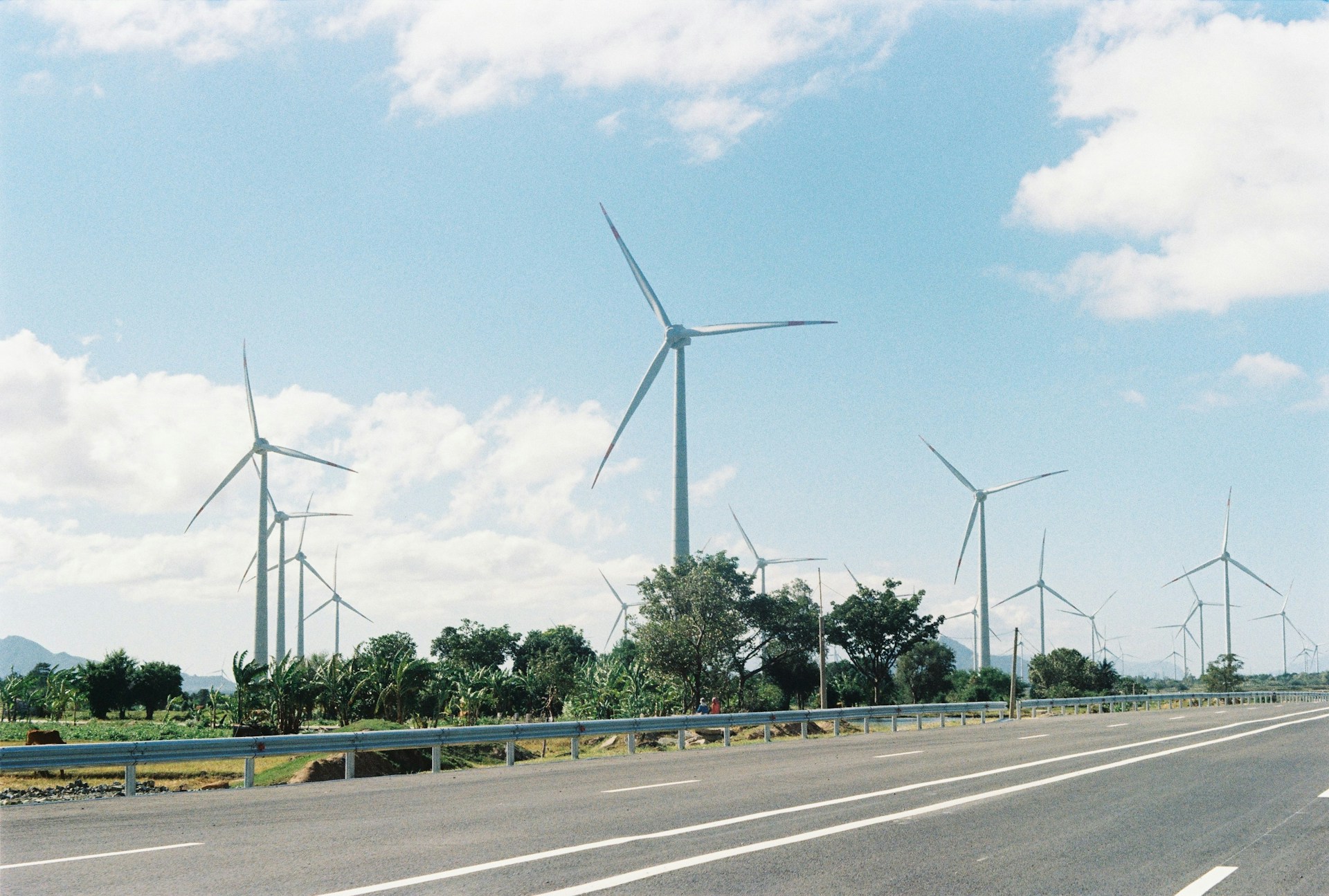
The subsidy-based Feed-in Tariff (FiT1 and FiT2) introduced between 2011 and 2021 played a central role in building the renewable energy market. Renewable energy capacity expanded from nearly zero in 2017 to 20 GW by 2025, establishing the foundation for a clean energy economy. Japan also ranked around 10th globally in the scale of large-scale solar and wind power generation (operational and planned)[1].
Evolution of the Electricity Pricing System
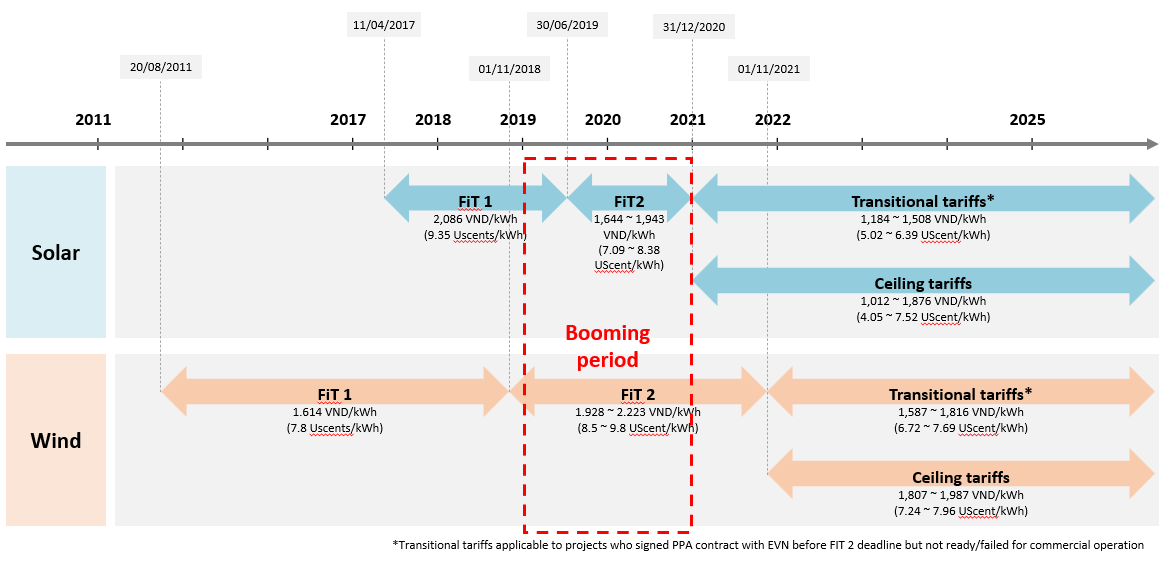
Note: Transition prices and cap prices are converted from VND to USD based on the central exchange rate published by the State Bank of Vietnam on the effective date of the regulation.
Source: B&Company analysis
Top 15 Countries by Solar and Wind Power Capacity as of February 2025
Unit: 1,000 MW
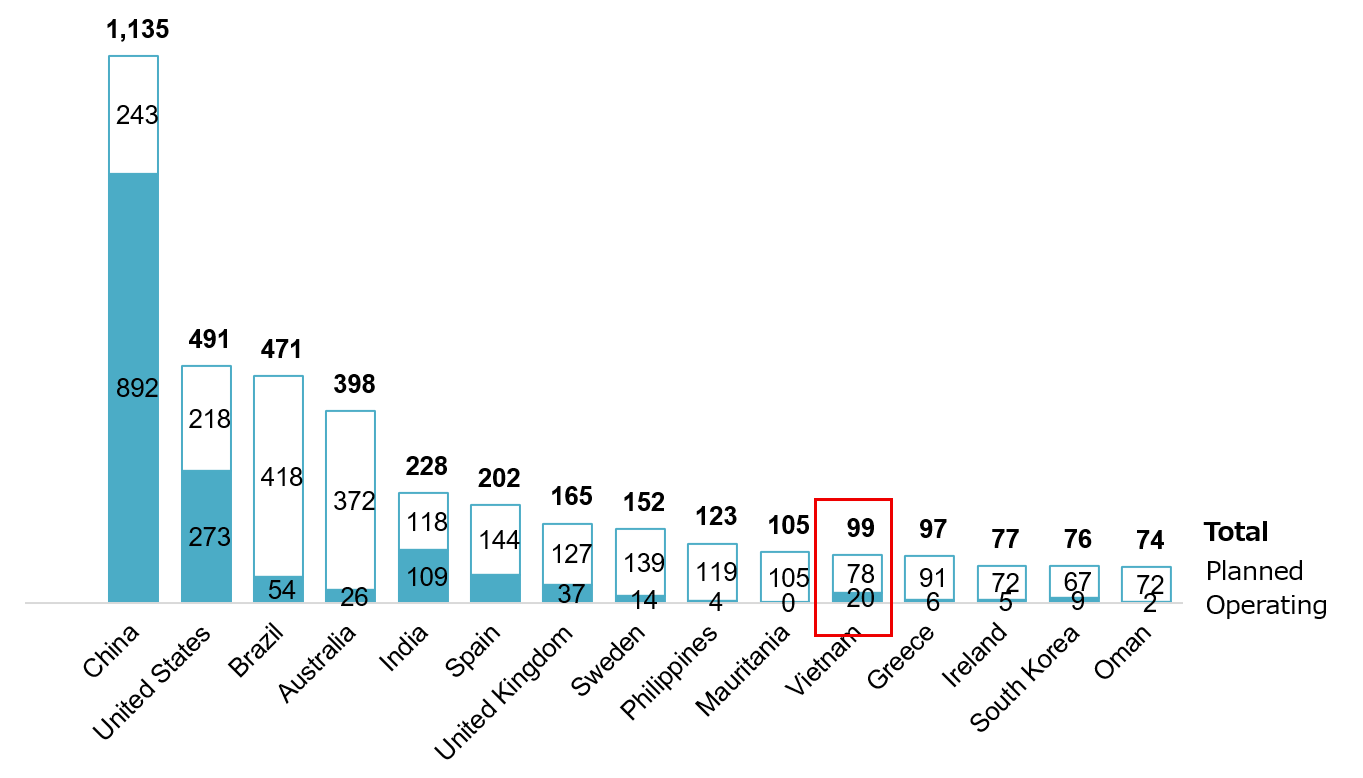
Source: Global Solar Power Tracker, Global Wind Power Tracker
This success gave policymakers the confidence to actively promote clean energy policies, leading to renewable energy increasing to approximately 14% of total power generation in the first half of 2025. Meanwhile, conventional sources like coal still accounted for 54%.
However, a government audit at the end of 2023 revealed that feed-in tariffs for 173 renewable energy projects could be retroactively revised. Many of these projects began operations around 2021, just before or after the end of FiT2, during which the approval process was significantly impacted by social distancing measures implemented as part of COVID-19 countermeasures. The issue lies in these projects having not obtained a Certificate of Completion and Acceptance (CCA) that was valid at the time of their Commercial Operation Date (COD). Furthermore, multiple agencies were involved in these projects, including EVN as the power purchaser, and the Ministry of Industry and Trade (MOIT) and provincial People’s Committees responsible for commercial operation and completion/acceptance procedures. Differences in judgment and interpretation of procedures among these agencies led to inconsistencies and confusion. As a result, FiT1 may have been applied to projects that should have received FiT2, or FiT2 may have been applied to projects subject to transition pricing. This could lead to downward revisions of power purchase prices. Operator revenues would decrease by 25-50%, potentially triggering legal disputes and damaging investor confidence going forward.
Ensuring a stable investment environment will become increasingly critical to achieving the targets of the 8th Power Development Plan (PDP8): 73 GW of solar power and 38 GW of onshore wind power by 2030.
Strategic Transition to a Competitive Market
The moves under PDP8 and its revisions to move away from feed-in tariffs (FiTs) for solar and wind power and establish a competitive market model align with global trends.
| Globally, competitive bidding is being utilized not only to reduce prices but also to achieve goals such as timely project completion and grid integration of highly variable renewable energy sources.
India has been particularly successful, significantly reducing solar power costs while achieving rapid expansion of generation capacity. Solar power costs fell from 9.72 cents/kWh in 2014 to 3.04 cents/kWh by 2024[2] . In Cambodia, a 60 MW solar project in 2019 recorded a bid price of 3.87 cents/kWh against a cap price of 7.6 cents/kWh, marking the lowest bid price in Southeast Asia at the time.[3] In Malaysia, solar power auctions attract many bidders, largely due to clear and transparent bidding conditions. However, winning bid prices are not disclosed, leaving price comparisons difficult as an ongoing challenge.[4] |
Many renewable energy projects initiated since 2021 are currently in negotiations with EVN for power purchase agreements (PPAs). In April and May 2025, the Ministry of Industry and Commerce established the long-awaited regional price caps.
These price caps are expected to serve as benchmarks for future PPA negotiations and competitive bidding processes. Under the new pricing system, investors will bid within the government-set price caps. This transparent mechanism aims to control costs and ensure the selection of efficient and viable projects.
However, compared to the period from 2017 to 2021 when the Feed-in Tariff (FiT) system was in effect, the cap price for solar power projects has been reduced to approximately half, at 4.05 cents per kWh. The impact on project profitability is drawing attention.
DPPA
The Direct Power Purchase Agreement (DPPA) system, enabling renewable energy generators to buy and sell electricity directly with consumers, is also drawing attention. DPAAs enable flexible power supply without relying on the state-owned transmission grid, meeting corporate needs for diversified procurement.
Macroscopically, the DPPA system, targeting renewable energy sources of approximately 1,000 MW scale, has the potential to act as a catalyst. It could ease the structure dominated by EVN, which holds about 37% of generation capacity as a single major buyer, and promote future competition in the wholesale and retail electricity markets.
Business-wise, it creates opportunities for investment in private infrastructure like transmission lines and entry into new fields such as energy storage technology. DPPAs enable renewable energy developers to secure a stable revenue base, while for electricity purchasers, they offer long-term price stability and the potential to enhance product international competitiveness through the acquisition of Renewable Energy Certificates (RECs) and carbon credits.
Originally proposed in 2021 as a pilot program limited to wind and solar projects totaling 1,000 MW (each over 30 MW), the DPPA was launched as a system covering all renewable energy sources following the promulgation of Decree 80/2024/ND-CP and Document 1543/NSMO-TTD in late 2024. This established the legal framework for DPPA, including transaction formats, pricing, registration requirements, and procedures.
However, skipping the pilot phase makes risk assessment difficult, and EVN’s final pricing for transmission fees and other charges remains undetermined. Furthermore, the conditions for eligible consumers under the DPPA and the technical aspects of transmission connection requirements are unclear. Additionally, companies within industrial parks face constraints from existing long-term contracts, making it difficult to switch to direct contracts with renewable energy generators[5] .
Therefore, for DPPA participation, the necessity of collaborating with energy and legal experts well-versed in the system has been pointed out at each stage of consideration and implementation.
Read more
Japan–Vietnam clean energy cooperation: from national frameworks to the emerging case of Tay Ninh
Can factories buy green power directly? Vietnam’s DPPA framework and manufacturing investment
* If you wish to quote any information from this article, please kindly cite the source along with the link to the original article to respect copyright.
| B&Company
The first Japanese company specializing in market research in Vietnam since 2008. We provide a wide range of services including industry reports, industry interviews, consumer surveys, business matching. Additionally, we have recently developed a database of over 1,000,000 companies in Vietnam, which can be used to search for partners and analyze the market. Please do not hesitate to contact us if you have any queries. info@b-company.jp + (84) 24 3978 5165 |
[1] Global Energy Monitor (2025) <Access>
[2] Institute for Energy Economics and Financial Analysis (2025) <Access>
Related article























Log in / Register
SUBSCRIBE NEWSLETTER