

 한국어
한국어  English
  日本語
日本語  Tiếng Việt
  简体中文
简体中文 2025년 성급 단위 통합 이후, 베트남 동남부는 강화된 지역 협력 시대로 접어들고 있습니다.
305월2025
최신 뉴스 및 보고서 / 베트남 브리핑
댓글: 댓글 없음.
베트남의 동남부 지역은 산업 생산, 수출 성장 및 외국인 투자를 견인하는 베트남에서 가장 역동적인 경제권입니다. 2025년 성급 행정단위 통합에 따라 동남부 지역은 효율적인 거버넌스와 강화된 역내 협력의 새로운 시대에 진입하고 있으며, 더욱 통합된 경제 전략의 기반을 마련하고 있습니다.
2025년 행정단위 통합 이후 동남부 지역 개요
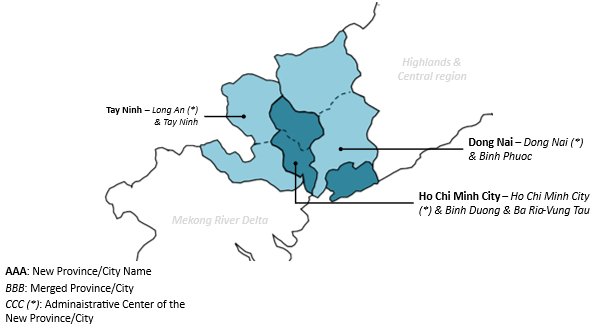
베트남의 신흥 산업 및 도시 중심지인 동남부 지역은 역내 협력과 경제 효율성을 제고하기 위해 대대적인 행정 개편을 진행하고 있습니다. 결정 제759/QĐ-TTg호에 따라[1], 6개 성급 단위가 하나의 중앙직할시(호찌민시)와 2개 성(동나이성 및 떠이닌성)으로 통합됩니다[2]. 5월 25일 서명된 결론 제157-KL/TW호에 따라 8월 15일부터 시행될 예정인 이번 새로운 구조는[3], 거버넌스를 간소화하고 인프라 계획을 최적화하며 투자자에게 더욱 매력적인 환경을 조성할 것으로 기대됩니다.
The Southeast’s provincial-level administrative units after the 2025 mergers
출처: B&Company Vietnam
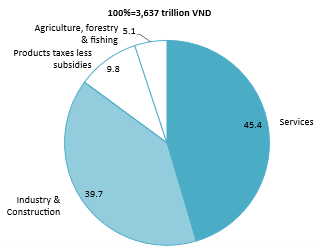
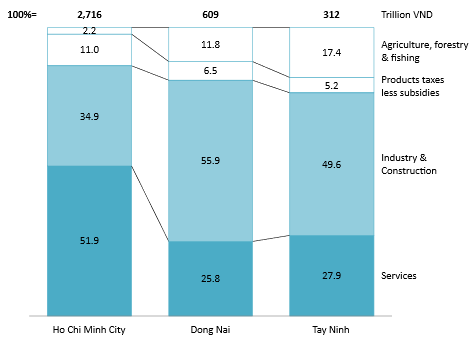
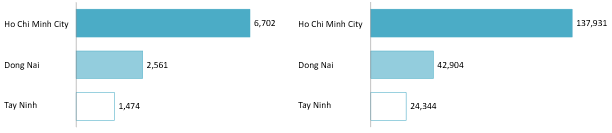
홍강 삼각주와 함께 동남부 지역은 베트남의 2대 경제 중심지 중 하나입니다. 2024년 동남부 지역의 GDP는 베트남 6대 핵심 경제권 중 가장 높은 3,600조 VND를 웃돌았으며, 국가 전체의 약 3분의 1을 차지했습니다. 행정 통합 이후 새롭게 확대된 호찌민시는 과거 베트남의 성급 경제 규모 3위와 6위였던 빈즈엉성과 바리아붕따우성을 편입하게 됩니다. 이에 따라 새로운 호찌민시 단독으로도 현재 국가 GDP의 20% 이상을 기여하며, 베트남의 압도적인 경제 중심지로서의 입지를 더욱 공고히 하게 됩니다. 통합 이후의 동나이성과 떠이닌성 역시 상당한 경제 확대가 예상되며, 두 지역 모두 GRDP 기준 전국 10대 성급 경제권에 포함될 것으로 전망됩니다.
행정 통합 이후 동남부 지역 각 성의 2024년 사회경제 지표
| 아니요. | 지방 | 인구
( 단위 : 천 명) |
총면적(단위: km)2) | GRDP
(단위: 십억 VND) |
성장률
(단위: %) |
| 1 | 호치민 시 | 13,609 | 6,773 | 2,715,780 | 8.0 |
| 2 | 동나이 | 4,428 | 12,737 | 609,176 | 8.3 |
| 3 | 따이닌 | 2,959 | 8,537 | 312,464 | 7.5 |
| 총 | 20,996 | 28,047 | 3,637,420 | 8.0 | |
출처: 결의안 제60-NQ/TW호, 결정 번호 759/QD-TTg, 통계청(GSO), 지방 통계청, B&Company 종합
동남부 지역의 경제적 특성과 투자 현황
동남부 지역은 경제 발전을 견인하는 매우 전략적인 입지를 갖추고 있습니다. 이 지역은 농업 및 양식업의 베트남 대표 거점인 메콩 삼각주, 주요 해양 경제 중심지에 접근할 수 있는 남중부 해안, 그리고 산업용 작물 원료의 주요 공급지인 중부고원과 접하고 있습니다. 또한 ASEAN의 중심부와 인접해 있으며 주요 국제 해상 및 항공 노선을 따라 위치하고 있습니다. 이러한 우수한 입지를 바탕으로 동남부 지역은 외국인 투자가 주도하는 주요 산업 거점으로 부상하는 동시에 물류, 금융 및 고부가가치 서비스 분야의 국내외 중심지로 성장하고 있습니다.
관련기사















로그인 / 회원가입
계정 없이 계속하기
로그인 / 회원가입
뉴스레터 구독