

 English
  日本語
日本語  Tiếng Việt
  简体中文
简体中文  한국어
한국어 Digital health in Vietnam is experiencing strong growth, driven by the rising demand for healthcare services and the potential of digital technologies to enhance efficiency, accessibility, and the quality of medical care.

20Aug2025
Latest News & Report / Vietnam Briefing
Comments: No Comments.
Vietnam digital health market was valued at USD 398.15 million in 2024 and is anticipated to witness robust growth during the forecast period, with a CAGR of 11.45% through 2030 [1]. This growth is driven by the rising demand for healthcare services, especially amid the overcrowding of public hospitals and the increasing desire among the population to access higher-quality medical care.
According to OECD, Digital health refers to the application of digital technologies—such as telemedicine, artificial intelligence (AI), big data, and other ICT tools—to support and enhance health systems and the delivery of healthcare services. It offers significant opportunities to improve efficiency, accessibility, and health outcomes [2]
Digital Health Market 2024 – 2030
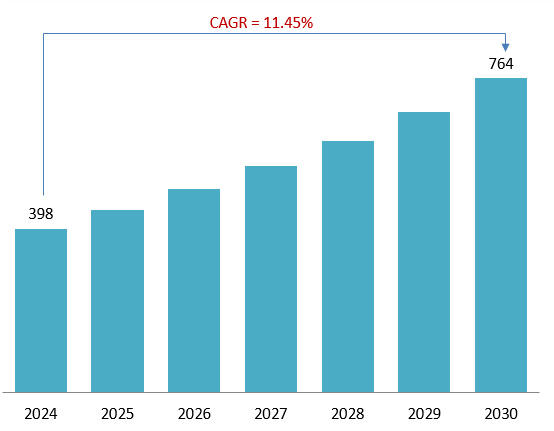
Source: TechSci Research
Government support
The Vietnamese government plays an active role in accelerating digital health, not just regulating it. Under the National Digital Transformation Program (Decision 749/QĐ-TTg), healthcare is designated as a top-priority sector. Key initiatives include:
– Mandatory EHR adoption: All healthcare providers are required to implement Electronic Health Records (EHR) by 2025–2026, creating a massive, non-optional B2B demand for health IT solutions. These records form the data backbone for future digital services like AI diagnosis and personalized medicine.
– VNeID integration: Linking EHRs to the national digital ID system (VNeID) will unify health records for nearly 100 million citizens—unlocking huge potential for data-driven healthcare.
– Telehealth infrastructure: A state-led initiative is connecting 1,000+ hospitals and clinics through telemedicine, easing central hospital congestion and enabling remote care.
– Policy & funding support: The government has committed significant funding (e.g., VND 30 trillion or ~USD 1.26 billion) to fast-track healthcare digitalization.
Core Market Segments: Pillars of Digital Health in Vietnam
Vietnam’s digital health landscape is shaped by several core segments, each addressing different healthcare needs through distinct technological approaches. From remote consultations to AI-driven diagnostics, these segments form the structural pillars of a rapidly evolving industry. The table below outlines the key segments, their functions, and notable players driving innovation and adoption across the market.
| Segment | Description | Notable Figures / Examples |
| Telehealth / Telemedicine | Remote medical consultation and chronic disease monitoring | Jio Health, Med247, eDoctor |
| mHealth (Mobile Health) | Health/fitness apps, medication tracking, wearable devices | Jio Health, Med247, eDoctor, application
FPT Long Châu / Pharmacity |
| Health IT Systems (EHR/EMR/HIS) | Electronic Health Records, Electronic Medical Records, Hospital IT systems | FPT.eHospital, Viettel-HIS, DrAid™ |
| e-Pharmacy | Online platforms for ordering and delivering medicines | BuyMed, FPT Long Châu, Pharmacity |
| AI & Precision Medicine | AI-based diagnostics, genomic testing, personalized medicine | VinBrain, Gene Solutions, Genetica |
Source: B&Company compilation
Several platforms in Vietnam have evolved into integrated digital health ecosystems, combining multiple features to meet diverse user needs. Notable examples include:
– Jio Health: Offers a one-stop solution with teleconsultation, home doctor visits, electronic health record management, and online medicine ordering.
– eDoctor: Provides remote consultations, personal health record tracking, at-home lab testing, and health monitoring via a mobile app.
– Med247: Operates both physical clinics and a digital platform, featuring telemedicine, appointment booking, chronic care management, and medication reminders.
– FPT Long Châu: Beyond its retail pharmacy chain, the platform supports online drug purchases, pharmacist consultations, prescription management, and links to healthcare services.
Growth Catalysts: What creates opportunities in Vietnam’s Digital Health Revolution
Vietnam’s unique demographic profile is driving both long-term structural and short-term consumer demand for digital health solutions. On one hand, the country is aging rapidly—by 2050, more than 25% of the population will be over 60 years old, accompanied by a sharp rise in chronic non-communicable diseases (NCDs) such as diabetes, hypertension, and cancer [4]. Unlike acute conditions, NCDs require continuous care, regular monitoring, and active patient participation—needs that align perfectly with digital tools. This is generating sustained demand for technologies like remote patient monitoring, AI-powered elderly care, and chronic disease management platforms.
At the same time, Vietnam benefits from a “golden population structure,” with 70% of its citizens aged 15–64 and nearly half under 34 [4]. This digitally native generation is driving strong short-term demand for mobile health apps, online doctor consultations, fitness platforms, and wearables—fueled by high smartphone penetration (over 84%) and increasing urbanization [5]. This young, tech-savvy population represents an ideal customer base for mobile health (mHealth) solutions and smart wearables. These tools support the growing shift toward preventive care and self-monitoring, unlocking a large and rapidly expanding segment of the digital health market.
Adding to this momentum is Vietnam’s fast-growing middle class and rising disposable incomes. By 2035, urban middle-income consumers are expected to comprise 50% of the population, showing a clear preference for private, high-quality, and tech-enabled healthcare services over overcrowded public hospitals [6]. The COVID-19 pandemic further accelerated this shift, normalizing telehealth and remote care while raising expectations for convenience, accessibility, and personalized wellness. As a result, demand is growing rapidly for self-monitoring tools, health tracking apps, and preventive care solutions tailored to the modern healthcare consumer.
Challenges in adopting digital healthcare
The legal and regulatory framework for digital health in Vietnam remains nascent, incomplete, and at times ambiguous—creating uncertainty for both investors and service providers. The Law on Medical Examination and Treatment (2023) and accompanying guidelines (e.g., Circular 30/2023/TT-BYT on conditions eligible for remote treatment) establish a legal foundation for telemedicine [7]. However, critical details such as liability, scope of practice, reimbursement mechanisms, and data interoperability remain unclear.
– Lack of Reimbursement Framework: There are currently no clear regulations for reimbursement of telemedicine services by Vietnam’s Social Health Insurance system or private insurers, posing a major barrier to large-scale adoption by providers.
– Liability and Licensing Ambiguities: Uncertainties persist around medical liability, licensing requirements for telehealth providers, and the legality of cross-border consultations. This regulatory vagueness may create a “first-mover disadvantage,” where early adopters risk becoming non-compliant or commercially unviable due to sudden policy changes.
– Data Security and Privacy: While the government has issued the Personal Data Protection Decree (Decree 13/2023/NĐ-CP), its provisions remain broad and open to interpretation [8]. Additionally, data localization requirements under the Cybersecurity Law may pose significant compliance burdens and operational costs for foreign companies.
Human element
One major challenge lies in patient trust and behavior, particularly among older individuals and those living in rural areas. Many patients still prefer traditional, face-to-face consultations, viewing them as more reliable and personal. Building trust in virtual diagnoses and digital platforms is therefore an ongoing obstacle, especially in regions where digital literacy remains low.
On the provider side, resistance to change among healthcare professionals is another barrier. Many clinicians are hesitant to adopt new technologies that disrupt their established workflows. Concerns about legal liability, increased workload, and the perceived limitations of virtual care often reduce their willingness to expand digital services.
The digital literacy gap also affects both patients and providers, especially outside major urban centers. To ensure inclusive adoption, substantial investment in training, education, and user-friendly platform design is essential. Without these efforts, digital health risks excluding large portions of the population.
Finally, data privacy concerns remain a critical hurdle. Both consumers and providers are reluctant to fully embrace eHealth platforms in the absence of clear, transparent cybersecurity protocols and a strong culture of data protection. Trust in the safety of personal health data is foundational to any scalable digital health system.
Conclusion
Vietnam’s eHealth market holds strong growth potential, driven by government initiatives, demographic trends, and rising demand for accessible, high-quality care. However, challenges such as regulatory gaps, limited reimbursement mechanisms, digital literacy barriers, and low trust in virtual care must be addressed. Overcoming these hurdles will be key to realizing a truly scalable and inclusive digital health ecosystem.
[1] TechSci Research, Vietnam eHealth Market <Access>
[2] OECD, Digital health <Access>
[3] Decision 749/QĐ-TTg <Access>
[4] Communist News, Population Aging and Its Impacts on Sustainable Development Today – Policy Implications for Vietnam <Access>
[5] Tien Phong, From Luxury to Mainstream: The Smartphone Revolution for All Segments of Vietnamese Society <Access>
[6] World Bank, Vietnam General Report 2035 <Access>
[7] Circular 30/2023/TT-BYT <Access>
[8] Decree 13/2023/NĐ-CP <Access>
B&Company
The first Japanese company specializing in market research in Vietnam since 2008. We provide a wide range of services including industry reports, industry interviews, consumer surveys, business matching. Additionally, we have recently developed a database of over 900,000 companies in Vietnam, which can be used to search for partners and analyze the market.
Please do not hesitate to contact us if you have any queries.
info@b-company.jp + (84) 28 3910 3913
Related article




































Log in / Register
SUBSCRIBE NEWSLETTER