

 English
  日本語
日本語  Tiếng Việt
  简体中文
简体中文  한국어
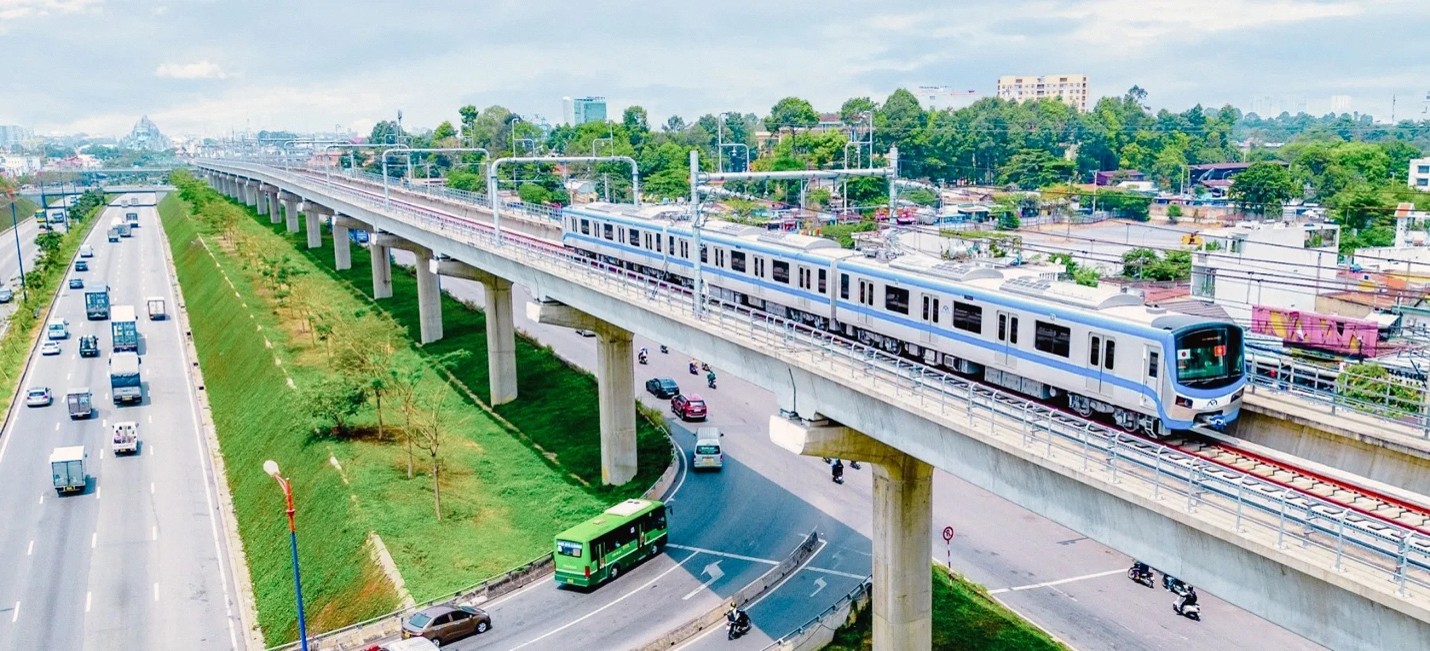
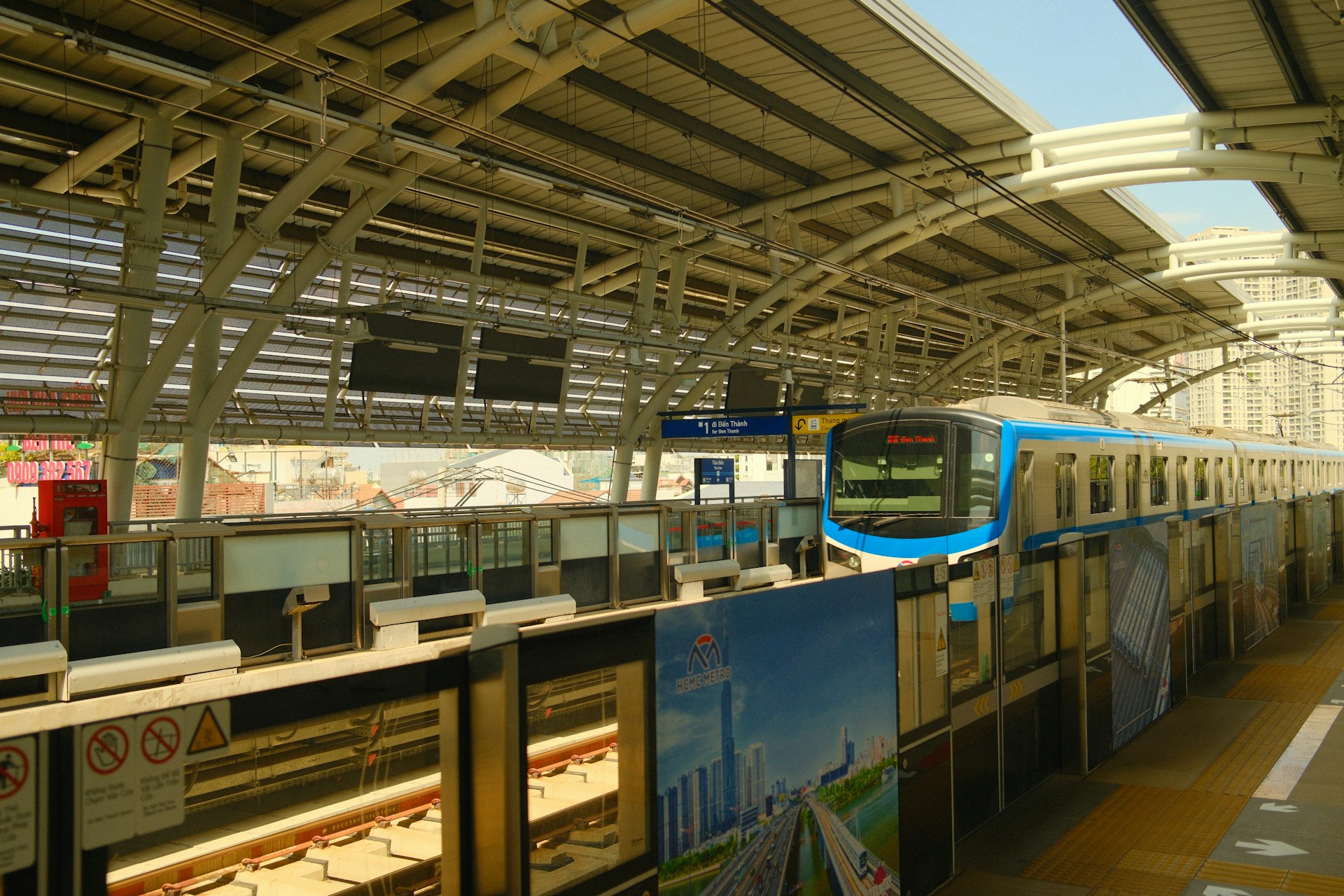
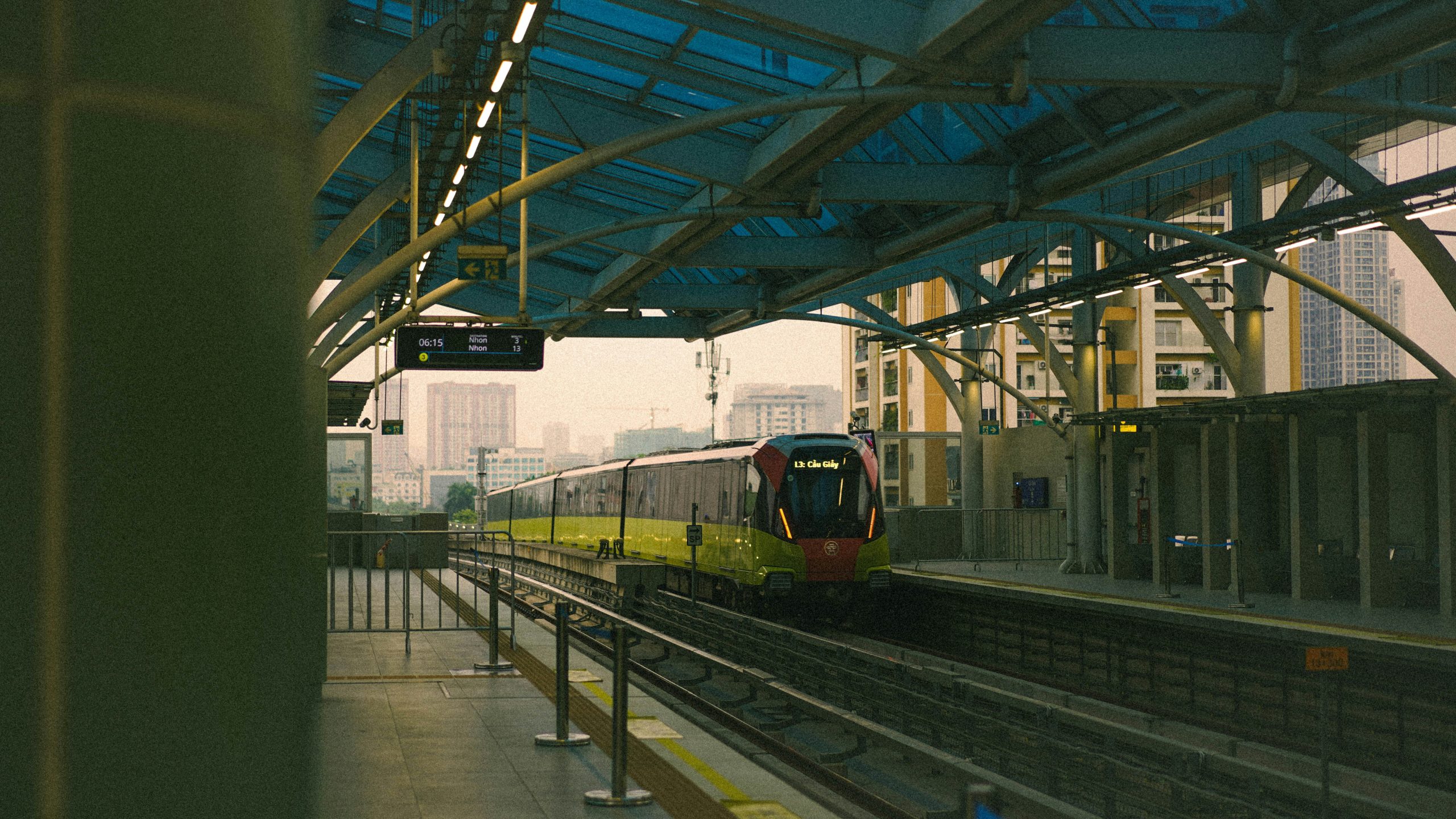
한국어 Metro Line 1 (Ben Thanh - Suoi Tien) is HCMC’s first metro line and Vietnam’s first urban railway to include an underground section.
29Sep2026
Latest News & Report / Vietnam Briefing
Comments: No Comments.
Abstract
Metro Line 1 (Ben Thanh – Suoi Tien) is HCMC’s first metro line and Vietnam’s first urban railway to include an underground section. The operation of Line 1 has shifted the focus of HCMC’s transport debate: The question is no longer whether a metro line can attract riders, but whether the city can turn one line into a connected, citywide rail network. Yet recent accessibility data shows that first-mile and last-mile connections, particularly feeder buses and walking access to stations, remain major barriers to making public transport competitive with motorbikes.
Metro Line 1 marks a turning point for HCMC’s public transport system
HCMC reached a major milestone on 22 December 2024, when Line 1 opened after 17 years from the signing of its loan agreement. The 19.7 km line connects Ben Thanh Market with Suoi Tien and has 14 stations.
In 2025, it carried 20.56 million passengers, averaging about 56,300 passengers per day and achieving 121.6% of its annual target[1]. Rather than proving that rail can replace motorbikes on its own, the result provides an initial indication that there is demand for reliable mass transit along a well-served urban corridor.
Metro Line 1 first full year performance
| Indicator | 2025 result |
| Annual passengers | 20.56 million |
| Equivalent daily average | ~56,300 |
| Achievement vs. annual target | 121.6% |
| Train trips operated | 80,154 |
Source: Tuoi Tre News
HCMC is shifting from individual metro projects toward a citywide rail network
The city is moving from individual metro corridors toward a connected urban railway network linking the city center with emerging urban areas, airports and surrounding provinces.
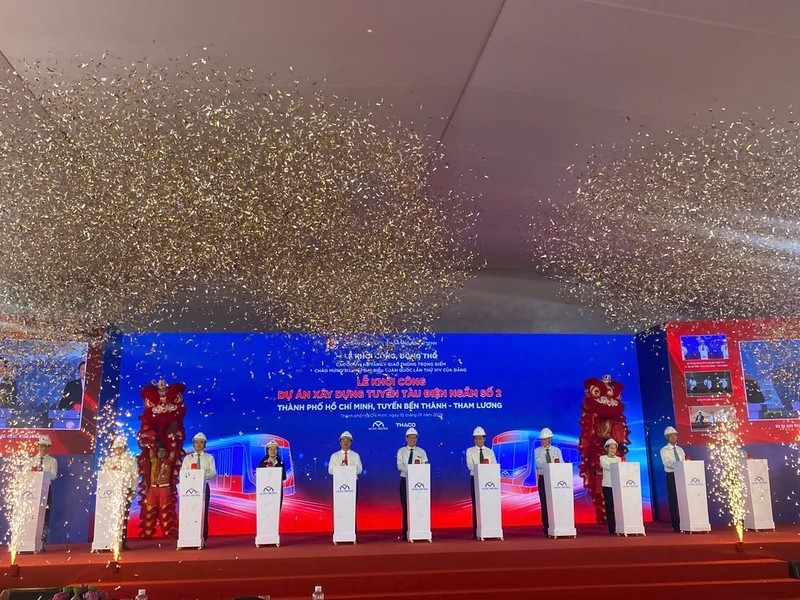
Metro Line 2 (Ben Thanh – Tham Luong) broke ground on 15 January 2026. The line will extend nearly 11.3 km, including about 9.3 km underground, with 10 underground stations, one elevated station and a depot[2]. It will connect the city center with the northwestern part of HCMC and intersect with Line 1 at Ben Thanh, creating the network’s most important interchange point. A separate Ben Thanh – Thu Thiem section broke ground on 29 April 2026; the approximately 6 km underground section includes six stations and will strengthen connections between the city center and Thu Thiem while supporting future links toward the Thu Thiem – Long Thanh railway corridor.
HCMC Metro Line 2 (Ben Thanh – Tham Luong) groundbreaking ceremony
Source: HCMC Metro
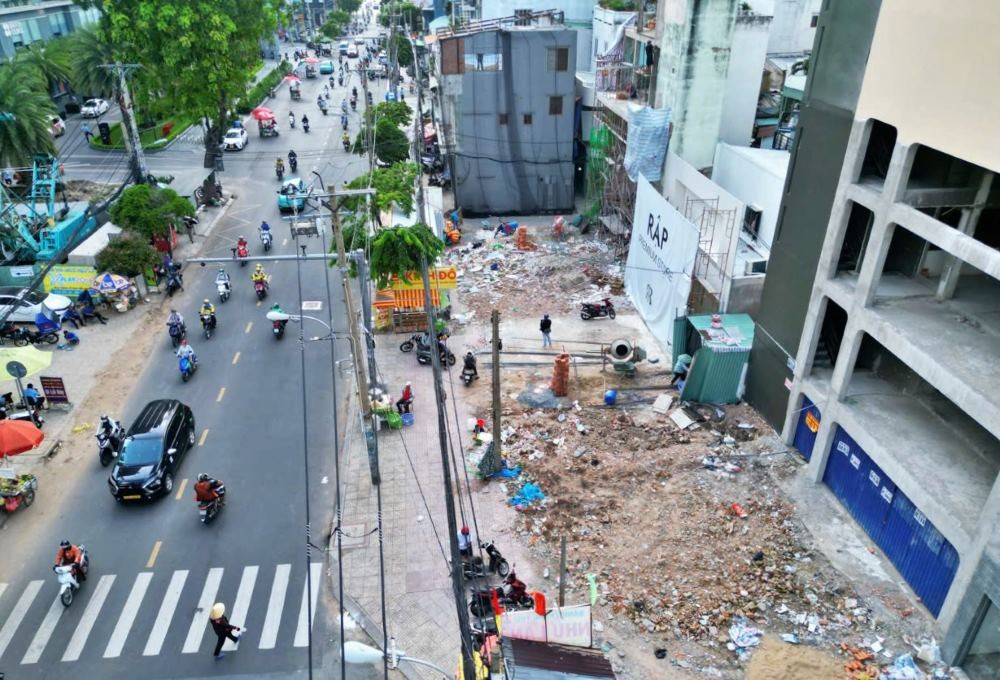
Construction site of Metro Line 2 at Dan Chu Roundabout
Source: Lao Dong News
Beyond Line 2, the latest implementation direction targets eight priority routes totaling about 255 km by 2030, followed by seven additional routes bringing the network to about 532 km by 2035. The program covers connections toward Thu Thiem, Long Thanh, Binh Duong and the northwest, indicating a shift toward a connected regional network[3].
Priority Urban Rail Projects Targeted for Completion by 2030
Unit: km
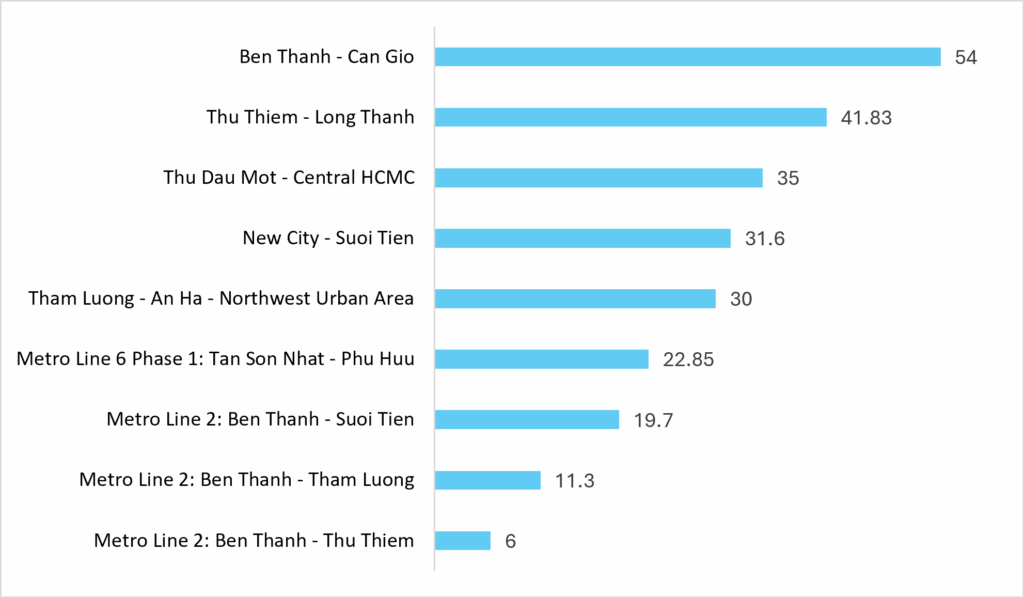
Source: HCMC People’s Council Electronic Information Portal
Priority Urban Rail Projects Targeted for Completion by 2035
Unit: km
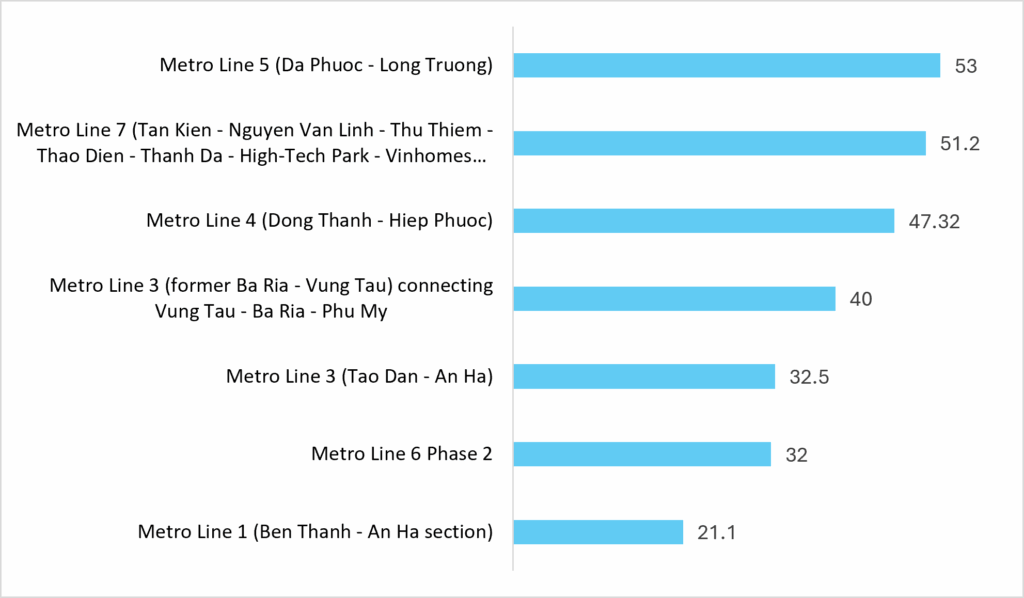
Source: HCMC People’s Council Electronic Information Portal
Urban Railway Network Planning Map in HCMC
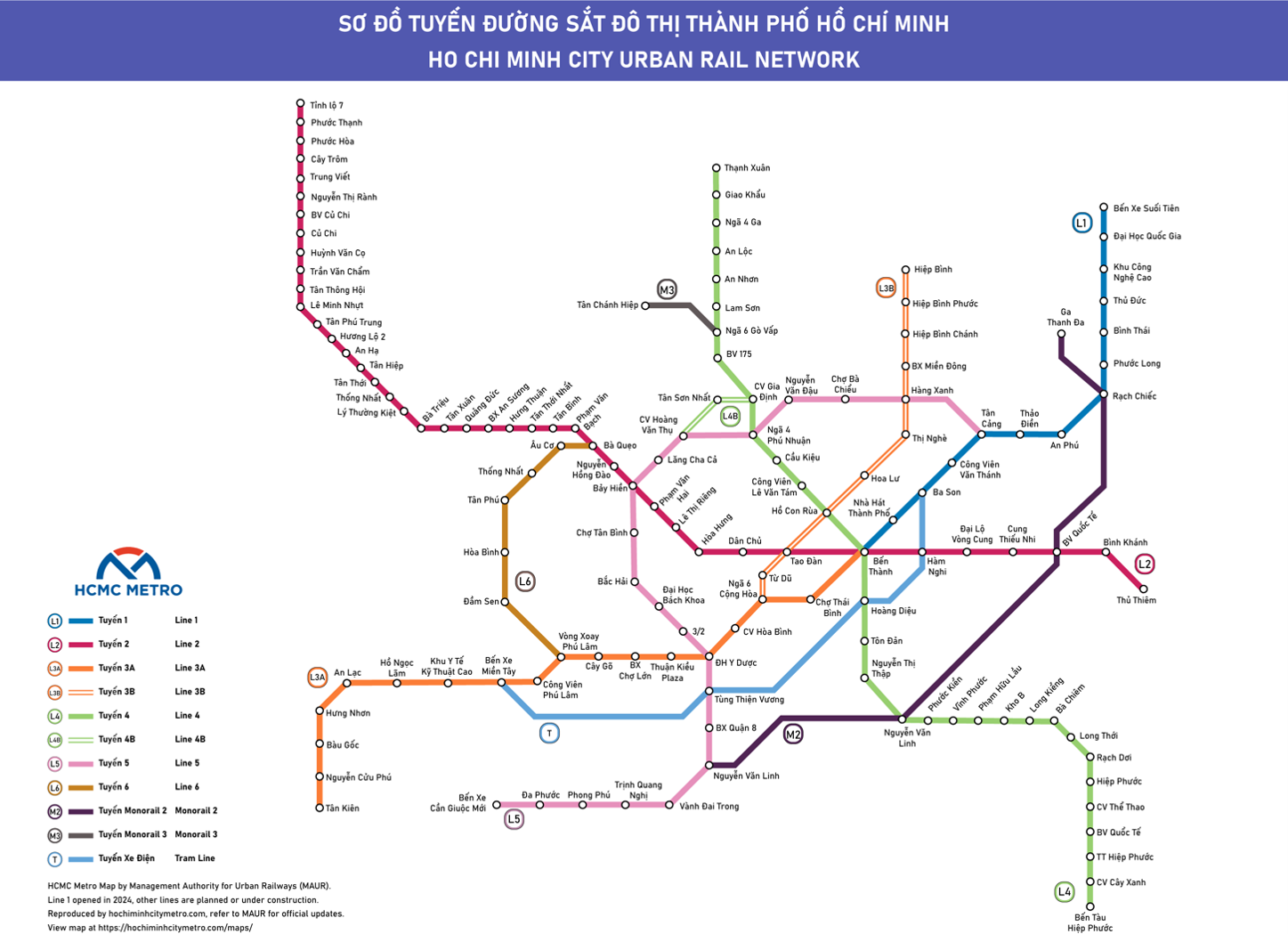
Source: Metro HCMC
Key challenges remain before metro can transform urban mobility
Infrastructure delivery and financing remain major constraints
HCMC’s Metro Line 1 illustrates the challenges of delivering large-scale urban railway projects. Initially approved at VND 17.387 trillion, the project underwent multiple adjustments before reaching a final investment of approximately VND 43.757 trillion, around 2.5 times the original estimate[4]. The project also faced delays related to land acquisition, technical standards, project coordination, and contractor arrangements.
Financing is another challenge. For Line 2, the shift from ODA to city budget financing was driven partly by the expiry of three ADB and EIB loan agreements and the need to extend KfW financing[5]. City budget financing reduces dependence on renegotiating external loans and gives the city a more direct financing mechanism, but also places greater responsibility on HCMC for capital allocation and disbursement. Line 2’s current investment is approximately VND 55.179 trillion.[6].
This shift, however, involves a trade-off. While city budget financing can reduce dependence on external loan procedures, it places a greater financing responsibility on HCMC and increases the city’s direct capital commitment. This becomes increasingly important as HCMC moves from a single operating line toward a much larger urban railway pipeline.
The scale of future investment is much larger. The latest plan targets 255 km through eight priority projects by 2030, with estimated investment of USD 26.87 billion. The ability to mobilize capital and maintain timely project delivery will therefore be critical to network expansion[7].
Estimated Investment for HCMC Regional Transport Routes
| Route | Estimated investment (Billion USD) |
| Thu Thiem – Long Thanh | 4.76 |
| Thu Dau Mot – Central HCMC | 4.68 |
| Ben Thanh – Can Gio | 4.57 |
| Metro Line 6 Phase 1 | 3.43 |
| Tham Luong – An Ha – Northwest Urban Area | 3.37 |
| Metro Line 2: Ben Thanh – Tham Luong | 2.19 |
| New City – Suoi Tien | 2.18 |
| Metro Line 2: Ben Thanh – Thu Thiem | 1.69 |
| Total | 26.87 |
Source: HCMC People’s Council Electronic Information Portal
Integrating the mobility ecosystem remains critical to turning metro expansion into daily mobility
Metro expansion alone will not make public transport convenient for everyday travel. Passengers still need reliable connections between homes, stations and final destinations, making feeder buses, walking access, parking and seamless transfers critical.
Parking is already a constraint on station access. As of March 2026, HCMC also had nearly 13 million registered vehicles in March 2026, including 11.5 million motorcycles, while parking infrastructure met only around 7 – 10% of estimated demand[8]. This limits the feasibility of combining private vehicles with metro travel, particularly for passengers who live beyond a convenient walking distance from stations.
Feeder buses face a separate first-mile challenge. A VnExpress simulation using HCMC Public Transport Management Center and OpenStreetMap data found that, for journeys reaching Line 1 within 60 minutes by public transport, bus access took about twice as long as motorbike travel on average. At Ben Thanh, the ratio remained 2.17 even within the 60-minute range.
Average Bus/Motorbike Travel Time Ratio by Access Range
| Station | ≤ 15 minutes | ≤ 30 minutes | ≤ 45 minutes | ≤ 60 minutes |
| Ben Thanh | 3.35 | 2.63 | 2.29 | 2.17 |
| Nha hat Thanh pho | 3.07 | 2.45 | 2.19 | 2.12 |
| Ba Son | 2.48 | 2.40 | 2.18 | 2.12 |
| Thao Dien | 3.34 | 2.21 | 2.03 | 1.96 |
| Van Thanh | 1.77 | 1.94 | 1.92 | 1.92 |
| Tan Cang | 2.28 | 2.12 | 2.04 | 2.00 |
| An Phu | 2.41 | 2.18 | 2.04 | 1.97 |
| Rach Chiec | 1.55 | 1.96 | 1.94 | 1.91 |
| Phuoc Long | 2.80 | 2.25 | 2.08 | 2.01 |
| Binh Thai | 3.02 | 2.52 | 2.28 | 2.19 |
| Thu Duc | 2.96 | 2.41 | 2.18 | 2.10 |
| High Tech Park | 3.04 | 2.52 | 2.26 | 2.14 |
| National University | 1.51 | 1.82 | 1.69 | 1.65 |
| Suoi Tien Bus Terminal | 2.53 | 2.27 | 2.00 | 1.88 |
Source: Vn Express
Note: A higher ratio means bus travel takes proportionally longer than motorbike travel for that access range. The gap is particularly significant around central stations: At Ben Thanh, the average bus/motorbike travel-time ratio ranges from 3.35 for trips accessible within 15 minutes to 2.17 for trips within 60 minutes.
The city is responding by strengthening feeder services and station connections. Its targets include bringing bus and metro stops within 300 – 500 m of residential areas and increasing public transport’s share to 15 – 20% of trips by 2030. Between July 1 and September 22, 2026, 134 bus routes receiving free fare support carried more than 26.8 million passenger trips, up 48% year on year. The city is also considering 9-16-seat demand-responsive minibuses through the MultiGo platform to connect residential streets with major bus and metro corridors.[9]. The city is also considering 9 – 16-seat demand responsive minibuses using the MultiGo platform to connect residential streets with major bus and metro corridors.
Payment integration is also moving from a regulatory framework toward implementation. Since August 2026, HCMC’s bus regulations have formally recognized intermodal tickets covering multiple public-transport modes and cashless payment methods such as contactless cards, e-wallets and QR codes. However, the specific integrated fare mechanism for bus-urban rail transfers remains under a draft framework. Under the proposal, cashless passengers could transfer between buses and urban rail within 120 minutes without purchasing a separate ticket for each transfer, with the new fare framework expected from January 2027 if approved[10][11].
Together, these measures show that the next challenge is not simply to expand rail capacity, but to make the entire journey, from station access and feeder transport to service and payment, work as one integrated mobility system.
Opportunities for businesses from metro expansion
Metro expansion is creating opportunities beyond civil construction in TOD, station area retail, feeder mobility, and railway technology and services. Five TOD areas along Line 2 have been approved, covering nearly 940 hectares[12].
Map of the five TOD zones along Metro Line 2
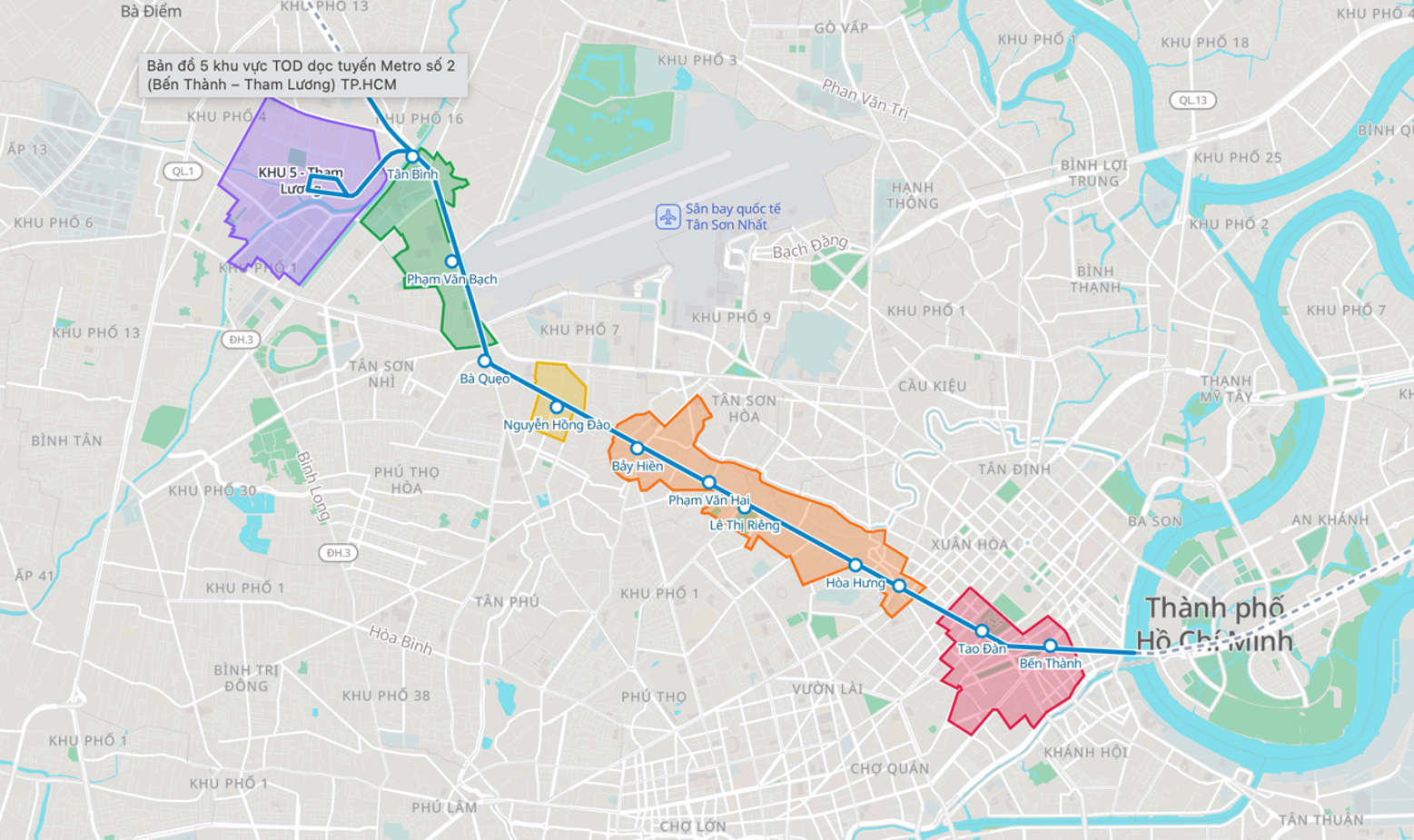
Source: Anpakong
5 TOD areas summary table
| Zone | Stations | Area | Potential business focus |
| 1 – City center | Ben Thanh, Tao Dan | 188.57 ha | Retail, offices, mixed-use redevelopment |
| 2 – CMT8 axis | Dan Chu, Hoa Hung, Le Thi Rieng, Pham Van Hai, Bay Hien | 265.07 ha | Station area retail, residential/commercial redevelopment |
| 3 – Nguyen Hong Dao | Nguyen Hong Dao | 43.81 ha | Compact station area development and services |
| 4 – Western line/Logistics | Ba Queo, Pham Van Bach, Tay Thanh | 148.92 ha | Commercial, logistics and supporting services |
| 5 – Tham Luong | Station & Depot Tham Luong | 292.81 ha | TOD, transport-related services, O&M and technical facilities |
Source: Anpakong, B&Company’s synthesis
For real estate and retail investors, station location should therefore be assessed together with the future network structure, not simply distance from a metro station. Ben Thanh is already the interchange between Metro Lines 1 and 2, while Tao Dan is planned as a connection point for the future Thu Dau Mot- HCMC corridor. The wider priority network also includes the Tham Luong – An Ha – Northwest Urban Area extension. The Tham Luong station and depot area is also relevant for investment screening because it is the largest of the five designated TOD areas along Line 2, at approximately 292.8 ha, and combines a station with a depot.
The opportunity extends beyond property development. The city is seeking to develop domestic capabilities in system integration, signaling, power, SCADA, OCC, automatic fare collection and station systems, alongside operations and maintenance. In July 2026, MAUR and GTEL agreed to prioritize research, technology transfer and workforce development in these areas for Metro Line 2 and other urban railway projects planned for 2026 – 2030.[13].
The Line 1 experience also provides a concrete example of opportunities for foreign railway expertise beyond construction. Tokyo Metro began an O&M advisory business for HCMC Metro Line 1 in May 2025, providing expertise in station operations, maintenance planning and training[14].
Conclusion
HCMC’s metro development has entered a new phase: Line 1 has demonstrated demand for urban rail, while Line 2 and the wider 2030 – 2035 pipeline are moving the city toward a regional network. The challenge is now to execute this expansion while making the network usable as a daily mobility system. Financing capacity, project delivery, feeder connectivity and integrated fares will be critical to this transition. For businesses, the opportunity extends beyond railway construction to TOD, station area services, feeder mobility, railway systems, technology transfer and O&M.
Read more
Hanoi Metro at a turning point: From delayed projects to network expansion
Ho Chi Minh City’s urban mobility outlook: Metro alone is not enough to beat the motorbike
* If you wish to quote any information from this article, please kindly cite the source along with the link to the original article to respect copyright.
| B&Company
The first Japanese company specializing in market research in Vietnam since 2008. We provide a wide range of services including industry reports, industry interviews, consumer surveys, business matching. Additionally, we have recently developed a database of over 1,000,000 companies in Vietnam, which can be used to search for partners and analyze the market. Please do not hesitate to contact us if you have any queries. info@b-company.jp + (84) 24 3978 5165 |
Cover photo: HCMC Metro
[1] https://news.tuoitre.vn/saigontimes/hcmc-metro-line-1-carries-over-20-5-million-passengers-in-2025-105511945.htm
[2] https://hdnd.hochiminhcity.gov.vn/tin-tuc/ban-kinh-te-ngan-sach/khao-sat-tuyen-metro-so-2-day-nhanh-tien-do-bao-dam-tinh-dong-bo-he-thong
[3] https://hdnd.hochiminhcity.gov.vn/tin-tuc/ban-do-thi/tp-hcm-xay-dung-so-do-gantt-lam-8-tuyen-metro-xong-truoc-2030
[4] https://vneconomy.vn/long-dong-so-phan-cac-du-an-metro.htm
[5] https://moc.gov.vn/vn/Pages/chitiettin.aspx?ChuyenmucID=1184&IDNews=84129&tieude=tp-hcm-su-dung-gan-48-000-ty-dong-von-ngan-sach-de-trien-khai-tuyen-metro-so-2.aspx
[6] https://moc.gov.vn/vn/tin-tuc/1184/91157/thanh-pho-ho-chi-minh-khoi-cong-du-an-xay-dung-tuyen-metro-so-2-ben-thanh–tham-luong.aspx
[7] https://dantri.com.vn/thoi-su/tphcm-muon-co-255km-metro-vao-nam-2030-vuot-chi-tieu-trung-uong-giao-20260730214924653.htm
[8] https://vnexpress.net/xe-buyt-den-metro-cham-hon-xe-may-bao-nhieu-lan-5100710.html
[9] https://tphcm.baochinhphu.vn/hanh-khach-su-dung-xe-buyt-tai-tphcm-tang-48-101260925192507868.htm
[10] https://thuvienphapluat.vn/van-ban/Giao-thong-Van-tai/Quyet-dinh-62-2026-QD-UBND-quan-ly-hoat-dong-van-tai-hanh-khach-cong-cong-bang-xe-buyt-Ho-Chi-Minh-719133.aspx?tab=7
[11] https://tuoitre.vn/tphcm-du-kien-mua-mot-ve-di-duoc-ca-xe-buyt-va-metro-100260914104212145.htm
[12] https://ttbc-hcm.gov.vn/tp-hcm-duyet-ranh-quy-hoach-do-thi-tod-5-khu-vuc-doc-metro-so-2-1021630.html
[13] https://tphcm.baochinhphu.vn/day-manh-hop-tac-lam-chu-cong-nghe-tich-hop-he-thong-van-hanh-va-bao-tri-cac-tuyen-metro-101260717183252261.htm
[14] https://www.tokyometro.jp/lang_th/news/metroNews250522_35ENG.pdf
Related article







Log in / Register
SUBSCRIBE NEWSLETTER