

 English
  日本語
日本語  Tiếng Việt
  简体中文
简体中文  한국어
한국어 The tripartite model linking farmers, factories, and distribution systems offers a solution to key challenges in production scale and quality.

19Jan2026
Latest News & Report / Vietnam Briefing
Comments: No Comments.
Vietnam’s shift from a production-focused to an agricultural economy requires urgent value chain restructuring. In this context, the tripartite model linking farmers, processing factories, and distribution systems offers a solution to key challenges such as small-scale production, inconsistent quality, and supply-demand imbalances. Building a connected ecosystem is essential not only for economic development but also for enabling Vietnamese agricultural products to integrate more deeply into the global value chain.
New business models in agriculture
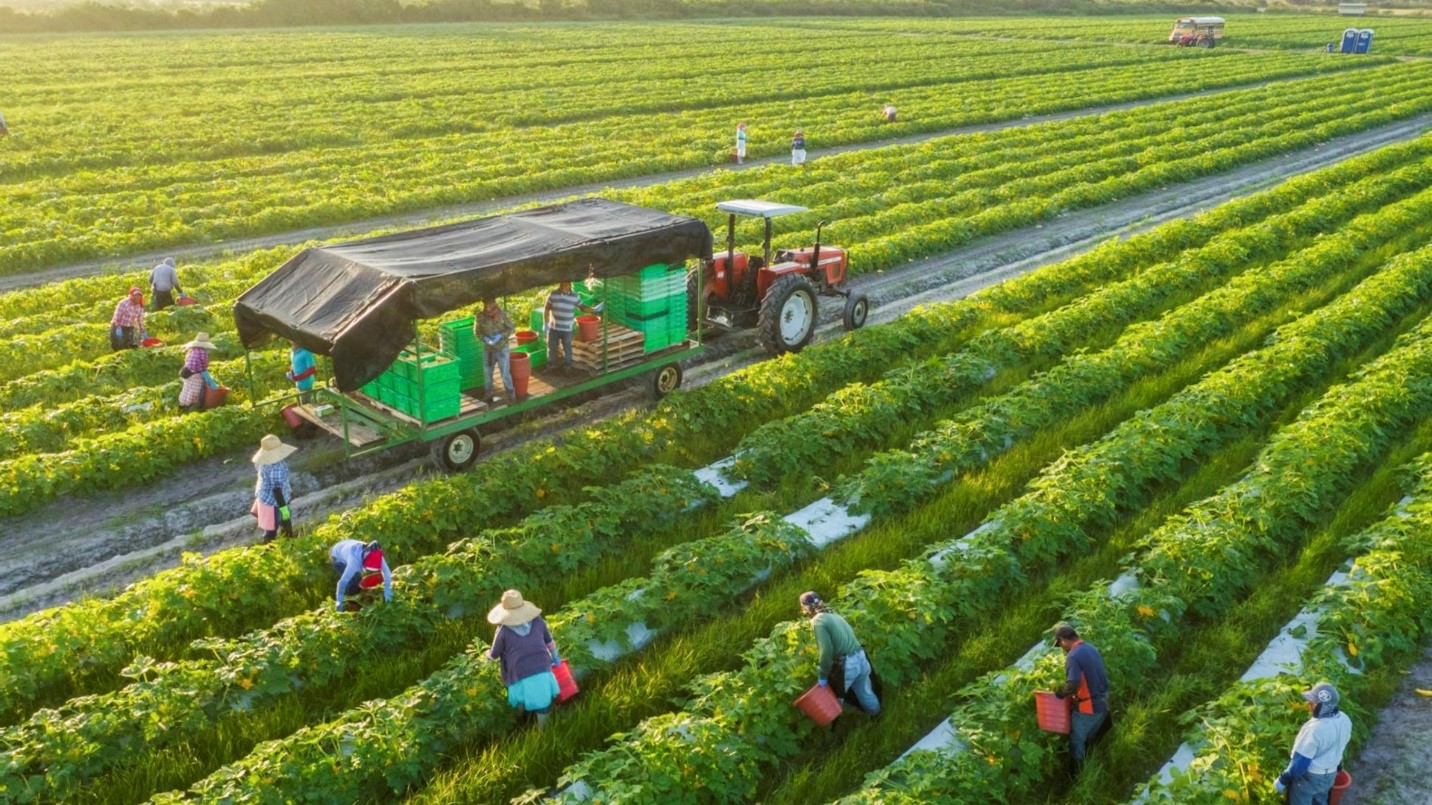
Source: https://digital.fpt.com/
Policy framework and institutional platform to promote value chain linkage
The foundation of current linkage models is primarily built on legal documents, particularly Government Decree No. 98/2018/ND-CP. From an economic standpoint, Decree 98/2018/ND-CP provides a strong financial incentive by offering 30% of the investment capital for machinery, equipment, and infrastructure projects like factories, warehouses, and processing facilities, with a maximum of 10 billion VND per project. This is especially beneficial for cooperatives and small- to medium-sized enterprises, which often struggle to secure long-term capital for technical infrastructure.
Forms of linkage according to Decree 98/2018/ND-CP
| Form of affiliation | Operating characteristics and support mechanisms | Primary beneficiaries |
| Linking from material supply to consumption | Enterprises supplying seeds, materials, and product procurement. | Small-scale households, Cooperatives. |
| Linking production organizations with consumption | Develop large-scale fields, applying VietGAP/GlobalGAP standards. | Cooperative, Enterprise. |
| Closed-loop value chain linkage | Integrated from production, preprocessing, processing to retail distribution. | Large agricultural corporation. |
| Infrastructure support link | Budget support for building warehouses, processing workshops, and yards. | Approved affiliate projects. |
B&Company’s synthesis
After more than six years of implementation, this model has proven its correctness in standardizing the production process and developing concentrated raw material areas, helping to elevate the position of Vietnamese agricultural brands in the international market. [1]
Operating mechanism and economic benefits of the three-party linkage model
The farmer – factory – distribution linkage model operates based on a highly specialized division of labor.
Benefit structure in the value chain
| Subject | Main role | Direct economic benefits | Risks are minimized |
| Farmer | Production, cultivation | Stable output, technical approach | Price fluctuations, lack of investment capital |
| Factory | Processing, preserving | Standardized materials, reduced operating costs | Supply chain disruption, poor quality |
| Distribution | Marketing, retail | Transparent products, customer trust | Counterfeit goods, goods of unclear origin |
Source: Communist Review
This vertical integration also brings significant added value to the entire agricultural sector by enhancing labor productivity and optimizing logistics costs. When the parties come together to plan production based on market forecasts, the situation of oversupply or artificial scarcity will be minimized, contributing to stabilizing food security and income for rural residents.[2]
The three-party benefit linkage model shifts from individual production to a collective economic organization based on the value chain.
Currently, the agricultural value chain in Vietnam operates through three main methods[3]:
Firstly, consumption contracts help businesses determine quality and cost right from the beginning of the season, while also providing credit and material support to farmers.
Secondly, investment support & input services allow farmers to contract costs and outsource processing on their own land, helping to reduce risks but with low profit margins.
Finally, a closed value chain, in which the enterprise controls 100% of the process from breeding to distribution, accounting for up to 70% of Vietnam’s pangasius production.
As of the end of June 2025, this agricultural value chain has recorded proud achievements with a total of 2,938 approved projects and linkage plans, including 1,968 projects and 970 linkage plans. The linkage network has connected 2,412 Cooperatives (HTX), 1,305 Enterprises, and 211,545 Farming Households, creating close cooperation among the participants. Among them, HTX plays a leading role in 2,331 projects/plans (accounting for nearly 80%), serving as an important bridge between farmers, factories, and distribution markets. The sectoral structure of the linkage projects shows a strong focus on Crop Production (accounting for 67%), followed by Livestock (23.7%), Forestry (6.3%), and Aquaculture (2.5%).[4]
Economic efficiency: The numbers that prove it
| Category | Local | Actual effectiveness | Case Study |
| Rice grains | Đồng Tháp | – Profit increase > 3.7 million VND/ha
– Purchase price is 200 VND/kg higher than the market price |
Tan Hong Food Co., Ltd (Loc Troi Group)
• Linkage Mechanism: The Tan Hong factory is a core unit in the group’s rice production and wholesale system. Through the “Together with Farmers in the Fields” program, a dedicated team of engineers (“Three Together” Force) works directly with farmers, providing technical guidance and supervising cultivation through field diaries. • Economic Impact: Field reports indicate that farmers participating in this linkage model earn over VND 3.7 million more per hectare per year compared with farmers outside the linked production area. |
| Coffee | Central Highlands | – Achieved 41 million VND/ha (34% higher compared to no linkage)
– HTX reached a peak of 51.46 million VND/ha |
Linkage Model via Intermediate Cooperatives – Case of Dak Man Company
• Participants: Dak Man Company collaborates with 10 cooperatives (e.g., Ea Kiet, Cu Dlie Mnong, Hoa Dong, Ea Tu), covering 668 farming households and 1,241 hectares. • Operating Model: Instead of contracting directly with individual farmers, the company works through cooperatives, which implement company policies and provide farmers with guidance on sustainable production in line with Fairtrade standards. • Economic Performance: Average profit reaches VND 51.46 million/ha—around 25% higher than comparable linked farmers. Purchase prices remain stable and exceed market levels by VND 2,500–3,000/kg. • Market & Distribution: Fairtrade-certified coffee is exported by Dak Man at a premium of up to USD 395/ton compared with conventional coffee.
|
| Vegetables and fruits | Lâm Đồng | – Profit of 250 – 300 million VND/ha/year
– Higher by 40% compared to households outside the model |
N/A |
| Aquatic products | Can Tho | – Profit of 600 – 700 million VND/household/year
– Mainly applied to basa fish |
N/A |
| Animal husbandry | Bac Ninh | – Income 10 – 15 million VND/month
– Link with foreign enterprises (Nippon Zoki) |
Rabbit Farming Model at Hop Thanh Rabbit Production and Service Cooperative (Son Dong Commune, Bac Ninh Province) Since 2015, the cooperative has operated under a product off-take agreement with Nippon Zoki Company, a Japanese enterprise in pharmaceuticals, food, and animal feed. • Nippon Zoki Company (Investor/Processor): ·• Farmers: Results: |
B&Company’s synthesis
Opportunities and development potential of the three-party benefit linkage model
The three-party linkage model of farmers – factories – distributors in Vietnam is facing great opportunities and development potential, shifting from resource-based production to a knowledge-based and value-added economy.
Opportunities from the shift in market demand
It is forecasted that by the mid-2030s, more than 50% of Vietnam’s population will join the middle class, creating strong purchasing power for high-quality agricultural products. This class is witnessing a shift in consumption mindset, from simply eating enough to prioritizing delicious and safe food, especially the trend of reducing rice consumption and increasing demand for animal products, vegetables, and processed foods. Additionally, modern retail is developing strongly, with revenue from supermarket and convenience store systems in Vietnam doubling and continuing to expand, requiring supply chains to be vertically coordinated to ensure stability and traceability. Alongside this, Vietnam is also deeply integrating into the global economy with nearly 20 Free Trade Agreements (FTAs) signed or under negotiation, opening significant opportunities for Vietnamese agricultural products to access East Asian and Southeast Asian markets, where food consumption value is forecasted to reach over 2,000 billion USD by 2030.[5]
Potential from institutional and policy innovation
The government is shifting from an administrative management role to a facilitative support role, focusing on core public services such as research, early warning, and connectivity infrastructure to encourage private investment in the value chain. Decree 98/2018/ND-CP has established an important legal foundation, helping to form nearly 3,000 linkage projects by 2025, opening opportunities to develop large-scale and professional raw material zones. At the same time, the development of new-style Cooperatives (HTX) has become a key nucleus in leading nearly 80% of linkage projects, systematically connecting hundreds of thousands of farming households with factories and distributors.[6]
Potential to enhance value through science and technology
Vietnam aims that by 2030, more than 80% of agricultural growth will come from increases in total factor productivity (TFP) through innovation, rather than relying solely on increased inputs such as chemicals or land. In addition, digitizing the value chain, building a national digital database system on cultivation areas, livestock, and traceability will help make information transparent, minimize risks for investors, and increase consumer confidence. At the same time, Vietnam also focuses on repositioning and building agricultural product brands, with the goal that by 2030, more than 50% of exported agricultural products will be refined and value-added products, helping the country move beyond the role of a “cheap raw material supplier” in the international market.[7]
Potential for sustainable development and adaptation
Agriculture “More from Less” is a linkage model that helps apply sustainable farming processes such as VietGAP, GlobalGAP, not only reducing environmental pollution and carbon emissions but also increasing profits for the participants. At the same time, this model also helps farmers adapt to climate change, proactively shift crop and livestock structures, for example, switching from rice cultivation to aquaculture in saline intrusion areas, turning climate challenges into new business opportunities.[8]
Effectively exploiting these potentials not only helps increase farmers’ income but also assists businesses (factories, distributors) in ensuring a stable supply, consistent quality, and elevating the position of Vietnamese agricultural products in the global value chain.
Conclusion
The tripartite linkage model between farmers, factories, and distributors in Vietnam is opening up strong development opportunities in the context of agriculture shifting towards green, organic, and sustainable directions. The policies of the Party and the State, along with the emergence of agri-tech startups, create a solid foundation to realize the vision of becoming a leading country in exporting high-quality agricultural products. The success of this model will depend on the complete connection between policies, infrastructure, technology, and cooperation among parties in the value chain, opening great opportunities for Vietnamese agricultural products to reach far on the international stage.
* If you wish to quote any information from this article, please kindly cite the source along with the link to the original article to respect copyright.
| B&Company
The first Japanese company specializing in market research in Vietnam since 2008. We provide a wide range of services including industry reports, industry interviews, consumer surveys, business matching. Additionally, we have recently developed a database of over 900,000 companies in Vietnam, which can be used to search for partners and analyze the market. Please do not hesitate to contact us if you have any queries. info@b-company.jp + (84) 28 3910 3913 |
[1] Vneconomy.vn, Value chain integration is the “institutional key” to modern agriculture (https://vneconomy.vn/lien-ket-chuoi-gia-tri-la-chia-khoa-the-che-cho-nong-nghiep-hien-dai.htm)
[2] Communist Review, The model involves linking agricultural production and consumption through contracts between businesses and farmers (https://www.tapchicongsan.org.vn/nghien-cu/-/2018/825268/mo-hinh-lien-ket-san-xuat%2C-tieu-thu-san-pham-nong-nghiep-theo-hinh-thuc-hop-dong-giua-doanh-nghiep-va-nong-ho.aspx)
[3] Communist Review, The model involves linking agricultural production and consumption through contracts between businesses and farmers (https://www.tapchicongsan.org.vn/web/guest/nghien-cu/-/2018/825268/mo-hinh-lien-ket-san-xuat%2C-tieu-thu-san-pham-nong-nghiep-theo-hinh-thuc-hop-dong-giua-doanh-nghiep-va-nong-ho.aspx)
[4] nnmt.net.vn, Part 1: Six Years of Implementing Decree No. 98/2018/ND-CP: The Journey to Perfecting Institutions for Linking and Developing Agricultural Product Value Chains (https://nnmt.net.vn/ky-1-sau-nam-thuc-hien-nghi-dinh-so-982018nd-cp-hanh-trinh-hoan-thien-the-che-lien-ket-va-phat-trien-chuoi-gia-tri-nong-san)
[5] Worldbank, Transforming Vietnamese Agriculture: Gaining more from less (https://documents1.worldbank.org/curated/en/116761474894023632/pdf/108510-WP-PUBLIC.pdf)
[6] nnmt.net.vn, Part 1: Six Years of Implementing Decree No. 98/2018/ND-CP: The Journey to Perfecting Institutions for Linking and Developing Agricultural Product Value Chains (https://nnmt.net.vn/ky-1-sau-nam-thuc-hien-nghi-dinh-so-982018nd-cp-hanh-trinh-hoan-thien-the-che-lien-ket-va-phat-trien-chuoi-gia-tri-nong-san)
[7] Worldbank, Transforming Vietnamese Agriculture: Gaining more from less (https://documents1.worldbank.org/curated/en/116761474894023632/pdf/108510-WP-PUBLIC.pdf)
[8] Worldbank, Transforming Vietnamese Agriculture: Gaining more from less (https://documents1.worldbank.org/curated/en/116761474894023632/pdf/108510-WP-PUBLIC.pdf)
Related article











Log in / Register
SUBSCRIBE NEWSLETTER