

 English
  日本語
日本語  Tiếng Việt
  简体中文
简体中文  한국어
한국어 This reviews Vietnam’s DPPA framework under Decree 57/2025/ND-CP, and what Japanese manufacturers should consider before buying renewable power.
03Jul2026
Latest News & Report / Vietnam Briefing
Comments: No Comments.
Vietnam’s Direct Power Purchase Agreement (DPPA) framework allows large electricity users to buy renewable power more directly from generators. For manufacturers, this is more than an energy policy change. It may affect site selection, ESG reporting, operating costs, and supplier qualification. This article reviews Vietnam’s DPPA framework under Decree 57/2025/ND-CP, its relevance to factories, and what Japanese manufacturers should consider before using green power procurement as part of their Vietnam investment strategy.
From green ambition to procurement questions
For many manufacturers in Vietnam, electricity used to be a simple operating cost. A factory connected to the grid, bought power through the local electricity supplier, and focused mainly on price and reliability. That is changing.
Global buyers are increasingly asking suppliers to reduce Scope 2 emissions. Export manufacturers face pressure from ESG rules, customer audits, RE100 commitments and carbon-related requirements in markets such as Japan, Europe and the United States. For a factory in Vietnam, the question is no longer only “Can we get enough power?” It is also “Can we prove that part of our power comes from renewable sources?”
Installed power capacity in Vietnam
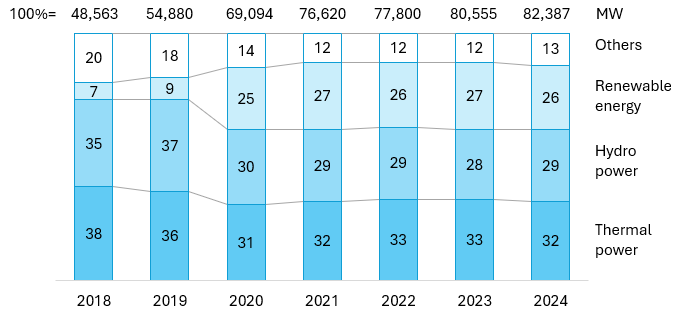
Source: B&Company
This is where Vietnam’s Direct Power Purchase Agreement, or DPPA, becomes important. In March 2025, the Government issued Decree No. 57/2025/ND-CP on the mechanism for direct electricity purchase and sale between renewable energy generators and large electricity users. The decree took effect from March 3, 2025 and replaced Decree No. 80/2024/ND-CP. EVN’s summary notes that Decree 57 regulates direct electricity trading through both separate grid connection and the national grid.
For manufacturers, this is a major step. Vietnam is not yet a fully liberalized electricity market, but DPPA gives large users a more formal route to procure renewable electricity. It also sends a signal to foreign investors that green electricity procurement is becoming part of Vietnam’s industrial competitiveness.
What does DPPA allow?
In simple terms, DPPA allows eligible large electricity users to buy renewable power through two main models.
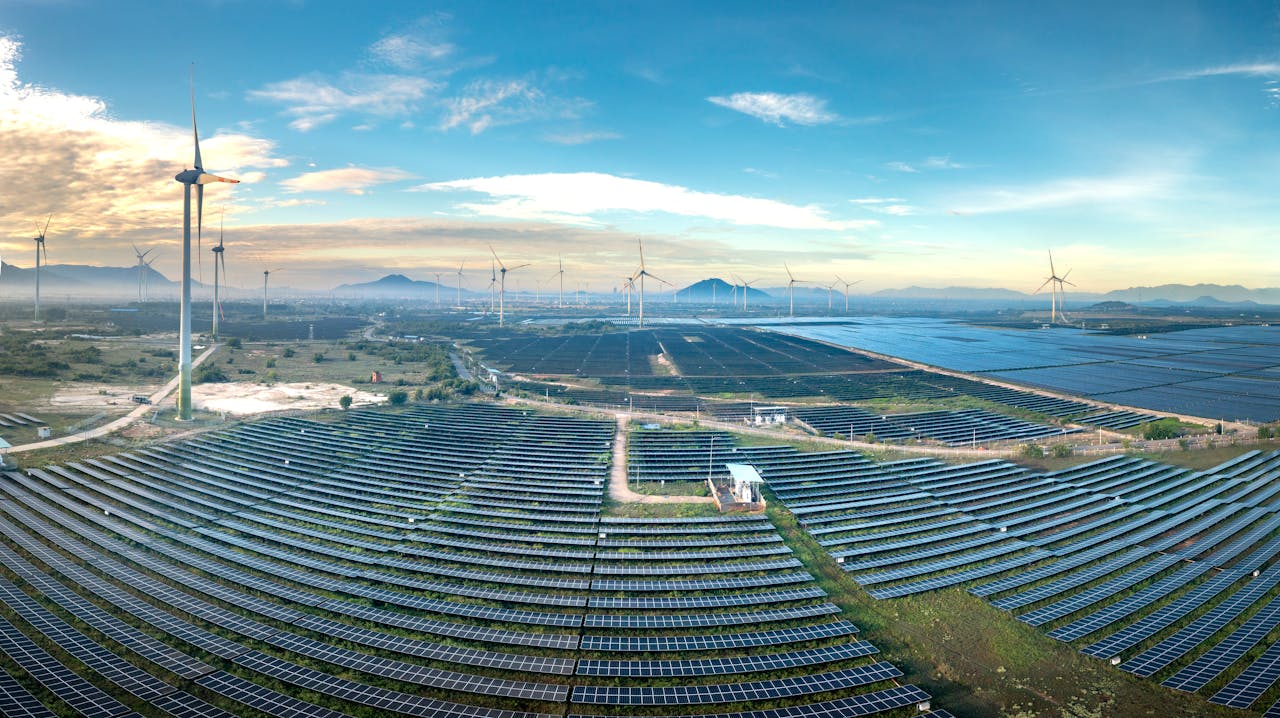
The first is a private or separate-grid model. In this case, a renewable power generator and a large customer are connected by a private grid outside the national grid. This is easier to imagine when a solar rooftop project, a nearby solar farm, or a renewable generation facility supplies power directly to an industrial user. Decree 57 provides a clearer legal framework for private grids, including infrastructure such as overhead lines, underground cables, transformers and related equipment.
The second is an on-grid model. In this model, electricity is delivered through the national grid, while commercial settlement is handled through contracts among the renewable generator, the large customer, EVN or relevant power companies, and the market operator. According to EVN’s summary, renewable generators from wind, solar or biomass with a capacity of 10 MW or more can participate in the national-grid model, while eligible large users include production customers and EV charging businesses connected at voltage levels of 22 kV or higher.
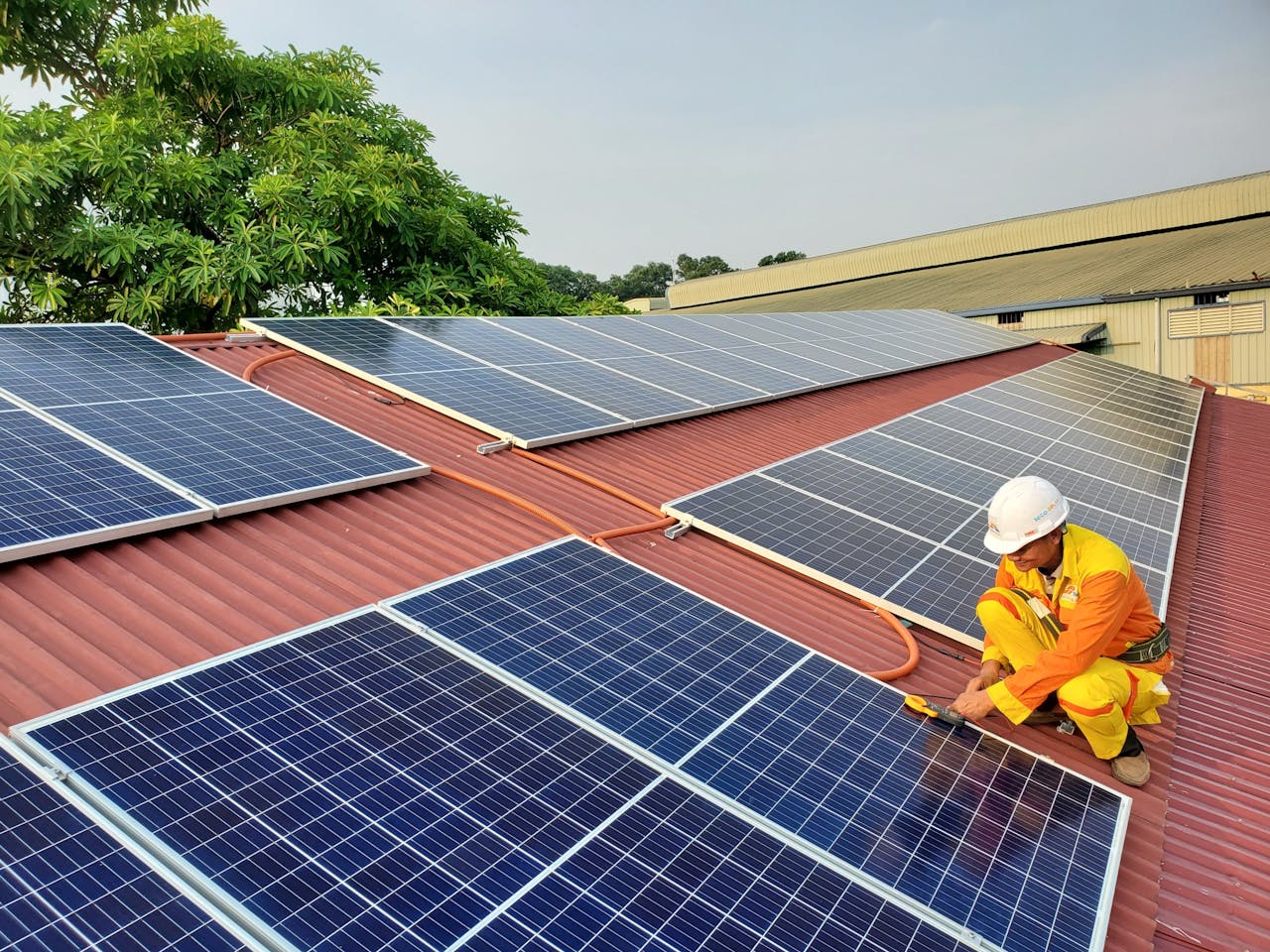
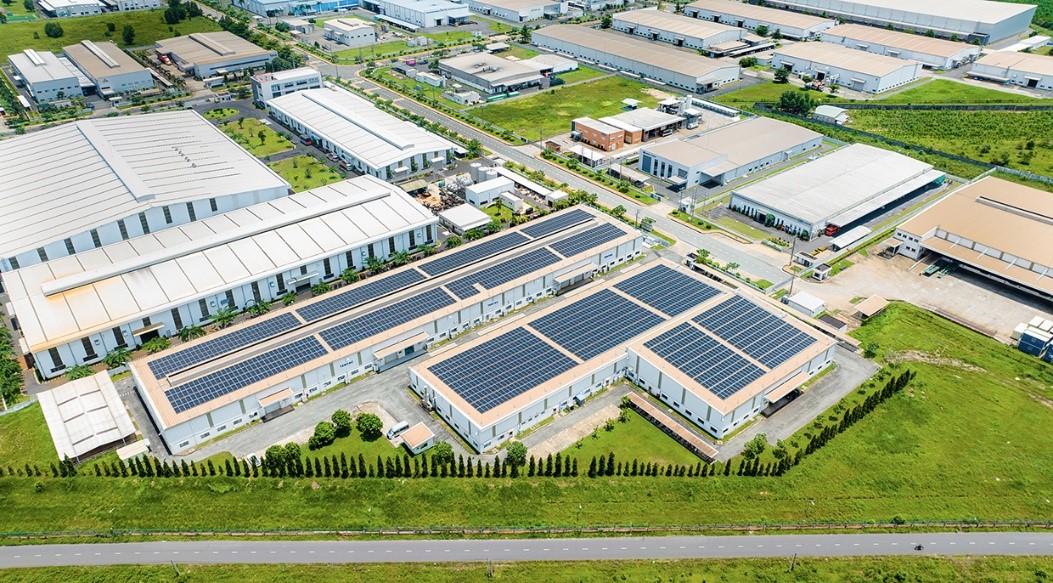
The rooftop solar power project at the Samsung Electronics Vietnam factory
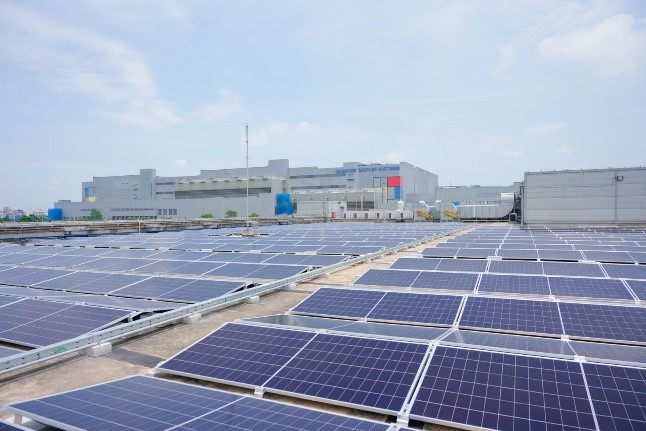
Source: Vienamenergy
Decree 57 allows direct sale and purchase through either a private grid or the national grid, and that electricity prices can be negotiated but must not exceed the applicable ceiling generation tariff for the corresponding renewable source. For factories, the practical meaning is clear: large manufacturers now have a more concrete legal route to buy renewable electricity, but the route is still regulated and requires careful structuring.
Why this matters for manufacturing investment
Vietnam remains one of Asia’s important manufacturing hubs. Electronics, machinery, textiles, footwear, furniture, automotive parts, and packaging industries all require a large and stable electricity supply. In recent years, power availability has become more important in investment decisions, especially after periods of tight supply in the North.
At the same time, Vietnam needs to expand power capacity quickly. EVN reported that by the end of 2025, Vietnam’s installed power capacity reached around 87,600 MW, excluding imported electricity. Of this, renewable energy, including wind, solar and biomass, accounted for about 24,453 MW, or 27.9%; coal accounted for nearly 28,100 MW, or 32.1%; and hydropower accounted for 24,640 MW, or 28.1%. Total electricity production and imports in 2025 were estimated at 322.8 billion kWh, up 4.6% from 2024.
Power source structure in Vietnam towards 2030 and 2050
| Power source | Power capacity 2030 | Power capacity 2050 | ||
| MW | % | MW | % | |
| Solar | 46,459 – 73,416 | 25-31 | 293,088 – 295,646 | 35-38 |
| Hydro | 33,294 – 34,667 | 15-18 | 40,624 | 5 |
| Onshore and nearshore wind | 26,066 – 38,029 | 14-16 | 84,696 – 91,400 | 11 |
| Coal-fired thermal power | 31,055 | 13-17 | 0 | 0 |
| Storage power source | 10,000 – 16,300 | 5-7 | 95,983 – 96,120 | 11-12 |
| Offshore wind | 6,000 – 17,032 | 3-7 | 113,503 – 139,097 | 15-17 |
| Nuclear power | 4,000 – 6,400 | 2-3 | 10,500 – 14,000 | 1-2 |
| Biomass | 1,523 – 2,699 | 1 | 4,829 – 6,960 | 1 |
| Waste-to-energy | 1,441 – 2,137 | 1 | 1,784 -2,137 | 0.2-0.3 |
| Other power sources | 14,628-23,453 | 6-13 | 129,496-152,697 | 17-18 |
| Total | 183,291 – 236,363 | 100 | 774,503 – 838,681 | 100 |
Source: Decision 768/QĐ-TTg
This shows both progress and limitations. Vietnam already has a large renewable capacity base, especially solar and wind. However, the power system still relies heavily on coal and hydropower. For manufacturers that need credible decarbonization, buying standard grid electricity may not be enough.
DPPA can therefore become a bridge between Vietnam’s industrial growth and green investment requirements. A factory that can sign a renewable power arrangement may improve its ESG profile, respond better to customer audits and reduce exposure to future carbon-related requirements. This is particularly relevant for Japanese manufacturers supplying global OEMs, where energy traceability is becoming part of supplier evaluation.
A business opportunity, not only a compliance tool
DPPA should not be viewed only as a legal mechanism. It can also reshape industrial park competition.
In the past, industrial parks mainly competed on location, land rent, labor access, infrastructure and tax incentives. In the next phase, energy service may become a differentiating factor. Parks that can support rooftop solar, internal power retail, DPPA structuring, renewable certificates or battery storage will be more attractive to export-oriented tenants.
The LEGO case shows how this can work in practice. Vietnam News reported that VSIP signed a DPPA with LEGO Manufacturing Vietnam for LEGO’s new factory, which opened in April 2025. The agreement is part of LEGO’s ambition to operate the factory on 100% renewable energy.
EGO Group signs a solar power supply agreement to operate the LEGO factory in Ho Chi Minh City
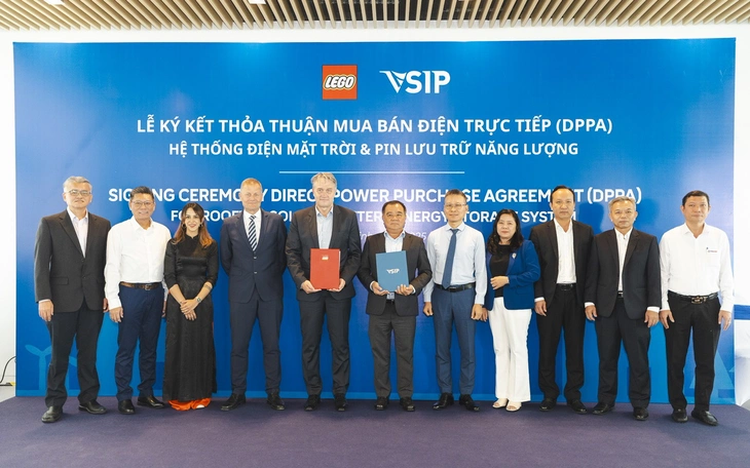
Source: Tuoitre
This type of case is important because it moves DPPA from policy discussion to factory-level implementation. It also shows that green power procurement can become part of investment branding. For global manufacturers, the factory is not only a production site; it is also a statement to customers, governments, and investors.
Implications for Japanese manufacturers
For Japanese manufacturers, the Direct Power Purchase Agreement framework makes green electricity part of the investment checklist. When selecting a factory site, companies should check not only land rent, labor access and logistics, but also renewable power availability, rooftop solar conditions, substation capacity and the industrial park’s readiness to support green electricity procurement.
The relevance of direct renewable power also depends on each factory’s electricity demand. Large factories with stable power consumption may be better positioned to use a Direct Power Purchase Agreement, while smaller facilities may first consider rooftop solar, energy efficiency measures, or International Renewable Energy Certificates.
Customer requirements are another key factor. Manufacturers supplying global electronics, automotive, apparel or consumer goods brands may face stronger pressure to reduce emissions from purchased electricity. In such cases, access to renewable power can become a competitive advantage in supplier evaluation.
Overall, Japanese manufacturers should not treat green electricity as a separate environmental issue. In Vietnam, it is increasingly connected to site selection, customer compliance, operating risk and long-term manufacturing competitiveness.
B&Company support
Vietnam’s Direct Power Purchase Agreement framework creates new opportunities for manufacturers to access renewable electricity, but practical implementation still requires careful assessment. Eligibility, electricity demand profile, industrial park conditions, grid connection, contract structure, price assumptions, and certification methods can differ significantly by project.
B&Company supports Japanese companies in Vietnam through market research, policy monitoring, industrial park comparison, energy-related desk research, and partner search. For companies considering green power procurement, B&Company can help assess potential renewable energy options, compare industrial parks by energy readiness, identify relevant power developers or service providers, and review how electricity strategy may affect site selection and manufacturing competitiveness.
As global buyers place more emphasis on carbon reduction and supply-chain transparency, green electricity is becoming part of Vietnam’s investment environment. Companies that evaluate renewable power options early will be better prepared to meet customer requirements, control long-term energy risk and position their Vietnam operations as more sustainable manufacturing bases.
Read more
Vietnam Renewable Energy Market: A Market Entry Guide for Foreign Investors
* If you wish to quote any information from this article, please kindly cite the source along with the link to the original article to respect copyright.
| B&Company
The first Japanese company specializing in market research in Vietnam since 2008. We provide a wide range of services including industry reports, industry interviews, consumer surveys, business matching. Additionally, we have recently developed a database of over 1,000,000 companies in Vietnam, which can be used to search for partners and analyze the market. Please do not hesitate to contact us if you have any queries. info@b-company.jp + (84) 24 3978 5165 |
Related article




















Log in / Register
SUBSCRIBE NEWSLETTER