

 English
  日本語
日本語  Tiếng Việt
  简体中文
简体中文  한국어
한국어 Vietnam’s approval of pilot GHG emission quotas for 2025–2026 marks a major step from broad climate commitments to practical carbon regulation.

15Apr2026
Latest News & Report / Vietnam Briefing
Comments: No Comments.
Vietnam’s approval of pilot GHG emission quotas for 2025–2026 marks a major step from broad climate commitments to practical carbon regulation. Under Decision No. 263/QĐ-TTg and Decision No. 699/QĐ-BNNMT, the Government has set pilot emission caps for 34 thermal power plants, 25 iron and steel facilities, and 51 cement plants. This makes power, steel, and cement the first sectors in Vietnam to face quota-based emissions control at the facility level, signaling a more concrete phase in the country’s carbon market development.
Vietnam Approves 2025–2026 Pilot GHG Emission Quotas
Vietnam’s approval of pilot greenhouse gas emission quotas for 2025–2026 marks a notable shift from broad climate commitments to more concrete market-based regulation. At COP26 in 2021, Vietnam pledged to achieve net-zero emissions by 2050[1], and that pledge has since been translated into a series of domestic policy steps aimed at building a carbon market and tightening emissions governance. In January 2025, the Government approved the scheme for establishing and developing Vietnam’s carbon market, setting a roadmap under which the domestic carbon exchange would be piloted from mid-2025 through 2028 before entering official operation from 2029[2]. The broader policy direction is therefore clear: Vietnam is not only pursuing long-term climate targets, but is also beginning to create the institutional tools needed to cap, measure, and eventually trade emissions in high-emitting sectors.
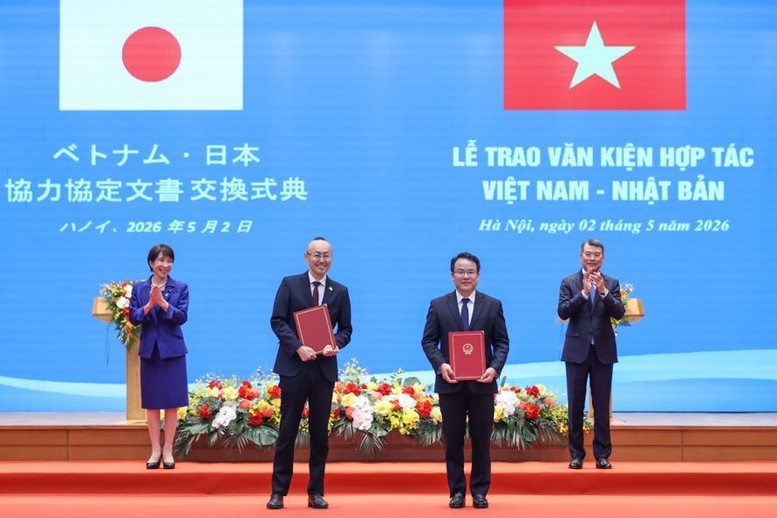
Deputy Prime Minister Tran Hong Ha Chairs Meeting on Approval of Total Greenhouse Gas Emission Quotas for 2025–2026
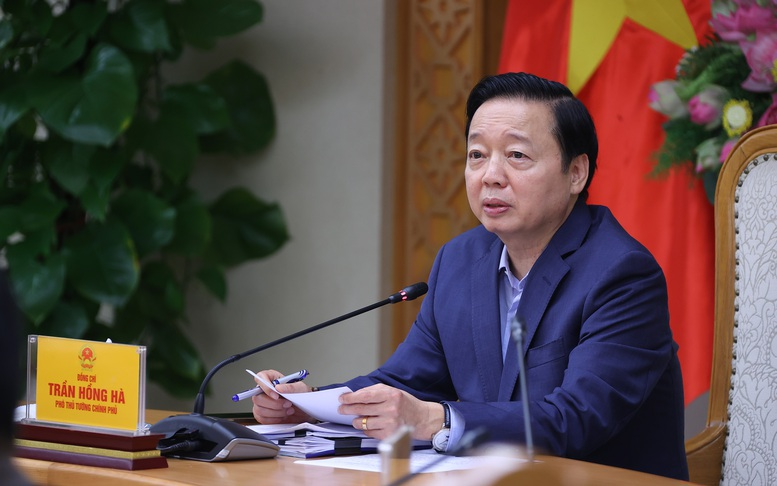
Source: Baochinhphu.vn
That direction became more tangible on 9 February 2026, when the Prime Minister approved total pilot GHG emission quotas for 2025 and 2026 under Decision No. 263/QĐ-TTg[3]. The pilot quotas cover 34 thermal power plants, 25 iron and steel facilities, and 51 cement plants, with a total cap of 243.082.392 tons CO2 for 2025 and 268.391.454 tons CO2 for 2026. The decision also assigns the Ministry of Agriculture and Environment, in coordination with the Ministry of Industry and Trade and the Ministry of Construction, to allocate quotas to individual facilities and guide implementation. In substance, this is an important first move: rather than discussing carbon market development in abstract terms, Vietnam has begun placing an actual emissions ceiling on some of its most carbon-intensive industries.
To operationalize the Prime Minister’s approval of total pilot GHG emission quotas for 2025–2026 under Decision No. 263/QĐ-TTg, the Ministry of Agriculture and Environment issued Decision No. 699/QĐ-BNNMT on 27 February 2026 to allocate quotas on a pilot basis to individual facilities in three covered sectors: thermal power, iron and steel, and cement.
Total quota allocation by sector
Unit: Million Ton CO2
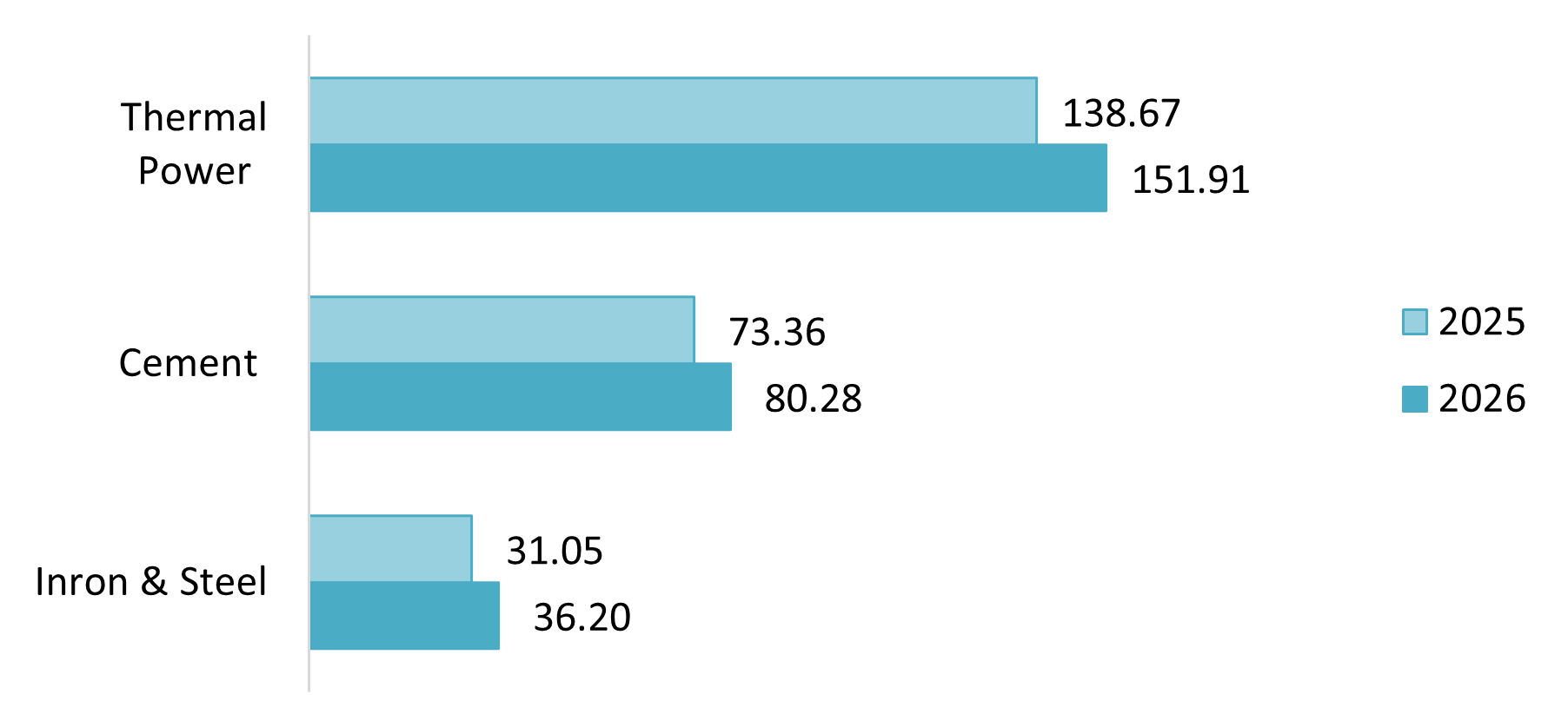
Source: B&Company’s Calculation from Decision No. 699/QĐ-BNNMT
As shown in the chart, thermal power accounts for the largest share of pilot quota allocation in both years, representing 57.0% of the total in 2025 and 56.6% in 2026. Cement ranks second, accounting for 30.2% in 2025 and 29.9% in 2026, while iron and steel account for the remaining 12.8% and 13.5%, respectively. Although quota volumes increase across all three sectors in 2026, the overall allocation pattern remains largely unchanged, with thermal power continuing to dominate the pilot scheme by a wide margin.
Top Allocated Emitters in Vietnam’s Power, Steel, and Cement Sectors
At the company level, the table below lists the top five enterprises in each sector receiving the highest allocated emission quotas under the pilot scheme.
| Sector | No. | Company | Established year | Country | Location | Allocated quota
(Unit: Million ton CO2) |
|
| 2025 | 2026 | ||||||
| Power | 1 | AES-VCM MONG DUONG POWER CO., LTD | 2010 | USA | Quang Ninh | 12.19 | 13.35
|
| 2 | VINH TAN 1 POWER CO., LTD | 2013 | China | Lam Dong | 11.86 | 12.99
|
|
| 3 | QUANG NINH THERMAL POWER JSC | 2003 | Vietnam | Quang Ninh | 11.1 | 12.15
|
|
| 4 | CN GENCO3 – VINH TAN THERMAL POWER COMPANY | 2014 | Vietnam | Lam Dong | 10.53 | 11.53
|
|
| 5 | HAI PHONG THERMAL POWER JSC | 2002 | Vietnam | Hai Phong | 10.24
|
11.23
|
|
| Steel | 6 | FORMOSA HA TINH STEEL CORPORATION | 2008 | Taiwan | Ha Tinh | 13.67 | 15.93
|
| 7 | HOA PHAT DUNG QUAT STEEL., JSC | 2017 | Vietnam | Quang Ngai | 11.22 | 13.08
|
|
| 8 | HOA PHAT HAI DUONG STEEL JSC | 2007 | Vietnam | Hai Duong | 4.5 | 5.24 | |
| 9 | THAI NGUYEN IRON AND STEEL JSC | 1998 | Vietnam | Thai Nguyen | 0.48 | 0.57 | |
| 10 | CAO BANG IRON AND STEEL JSC | 2006 | Vietnam | Cao Bang | 0.4 | 0.46
|
|
| Cement | 11 | LONG SON CO., LTD – LONG SON CEMENT PLANT | 2016 | Vietnam | Thanh Hoa | 8.51 | 9.13
|
| 12 | THANH THANG GROUP CEMENT JSC | 2013 | Vietnam | Ha Nam | 6.85 | 7.5
|
|
| 13 | XUAN THANH CEMENT., JSC | 2012 | Vietnam | Ha Nam | 5.3 | 5.8
|
|
| 14 | SONG LAM.,JSC | 2004 | Vietnam | Nghe An | 4.68 | 5.12
|
|
| 15 | NGHI SON CEMENT CORPORATION | 2011 | Japan | Thanh Hoa | 3.88 | 4.24 | |
Source: B&Company’s Synthesis from Decision No. 699/QĐ-BNNMT
Sector implications for power, steel, and cement in 2026
Power
Vietnam’s power sector entered 2026 under continued demand pressure. On 31 March 2026, national electricity consumption exceeded 1 billion kWh in a single day for the first time in the year, up 7.4% year on year, while peak system load reached 48,789 MW, up 5.4% from the same period of 2025. On that day, coal-fired generation alone accounted for 55% of total electricity output, showing that despite ongoing diversification of the power mix, Vietnam still relies heavily on fossil-based thermal generation to meet rising demand, especially during peak periods[4].
The newly approved quota policy is therefore likely to have its most visible early impact in the power sector. Under the pilot allocation, thermal power receives about 57% of total quotas, and the covered group includes 34 plants: 22 coal-fired, 7 gas-fired, 4 oil-fired, and 1 co-firing facility. The Ministry of Agriculture and Environment has stated that the total quota proposed for thermal power is 1.6–2% below projected emissions in 2025–2026[5], but the pilot phase is also designed to help firms build familiarity with MRV and compliance, and quotas will be allocated free of charge during the pilot period. As a result, the first-year implication is less likely to be abrupt output cuts and more likely to be tighter emissions reporting, stronger fuel-efficiency management, and greater pressure on coal-heavy plants with higher carbon intensity.
Steel
Vietnam’s steel industry entered 2026 with a clearer recovery trend, although external pressure remains high. According to the Vietnam Steel Association (VSA), crude steel output in 2025 exceeded 24.7 million tons, the highest level in the past five years and around 12% higher than in 2024. Crude steel consumption reached 24.1 million tons, up 12.9%, while crude steel exports rose to 3.15 million tons, up 12.8%. At the same time, the sector is facing growing pressure from green trade requirements, especially as steel is among the Vietnamese industries most exposed to the EU’s Carbon Border Adjustment Mechanism (CBAM)[6].
The newly approved pilot quota policy adds a domestic carbon-management layer to that recovery story. The pilot covers 25 iron and steel facilities, including 6 BF–BOF plants, 9 EAF facilities, 9 IF facilities, and 1 BF–EAF facility, with BF–BOF plants receiving the largest share of quotas because they are more emissions-intensive. The Ministry of Agriculture and Environment has said the proposed steel quota is around 3.8–4.4% below projected emissions in 2025–2026. In the first year, the policy is therefore more likely to strengthen plant-level emissions accounting, energy-efficiency control, and benchmarking between more carbon-intensive integrated producers and relatively lower-emission routes such as EAF and IF, rather than causing an immediate reduction in sector output.
Cement
Vietnam’s cement industry also entered 2026 in a better demand environment, but structural oversupply remains. According to sector data published in early 2026, total design capacity was above 128 million tons, while actual cement output in 2025 was about 117 million tons. Domestic cement consumption reached around 74.42 million tons, up more than 17% year on year, indicating that the local market recovered meaningfully in 2025, even though the sector still operates with a supply base larger than domestic demand[7]. The Ministry of Construction has also repeatedly noted that Vietnam’s cement industry remains characterized by high installed capacity and persistent oversupply pressure.
Against that backdrop, the quota policy is likely to increase pressure for operational decarbonization rather than immediate output adjustment. Cement accounts for about 30% of total pilot quotas, covering 51 clinker production facilities, and the proposed quota is around 4–4.5% below projected emissions in 2025–2026. Because cement is a hard-to-abate sector with substantial process emissions from clinker production, the first-year impact will likely center on better emissions monitoring, stronger incentives to reduce clinker intensity, and wider use of alternative fuels and efficiency upgrades, while the stronger competitive effect will emerge gradually as carbon constraints become more binding.
Conclusion
Overall, the 2025–2026 pilot quota scheme is an important first step in turning carbon management into a practical requirement for high-emitting industries in Vietnam. In the short term, its main effects will likely be stronger emissions monitoring, compliance pressure, and greater focus on carbon efficiency in power, steel, and cement. Over time, this pilot phase is expected to lay the groundwork for a more complete and competitive carbon market.
Read more
Reducing greenhouse gas emissions in agriculture in Vietnam: Emerging technologies
Development of Green Hydrogen and Green Ammonia in Vietnam: The current status and growth potential
* If you wish to quote any information from this article, please kindly cite the source along with the link to the original article to respect copyright.
| B&Company
The first Japanese company specializing in market research in Vietnam since 2008. We provide a wide range of services including industry reports, industry interviews, consumer surveys, business matching. Additionally, we have recently developed a database of over 900,000 companies in Vietnam, which can be used to search for partners and analyze the market. Please do not hesitate to contact us if you have any queries. info@b-company.jp + (84) 28 3910 3913 |
[1] https://primeminister.chinhphu.vn/full-remarks-by-pm-pham-minh-chinh-at-cop26-11240273.htm
[2] https://datafiles.chinhphu.vn/cpp/files/vbpq/2025/01/232-ttg.signed.pdf
[3] https://datafiles.chinhphu.vn/cpp/files/vbpq/2026/02/263-ttg.signed.pdf
[4] https://moit.gov.vn/tin-tuc/su-dung-nang-luong-tiet-kiem-va-hieu-qua/nhu-cau-su-dung-dien-toan-quoc-lan-dau-dat-tren-1-ty-kwh-trong-nam-2026.html
[5] https://mae.gov.vn/chuan-bi-thi-iem-phan-bo-han-ngach-phat-thai-khi-nha-kinh-20664.htm
[6] https://vsa.com.vn/nganh-thep-viet-nam-nhin-lai-2025-trien-vong-2026/
[7] https://ximang.vn/vncr-2025-tieu-thu-xi-mang-noi-dia-giu-vai-tro-hap-thu-san-luong-toan-nganh
Related article





















Log in / Register
SUBSCRIBE NEWSLETTER