

 English
  日本語
日本語  Tiếng Việt
  简体中文
简体中文  한국어
한국어 By August of 2025, Japan has had more than 5,630 FDI projects in Vietnam with a total registered capital of over 79.4 billion USD.

04Mar2026
Latest News & Report / Vietnam Briefing
Comments: No Comments.
In 2025, Vietnam remains one of the most attractive destinations for foreign direct investment (FDI) in Asia. Among the leading investors, Japan stands out as one of Vietnam’s most significant partners, with robust ties spanning over 30 years. Japan is the third-largest source of foreign investment in Vietnam, and the volume of Japanese capital continues to rise steadily. According to the latest data, Japan has more than 5,630 FDI projects in Vietnam with a total registered capital of over 79.4 billion USD[1], positioning Japan as a key player in Vietnam’s economic development.
In 2025, Japan’s investments are spread across a variety of sectors, including manufacturing, renewable energy, logistics, services, and infrastructure development. This article examines several of the most prominent Japanese investment projects in Vietnam, highlighting their impact on both the local economy and society.
1. North Hanoi Smart City – A Landmark Urban Development (US $4.2 billion)[2]
One of the most significant Japanese-linked ventures in Vietnam in 2025 is the North Hanoi Smart City, a major urban development in Đông Anh District, Hanoi. With a projected investment of approximately US $4.2 billion, this ambitious project is a joint initiative between Vietnam’s BRG Group and Sumitomo Corporation from Japan.
The groundbreaking ceremony of the North Hanoi Smart City project on August 18

Source: VnEconomy
Spanning 272 hectares, the development will unfold in five phases, with the first phase covering 72.7 hectares. The entire project aims to integrate smart technology in its infrastructure, including smart energy, smart transport, smart living, and smart economy solutions, in line with global smart city trends. Scheduled for completion by 2032, this landmark development will not only serve as a major residential and business hub but also strengthen Vietnam’s position in sustainable urbanization and economic modernization.
The project also marks a significant milestone in the Vietnam-Japan relationship, commemorating 50 years of diplomatic ties between the two nations. With cutting-edge technology and green design principles, the North Hanoi Smart City reflects Japan’s deepening commitment to shaping Vietnam’s future through sustainable and high-tech development.
2. Thang Long Industrial Park – Thanh Hoa by Sumitomo Corporation
A standout project for 2025 is the Thang Long Industrial Park in Thanh Hoa, an initiative led by Sumitomo Corporation. This industrial park marks a strategic expansion of Sumitomo’s presence in Vietnam’s northern and central regions, which are becoming increasingly industrialized. The first phase of this project will cover 167 hectares[3], represents an estimated investment of $110.7 million and a 50-year operating term[4]. This phase is set to accommodate various industries, including high-tech manufacturing and supply chain operations, establishing the park as a significant player in Vietnam’s growing industrial sector.
The long-term economic impact of the park is substantial, with projections suggesting that total foreign investments in the complex could reach between USD 2–8 billion by completion[3]. The park is also expected to generate thousands of local jobs, boosting the Thanh Hoa economy. The park’s location, about 150 kilometers from Hanoi, makes it easily accessible, with reduced travel time thanks to a new expressway. This strategic location, along with green energy plans and a focus on ecological restoration, strengthens the park’s potential to become a major manufacturing hub, integrating Vietnam into the global supply chain while contributing to sustainable economic growth.
Thang Long Industrial Park in Hanoi
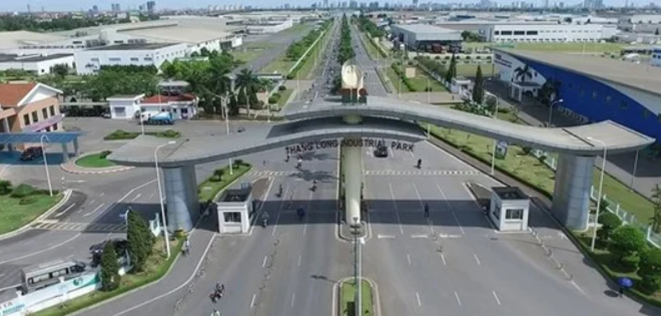
Source: Theinvestor.vn
Another project invested by Sumitomo is the expansion of Vietnam’s existing industrial zones with projects like the Thang Long II Industrial Park in Hung Yen leading the way. This industrial park is home to a number of Japanese-owned factories, focusing on sectors such as automotive manufacturing, electronics, and precision engineering. Sumitomo Corporation, a key player in these investments, has also launched plans for a second industrial park in Bac Ninh Province[5], further bolstering Japan’s industrial footprint in northern Vietnam.
Vinh Phuc Chairman Tran Duy Dong (right) and Sumitomo representative Takashi Yanai at a meeting in the province, northern Vietnam

Source: Theinvestor.vn
Thang Long II Industrial Park in Hưng Yên Province is one of northern Vietnam’s major industrial zones developed with significant Japanese investment. The park covers a total planned area of about 525.7 hectares and has attracted more than 100 foreign-invested projects with total registered capital exceeding USD 3 billion, with many tenants from Japan, including companies such as Kyocera, Hoya, Nippon, Daikin, Toto, Panasonic and others[6]. As a result of these investments, the park has become an important manufacturing hub in the region with tens of thousands of jobs supported indirectly through its operations.
These expansions not only diversify Vietnam’s industrial base but also foster skills training, technology transfer, and knowledge sharing, helping elevate the country’s manufacturing capabilities. By boosting industrial production and integrating Vietnam into global supply chains, these projects play a pivotal role in strengthening the economic ties between Japan and Vietnam, enhancing both countries’ positions in the global economy. As these industrial parks grow, they will further consolidate Vietnam’s status as a key player in Asia’s manufacturing sector.
3. Japanese Investment Projects in Biomass Energy, Rooftop Solar, Eco-Industrial Parks, and Waste-to-Energy in Long An Province (2025)[7]
Japanese investments in Vietnam are making significant strides in green energy and sustainable development, particularly in Long An Province, a key region in the Mekong Delta. This area is experiencing a surge in renewable energy projects, with a particular focus on solar power and biomass energy — both critical components of Vietnam’s efforts to transition toward more sustainable energy sources.
One notable project is a biomass energy plant developed by a Japanese firm that uses agricultural by-products as its primary source of fuel. This innovative plant aims not only to generate clean energy but also to reduce carbon emissions, contributing significantly to Vietnam’s sustainable development goals (SDGs). By repurposing agricultural waste, this project addresses both environmental concerns and the need for more sustainable energy solutions in rural areas. The plant is expected to help reduce reliance on fossil fuels while promoting the use of local resources, which is particularly important for Long An, an agriculturally rich province.
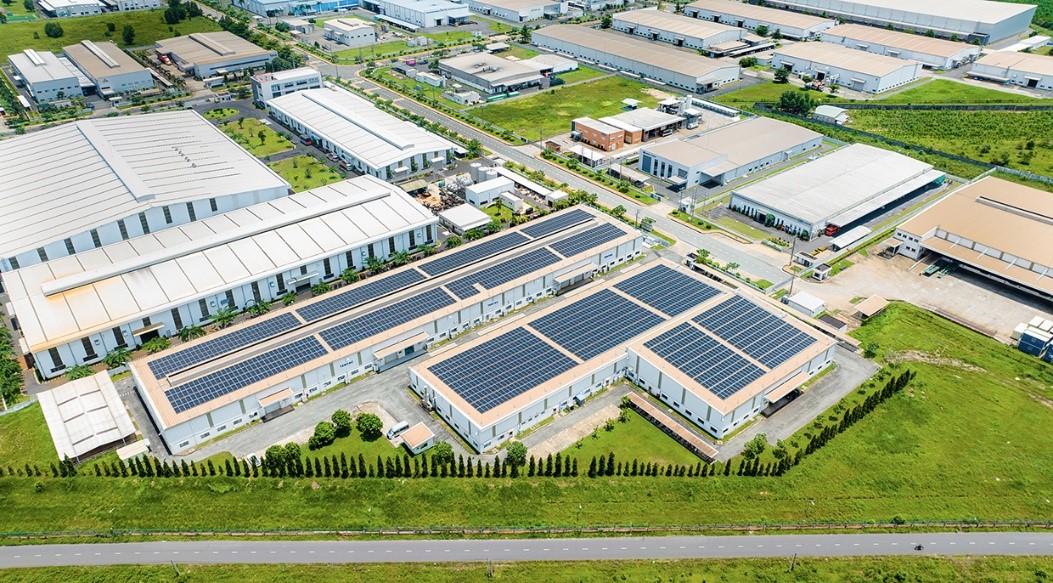
In addition, another major Japanese initiative in Long An is the installation of solar energy systems on the rooftops of industrial parks. This project aims to harness Vietnam’s growing solar potential, making use of the country’s abundant sunlight to generate renewable energy. The solar panels are expected to not only reduce dependence on traditional fossil fuels but also support Vietnam’s long-term energy strategy, which emphasizes renewable resources as a central part of the nation’s energy mix. This project aligns with global sustainability trends and Vietnam’s goals to meet international climate commitments.
These green energy projects are playing a vital role in Vietnam’s energy transition, helping to address the country’s growing energy needs while reducing environmental impact. By supporting sustainable energy solutions, Japanese investments contribute to both Vietnam’s national development goals and global sustainability initiatives, ensuring a cleaner, greener future for the region.
4. Logistics and Service Sector Investments: Enhancing Trade Efficiency
In addition to industrial and energy projects, Japanese companies are increasingly investing in logistics and service sectors to support Vietnam’s expanding trade network. The logistics sector has seen particularly significant investment, as e-commerce and international trade have surged in the region.
One of the standout areas of Japanese investment is logistics infrastructure. In Ho Chi Minh City, Japanese investors are funding over 130 logistics projects, aimed at improving supply chain efficiency and reducing delivery times for both domestic and international shipments[8]. These projects are designed to streamline the flow of goods, enhancing Vietnam’s ability to meet the demands of both local consumers and global markets. The investments focus on the development of warehouses, distribution centers, and transportation networks that support the growing e-commerce sector and facilitate cross-border trade. This is particularly crucial as Vietnam strengthens its position in global trade networks and meets the increasing demand for quick, efficient delivery systems.
In addition to logistics, Japanese companies are also expanding into retail and commercial real estate sectors[9]. Investments in shopping centers, service apartments, and supermarkets reflect the growing middle class in Vietnam and the increasing demand for modern retail and residential spaces. These commercial real estate investments are helping to meet the demands of a fast-growing population with rising purchasing power. For instance, AEON Mall and other retail chains are expanding their presence in major urban areas like Ho Chi Minh City and Hanoi, providing modern shopping experiences that cater to Vietnamese consumers. Moreover, the rise of service apartments and supermarkets aligns with the expanding needs of urban residents for convenient living and shopping options.
These investments not only support Vietnam’s economic development but also significantly enhance its logistics infrastructure, which is crucial for the nation’s integration into the global economy. The modernization of logistics and real estate facilities enables better supply chain management and ensures that Vietnam can efficiently manage the growing demand for consumer goods and services. As these sectors grow, Japan’s investments help position Vietnam as a key player in Southeast Asia’s evolving economic landscape.
Conclusion
In 2025, Japan’s role as a key investor in Vietnam continues to grow, with projects spanning from industrial zones to renewable energy and services. These investments not only bring financial capital to Vietnam but also support its broader goals of industrialization, modernization, and sustainability. As the relationship between Vietnam and Japan strengthens, both countries are poised to benefit from increased trade, technology transfer, and long-term economic growth.
Looking ahead, Japanese investments will play a crucial role in supporting Vietnam’s continued development and integration into the global economy.
Read more
Japanese FDI in Vietnam 2025: Highest profit outlook in 15 years – Is expansion next?
* If you wish to quote any information from this article, please kindly cite the source along with the link to the original article to respect copyright.
| B&Company
The first Japanese company specializing in market research in Vietnam since 2008. We provide a wide range of services including industry reports, industry interviews, consumer surveys, business matching. Additionally, we have recently developed a database of over 900,000 companies in Vietnam, which can be used to search for partners and analyze the market. Please do not hesitate to contact us if you have any queries. info@b-company.jp + (84) 28 3910 3913 |
[6] RSL Group Investment Promotion <Access>
[7] B&Company
Related article














Log in / Register
SUBSCRIBE NEWSLETTER