

 English
  日本語
日本語  Tiếng Việt
  简体中文
简体中文  한국어
한국어 The recent decision by the U.S. to impose a 46% tariff tax on imported goods from Vietnam sparked discussions about its economic impact.
18Apr2025
Latest News & Report / Vietnam Briefing
Comments: No Comments.
The United States is one of Vietnam’s largest and long-term export markets and also a comprehensive strategic partner since 2023. However, the recent decision by the U.S. to impose a 46% tariff tax on imported goods from Vietnam has sent shockwaves through both governments and businesses, sparking discussions about its potential economic impact. This significant tariff increase aims to address concerns over trade imbalances, but its long-term consequences could be far-reaching for both countries.
U.S. Tax Policy Changes and reciprocal tariffs
On April 2, 2025, U.S. President Donald Trump announced a baseline tariff of 10% on all imports from countries and territories worldwide, effective from April 5, 2025. Shortly after, the U.S. unveiled higher tariffs, called reciprocal tariffs, targeting nations with significant trade surpluses with the U.S., including Vietnam [4]. A 46% tariff was imposed on 90% of goods imported from Vietnam to the U.S. This tariff is among the highest, alongside those for China and Cambodia, aimed at addressing the U.S. trade deficit and concerns over Chinese goods being rerouted through Vietnam to bypass tariffs.
Certain goods are exempt from the U.S. countervailing tariff adjustments. These include items already taxed under other regulations (50 USC 1702); steel, aluminum, automobiles, and auto parts taxed under separate provisions; copper, pharmaceuticals, semiconductors, and lumber; all goods potentially subject to future tariffs; gold bullion; energy; and specific minerals unavailable in the U.S.
Since the announcement of the countervailing tariff policy, the U.S. has continuously adjusted its timeline and scope of application. On April 9th, Washington postponed the imposition of reciprocal tariffs (excluding China) for 90 days for non-retaliatory trading partner countries [3]. Instead of taking effect on April 9th, the reciprocal tariff policy has been delayed until July 8th. During this period, Vietnamese goods, as well as goods from non-retaliatory countries, are subject only to the baseline 10% tariff. This delay is seen as a critical negotiation window, allowing many countries—including Vietnam—to push for dialogue and adjust bilateral trade policies.
President Trump announced the reciprocal tariffs
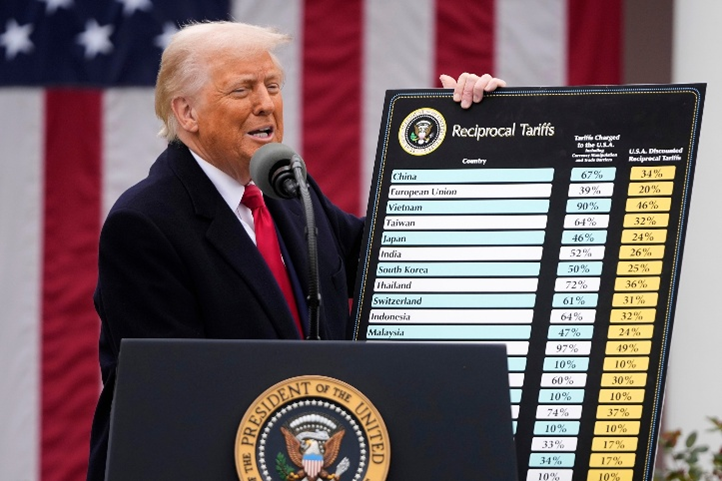
Source: ABC News
Vietnam-US Trading activities
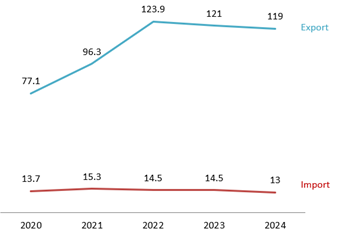
Over the past five years, Vietnam has consistently maintained a significant trade surplus with the United States, with the surplus value increasing by 64% from approximately $63.4 billion in 2020 to nearly $106 billion in 2024 [1]. The total bilateral trade turnover in 2024 reached $132 billion, of which Vietnam’s exports to the United States are estimated at nearly $119 billion. In 2024, Vietnam’s top three export items to the United States were computers, electronic products, and components (19.4% of total exports), machinery, equipment, tools, and spare parts (18.5%), and textiles and garments (13.5%) [1]. These three categories together accounted for 51.4% of Vietnam’s total export value to the U.S., underscoring their significant role in bilateral trade relations.
Vietnam’s import value from the United States remained significantly lower compared to its export value, amounting to approximately $13 billion [6]. This figure showed little variation from 2020, with imports consistently ranging between $13 billion and $15.3 billion. This disparity created a substantial trade deficit in favor of Vietnam. The main imported items from the U.S. included computers, electrical products, spare parts, and components (28.7%), other products (10.5%), machinery, equipment, tools, and instruments (7.3%), as well as animal fodder and animal fodder materials (6.7%) [7].
This demonstrates a substantial trade imbalance between the two nations. Vietnam exports significantly more goods to the U.S. than it imports, resulting in a trade surplus for Vietnam. Many experts believe this imbalance is a key factor behind the recently announced reciprocal tariff by President Trump [8].
Related article

































Log in / Register
Continue without an account
Log in / Register
SUBSCRIBE NEWSLETTER