
ベトナムの2030年までの教育開発目標と外国人投資家への機会

ベトナムが2030年の開発目標に向かって進むにつれ、教育分野は特にM&Aにおいて外国投資家にさまざまな機会を提供します。
Vietnam school

2025年1月17日

B&Company

最新ニュース&レポート / ベトナム速報

コメント: コメントはまだありません.

B&Companyは、2008年以来ベトナムにおいて市場調査および投資コンサルティングを専門とする初の日本企業です。.

この「ベトナム速報」セクションでは、B&Companyの若手研究者たちが、ベトナムの産業動向、消費動向、社会運動に関する最新情報をお届けします。.

この記事は英語で書かれており、自動翻訳が他の言語版に使用されています。正確な内容については英語版を参照してください。元の情報の正確性を確保するよう努めていますが、各情報については別途ご確認ください。解釈および将来の展望は各研究者の個人的な意見です。.

Education plays a pivotal role in Vietnam’s socio-economic development, fostering innovation and preparing the workforce for the rising demand for high-skilled labor. As the nation moves toward its 2030 development goals, the education sector presents a wealth of opportunities for foreign investors, especially through M&A transactions.

Overview of Vietnam’s education system

Vietnam’s education system consists of formal education and continuing education, which is structured into multiple levels, designed to provide a comprehensive and inclusive educational pathway for its citizens[1], including:

– Preschool education includes junior kindergartens and senior kindergartens;

– General education consists of primary education, lower secondary, and upper secondary education, with primary education being the compulsory education stipulated under Vietnam’s Education Law;

– Vocational education offers training at the elementary level, intermediate level, or college level, as well as other vocational training programmes; and

– Higher education includes university education, master education, and doctoral education.

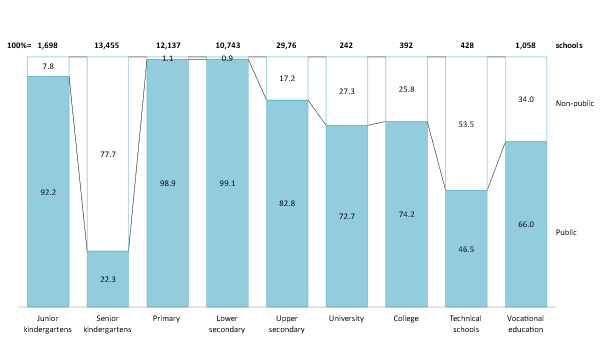
Over recent decades, Vietnam has made impressive strides in improving access to education and educational quality. The country has a near-universal primary education completion rate of over 98% with all provinces offering adequate education standards[2]. In the school year 2023-2024, there were 522 thousand classes in general education, including 280 thousand primary classes; 168 thousand lower secondary classes, and 74 thousand upper secondary classes[3]. The number of classes rose by 1% to accommodate growing enrollments, despite the steady decline in schools from 28,951 in 2015[4] to 25,783 in 2024 due to mergers or closures into multi-level[5]. The state management of vocational education has been innovated towards enhancing decentralization, strengthening autonomy and governance for institutions, and increasing the accountability of the heads of these institutions[6]. 2024 also saw remarkable progress in Vietnam’s university education as the training quality of 11 university-level institutions is recognized globally[7].

Education establishments in Vietnam in the school year 2024-2025 (Unit: %)

Education establishments in Vietnam in the school year 2024-2025

出典: GSO ((ベトナム統計総局)), MOE.

The situation of foreign direct investment in education sector in Vietnam

ログインまたは無料会員登録をして、続きを読むにははこちら。

関連記事

ニュースレターを購読する