

 English
  日本語
日本語  Tiếng Việt
  简体中文
简体中文  한국어
한국어 This article examines where Japanese rice is most likely to find product-market fit among three countries: Vietnam, Thailand, and Indonesia.
31Mar2026
Latest News & Report / Vietnam Briefing
Comments: No Comments.
Abstract
Rice remains a staple food across Southeast Asia, but not every rice market is equally suited to Japanese rice. As Japanese rice exports move beyond commodity trade toward premium, foodservice, and value-added channels, Vietnam, Thailand, and Indonesia offer three distinct demand environments. Each market differs in consumer taste, spending patterns, openness to imported rice, and the depth of its Japanese food ecosystem. Against that backdrop, this article examines where Japanese rice is most likely to find product-market fit among the three countries.
What makes a market fit for Japanese rice?
Japanese rice is now more clearly positioned as a value-added category, rather than a product competing through low prices or sheer volume. It is predominantly short-grain Japonica rice, known for its round shape, stickiness, and soft texture when cooked; at the same time, Japan’s export portfolio has expanded beyond commercial rice to include packed rice, rice-based prepared meals, rice flour, and rice-flour products. In 2025, the largest destinations for Japanese rice were Hong Kong, the United States, Singapore, Taiwan, and Thailand, suggesting that the product performs best in markets with clear demand for premium offerings and Japanese dining experiences[1].
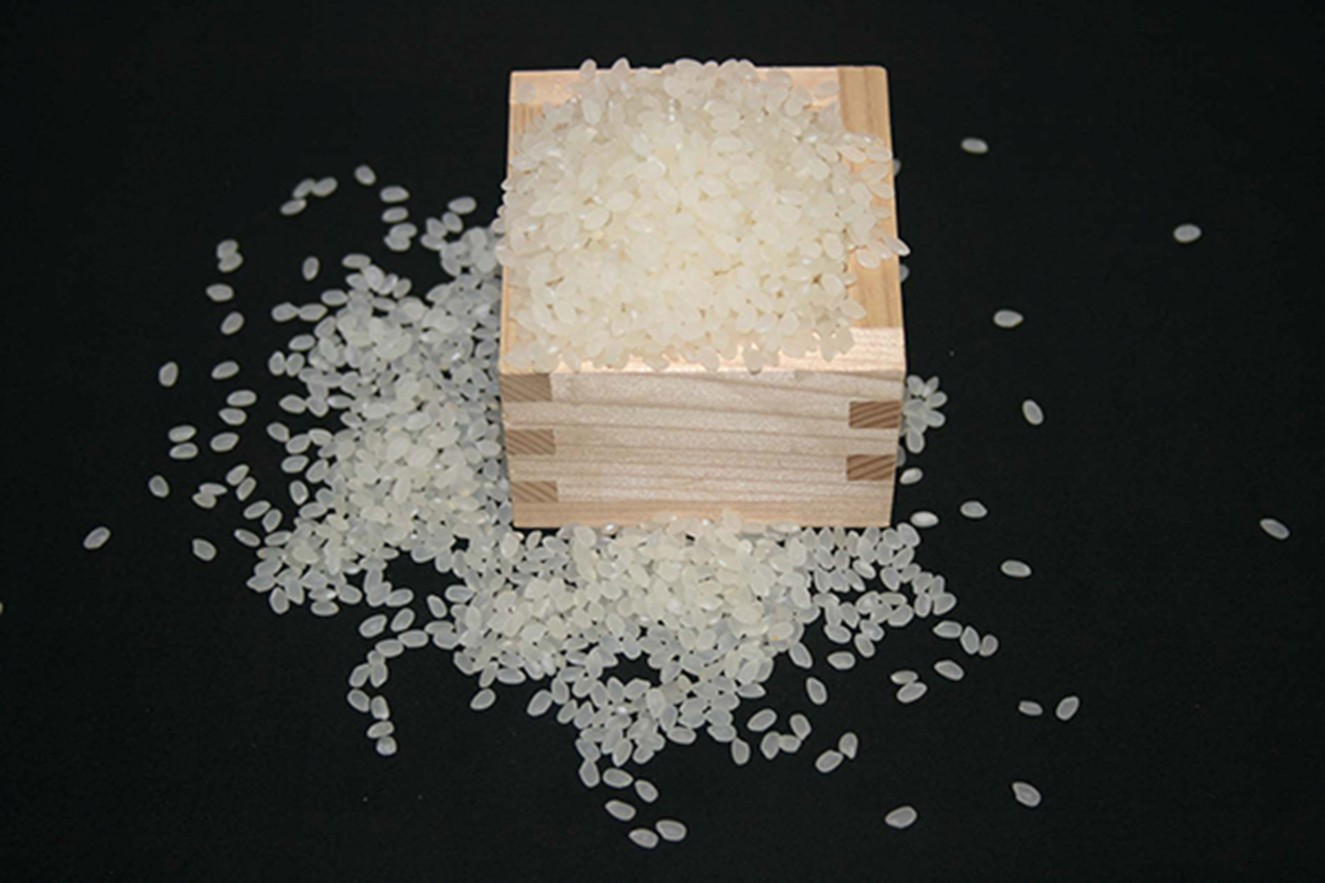
Koshihikari rice – Japan’s iconic premium rice variety
Source: Japan.net
Because Japanese rice does not enjoy a clear advantage in either price or scale, judging market fit cannot rely on overall rice consumption alone. More importantly, the question is whether a market is genuinely ready to absorb a product with distinctive characteristics and a clear culinary identity. Based on the nature of the product and the current export-promotion direction of MAFF[2] (Japan’s Ministry of Agriculture, Forestry and Fisheries), the fit of each market can be assessed through these main dimensions:
– Taste compatibility
– Ability to pay for the premium segment
– Depth of the Japanese foodservice ecosystem
– Openness to imported rice
– Competitive pressure from domestic premium rice
Vietnam: The Most Promising Emerging Fit for Japanese Rice
In terms of scale, Vietnam remains one of the region’s major rice markets. In 2025, paddy output reached 43.54 million tons, the highest level in four years[3]. Yet on the demand side, the market is maturing, and average per-capita rice consumption fell to 6.5 kg per month in 2024, down 40% from 2008[4]. That suggests future growth is less about higher volumes and more about quality, segmentation, and the way rice is consumed.
From a taste perspective, Vietnam is not yet a natural large-scale market for Japonica rice. Production in the Mekong Delta remains concentrated in high-quality white rice and long-grain fragrant varieties such as ST25, OM5451, Dai Thom 8, and OM18, while Japonica accounts for only about 4% of planted areas. In practice, that makes Japanese rice better suited to specialized consumption settings such as sushi, onigiri, bento, and Japanese-style rice dishes than to the everyday meals of the mass market.
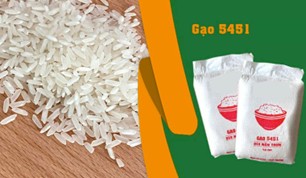
OM5451 rice – one of the most widely grown rice varieties in Vietnam
Source: VIFOOD
At the same time, Vietnam is showing encouraging signals in the premium segment. Michelin Guide Vietnam 2025 listed 181 establishments, up 10% from the previous year, reflecting rising interest in high-quality dining experiences. Consumers are also gradually shifting from traditional wet markets to supermarkets and modern stores, supported by rising incomes and stronger concerns about food safety, hygiene, and healthier lifestyles[5].
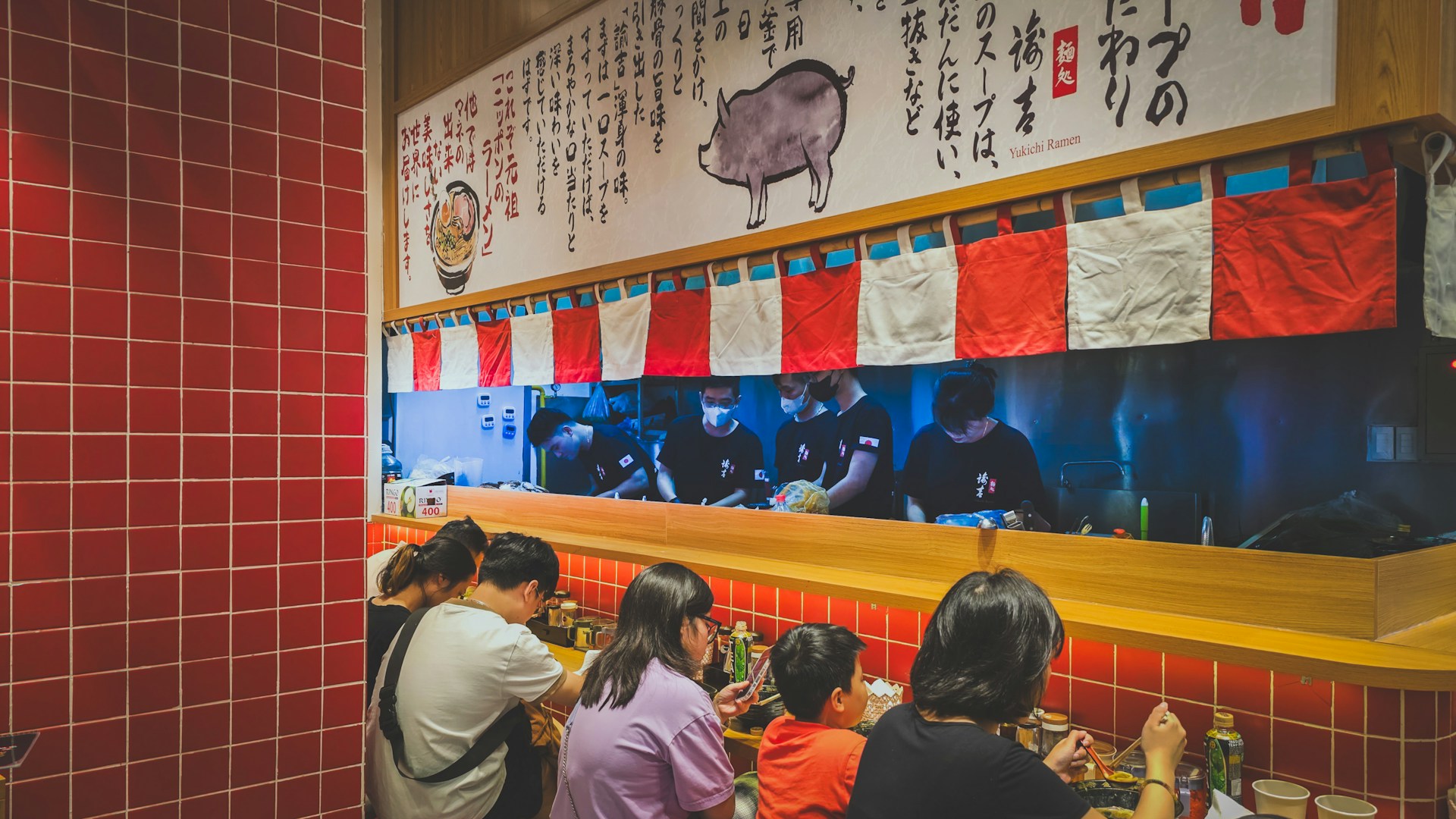
Vietnam’s Japanese food ecosystem is also expanding rapidly. As of May 2025, the country had 2,688 Japanese restaurants, including 1,219 in Ho Chi Minh City alone – nearly four times the 2015 level[6]. That creates a natural sales channel for Japanese rice, especially in restaurants, ready-to-eat foods, and formats that need to preserve an authentic Japanese dining experience.
Still, Vietnam maintains relatively strong protection for imported rice, with MFN tariffs as high as 40%, although quota-based 0% preferences are available for certain neighboring partners such as Laos and Cambodia[7]. As a result, Japanese rice is unlikely to compete on price across the mass market and is better positioned in premium niches.
The biggest challenge for Japanese rice in Vietnam is competition from domestic premium varieties. According to USDA, OM5451, Dai Thom 8, and OM18 accounted for 60% of the 2025 winter-spring crop area and 68% of the summer-autumn crop area in the Mekong Delta, underscoring Vietnam’s growing focus on high-quality rice production and exports. In that context, Japanese rice stands out only when it is tied to the authenticity of Japanese cuisine and a country-of-origin value proposition that domestic rice cannot fully replicate.
Thailand: The Best Current Fit for Japanese Rice
Thailand remains a large rice-consuming market, but it has clearly entered a mature phase. USDA projects domestic rice consumption in MY 2025/26 at 12.4 million tons, broadly stable from the previous season, while per-capita consumption has fallen from 100 kg in 2018 to about 75 kg in recent years[8]. That points to a market where growth is no longer driven by volume, but increasingly by quality and specialized consumption occasions.
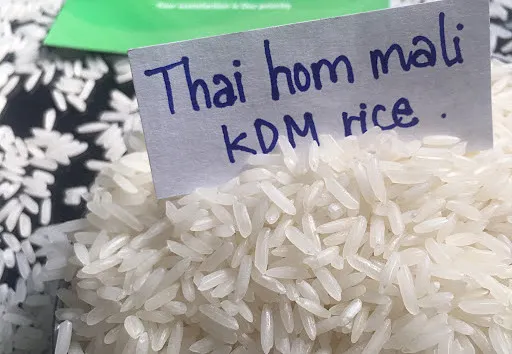
In terms of mainstream taste preferences, Thailand is not the most natural market for Japanese rice. Consumers are closely attached to long-grain fragrant rice, especially Hom Mali, whereas Japanese rice belongs to the short-grain Japonica category and has a softer, stickier texture.
Hom Mali – Thailand’s signature fragrant rice
Source: Phuong Nam Food
Thailand nonetheless shows solid purchasing power for premium food, especially among urban consumers. According to the USDA, the price of Hom Mali paddy reached 15,003 baht per ton in January 2025, far above the 9,180 baht per ton recorded for ordinary white paddy. The price gap suggests that consumers are willing to pay more for quality and brand value in rice.
Thailand’s Japanese food ecosystem is another major advantage. JETRO’s latest survey counted 5,781 Japanese restaurants in 2025, up sharply from just 745 in 2007[9]. This gives Thailand one of the deepest and broadest Japanese foodservice base in the region, centered on Bangkok, and makes restaurants the most natural entry point for Japanese rice.
Market access, however, is not especially easy. Rice imports remain subject to tariff-rate quotas and tight licensing controls, with an in-quota tariff of 30% and an out-of-quota tariff of 52%[10] on a quota volume of 249,757 tons, while imported food more broadly must also comply with licensing, production-standard, and labeling requirements.
At the premium end, Thailand already has a powerful domestic benchmark in Hom Mali. Japanese rice, therefore, has room to grow only when it is positioned not as another premium rice but as an indispensable component of an authentic Japanese dining experience that emphasizes origin, quality, story, and sensory precision.
Indonesia: The Largest Long-Term Opportunity for Japanese Rice
Indonesia remains a very large rice market, supported by a population of about 283.5 million in 2024. However, the market is currently shaped more by food self-sufficiency policy than by open trade: BPS reported 2025 rice production for food consumption at 34.69 million tons, up 13.29% from 2024[11], while USDA Indonesia noted that the government would only allow specialty rice imports in MY 2025/26. This suggests that although the underlying demand is massive, market access for imported rice is now largely confined to specialized segments.
From a mass-market taste perspective, Indonesia is not the most natural fit for Japanese rice. The clearest signal is the government’s own position that imported rice is now intended only for specific restaurant uses, including Japanese rice for Japanese restaurants and basmati for Arab or Indian restaurants, because such needs cannot be replaced by domestic rice[12].
Indonesia does have an urban consumer base willing to pay for premium food, but that demand is concentrated mainly among middle- and upper-income households and within specialized modern retail channels. According to BPS, the middle and aspiring middle class account for 66.35% of the population but 81.49% of household spending[13], while USDA Indonesia notes that demand for healthy, nutritious, and premium products continues to rise [14].
MAFF’s 2025 survey estimated around 6,580 Japanese restaurants in Indonesia, an increase of 2,580 from the previous survey period. That places Indonesia among the more significant Japanese food markets in the region and confirms that a real niche exists for Japanese rice in foodservice[15].
Although Indonesia was once a major rice importer, it has tightened controls to prioritize self-sufficiency and, from MY 2025/26, allows only specialty rice imports for uses that cannot be substituted by domestic rice. With the main barrier lying in strict licensing rather than tariff levels, Japanese rice is currently confined to a narrow market serving high-end restaurants and processing demand, rather than broad-based retail expansion.
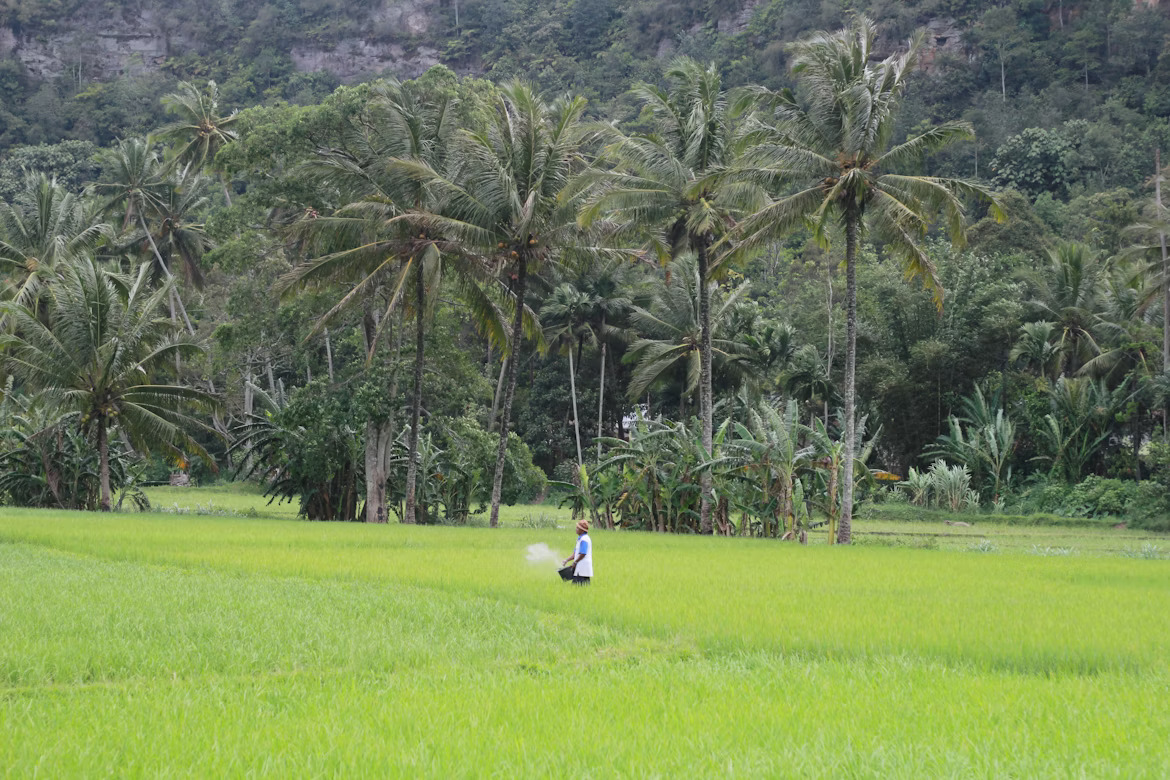
Farmers cultivating rice in Indonesia
Country synthesis: Where does Japanese rice have product–market fit?
Thailand offers the clearest current fit for Japanese rice, not because of mass demand, but because it already has a consumer tier that understands and accepts the value of Japanese cuisine. Its large Japanese restaurant base and strong urban premium demand create a ready-made niche. Even so, Japanese rice stands out there only when it is positioned as a core element of an authentic Japanese dining experience, rather than simply another premium rice.
Vietnam may not yet match Thailand in terms of depth of fit, but it is the market where fit appears to be emerging fastest. The expansion of premium dining and the rapid growth of Japanese foodservice point to an urban consumer base that is becoming more receptive to quality, experience, and brand story. That makes Vietnam the most promising market for Japanese rice to grow through foodservice, ready-made foods, and premium retail, rather than through everyday table rice competition.
Indonesia has the largest long-term upside thanks to its sizable middle class and rising interest in premium food, yet Japanese rice remains heavily constrained by policy. Although the Japanese restaurant network and household purchasing power are large enough to support a real customer niche, the government’s specialty-only import policy sharply narrows access. For now, the fit in Indonesia is highly selective and shaped more by policy windows than by underlying demand alone.
Conclusion
Taken together, the three markets suggest that Japanese rice performs best not where rice demand is largest, but where premium demand, Japanese foodservice, and market access align. Thailand appears to offer the best current fit, Vietnam the strongest emerging fit, and Indonesia the biggest long-term potential under the narrowest entry window. For exporters, that means success will depend less on pushing Japanese rice as a general premium product and more on matching each market with the right positioning, channel, and consumption context.
Read more
Vietnam’s potential to become a global Agri-Food Hub: Opportunities and challenges
Comparing major Holiday Impacts on business across Southeast Asia
* If you wish to quote any information from this article, please kindly cite the source along with the link to the original article to respect copyright.
| B&Company
The first Japanese company specializing in market research in Vietnam since 2008. We provide a wide range of services including industry reports, industry interviews, consumer surveys, business matching. Additionally, we have recently developed a database of over 900,000 companies in Vietnam, which can be used to search for partners and analyze the market. Please do not hesitate to contact us if you have any queries. info@b-company.jp + (84) 28 3910 3913 |
[1] https://www.maff.go.jp/j/syouan/keikaku/soukatu/kome_yusyutu/attach/pdf/kome_yusyutu-774.pdf
[2] https://www.maff.go.jp/j/seisaku_tokatu/antei/attach/pdf/keiei_antei-298.pdf
[3] https://www.nso.gov.vn/tin-tuc-thong-ke/2026/01/thong-cao-bao-chi-tinh-hinh-kinh-te-xa-hoi-quy-iv-va-nam-2025/
[4] https://apps.fas.usda.gov/newgainapi/api/Report/DownloadReportByFileName?fileName=Grain+and+Feed+Quarterly_Ho+Chi+Minh+City_Vietnam_VM2025-0028.pdf
[5] https://www.jetro.go.jp/ext_images/agriportal/platform/vn/pf_vho_202512.pdf
[6] https://www.jetro.go.jp/biznews/2025/05/bfb176ac0ce97af1.html
[7] https://www.vietnamtradeportal.gov.vn/index.php?id=11201&r=tradeInfo%2Fview
[8] https://apps.fas.usda.gov/newgainapi/api/Report/DownloadReportByFileName?fileName=Grain+and+Feed+Annual_Bangkok_Thailand_TH2025-0011.pdf
[9] https://www.jetro.go.jp/ext_images/thailand/food/2025survey/japaneserestaurantsurvey202601.pdf
[10] https://www.wto.org/english/news_e/news_docs/s480_e.pdf
[11]https://www.bps.go.id/en/pressrelease/2026/02/02/2545/luas-panen-padi-pada-tahun-2025-mencapai-sekitar-11-32-juta-hektare-dengan-produksi-padi-sebanyak-60-21-juta-ton-gabah-kering-giling–gkg-.html
[12] https://en.antaranews.com/news/379265/indonesias-rice-imports-limited-to-specialty-dining-needs-sudaryono
[13] https://www.bps.go.id/en/news/2024/10/25/622/kelas-
[14]https://apps.fas.usda.gov/newgainapi/api/Report/DownloadReportByFileName?fileName=Retail%20Foods%20Annual_Jakarta_Indonesia_ID2025-0036
[15] https://www.maff.go.jp/j/shokusan/eat/attach/pdf/160328_shokub-21.pdf
Related article





















Log in / Register
SUBSCRIBE NEWSLETTER