

 English
  日本語
日本語  Tiếng Việt
  简体中文
简体中文  한국어
한국어 Vietnam’s electric two-wheeler (E2W) market has emerged as a dynamic and burgeoning market driven by the national shift towards sustainable and eco-friendly transportation.
08Jan2025
Latest News & Report / Vietnam Briefing
Comments: No Comments.
Vietnam’s electric two-wheeler (E2W) market has emerged as a dynamic and burgeoning market driven by the national shift towards sustainable and eco-friendly transportation. With the government’s commitments to its environmental goals, the E2W sector is poised to see remarkable development in the future.
The situation of Vietnam’s two-wheeler vehicle market
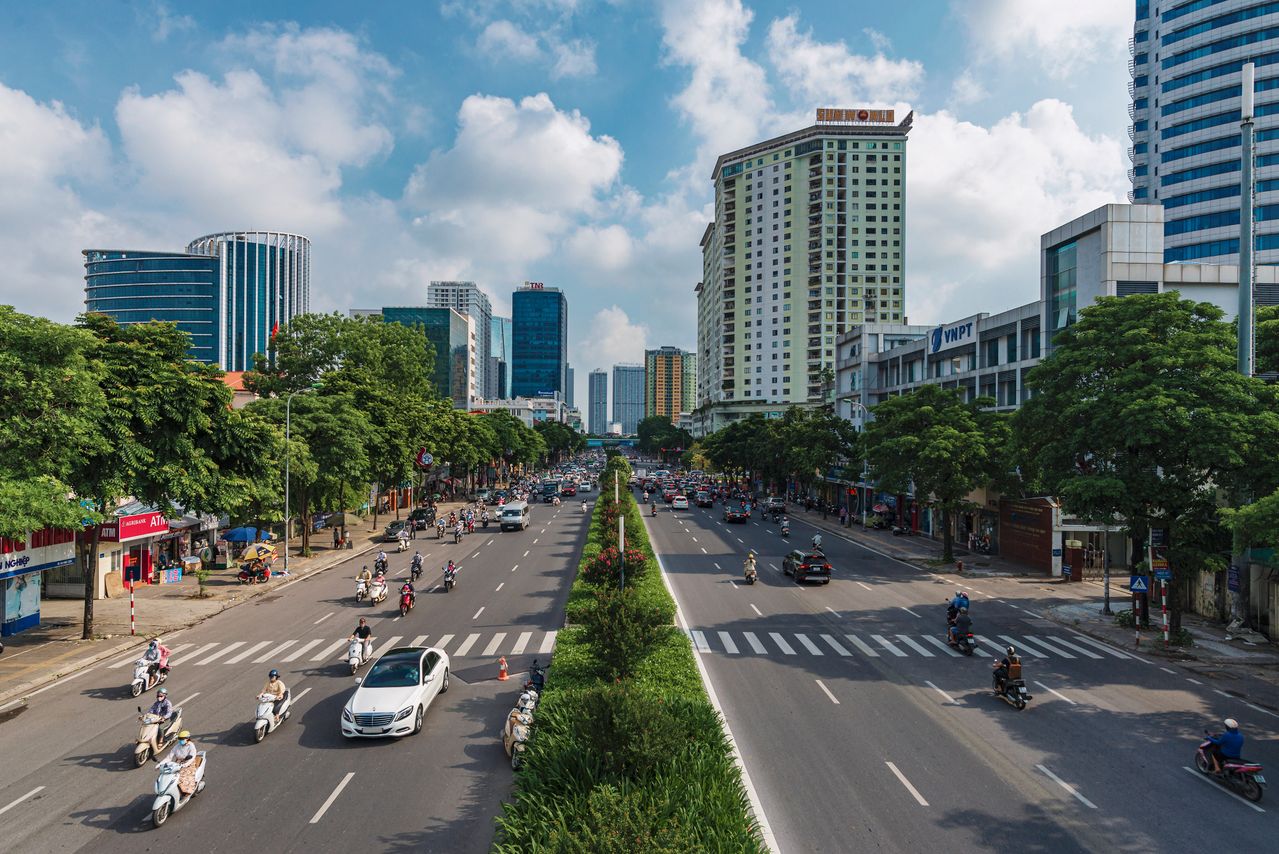
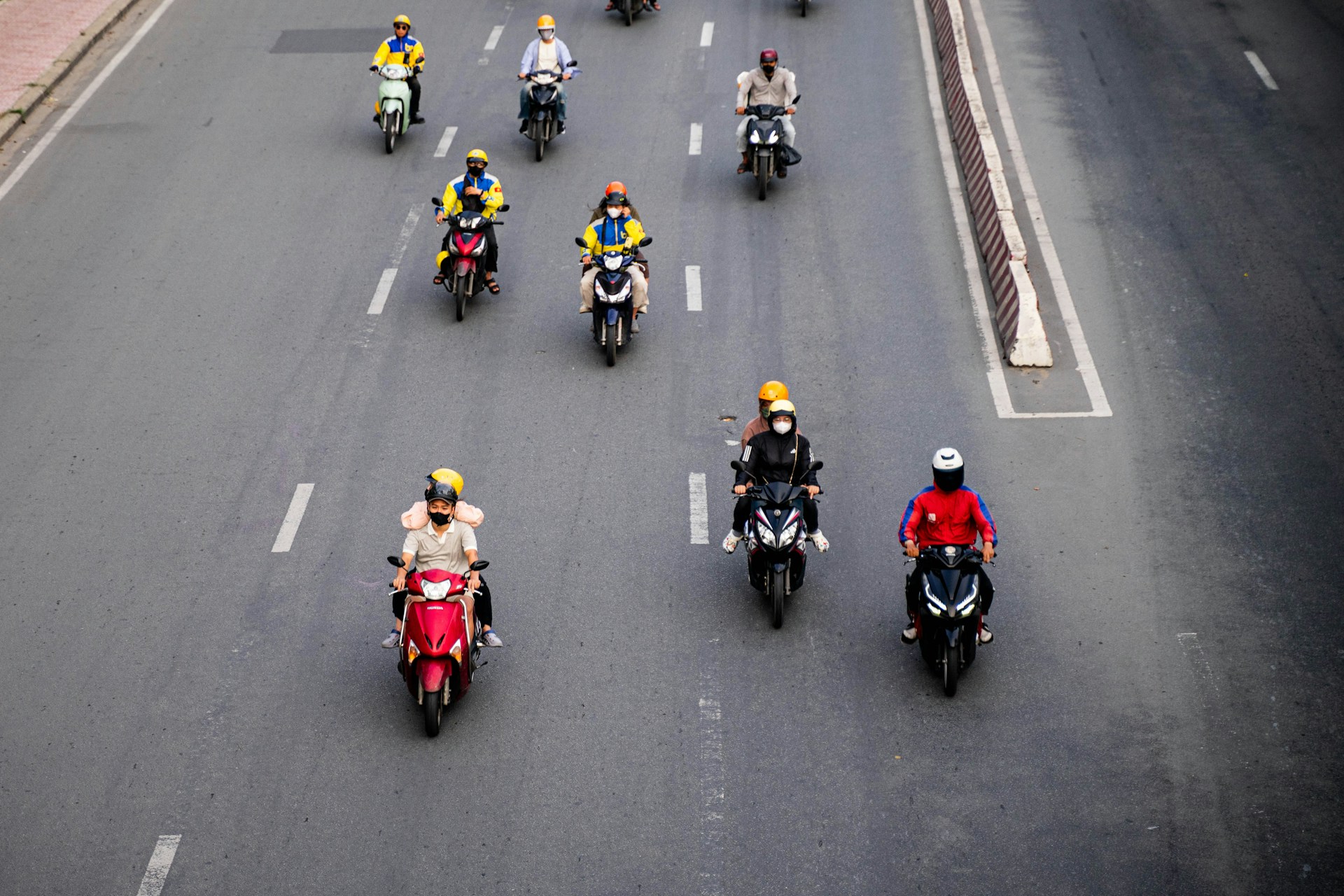
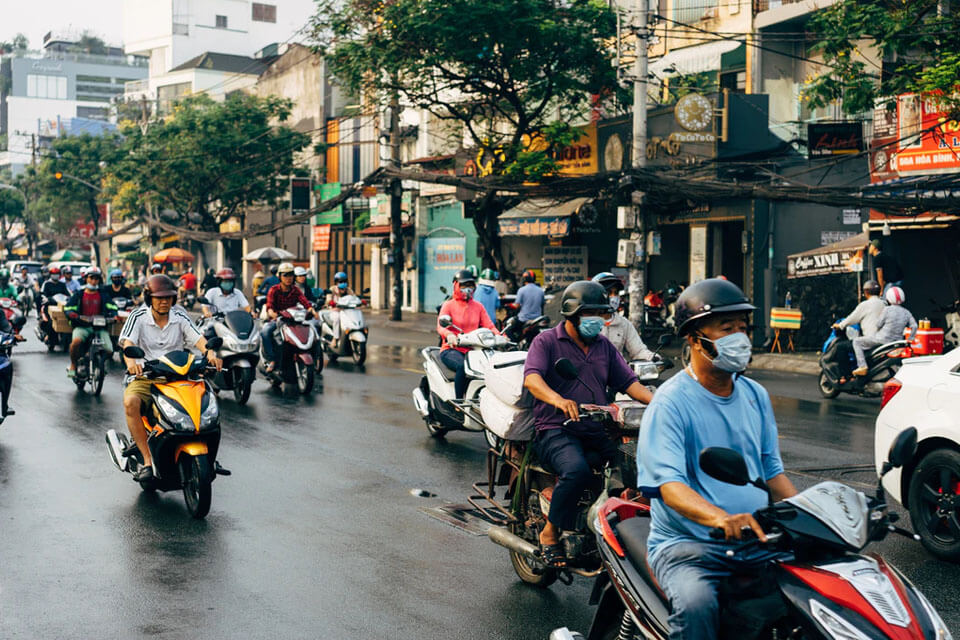
Vietnam’s two-wheeler vehicle market is one of the largest in the world, with motorcycles being the primary mode of transportation for the majority of its population[1]. The Ministry of Transport (MoT) reported that the total number of motorcycles in circulation was 75 million units at the end of 2023[2], making Vietnam the leading ASEAN country in terms of motorcycle usage rate[3]. This dominance stems from their affordability, ease of use in urban environments, and the lack of comprehensive public transportation systems in many areas[4]. However, recent setbacks in sales highlight the saturation of the market, as well as signifying a shift in domestic demand.
Despite these challenges, electric motorbikes have witnessed steady growth over the past decade as environmentally friendly alternatives for traditional internal combustion engine (ICE) vehicles. E2Ws cost just one-tenth to operate and maintain compared to ICE motorcycles while emitting only a third of the CO2[5]. E2Ws are mostly concentrated in central cities[6]. Prices now range between 22 and 70 million VND, making them comparable to ICE scooters, with some manufacturers like Yadea targeting younger buyers with models priced as low as 16 million VND[7]. As infrastructure improves and affordable models emerge, the adoption of electric motorcycles is expected to rise.
The domestic registration of E2W increased from 500 thousand to over 2.3 million units from 2016 to 2023[8], corresponding with a CAGR of 24%. Such an increase in local consumption has propelled Vietnam to become the largest E2W market in the ASEAN region and the second global market after China[9]. Vietnam’s E2W market is expected to sustain its growth momentum with annual domestic demand for electric vehicles projected to reach 2.5 million units in 2036, including 2 million electric motorcycles[10].
Number of total registered E2W in Vietnam from 2016 to 2023[11] (Unit: Million units)
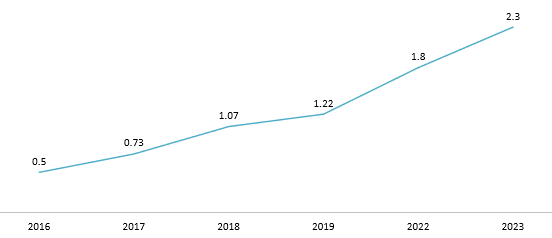
Source: GIZ
The E2W ecosystem has seen rapid development in technologies and infrastructure.
In terms of technologies, manufacturers are integrating advanced features into their electric motorcycles. VinFast, for instance, utilizes IoT technologies such as the VinFast E-Scooter app and the Phone-as-a-Key feature in premium models[12]. Battery technology improvements remain a priority in addressing consumer concerns. Notable examples include VinFast’s LFP batteries with waterproofing capabilities[13] and Selex’s partnership with Samsung SDI for high-quality battery cells[14].
Regarding the infrastructure, significant investments are being made to enhance charging facilities to support growing E2W adoption. V-Green, founded by Vingroup’s chairman, has committed to establishing 150,000 charging stations across all 63 provinces and cities nationwide[15], while Selex established battery-swap stations in major cities[16].
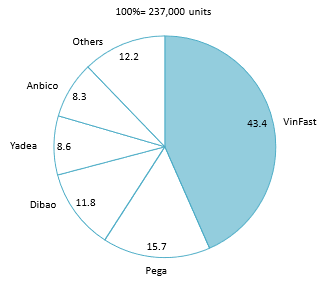
Player dynamics of Vietnam’s E2W market
Related article












Log in / Register
Continue without an account
Log in / Register
SUBSCRIBE NEWSLETTER