

 English
  日本語
日本語  Tiếng Việt
  简体中文
简体中文  한국어
한국어 This article explores the growing need for mobile laboratories in Vietnam, and analyses why this sector aligns with Japanese strengths.

23Feb2026
Latest News & Report / Vietnam Briefing
Comments: No Comments.
The demand for rapid, flexible, and accessible diagnostic solutions in Vietnam has accelerated since the COVID-19 pandemic, revealing both challenges and opportunities within the country’s healthcare system. Mobile laboratories — compact, transportable diagnostic facilities — have proven effective in emergency response and are now gaining attention as scalable, long-term healthcare infrastructure. For Japanese enterprises, which possess advanced medical technology and strong experience in healthcare management, this emerging field presents a new and promising investment opportunity. This article explores Vietnam’s growing need for mobile labs, analyses why this sector aligns with Japanese strengths, and discusses potential strategies for successful market entry, emphasising sustainable cooperation, technological localisation, and regional expansion within Southeast Asia.
Current Market Size in Vietnam
A mobile laboratory is a fully or partially equipped laboratory system installed on a vehicle, trailer, or container platform, designed to travel to field locations and perform on-site sampling, testing, analysis, and sometimes preliminary reporting. Depending on its purpose, it may include sample preparation areas, PCR and biochemical analyzers, environmental monitoring instruments, biosafety cabinets, negative pressure systems, and integrated data management tools[1]. Its core value lies in delivering laboratory-grade services directly at the point of need, reducing turnaround time, enhancing emergency responsiveness, and enabling reliable testing in areas where permanent laboratory infrastructure is limited or unavailable, such as during outbreaks, environmental incidents, remote healthcare missions, or industrial field operations.
The mobile testing vehicle at the Southern branch of the Vietnam – Russia Tropical Centre
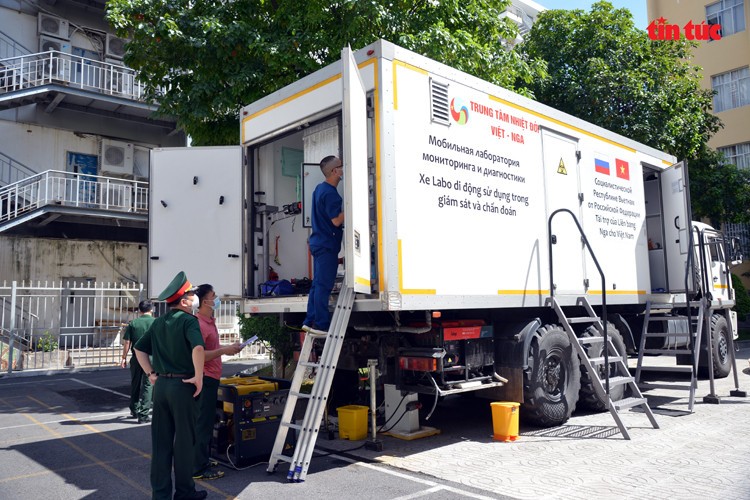
Source: Vietnam Plus
In Vietnam, however, mobile laboratories remain a relatively small and specialized market segment. There is no publicly available standalone market data specifically categorizing “mobile laboratories” as an independent industry. Instead, they are typically included within broader sectors such as medical devices[2], laboratory services[3], environmental monitoring systems[4], laboratory automation[5], or inspection equipment[6]. As a result, the market is best described as niche and project-driven rather than large and mature.
Most deployments in Vietnam have been initiated through government programs, public health emergencies, donor-supported initiatives, or specific industrial projects. During the COVID-19 pandemic, mobile PCR laboratories saw increased deployment to expand decentralized testing capacity. Following the pandemic, demand has normalized and shifted from large-scale emergency response to more targeted, application-specific uses[7].
Several structural factors contribute to the market’s limited scale:
First, capital expenditure is relatively high. A fully equipped mobile laboratory requires not only advanced laboratory instruments but also vehicle customization, climate control systems, biosafety infrastructure, and independent power supply solutions. Maintenance costs can also be elevated due to transportation-related wear and environmental exposure.
Second, regulatory and quality compliance requirements are complex. In medical applications, mobile laboratories must meet biosafety standards, quality management system requirements, and accreditation criteria. In industrial and environmental sectors, compliance with ISO/IEC standards and traceability protocols is often required. Maintaining consistent compliance in a mobile environment adds operational and administrative complexity.
Third, utilization rates can be challenging to optimize. While mobile laboratories are highly effective during outbreaks, inspection campaigns, or field missions, irregular deployment may reduce return on investment. Institutions must therefore assess whether ownership is economically justified or whether a service-based or shared model is more appropriate. Finally, successful operation depends on trained personnel who possess not only laboratory expertise but also experience in logistics coordination and field-based operations.
Overall, while the Vietnamese mobile laboratory market remains smaller than the fixed laboratory infrastructure sector, it holds strategic importance in selected applications and has potential for gradual, specialized growth.
Japanese Investment Situation in Vietnam
Japan remains one of the most important and long-standing foreign investors in Vietnam. Over the past two decades, Japanese companies have built a strong presence across manufacturing, infrastructure, real estate, energy, and supporting industries[8]. As of January 31, 2026, Japan had 5,722 active investment projects in Vietnam with a total registered capital of US$78.9 billion, ranking third among 153 countries and territories. In 2025 alone, Japan registered US$3.7 billion across 296 new projects (up 6.6% year-on-year), ranking fourth among 113 investors, with manufacturing remaining the dominant sector at 61.6% of total capital, followed by energy and real estate. Bilateral trade also reached a record high of over US$51.43 billion in 2025 (up 11.28%), with Vietnam posting a trade surplus of nearly US$2.1 billion, reinforcing Japan’s role as a key, stable, and complementary partner[9]. This reflects Vietnam’s continued attractiveness in terms of political stability, competitive labor costs, improving infrastructure, and its strategic position within regional supply chains.
The Prime Minister poses for a commemorative photo with the Japanese delegation (Dec 2025)
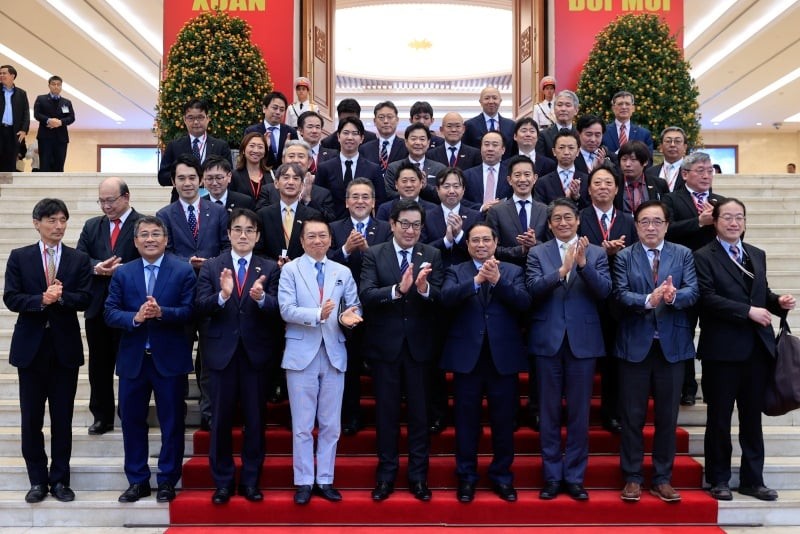
Source: Vietnam.vn
Investment Trends from Other Countries and Key Players
Beyond Japan, Vietnam continued to attract strong FDI inflows from multiple economies. Singapore led with US$10.21 billion, accounting for 26.7% of total registered capital and rising 31.4% year-on-year, followed by South Korea with nearly US$7.06 billion, representing 18.5% of total investment and increasing 37.5% year-on-year; China and Hong Kong (China) were also among the top contributors. In terms of project activity, China ranked first in the number of newly registered projects (28.3%), while South Korea led in capital adjustments (22.8%) and capital contributions and share purchases (25.2%), reflecting strong expansion and reinvestment trends from these economies[10].
Recent developments highlight continued expansion in industrial park pipelines[11], semiconductor ecosystem growth[12], and infrastructure upgrades. Vietnam is investing heavily in logistics connectivity[13], energy capacity[14], and export competitiveness[15]. These dynamics strengthen the country’s role as a regional manufacturing hub and increase demand for quality assurance, environmental monitoring, and regulatory compliance systems.
To better illustrate the competitive landscape, the table below summarizes the key foreign investment players in Vietnam and their strategic roles:
| Country / Region | Key Company / Group | Main Sector in Vietnam | Strategic Relevance |
| Japan | Sumitomo Corporation | Industrial parks, infrastructure | Developer of large industrial parks attracting Japanese manufacturing ecosystems |
| Japan | Toyota Motor Vietnam | Automotive manufacturing | Major auto assembler with strong supply-chain impact |
| Japan | Canon Vietnam | Electronics manufacturing | Large-scale export-oriented production |
| Japan | Panasonic Vietnam | Electronics & appliances | High-quality manufacturing base |
| South Korea | Samsung Electronics | Electronics & smartphones | Vietnam as a global production hub |
| South Korea | LG Group | Electronics & components | High-tech manufacturing cluster |
| Singapore | Sembcorp (VSIP) | Industrial park development | Nationwide industrial park ecosystem |
| Singapore | CapitaLand | Real estate & logistics | Urban and industrial infrastructure expansion |
| United States | Intel | Semiconductor assembly & testing | High-tech anchor investor |
| United States | Amkor Technology | Semiconductor packaging & testing | Advanced manufacturing expansion |
| China / Hong Kong | Foxconn | Electronics manufacturing | Supply chain diversification |
| Taiwan | Pegatron | Electronics manufacturing | Export-oriented production relocation |
B&Company’s synthesis
Implications for the Mobile Laboratory Market and Potential for Japanese Companies
When combined with the earlier assessment that Vietnam’s mobile laboratory market remains niche and project-based, the broader investment landscape suggests a focused but meaningful opportunity. Although mobile laboratories are not yet a large-scale commercial segment, demand drivers are gradually strengthening.
Export-oriented industries—such as electronics, automotive, food processing, and semiconductors—face stricter quality requirements from global markets. Environmental regulations are becoming more stringent. Public health preparedness and rural healthcare access remain national priorities. All of these areas can benefit from on-site, rapid testing and inspection solutions.
For Japanese companies, the opportunity lies primarily in business-to-government (B2G) and business-to-business (B2B) applications rather than mass-market deployment. Japanese firms are well-positioned to leverage their strengths in precision technology, reliability, and compliance management. Mobile laboratory solutions could support industrial park ecosystems, export quality control programs, environmental inspections, and targeted public health initiatives.
A service-based or operation-and-maintenance model may be more suitable than pure equipment sales, particularly in a market where utilization rates must be carefully managed. By aligning mobile laboratory offerings with Vietnam’s expanding industrial base and regulatory framework, Japanese enterprises can capture a specialized but strategically promising segment.
Conclusion
Vietnam remains a strong investment destination for Japan and other major economies. While the mobile laboratory market is relatively small in absolute terms, it aligns with the country’s evolving industrial structure and regulatory demands. For Japanese enterprises with long-term strategic commitment and advanced technological capabilities, the sector presents a focused yet promising growth opportunity within Vietnam’s broader foreign investment landscape.
* If you wish to quote any information from this article, please kindly cite the source along with the link to the original article to respect copyright.
| B&Company
The first Japanese company specializing in market research in Vietnam since 2008. We provide a wide range of services including industry reports, industry interviews, consumer surveys, business matching. Additionally, we have recently developed a database of over 900,000 companies in Vietnam, which can be used to search for partners and analyze the market. Please do not hesitate to contact us if you have any queries. info@b-company.jp + (84) 28 3910 3913 |
Read more
Pharmaceutical market in Vietnam: Landscape, key players and regulatory overview
[1] World Health Organisation <Access>
[6] Transparency Market Research <Access>
[8] Ministry of Foreign Affairs of Japan <Access>
[10] Ministry of Planning and Investment <Access>
[11] NamDinhVu Industrial Park <Access>
Related article





























Sidebar:
SUBSCRIBE NEWSLETTER