

 English
  日本語
日本語  Tiếng Việt
  简体中文
简体中文  한국어
한국어 Da Nang, the largest city in the central provinces, serves as a dynamic economic and cultural hub in the central region.
15Apr2025
Latest News & Report / Vietnam Briefing
Comments: No Comments.
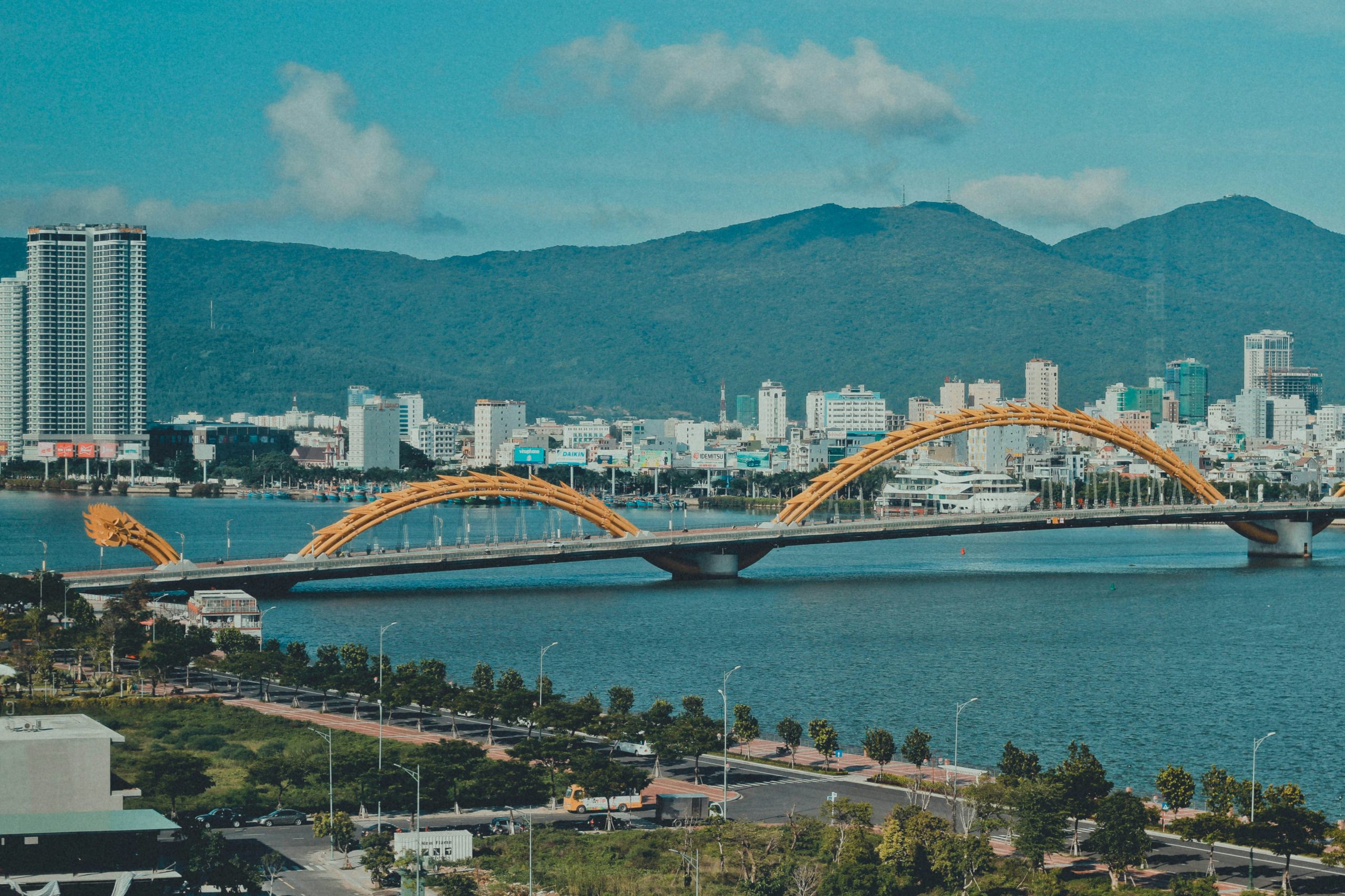
Da Nang, the largest city in the central provinces, serves as a dynamic economic and cultural hub in the central region. Its strategic location, robust infrastructure, skilled labor force, and diverse investment opportunities make it an attractive destination for foreign investors.
Location
Situated along Vietnam’s eastern coast at the mouth of the Hàn River, Da Nang occupies a prime position as a port city. It lies approximately halfway between Hanoi to the north and Ho Chi Minh City to the south, making it a pivotal gateway for trade and tourism. The city is enclosed by Quảng Nam Province to the south and Thừa Thiên–Huế Province to the north, and within reach of several UNESCO World Heritage Sites, including the Imperial City of Huế, the Ancient Town of Hội An, and the Mỹ Sơn Sanctuary. Da Nang’s strategic location provides easy access to key domestic and international markets, strengthening its position as an economic center in central Vietnam.
Da Nang city in national map
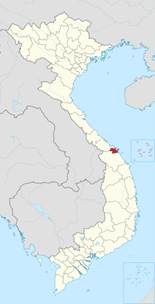
Source: Wikipedia
Infrastructure
Da Nang boasts a modern and efficient infrastructure system, ranking 4th in Vietnam for infrastructure development in 2022[1]. The city’s transportation infrastructure is highly regarded, with Da Nang International Airport being one of the three largest international gateways in Vietnam, offering flights to numerous domestic and international destinations. The city is also a key intersection of National Route 1A and the North-South Railway, facilitating easy connectivity across the country. Its port system, including Tiên Sa Port and Song Hàn Port, plays an important role in cargo transportation and boosting regional trade.
Da Nang is actively developing its industrial infrastructure, with major industrial zones such as Hòa Cầm Industrial Zone and Liên Chiểu Industrial Zone, which contribute significantly to the city’s economic development. The city currently has a diverse network of industrial zones, including 6 main industrial zones and one high-tech park, attracting both domestic and foreign investors. These industrial zones focus mainly on sectors such as agricultural processing, seafood, mechanical engineering, electronics, and high technology, further driving the development of key industries.
Looking ahead, Da Nang’s infrastructure development strategy focuses on expanding and upgrading the transportation system, developing smart industrial zones, and building infrastructure to support tourism, trade, and Industry 4.0. Industrial zones will continue to expand, especially new industrial zones and industrial clusters such as the Hòa Liên Industrial Zone and Hòa Khánh Nam CCN, aiming to strengthen the city’s position both regionally and internationally.
Labor Market
Da Nang’s labor force is notably young and dynamic. The labor force comprises over 66% of the population, totaling around 633,600 workers[2], which is 1.2% of the national labor force in 2023. The average monthly income per capita is about 6.2 million VND. The city’s labor force focuses on trading, repairing, manufacturing and processing industries, and accommodation and food services. In recent years, the proportion of trained labor in Da Nang has steadily increased, rising from 41.73% in 2015 to 48.15% in 2021. Notably, the share of workers with university and intermediate vocational training has seen the most significant growth. By 2021, over a quarter of the workforce in Da Nang had a university degree or higher (up from 22.08% in 2015), and more than 10% had intermediate vocational training (up from 5.53% in 2015). Compared to the national average, Da Nang ranks highly in terms of the proportion of trained workers with qualifications, achieving the highest rank in 2010 and second place in 2020.[3]

Related article
















Log in / Register
Continue without an account
Log in / Register
SUBSCRIBE NEWSLETTER