

 English
  日本語
日本語  Tiếng Việt
  简体中文
简体中文  한국어
한국어 Nestled in northern Vietnam, Lao Cai is poised to become a dynamic trade and connectivity hub under the government's ambitious framework.

06Jan2025
Latest News & Report / Vietnam Briefing
Comments: No Comments.
Nestled in northern Vietnam, Lao Cai is poised to become a dynamic trade and connectivity hub under the government’s ambitious framework. This strategic initiative sets out a roadmap to enhance infrastructure, develop service industries, and position Lao Cai as a vital economic gateway to ASEAN and China. This presents a wealth of opportunities for domestic and international investors alike, promising a future of economic prosperity and regional integration.
Overview of Lao Cai Economics
In 2023, Lao Cai’s GRDP reached nearly 3 billion USD, an 8% increase compared to 2022, and ranked 4th out of 14 northern midlands and mountainous regions. Services account for the most in the economics structure with 40% of GRDP, followed by Industry with 36% and Agriculture with 14%[1].
Lao Cai GRDP by economic structures from 2019 to 2023
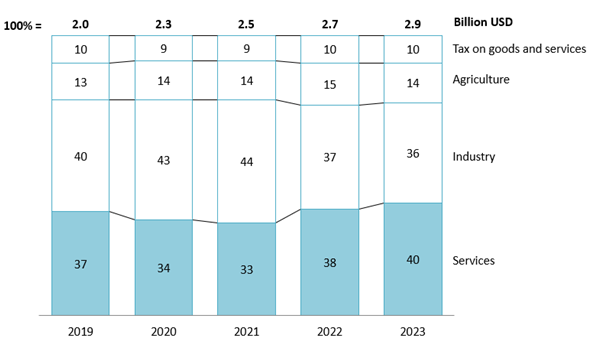
Source: The General Statistics Office of Vietnam
Lao Cai’s strategic position as a border province with China has been instrumental in its economic development. The province serves as a crucial gateway for trade between Vietnam and China, with a well-developed transportation network that includes roadways and railways facilitating seamless connections. Just within the first 6 months of 2024, the total value of import, export, purchase, sale, and exchange of goods through Lao Cai’s border gates was estimated at nearly 2 billion USD, a 164% increase period-on-period[2].
Government Decision to Transform Lao Cai into a Trade and Connectivity Hub
On 20th December 2024, the government enacted Decision No. 1620/QĐ-TTg, outlining a comprehensive plan to transform Lao Cai into a central hub for economic trade and connectivity between Vietnam, ASEAN countries, and Southwest China.
| Initiatives | Features |
| Objective and plans | · Transform Lao Cai into a premier trade and logistics hub for Vietnam, ASEAN, and Southwest China.
· Elevate Lao Cai as a central node in the regional economic network, facilitating increased trade flows and economic integration. · Expand and improve infrastructure to meet international standards, supporting the growth of key industries such as logistics, tourism, and manufacturing. · Promote sustainable development by integrating eco-friendly practices into infrastructure projects and prioritizing renewable energy initiatives. |
| Logistics and Transportation | · Develop and optimize Lao Cai’s role in the Kunming – Lao Cai – Hanoi – Hai Phong – Quang Ninh economic corridor to boost trade efficiency and connectivity.
· Streamlining customs processes and enhancing trade facilitation at Lao Cai border gates. · Building the Sa Pa Airport to handle up to 3 million passengers annually, improving domestic and international connectivity, expected to finish by 2028. · Expand and integrate multimodal transportation networks, linking roads, railways, and airways to ensure seamless goods and passenger movement. |
| Infrastructure | · Upgrade and expand the Noi Bai – Lao Cai Expressway, ensuring faster and more reliable connections to Hanoi and neighboring provinces like Ha Giang.
· Establish modern logistics zones and industrial parks to support manufacturing, warehousing, and export-oriented activities. · Construct new cross-border bridges over the Red River to strengthen transportation links between Vietnam and China. · Enhance border facilities with advanced logistics services, creating a smoother and more efficient trade environment. |
Source: Vietnam Government Portal
This initiative is expected to attract investment, promote regional development, and contribute to the broader economic growth of the northern midland and mountainous regions of Vietnam.


Related article






















Log in / Register
Continue without an account
Log in / Register
SUBSCRIBE NEWSLETTER