

 English
 日本語
 Tiếng Việt
 简体中文
 한국어
Vietnam and Japan are working towards completing fruit market access procedures for Vietnamese pomelos and Japanese grapes for the 2027 season.
26Nov2026
Latest News & Report / Vietnam Briefing
Comments: No Comments.
Vietnam and Japan are working towards completing market access procedures for Vietnamese pomelos and Japanese grapes for the 2027 season. This development could broaden the range of Japanese fresh fruit available in Vietnam while creating opportunities in distribution and post-harvest technology. Commercial success will depend on matching product quality with consumer expectations, purchasing power, and reliable delivery.
The 2027 target could expand bilateral fruit trade
During bilateral talks on November 6, 2026, Vietnam and Japan agreed to prioritize market access procedures for Vietnamese pomelos and Japanese grapes, targeting the 2027 season. Japanese peaches are among the additional products under discussion. The timetable remains conditional on completing the necessary procedures; it does not represent confirmed import authorization.
Minister Trinh Viet Hung and Japan’s Agriculture Minister Takebe Arata agreed to advance market access for pomelos, grapes, and other agricultural products
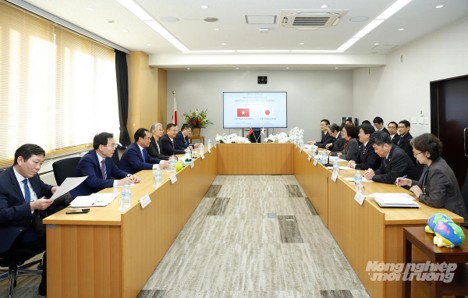
Source: Agriculture & Environment
The proposed openings would benefit both directions of trade. Vietnamese pomelos could gain access to another market with demanding quality requirements, while Japanese exporters could add grapes to their offerings in Vietnam. In B&Company’s assessment, the opportunity also extends to preservation, traceability, and distribution services that help fruit meet destination-market requirements.
Which Japanese fresh fruits currently enter Vietnam
The Japanese Plant Protection Station’s current commercial cargo requirements identify apples, Japanese pears, and Unshū mandarins as eligible for export to Vietnam under bilateral phytosanitary conditions. Japanese grapes, peaches, strawberries, and melons do not yet have established conditions in this list. These requirements concern fresh produce grown in Japan; processed fruit products fall outside this scope.
Full-year 2025 figures from Japan’s Ministry of Agriculture, Forestry and Fisheries (MAFF) show that apples accounted for most of the shipment volume across the three categories of apples, citrus, and pears exported to Vietnam.
Japanese fruit exports to Vietnam by category in 2025
| Product category | Volume (tonnes) | Share of combined volume | Value (JPY million) |
| Apples | 106 | 60.6% | Approximately 90 |
| Citrus* | 48 | 27.4% | Approximately 30 |
| Japanese pears | 21 | 12.0% | Approximately 20 |
| Combined total | 175 | 100.0% | Approximately 140 |
Source: MAFF; volume shares calculated by B&Company using rounded reported quantities. *MAFF reports the broader “citrus” category; Unshū mandarins are the fresh citrus fruit currently eligible for entry.
These figures indicate a relatively small trading segment. The value of Japanese apple exports to Vietnam fell by 52.6% in 2025. B&Company considers this an important qualification when assessing future opportunities: interest in Japanese products needs to be translated into sustained purchases, supported by suitable pricing and dependable supply.
Quality and gifting support demand for Japanese fruit
B&Company’s earlier analysis of premium demand in Vietnam’s fruit and vegetable market highlighted growing attention to quality, safety, and origin[1]. Vietnam imported approximately USD 2.4 billion in fresh and processed fruit and vegetables in 2024. Although this category is broader than fresh fruit, it provides context for the demand supporting differentiated imported products.
Gifting offers a concrete example of demand for Japanese fruit. At the “Xin Chao Nhat Ban” promotion at Saigon Centre in January 2025, one-kilogram bags of Wakayama Unshū mandarins ranked first in product sales value. Among 219 fruit-tasting participants surveyed, 120 selected Japan as their preferred origin for food received as Tet gifts, while 102 selected fruit and vegetables as a desired gift category. These findings describe event participants and should not be generalized to all Vietnamese consumers.
In B&Company’s assessment, Japanese fruit has a clear opportunity when taste, appearance, and confidence in origin come together in a suitable gift. Packaging, information about the growing region, and knowledgeable in-store advice can help buyers understand the product’s value.
Tet gift basket featuring Japanese Ohrin apples
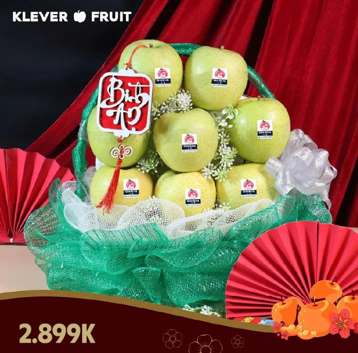
Source: Kleverfruit
Price remains a constraint on wider adoption. PwC’s 2025 consumer survey, which included 517 respondents in Vietnam, found that 47% identified price as a primary consideration when choosing food. Exporters therefore need to test willingness to pay within specific customer segments. Smaller packs and individual purchases could also make trial more accessible.
Japanese grapes will need a clear market position
Japanese grapes would enter a competitive market already supplied by China, the United States, Australia, and New Zealand. Exporters will need clear positioning that reflects their target customers. Gift buyers may prioritize presentation and delivery services, while household buyers may focus on taste, pack size, and price. Product information should also distinguish grape varieties from growing origin so consumers can accurately identify Japanese-grown fruit.
Existing retailers offer potential channels for testing demand. The Japan Fruit and Vegetables Export Promotion Council’s Vietnam directory includes Fujimart, Klever Fruit, and Tony Fruit. Trials at selected outlets could help exporters assess purchase conversion after tasting, sales speed, and product losses before expanding shipments.
Maintaining quality throughout transport, storage, and display will be essential to commercial success. Exporters and Vietnamese partners should agree on acceptance standards, storage conditions, and responsibility for damaged goods to support reliable distribution and manage costs.
Opportunities extend to post-harvest services and technology
Growing bilateral fruit trade could also create opportunities beyond direct exports. In its earlier article on Vietnam as a food production base for Asia[2], B&Company highlighted Yasaka Fruit Processing Vietnam, a Japanese-invested company providing vapor heat treatment for tropical fruit to support compliance with export-market phytosanitary requirements. This illustrates how Japanese companies can participate through treatment and preservation capabilities.
The preparation period ahead of the targeted 2027 season gives Japanese exporters and Vietnamese partners time to test demand, agree on quality standards, and develop trial shipment plans. Completing market access procedures would establish the conditions for trade. Long-term growth will depend on consistent quality, value that justifies the selling price, and dependable distribution partnerships.
As Japanese fruit exporters prepare for potential market openings, understanding Vietnamese consumers and selecting suitable local partners will be essential. B&Company supports this process through market research, consumer surveys, industry interviews, and business matching. We help companies assess demand, evaluate product positioning and pricing, and identify potential importers and distributors. These insights support practical decisions on market entry and business development in Vietnam.
To explore opportunities for your products in Vietnam, please contact B&Company at info@b-company.jp.
Read more
Rising premium demand in Vietnam’s Fruit and Vegetable market: A clear opening for foreign brands
Vietnam’s fruit and vegetable export situation: Strong growth and current challenges
* If you wish to quote any information from this article, please kindly cite the source along with the link to the original article to respect copyright.
| B&Company
The first Japanese company specializing in market research in Vietnam since 2008. We provide a wide range of services including industry reports, industry interviews, consumer surveys, business matching. Additionally, we have recently developed a database of over 1,000,000 companies in Vietnam, which can be used to search for partners and analyze the market. Please do not hesitate to contact us if you have any queries. info@b-company.jp + (84) 24 3978 5165 |
[1] https://b-company.jp/rising-premium-demand-in-vietnams-fruit-and-vegetable-market-a-clear-opening-for-foreign-brands/
[2] https://b-company.jp/japan-chooses-vietnam-as-a-food-production-base-for-asia/
Related article




























Log in / Register
SUBSCRIBE NEWSLETTER