

 English
  日本語
日本語  Tiếng Việt
  简体中文
简体中文  한국어
한국어 The widening of Phan Ke Binh and nearby streets is moving from a long-discussed urban plan into a visible business impact for restaurants and tenants.
04Jun2026
Latest News & Report / Vietnam Briefing
Comments: No Comments.
The planned widening of Phan Ke Binh and nearby Linh Lang streets in Ba Dinh District is moving from a long-discussed urban plan into a visible business issue for restaurants and tenants in one of Hanoi’s most concentrated Japanese F&B areas. The project aims to expand Phan Ke Binh from its current width of about 10–12 meters to 30 meters along the route, a change that may improve long-term traffic capacity but create short- and medium-term disruption for local businesses.
For Japanese restaurants, the impact is not only physical relocation. Linh Lang, Phan Ke Binh, Kim Ma and Dao Tan have formed a familiar “Japanese town” in Hanoi, supported by Japanese residents, business visitors, nearby offices, serviced apartments and regular local customers. The announced closure of Pizza 4P’s Phan Ke Binh on 15 June 2026 due to the city’s road expansion has become a symbolic case showing how infrastructure projects can affect brand locations, customer habits and the local F&B ecosystem.
From long-term planning to direct business impact
Urban road expansion is a normal part of Hanoi’s infrastructure development, especially in dense central districts where roads were originally narrow and traffic demand has increased. In the case of Phan Ke Binh, the project has been discussed for several years. Official information from the government portal noted that the road is around 785 meters long, currently about 10–12 meters wide, and planned to be widened to 30 meters[1].
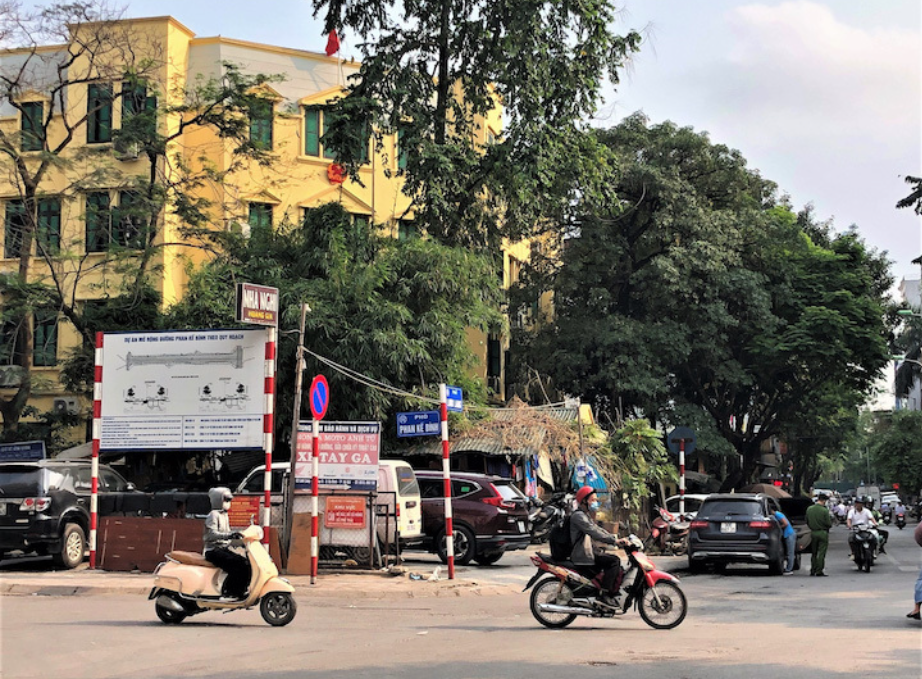
Intersection of Phan Ke Binh and Linh Lang streets in Ba Dinh District, Hanoi — an area expected to be affected by the planned road widening project
Source: Vietnamnet
The planning logic is clear. Wider roads can improve traffic flow, reduce bottlenecks, and create a more orderly urban landscape. In the long term, a more accessible road may increase commercial value and support higher-density development around Ba Dinh. However, for businesses already operating along the affected roads, the transition period can be costly. Land acquisition, partial demolition, construction fences, reduced visibility, parking difficulty, and customer uncertainty may all reduce sales before any long-term benefit appears.
This is particularly important in F&B, where location is closely linked to daily revenue. Restaurants depend on regular traffic, frontage, atmosphere, and customer routines. Even a short disruption can affect reservations and repeat visits, while relocation may require heavy investment in interior design, kitchen equipment, staff movement, licensing, and customer communication.
Why Linh Lang–Phan Ke Binh matters to Japanese F&B
The Linh Lang–Phan Ke Binh area is not an ordinary restaurant street. It is part of a wider Japanese-oriented cluster in Ba Dinh, together with Kim Ma and Dao Tan. Real estate agencies and local media commonly describe this area as one of the places where Japanese residents and Japanese restaurants are highly concentrated in Hanoi.
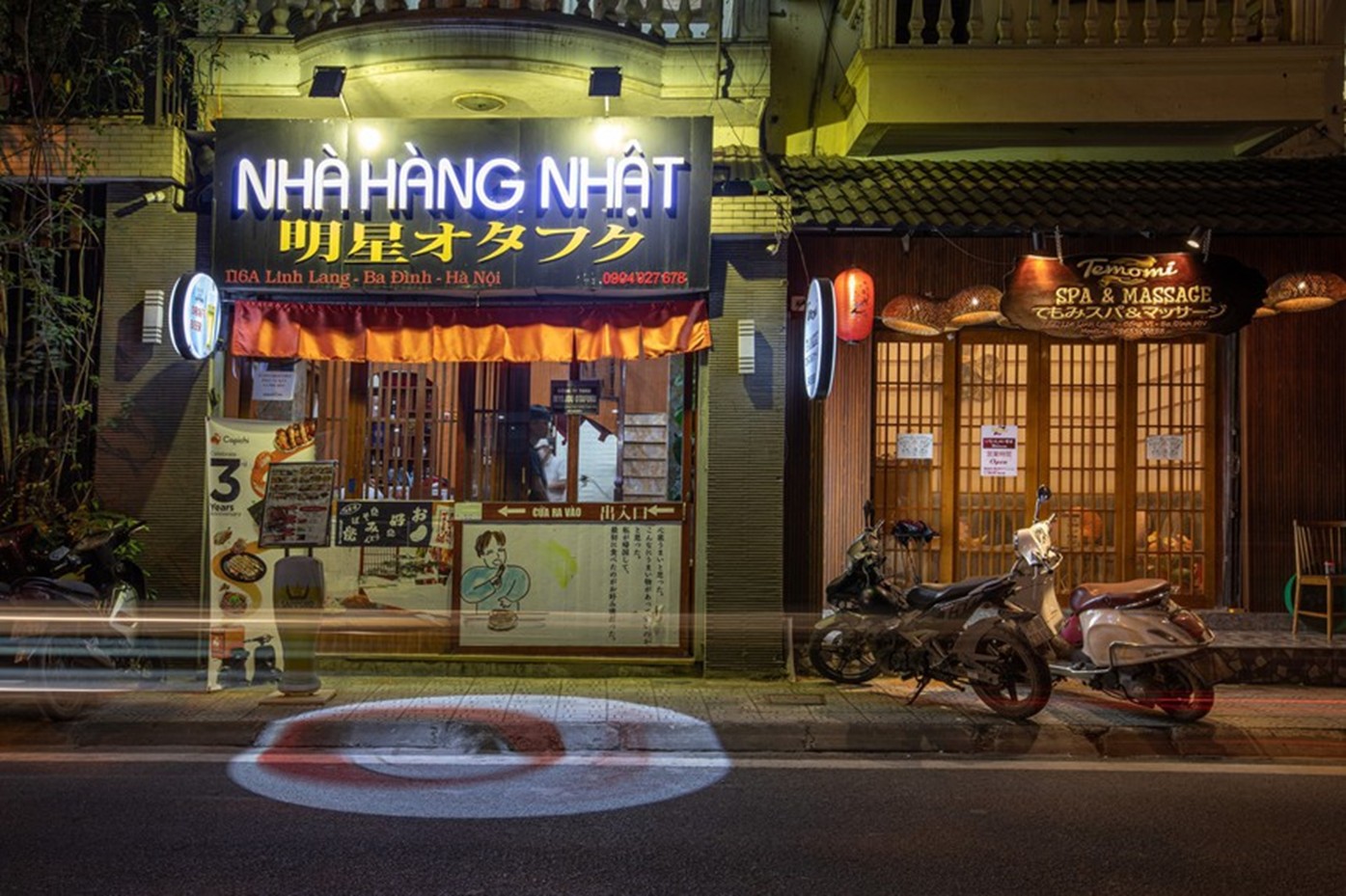
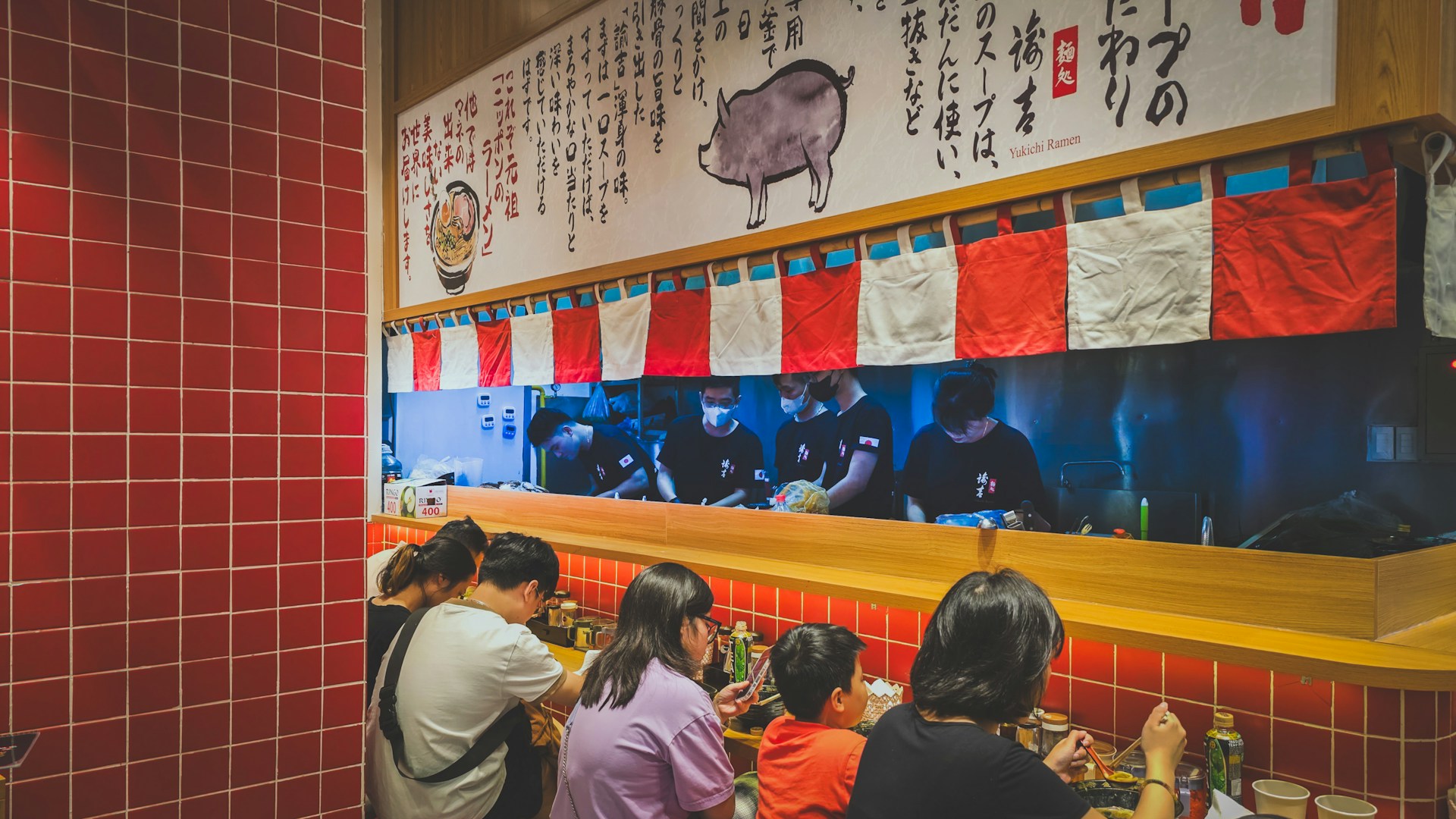
Japanese restaurants on Linh Lang Street
Source: Thethaovanhoa
This cluster has developed for practical reasons. It is close to major office buildings, embassies, hotels, serviced apartments, and residential areas preferred by foreign professionals. For Japanese expatriates and business travelers, the area offers familiar food, language-friendly services, and a sense of community. For Vietnamese consumers, it has become a destination for Japanese cuisine, from casual ramen and izakaya to sushi, BBQ and premium dining.
The strength of this cluster is also its vulnerability. When restaurants are concentrated in a limited number of small streets, any infrastructure change in the area can affect multiple operators at the same time. Customers may shift to nearby substitutes, but the overall dining map can change if several restaurants close, relocate, or lose their storefront visibility during construction.
Pizza 4P’s Phan Ke Binh as a symbolic case
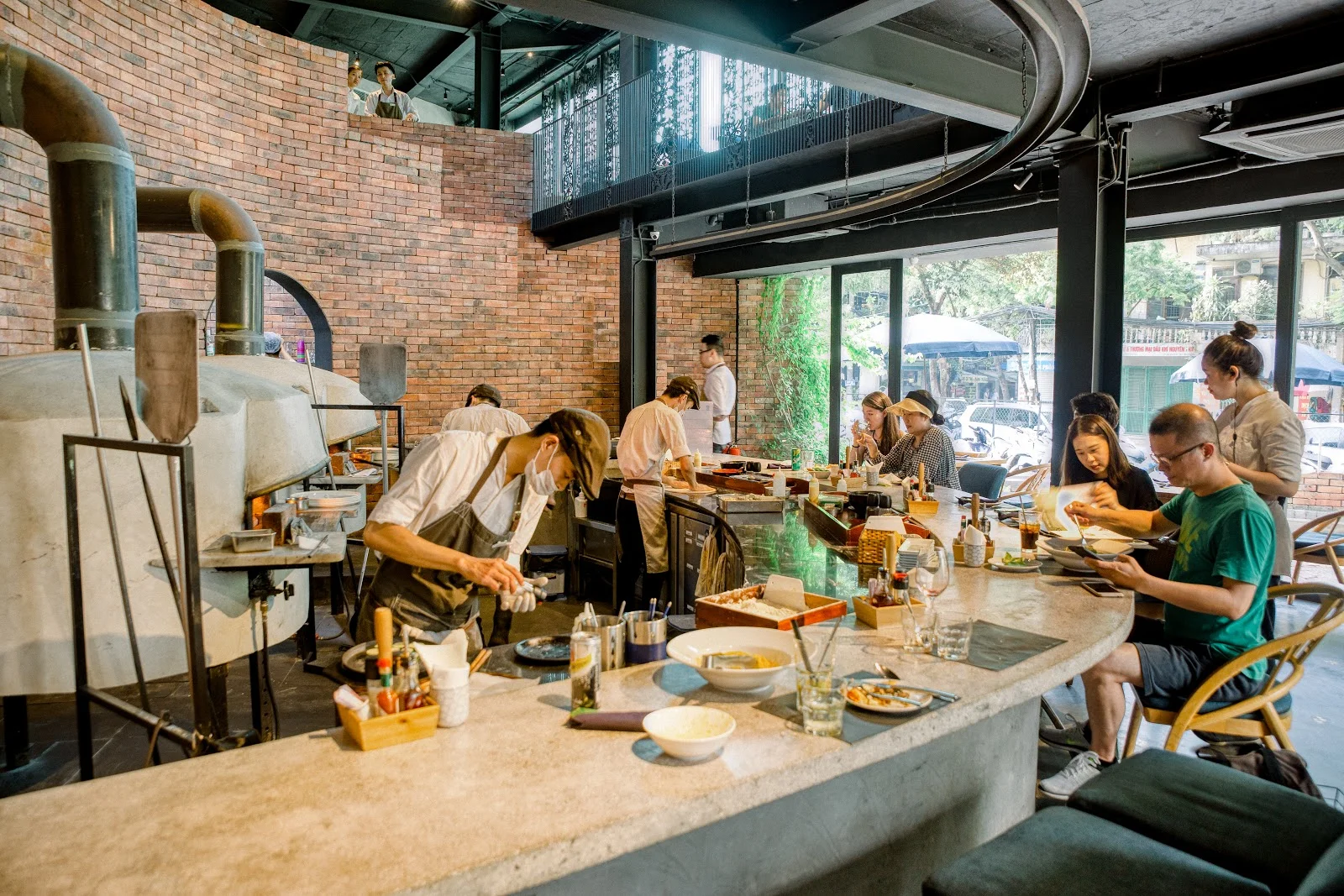
Pizza 4P’s Phan Ke Binh is one of the most visible examples of this impact. The branch is located at 5 Phan Ke Binh and has been known not only as a restaurant but also as an architectural space. The design by Takashi Niwa Architects used cast-iron façade elements and garden-like details to create a distinctive atmosphere between the street and the dining space.
According to public posts related to the brand and the architect, Pizza 4P’s Phan Ke Binh will close on 15 June 2026 as part of the city’s road expansion plan. This is meaningful because the store represented a combination of Japanese-related entrepreneurship, design investment and Hanoi’s F&B lifestyle. Its closure suggests that road widening not only affects small tenants with limited resources. It can also affect well-known brands with strong customer bases and carefully designed physical spaces.
Notice announcing the closure of Pizza 4P’s Phan Ke Binh from 15 June 2026

Source: Pizza 4P’s Facebook
For restaurant operators, this raises a broader question: how should brands evaluate location risk in fast-changing Vietnamese cities? A location may be commercially attractive today but is still exposed to planning, land clearance, or redevelopment risks. In areas with narrow streets and high land value, such risks should be assessed before signing long-term leases or investing heavily in store design.
Possible effects on Japanese restaurants and surrounding tenants
The first effect is relocation pressure. Some restaurants may need to move completely, while others may lose part of their operating space or frontage. For Japanese restaurants, which often rely on compact but carefully arranged interiors, even a small reduction in space can affect seating capacity, kitchen layout, and customer experience.
The second effect is rent and property repositioning. After road widening, the newly improved frontage may push up land and rental values. Some landlords may prefer higher-paying tenants, chain stores, or redevelopment projects. This could gradually change the tenant mix from small independent Japanese restaurants to larger brands, cafés, retail shops, or mixed-use buildings.
The third effect is customer redistribution. Some customers may move to nearby alternatives such as Lotte Center, Kim Ma, Dao Tan, Van Phuc, Tay Ho, or shopping malls. For well-known brands, relocation may be manageable if communication is strong. For smaller restaurants, however, moving even a few streets away can lead to customer loss.
Strategic implications for F&B operators
For Japanese F&B businesses in Hanoi, the case highlights the need for location due diligence beyond foot traffic and rent. Operators should check urban planning information, road expansion maps, land clearance risks, and building ownership status before committing to a major investment. Lease contracts should also consider early termination, compensation, renovation recovery, and relocation support.
Existing restaurants in the Linh Lang–Phan Ke Binh area should prepare customer-retention measures before construction progresses further. These may include collecting customer contacts, strengthening Google Maps and social media updates, promoting reservation systems, preparing delivery options, and clearly communicating any temporary closure or relocation plan. For restaurants serving Japanese business customers, direct communication through Japanese-language channels will be particularly important.
Multi-location strategies may also become more relevant. Instead of relying only on one Japanese cluster, brands can consider a combination of locations: one store in a Japanese community area, another in a shopping mall or office district, and possibly a delivery-focused kitchen. This can reduce exposure to one street-level risk.
B&Company support
As Vietnam’s urban landscape continues to evolve, location strategy is becoming increasingly important for F&B operators, retailers and investors. B&Company, a market research and consulting firm with long-standing experience in Vietnam, supports companies in understanding local market dynamics, assessing consumer behavior, identifying promising locations, and evaluating business risks before market entry or expansion. For F&B businesses, our services can include market size analysis, competitor mapping, customer surveys, site selection support, area potential assessment, and feasibility studies. By combining local data collection with practical business insight, B&Company helps companies make more informed decisions in a rapidly changing market.
*Cover photo by Pizza 4P’s
[1] https://thanglong.chinhphu.vn/phe-duyet-gia-dat-ho-tro-giai-phong-mat-bang-tai-linh-lang-phan-ke-binh-chua-boc-thai-ha-10334174.htm
Read more
Analysis of challenges in Choosing a Business location and effective evaluation methods
Choosing the Optimal F&B Location in Hanoi: Strategy in a new market context
* If you wish to quote any information from this article, please kindly cite the source along with the link to the original article to respect copyright.
| B&Company
The first Japanese company specializing in market research in Vietnam since 2008. We provide a wide range of services including industry reports, industry interviews, consumer surveys, business matching. Additionally, we have recently developed a database of over 1,000,000 companies in Vietnam, which can be used to search for partners and analyze the market. Please do not hesitate to contact us if you have any queries. info@b-company.jp + (84) 28 3910 3913 |
Related article



滋賀県ベトナムビジネス・サポートデスク-12.jpg)

















Log in / Register
SUBSCRIBE NEWSLETTER