

 English
  日本語
日本語  Tiếng Việt
  简体中文
简体中文  한국어
한국어 Vietnam automotive and vehicle market in Q4-2025 showed strong growth, focusing on market performance, investment activities, and policy changes.

06Apr2026
Latest News & Report / Vietnam Briefing
Comments: No Comments.
Abstract
Vietnam’s automotive and vehicle market in Q4/2025 showed strong growth, focusing on market performance, investment activities, and policy changes. The market continues to be supported by rising demand for cars and motorbikes, while electric vehicles (EVs) and charging station infrastructure are expanding quickly. Key investment trends and government policies are also highlighted during the period, offering insights and recommendations for foreign investors looking to enter or expand in Vietnam’s automotive sector.
Market Overview
Overall Market Performance
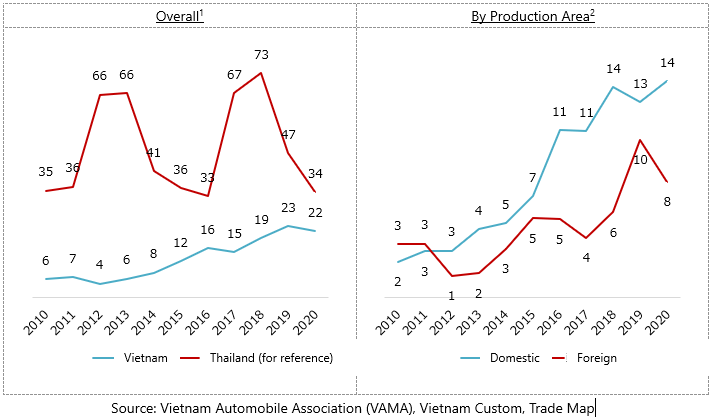
Vietnam’s automotive and vehicle market maintained steady growth in 2025, with stronger momentum observed in the final quarter. According to the Vietnam Automobile Manufacturers Association (VAMA), total car sales (including VAMA members, Hyundai TC, and VinFast) reached approximately over 600,000 units in 2025, reflecting an estimated ~15% year-on-year increase compared to 2024[1]. Especially in Q4/2025, the market recorded a clear rebound driven by year-end promotions and new model launches. For example, in December 2025 alone, total market sales exceeded 50,000 units, which accounted for 8.2% of the total car sales in the whole year
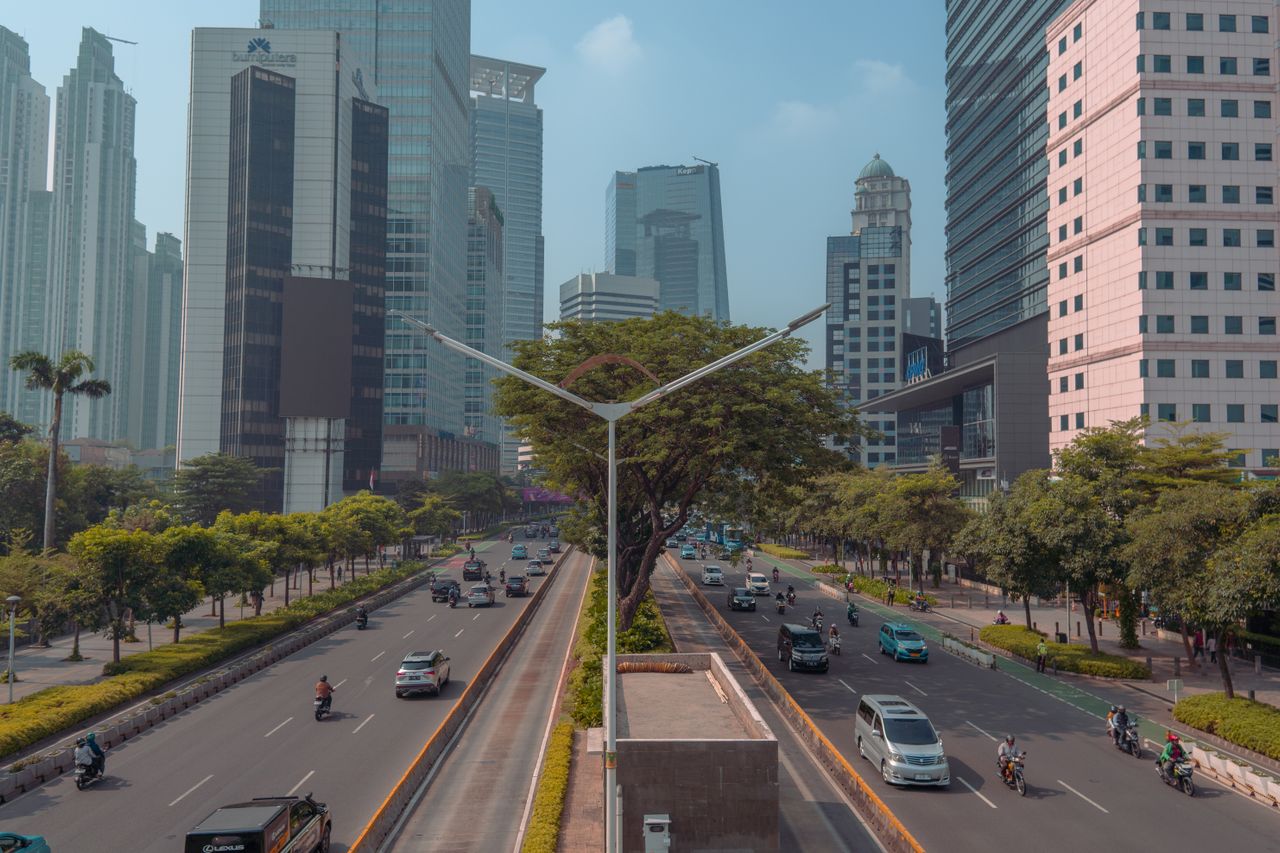
Meanwhile, the motorbike market continued to dominate Vietnam’s vehicle landscape. Total motorbike sales reached approximately 3.4 million units in 2025, up around 14–15% year-on-year, with Honda maintaining a leading market share of over 80%. These facts prove that Vietnam remains one of the fastest-growing automotive markets in Southeast Asia, driven by a young population and rising income levels.
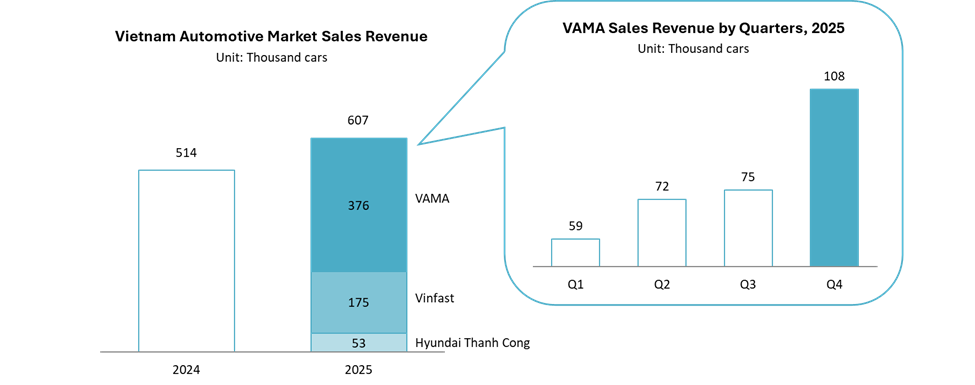
Source: VAMA
EV Market (Cars and Motorbikes)
The EV market is one of the fastest-growing segments. VinFast is the leading EV car manufacturer in Vietnam, offering models such as VF e34, VF 5, and VF 8.
EV adoption has increased rapidly in recent years, supported by strong government incentives. One of the most important policies is the 0% registration fee for battery electric vehicles, extended until February 2027[2], significantly reducing the upfront cost of car ownership. In addition, EVs benefit from a very low Special Consumption Tax (SCT) of around 3%, compared to 35–150% for gasoline vehicles, making EVs much more price-competitive[3]. These incentives have played a key role in boosting adoption, with monthly EV registrations increasing from around 400 vehicles in 2022 to over 6,600 vehicles in 2024.
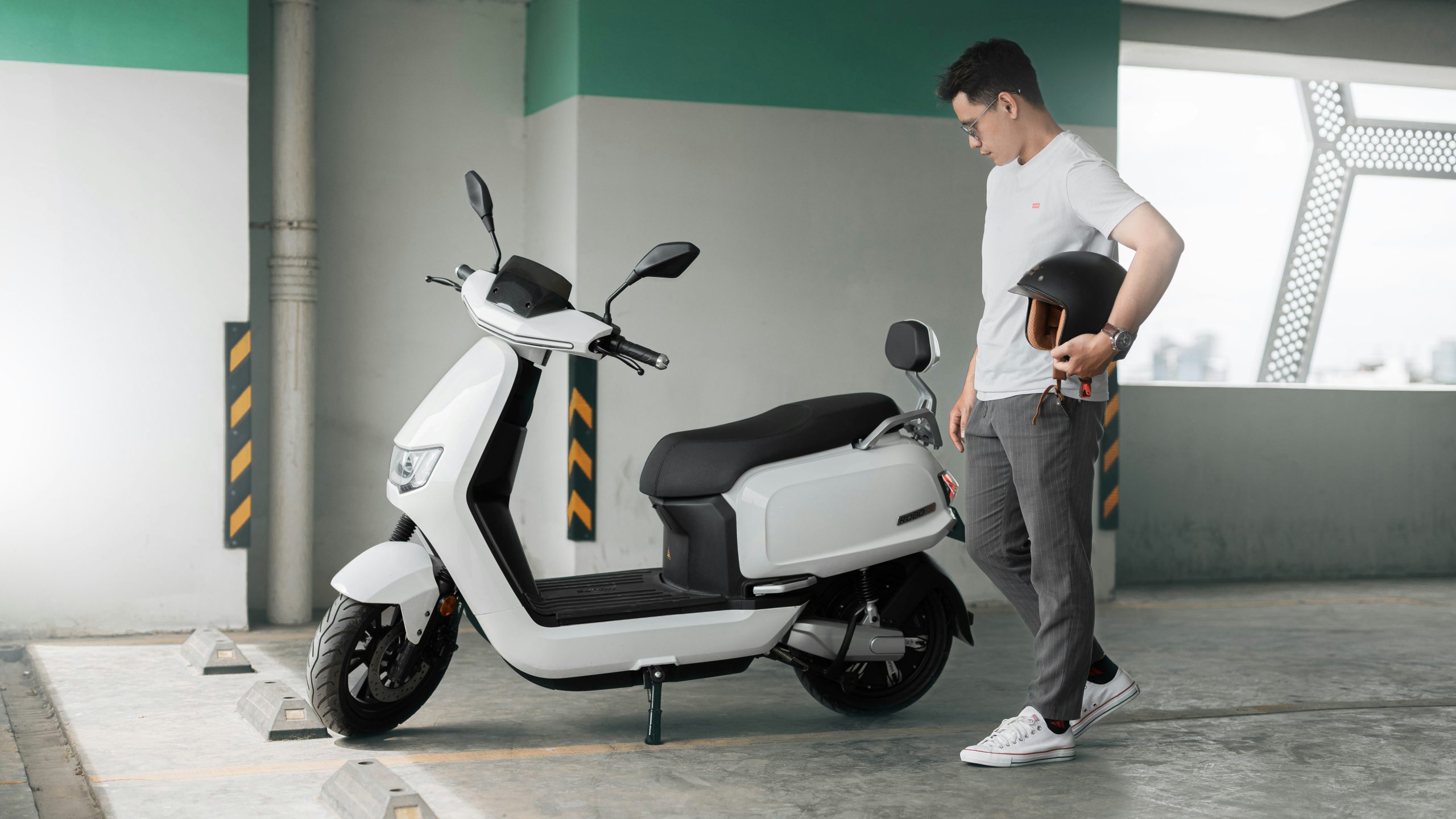
Electric motorbikes are also experiencing rapid growth and becoming a key segment within Vietnam’s vehicle market. This development is due to the growing demand for electric two-wheelers, with an average of 30–35% increasing per year, caused by rising fuel costs, environmental concerns, and government policies promoting green mobility[4]. Resulting in Vietnam recorded around 209,000 electric motorbike sales in the first half of 2025, ranking the country as the third-largest electric motorbike market globally, after China and India[5].
Vietnam is one of the world’s fastest-growing electric motorbike markets

Source: Bao Tuoi Tre
Investment Update (Q4/2025)
1. [Oct 2025] VinFast records strong EV deliveries growth
VinFast reported 175,099 EV deliveries in Vietnam in 2025 — an increase of approximately 80% compared to the previous year. December alone saw a record 27,649 vehicles delivered[6], the highest monthly sales figure ever recorded in Vietnam’s automotive market.
This performance signals that EVs have moved beyond niche status and are entering the mainstream. VinFast’s strong showing secured the company an estimated 36% market share[7], reinforcing its dominant position. More broadly, the result signals a structural shift away from gasoline vehicles, one that is already pressuring traditional automakers to rethink their product and pricing strategies.
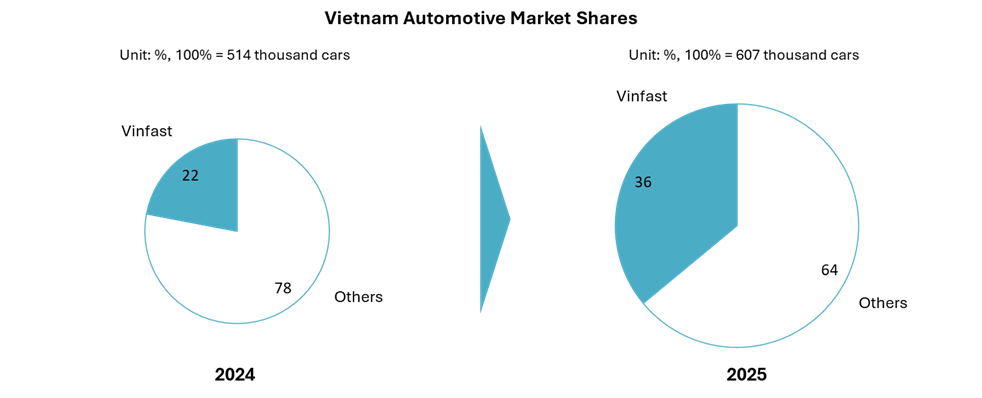
Source: Theinvestor.vn, Vinfast
2. [Nov 2025] Charging infrastructure market reaches USD 1.2 billion
Vietnam’s EV charging infrastructure market is now valued at approximately USD 1.2 billion[8], reflecting the scale of investment pouring into charging stations and related technologies. The market encompasses AC chargers, DC fast chargers, and emerging solutions such as wireless charging.
As of the end of 2025, Vietnam has developed approximately over 150,000 charging ports nationwide, mainly driven by VinFast and its ecosystem partners[9]. This massive infrastructure continues to serve as a proprietary competitive advantage for VinFast, as its network, now managed by V-Green, remains largely exclusive to its own fleet, creating a significant “barrier” against international rivals.
This marks a significant expansion compared to 2022–2023, when charging infrastructure was still limited and fragmented, with only a few thousand public charging points concentrated in major cities. While VinFast scaled rapidly, other EV brands entering the market, such as BYD, Hyundai, and Mercedes-Benz, have yet to prioritize the development of proprietary nationwide charging networks. Instead, these manufacturers currently rely on ‘hub-based’ charging at service centers and third-party stations like Eboost, EVOne, or Charge+. While they also promote home-charging, this remains a challenge in the Vietnamese market. Many residential buildings and apartment complexes do not yet meet the stringent technical or safety standards necessary to support private charging units[10].
In Q4/2025 specifically, infrastructure development accelerated further through new investment initiatives. For example, V-Green announced plans to expand charging coverage nationwide and develop inter-provincial fast-charging corridors, addressing long-distance travel needs—one of the key barriers to EV adoption.
Despite this rapid growth, infrastructure deployment remains uneven. Most charging stations are still concentrated in urban areas, residential complexes, and commercial centers, while availability drops significantly in secondary cities and rural areas. At the same time, Vietnam is projected to require 100,000–350,000 charging stations in the long term to support EV adoption, indicating that current infrastructure still falls short of future demand[11].
3. [Nov 2025] Hyundai strengthens local production
In November 2025, Hyundai announced plans to strengthen its local production capacity in Vietnam through the establishment of a new manufacturing subsidiary, Hyundai HT Global, located in Binh Xuyen Industrial Park. The facility is expected to be completed by the end of 2025, with mass production scheduled to begin in 2026, marking a significant step in Hyundai’s long-term localization strategy in Vietnam. This move complements Hyundai’s existing production ecosystem in Vietnam, where its joint venture with Thanh Cong Group already operates plants with a combined capacity of up to 170,000 vehicles per year. [12]
From a strategic perspective, the expansion aims to improve supply chain stability, reduce logistics costs, and enhance price competitiveness in the Vietnamese automotive market.
By increasing local production, Hyundai can better respond to growing domestic demand while also preparing for potential export opportunities in Southeast Asia. This also aligns with Vietnam’s broader policy direction to promote local manufacturing and reduce reliance on imported vehicles.
In terms of market impact, Hyundai’s investment signals continued confidence in Vietnam as a key automotive production hub in ASEAN. It also intensifies competition with other major players such as Toyota and VinFast, especially in the mid-range passenger car segment.
For foreign investors, this development highlights the importance of localization and supply chain integration as critical success factors when entering Vietnam’s automotive and vehicle market
4. [Q4 2025] Gasoline motorbike ban proposal creates market uncertainty
In Q4/2025, Hanoi’s plan to ban gasoline motorbikes in central districts starting from 2026 created significant concern in the industry. The policy has raised significant concerns among industry players. Honda Vietnam estimated that the ban could reduce its annual sales by approximately 200,000 units, equivalent to nearly 9% of its total yearly sales volume of around 2.2–2.3 million units.[13]
Beyond direct sales impact, the policy could affect a much broader ecosystem. Vietnam currently has over 70 million registered motorbikes, with gasoline vehicles accounting for the vast majority, and the industry supports thousands of dealerships, suppliers, and service providers nationwide. Japanese stakeholders, including Honda, also warned that the transition could lead to significant job losses across the supply chain, particularly in maintenance services and parts distribution, which are heavily dependent on gasoline vehicles.[14]
5. [Dec 2025] Auto financing services expand
In December 2025, banks and finance companies in Vietnam continued expanding auto loan offerings to support rising car demand, with total outstanding credit in the economy reaching approximately VND 18.4 quadrillion (USD 699 billion), up 17.87% compared to 2024[15]
Financial institutions introduced more flexible car loan packages, typically financing 75–85% of vehicle value with repayment terms up to 72 months, while some programs offered even higher loan ratios and simplified procedures. At the same time, lending interest rates declined by around 0.5–0.9 percentage points in 2025, making borrowing more affordable for individual customers[16]
This expansion reflects strong competition among banks and a shift toward consumer financing, especially for high-value assets such as cars. It significantly lowers the financial barrier to vehicle ownership, supporting growth in the automotive market and stimulating demand across both passenger and commercial vehicle segments.
Policy Updates
Vietnam is actively promoting investment in EV-related industries through a combination of tax incentives, import duty exemptions, and land support policies. These policies aim to develop a full EV ecosystem, including battery production, charging stations, and supporting industries. In addition to consumer incentives, the government also provides preferential corporate income tax rates and investment incentives for large-scale projects. This creates a favorable environment for foreign investors, especially in high-tech manufacturing and automotive supply chains.
1. [Q4 2025] Vietnam introduces a major Special Consumption Tax (SCT) reform favoring EV and hybrid vehicles
Vietnam’s revised Special Consumption Tax Law, effective from January 2026, introduces significant incentives for environmentally friendly vehicles. Under the new framework, battery electric vehicles are taxed at only 3% (≤9 seats) until 2027, compared to 35–150% for gasoline vehicles, creating a strong price advantage[17]. At the same time, hybrid vehicles now benefit from a reduced tax rate of 70% of the rate applied to conventional cars, provided they meet fuel efficiency requirements of at least 30% lower consumption.
These changes can reduce vehicle prices by VND 70–150 million, significantly improving affordability[18]
2. [Q4 2025] Vietnam accelerates FDI attraction in EV battery and automotive manufacturing
Vietnam’s government policies offered significant incentives, including import duty exemptions for auto parts until 2027 and reduced excise tax rates of 1 – 3% for EVs. This policy is aligned with the development of continuing to attract strong foreign investment into its automotive and EV supply chain, highlighted by a USD 130 million EV battery plant project by BYD and Kim Long Motor, with planned capacity of up to 6 GWh per year[19]. It aims to boost Kim Long Motor’s battery production capacity for its own electric automobiles in the domestic market (trucks, buses, minibuses, minivans, etc.), and gradually establish a regional-scale EV and battery production hub, targeting the export market[20].
The Ceremony to kick off the construction of a BYD battery manufacturing plant in Hue
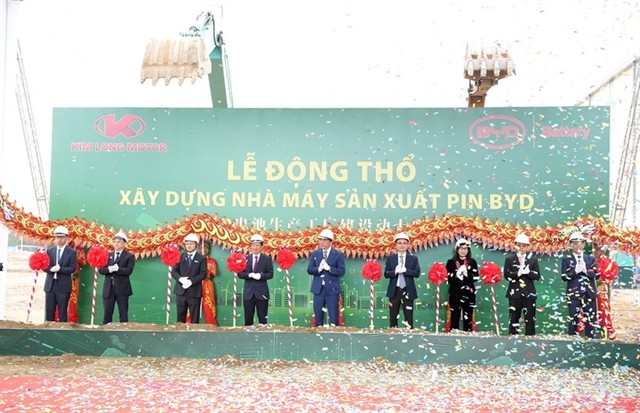
Source: VietnamNews
These policies and investments are driving Vietnam’s transition from an import-based market to a production hub, while encouraging foreign OEMs and suppliers to localize their operating systems. The total FDI inflows reached USD 38.4 billion, with manufacturing accounts for nearly 60% of total investment, highlighting strong interest in industrial sectors such as automotive in 2025[21]. As a result, Vietnam is becoming an increasingly attractive destination for automotive FDI, particularly in EV, battery, and supporting industries.
Conclusion and Recommendations
Vietnam offers strong opportunities for foreign investors, particularly in EV, hybrid vehicles, and supporting industries. However, the market remains dual-structured, with gasoline vehicles and motorbikes still dominant in volume. FDI enterprises should prioritize hybrid technology, component supply, and partnerships with local players to balance short- and long-term opportunities. Investment in charging infrastructure and battery supply chains is also promising. At the same time, companies must closely monitor regulatory changes and adopt localization strategies to remain competitive.
Read more
Vietnam EV cars: Key update and investment activities in 2025
Vietnam’s Car Repair Industry Faces a Turning Point in the EV Era
* If you wish to quote any information from this article, please kindly cite the source along with the link to the original article to respect copyright.
| B&Company
The first Japanese company specializing in market research in Vietnam since 2008. We provide a wide range of services including industry reports, industry interviews, consumer surveys, business matching. Additionally, we have recently developed a database of over 900,000 companies in Vietnam, which can be used to search for partners and analyze the market. Please do not hesitate to contact us if you have any queries. info@b-company.jp + (84) 28 3910 3913 |
[1] https://vietnamnet.vn/en/vietnam-s-2025-car-sales-race-these-9-models-led-their-brands-2483168.html
[2] https://en.vietnamplus.vn/ev-buyers-enjoy-zero-percent-registration-fee-till-2027-post311130.vnp
[3] https://b-company.jp/vietnam-ev-cars-key-update-and-investment-activities-in-2025/
[4] https://english.thesaigontimes.vn/motorbikes-take-a-sharp-turn/
[5] https://news.tuoitre.vn/vietnam-ranks-third-globally-in-electric-motorbike-consumption-103250814151101589.htm
[6] https://en.vietnamplus.vn/vinfast-sets-record-with-nearly-176000-ev-deliveries-in-vietnam-in-2025-post335909.vnp
[7] https://theinvestor.vn/vinfast-sees-ev-demand-tailwinds-from-fuel-prices-ramps-up-charging-network-d18634.html
[8] https://www.kenresearch.com/vietnam-ev-charging-infrastructure-market
[9] https://vinfastauto.us/investor-relations/news/vinfast-sets-record-with-175099-electric-vehicles-delivered-in-vietnam-in
[10] https://tuoitre.vn/truoc-khi-mua-xe-dien-nhap-khau-gia-re-hay-tu-hoi-toi-sac-o-dau-20260330180913083.htm
[11] https://vietnamlawmagazine.vn/vietnams-ev-charging-infrastructure-key-to-green-transition-74018.html
[12] https://hanoitimes.vn/hyundai-starts-building-us138-million-automobile-plant-in-vietnam.580237.html
[13] https://theinvestor.vn/honda-warns-vietnam-sales-could-drop-200000-units-on-proposed-gasoline-motorbike-ban-d17618.html
[14] https://www.reuters.com/sustainability/climate-energy/japan-warns-vietnam-job-losses-hanoi-motorbike-ban-hits-honda-2025-10-21/
[15] https://en.vneconomy.vn/vietnams-outstanding-credit-reaches-699-bln.htm
[16] https://en.vneconomy.vn/interest-rate-in-support-of-economic-growth.htm
[17] https://www.tilleke.com/insights/vietnams-legal-framework-on-electric-vehicles-offers-new-opportunities-for-investors/
[18] https://vietnamnet.vn/en/vietnam-sets-fuel-efficiency-benchmarks-for-hybrid-tax-incentives-2488196.html
[19] https://vietnamnews.vn/economy/1764676/kim-long-motor-partners-with-byd-to-build-ev-battery-plant-in-hue.html
[20] https://bydvn.com.vn/tin-tuc/kim-long-motor-va-byd-battery-ky-ket-hop-tac-chien-luoc-dong-tho-nha-may-san-xuat-pin-tai-hue-2126
[21] https://vietnamnews.vn/economy/1743208/fdi-inflows-into-vietnam-exceed-38-billion-in-2025.html
Related article















Log in / Register
SUBSCRIBE NEWSLETTER