
 English
  日本語
日本語  Tiếng Việt
  简体中文
简体中文  한국어
한국어 
20Dec2024
Industry Reviews / Latest News & Report
Comments: No Comments.
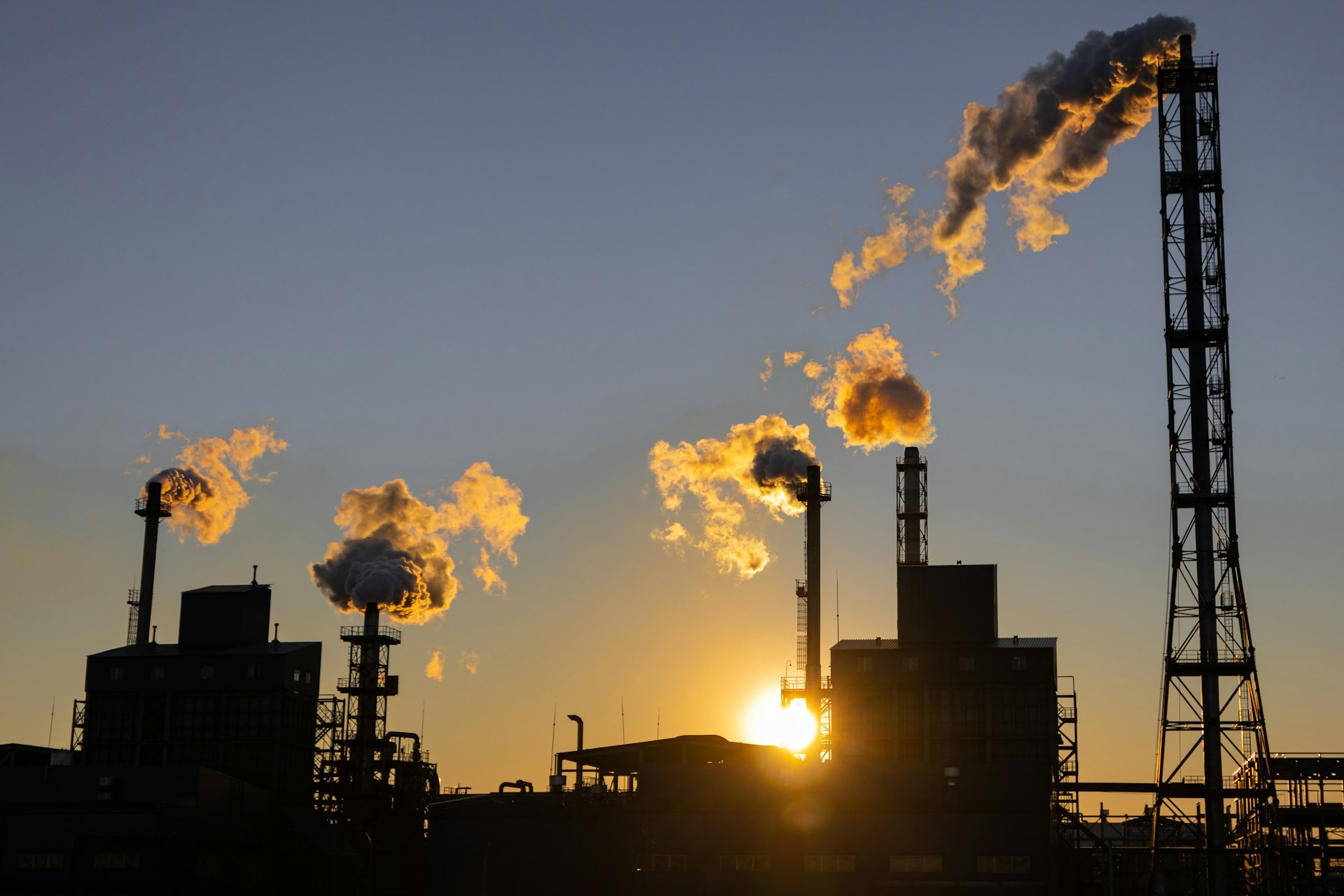
Vietnam’s total energy demand in 2023 has grown up by 9.2%, compared to 2022[1], driven by a robust average economic growth rate of 5%[2], with increased in industrial activity and urban development. As a result, coal and oil, now accounting for 47% and 25% of the country’s primary energy demand, continue to depend on fossil fuels to meet growing energy needs[3]. From 2017 to 2023, Vietnam’s greenhouse gas emissions rose by 46%, reaching 372 million tons of carbon dioxide, the highest recorded since 1900[4]. Therefore, at the 7th Central Committee Conference in 2019, the government underscored the urgent need to reduce greenhouse gases and transition to cleaner, safer energy sources, particularly by reducing coal and fossil fuel consumption and gradually shifting to LNG energy[5].
Overview of LNG energy market in Vietnam
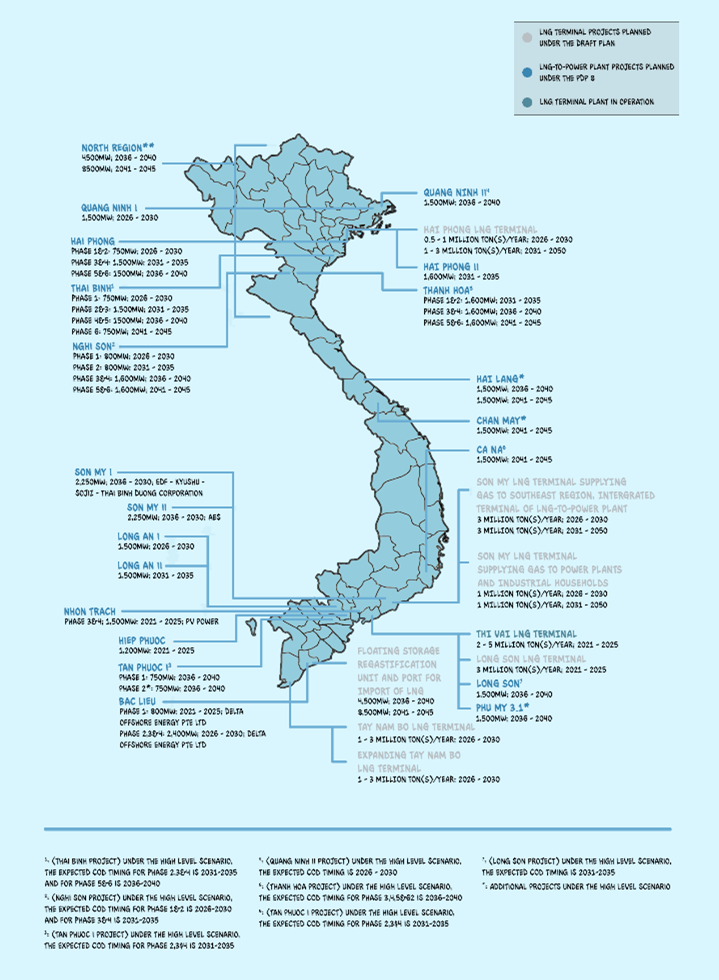
In 2023, Vietnam officially entered the LNG market with the Thi Vai LNG Terminal, operated by PetroVietnam Gas, which received its first LNG cargo in July. As the country currently does not produce LNG domestically, Thi Vai serves as Vietnam’s first and only operational LNG import facility, helping ensure gas supply for existing customers and to-be-built power plants. Thi Vai Terminal has an annual capacity of 1 million tons per annum (MTPA) and is expected to supply the Nhon Trach 3 and 4 combined cycle power plants in 2025[6]. By 2024, LNG energy market is expected to increase even further, with the addition of the Cai Mep Terminal, has the capacity of 3 MTPA and will significantly expand Vietnam’s LNG import and processing capacity[7].
Vietnam is actively investing in expanding its LNG infrastructure, with the Power Development Plan VIII[8] (PDP8) setting a goal of approximately 22.4 gigawatts (GW) of LNG-fired power generation capacity by 2030. This would account for about 15% of the country’s total installed power capacity, positioning LNG as a critical component of the nation’s energy mix[9]. According to Wood Mackenzie, LNG demand is projected to increase by an average of 12% annually, potentially tripling by the mid-2030s[10]. Additionally, Vietnam is converting the Quang Trach thermal power station into an LNG plant[11], further promoting LNG as a foundational energy source in Vietnam’s transition.
While Vietnam initiated its first LNG imports in 2023 with the Thi Vai Terminal (1 MTPA) and plans to add the 3 MTPA Cai Mep Terminal, its capacity is still modest compared to Thailand’s 10 MTPA at Map Ta Phut and 7.5 MTPA at Nong Fab[12], as well as Singapore’s 11 MTPA SLNG Terminal[13]. This huge gap in production underscores Vietnam’s need to accelerate LNG infrastructure development to meet regional standards.
Foreign Investment and Development Projects in Vietnam’s LNG Market
As Vietnam strives to diversify its energy sources and reduce coal reliance, LNG has become a key focus for foreign corporations investing in Southeast Asia’s energy market. This influx of capital and collaborative projects highlights Vietnam as a high potential market in the LNG sector.
LNG Energy Projects in International Collaboration
| Project | Collaborator | Operation status | Partnership Type |
| Son My LNG Terminal
(LNG power plant) |
AES Corporation
(United States) |
Scheduled operation in 2027 | Collaborator with PetroVietnam Gas (PV Gas) |
| LNG terminal
(LNG power plant) |
JERA
(Japan) |
In planning | Foreign investment |
| Block B
(Gas Field) |
Mitsui & Co. Ltd
(Japan) |
Scheduled operation in 2026 | Collaborator with PVN, PVEP, PV Gas and PTTEP[14] |
Source: B&Company Complication
Additionally, Delta Offshore Energy (DEO), a Singapore-based company, has partnered with Electricity Power Trading Company (EPTC) under Vietnam Electricity (EVN) to organize international bidding for a long-term LNG supply. This process attracted more than 29 bids, highlighting growing foreign interest in Vietnam’s LNG market[15].
Vietnam’s LNG market presents a high-potential investment opportunity due to its growing energy demands adding with the Power Development Plan VIII (PDP8), has set ambitious targets for LNG market in Vietnam. Although the market is promising, competition remains relatively low compared to neighboring markets, presenting a unique advantage for early entrants who can secure a foothold before the market matures.
Government policies and supports
The Vietnamese government has taken active steps to support the development of LNG infrastructure, creating a fertile environment for both current and potential investors. With clear directives and ambitious energy plans, Vietnam is making LNG a central component of its long-term energy strategy.
Key Vietnamese Policies Promoting LNG Energy