

 English
  日本語
日本語  Tiếng Việt
  简体中文
简体中文  한국어
한국어 As Vietnam becomes more affluent and approaches a full-scale transition to automobiles, the shift appears to be toward electric and hybrid vehicles.
17Sep2026
Latest News & Report / Vietnam Briefing
Comments: No Comments.
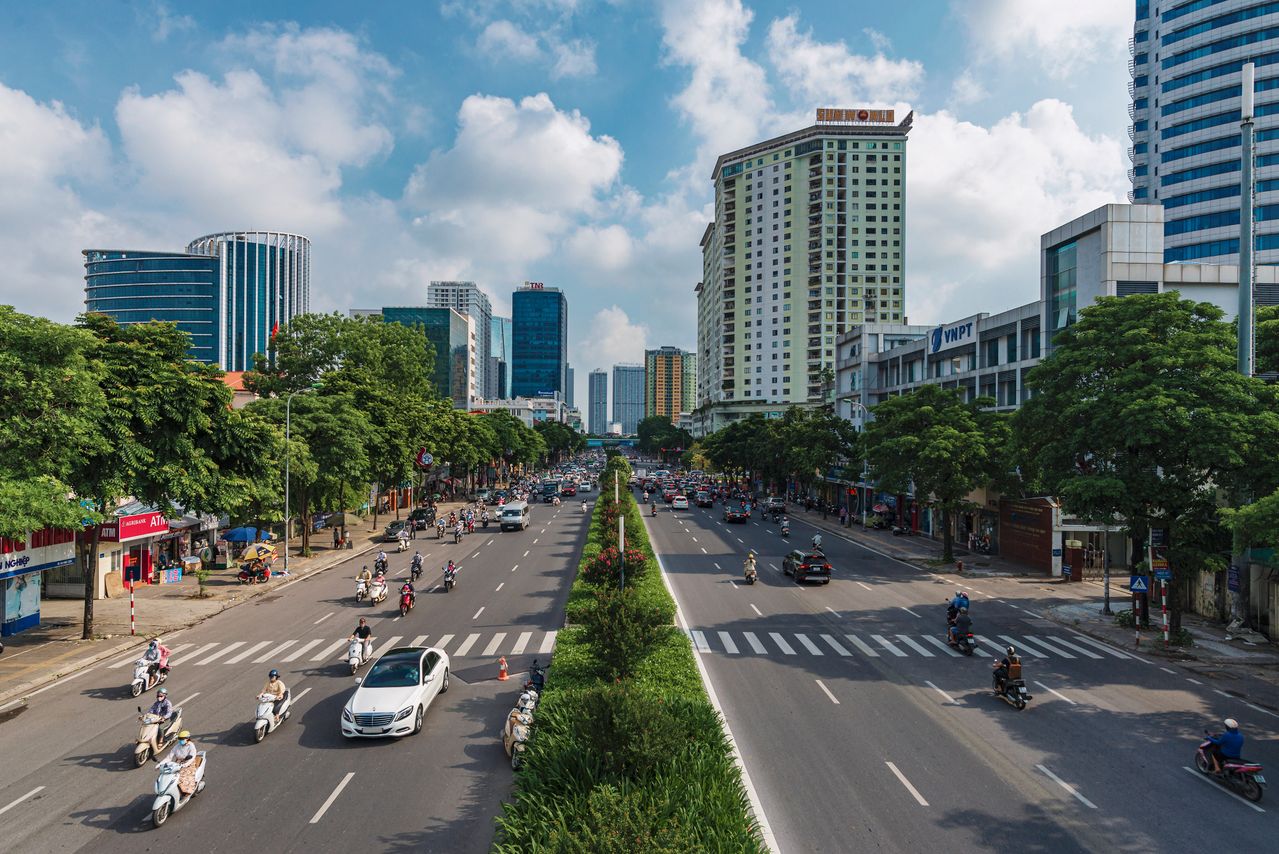
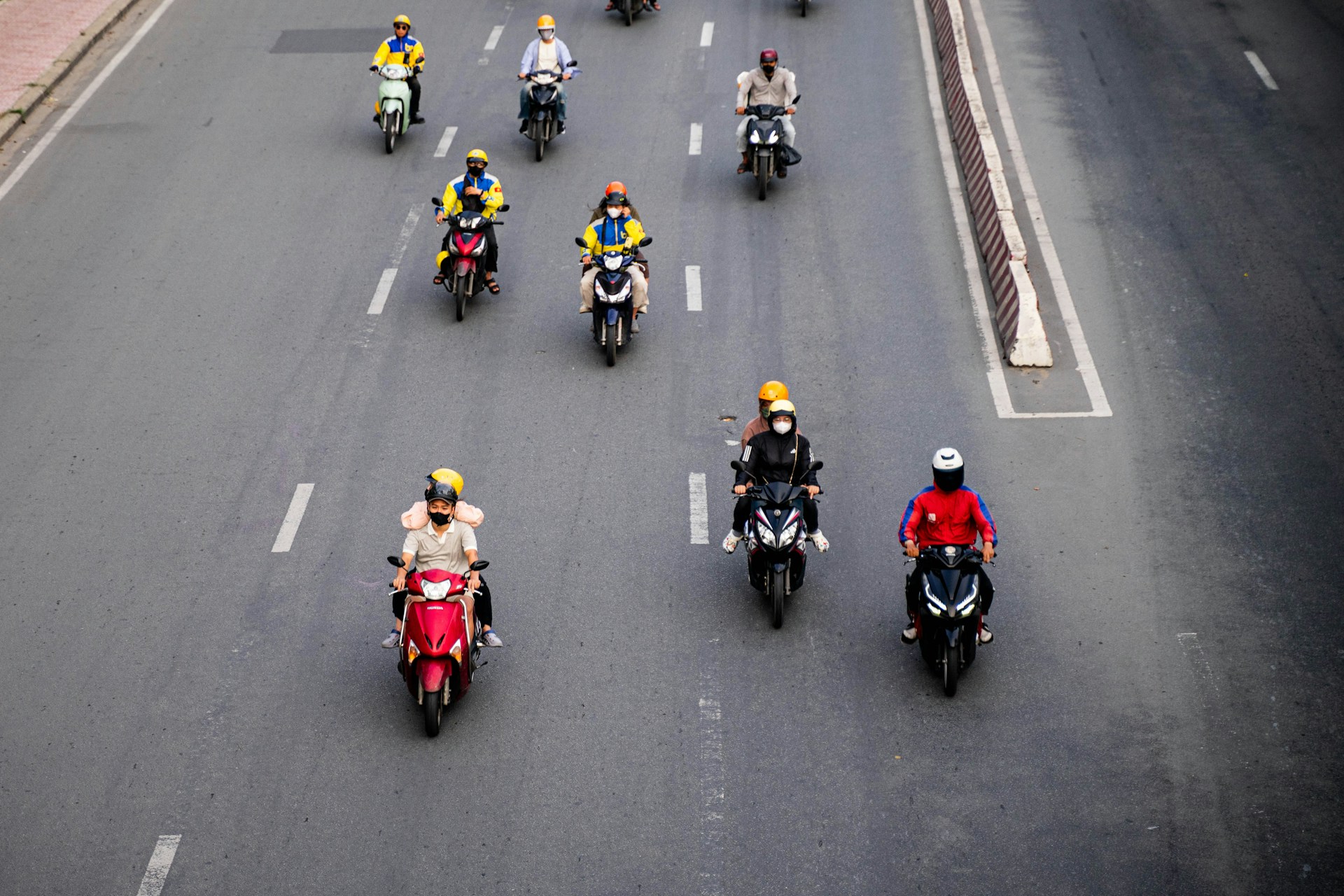
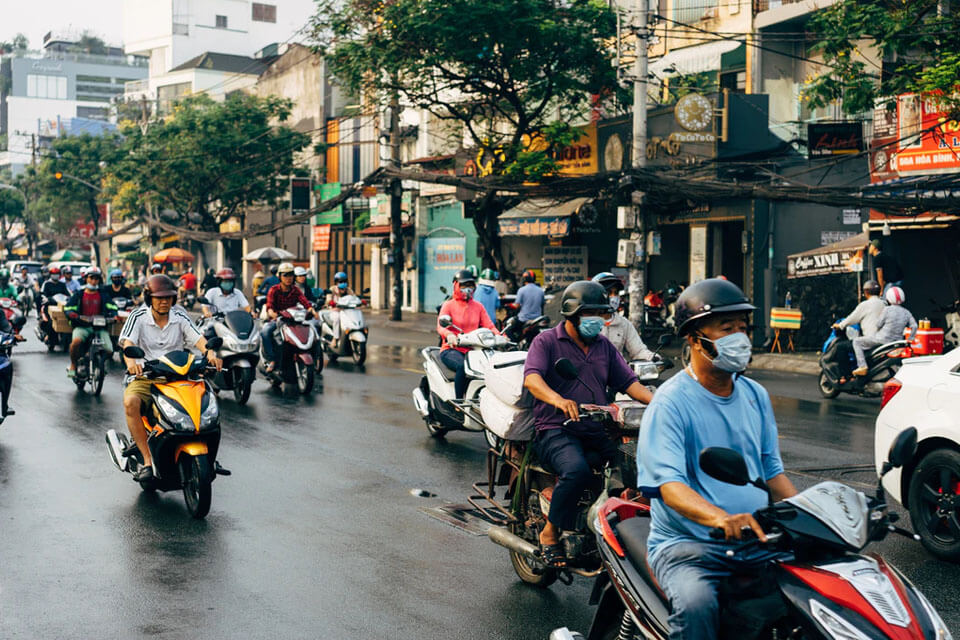
Vietnam is widely recognized as a motorcycle society. Now, as it becomes more affluent and approaches a full-scale transition to automobiles, it appears the shift will be toward electric vehicles first. Riding the wave of growing public concern over urban air pollution, the government is actively promoting EV conversion policies. Participation from overseas manufacturers is also increasing, accelerating the spread of electric vehicles and hybrid vehicles.
Rapid EV Adoption
The EV market size is estimated at approximately 3 billion USD in 2025, growing at an average annual rate of 18% and projected to reach 7 billion USD by 2030[1]. Sales volume increased roughly 20-fold over the two-year period from 2022 to 2024. During the same period, hybrid vehicles also increased more than threefold. Consumer interest in environmentally friendly vehicles is rapidly rising[2] .
However, Vietnam’s automobile sales in 2023 saw a significant decline compared to 2022. The main factors were the expiration of a temporary 50% reduction in registration tax for domestically assembled vehicles, which had boosted sales in 2022, and the loss of this short-term demand stimulus effect. Simultaneously, against a backdrop of slowing economic growth and weakening exports, consumers became more cautious about purchasing high-value durable goods. Additionally, high interest rates and tightened credit conditions reduced the appeal of auto loans.
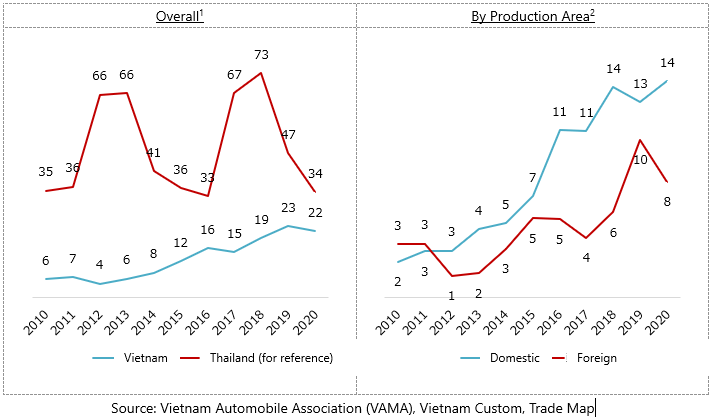
Automobile Sales Volume
Unit: Thousand units
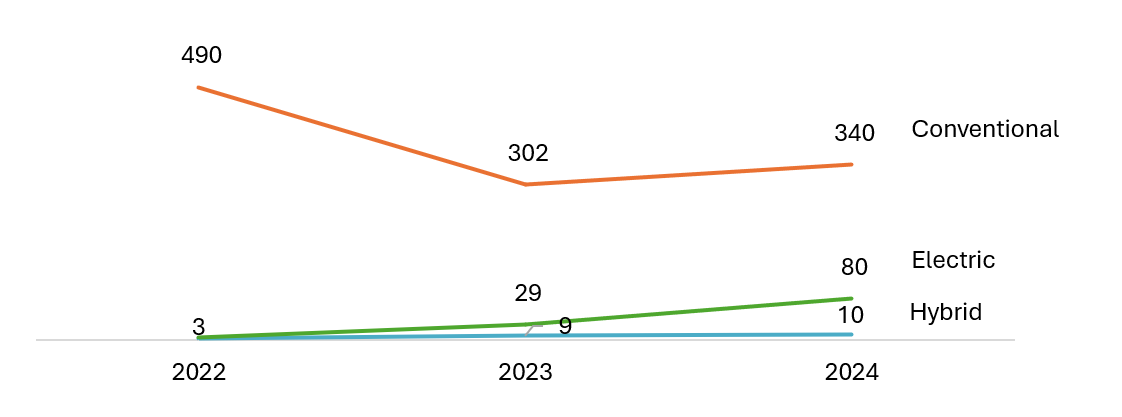
Source: B&Company analysis
EV Brands
VinFast is the largest player. It holds a 75% share of the 2024 EV market, followed by overseas brands like BYD, Wuling, and Hyundai.[3]
VinFast VF7 launched in November 2023
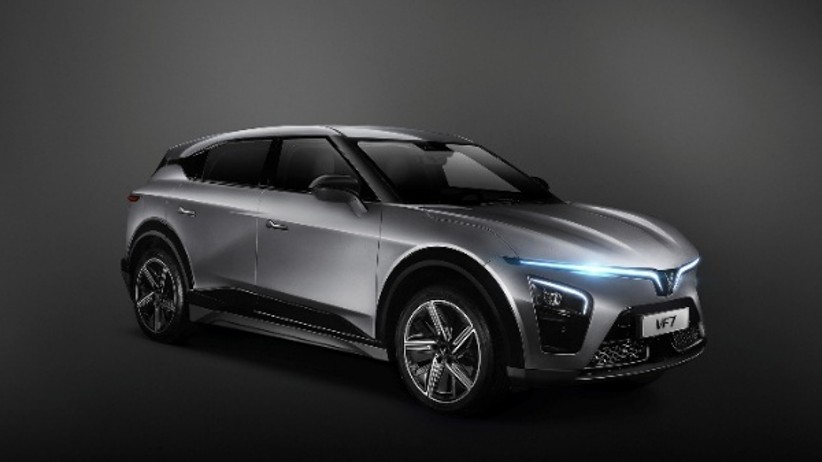
Source: Vneconomy
EV Brand Comparison
| VinFast | Overseas Brands (BYD, Kia, MG, etc.) | |
| Market Entry | 2021 | 2022 and later |
| Suggested Retail Price (USD) | Competitive pricing across a wide range of classes
· B-Class VF 6 Plus 32,700 USD · C-Class VF7 Plus 37,000 USD[4] |
Typically 5% to 40% higher due to import costs
· B-Class BYD Atto 3 Premium 34,000 USD · C-Class BYD Seal Performance 52,000 USD[5] |
| Charging Infrastructure | Over 200,000 charging ports nationwide (2025) [6] | Dealerships and limited partners |
| After-Sales Service | Nationwide network, locally focused | Concentration in major cities |
Source: B&Company analysis
Hybrid brands
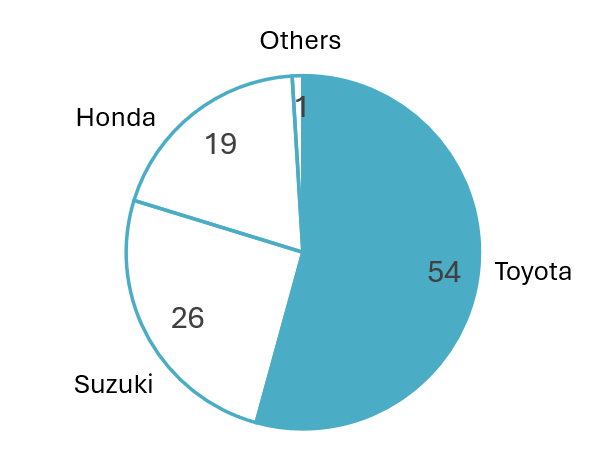
Japanese brands like Toyota, Suzuki, and Honda dominate the top ranks. In 2024, Toyota led the market with 5,350 units sold (54% share). Suzuki (25%) and Honda (19%) followed. In January 2025, Toyota sold 565 hybrid vehicles, a 500% increase compared to January 2024. Toyota entered the market early in 2020 and offers a broad lineup including the Innova Cross HEV, Corolla Cross HEV, and Camry Hybrid. Its hybrid vehicles save fuel and reduce emissions without changing users’ driving habits.
As the market grows, Kia, GAC, Volvo, and others have also begun sales, intensifying competition.
2024 Hybrid Vehicle Sales
100% = 9,866 units
Source: VAMA
Electric Motorcycles (E2W)
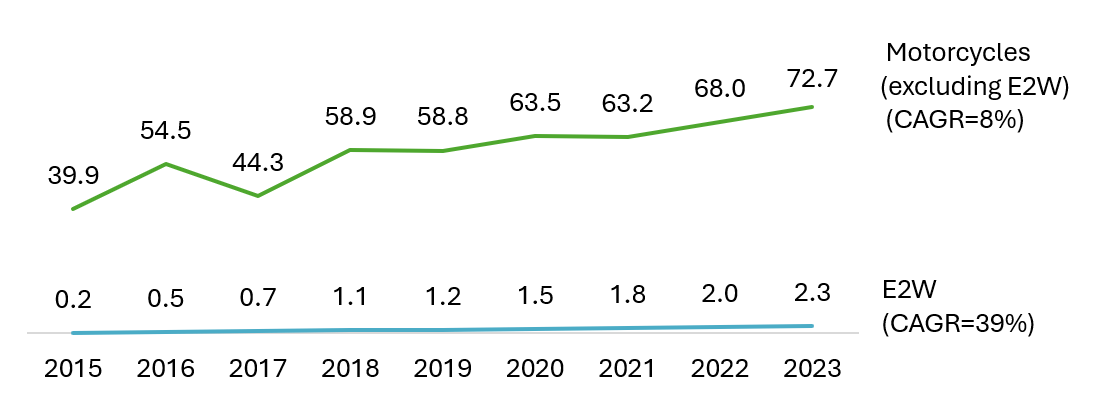
For motorcycles, we can confirm the number of registrations rather than annual sales figures. While sales have long been said to have plateaued at around 3 million units, registrations have grown steadily, reaching 75 million units in 2023. Among these, electric two-wheelers (E2W) increased more than fourfold from 500,000 units in 2016 to 2.3 million units in 2023. Vietnam has become the largest E2W market in the ASEAN region and the world’s second-largest market after China.[7]
Total Registered Motorcycles
Unit: million units
Source: GIZ
Competition between domestic and overseas brands is fierce. VinFast remains firmly in first place, selling 70,977 units in 2024[8]. Rival Chinese brand Yadea is accelerating efforts to close the gap, with 100,000 units on the road as of August 2023. While sales figures are undisclosed, Yadea has invested 100 million USD to build a second factory in Bac Giang, aiming to boost domestic production capacity to 2 million units annually[9].
Major E2W Brands
| No | Brand | Origin | Market Entry | 2023 Sales
(billion VND) |
Features |
| 1 | Vinfast | Vietnam | 2018 | 32,173
(including four-wheelers) |
Top domestic brand. Advanced technology and integrated ecosystem |
| 2 | Yadea | China | 2019 | 1,050 | Global volume leader, reliable and practical for the mass market |
| 3 | Pega | Vietnam | 2012 | 118 | Competitively priced, targeting urban youth; stylish and easy to use |
| 4 | Dat Bike | Vietnam | 2019 | 43 | High performance and unique design, appealing to tech-savvy and distinctive niche consumers with a “Made in Vietnam” identity |
| 5 | Selex Motors | Vietnam | 2020 | 7 | Efficient and practical battery swapping technology, B2B solutions for logistics |
Source: B&Company
Factors Driving the Shift to Eco-Friendly Vehicles
Policy
The Vietnamese government is actively promoting the adoption of electric vehicles. Decision 876/QD-TTg sets the goal of phasing out gasoline vehicles by 2040, part of its commitment to achieving net-zero carbon by 2050[10]. Policies in the two major cities are crucial.
| Cities | Details | Schedule | Support Measures |
| Hanoi | Establish Low Emission Zones (LEZ) and ban fossil fuel motorcycles | · Within Ring Road 1: 2026
· Within Ring Road 2: 2028 · Within Ring Road 3: 2030 |
Subsidies to replace 450,000 gasoline motorcycles with electric ones |
| Ho Chi Minh City | Electrification of 400,000 ride-hailing and delivery motorcycles | · 2026: 30%
· 2027: 80% · 2028: 100% · Complete ban on gasoline vehicles by 2029 |
VAT exemption, registration fee exemption, low-interest loans |
Source: Vietnamnews, Vietnamnet
Consumer Interest
In August 2024, a KPMG consumer survey found over 85% of respondents expressed concern about environmental degradation and health impacts. Factors like greenhouse gas emissions and noise pollution influence decisions to purchase electric vehicles.
Particularly among households with children and urban residents, expectations for reduced air pollution and quieter operation are high. Whether commuting and school run stress can be reduced is also a key decision factor.
Furthermore, as corporate carbon neutrality pledges and government decarbonization policies gain widespread recognition, the value of making environmentally conscious choices is becoming more prevalent. Consequently, the trend of switching from gasoline vehicles to electric vehicles when replacing personal cars is gradually expanding.
Expanding Business Opportunities
Honda (CUV brand) and Selex operate electric motorcycle rental businesses. VinFast’s Green SM is gaining market share from Grab in the ride-sharing sector. EV-related investments are expanding into areas such as vehicle sharing, charging infrastructure, battery services, and smart mobility platforms. This also provides consumers with opportunities to experience EVs, gradually fostering awareness, trust, and purchase intent. A multi-layered EV ecosystem encompassing vehicles and services is expanding.
Challenges
Charging Infrastructure and Batteries
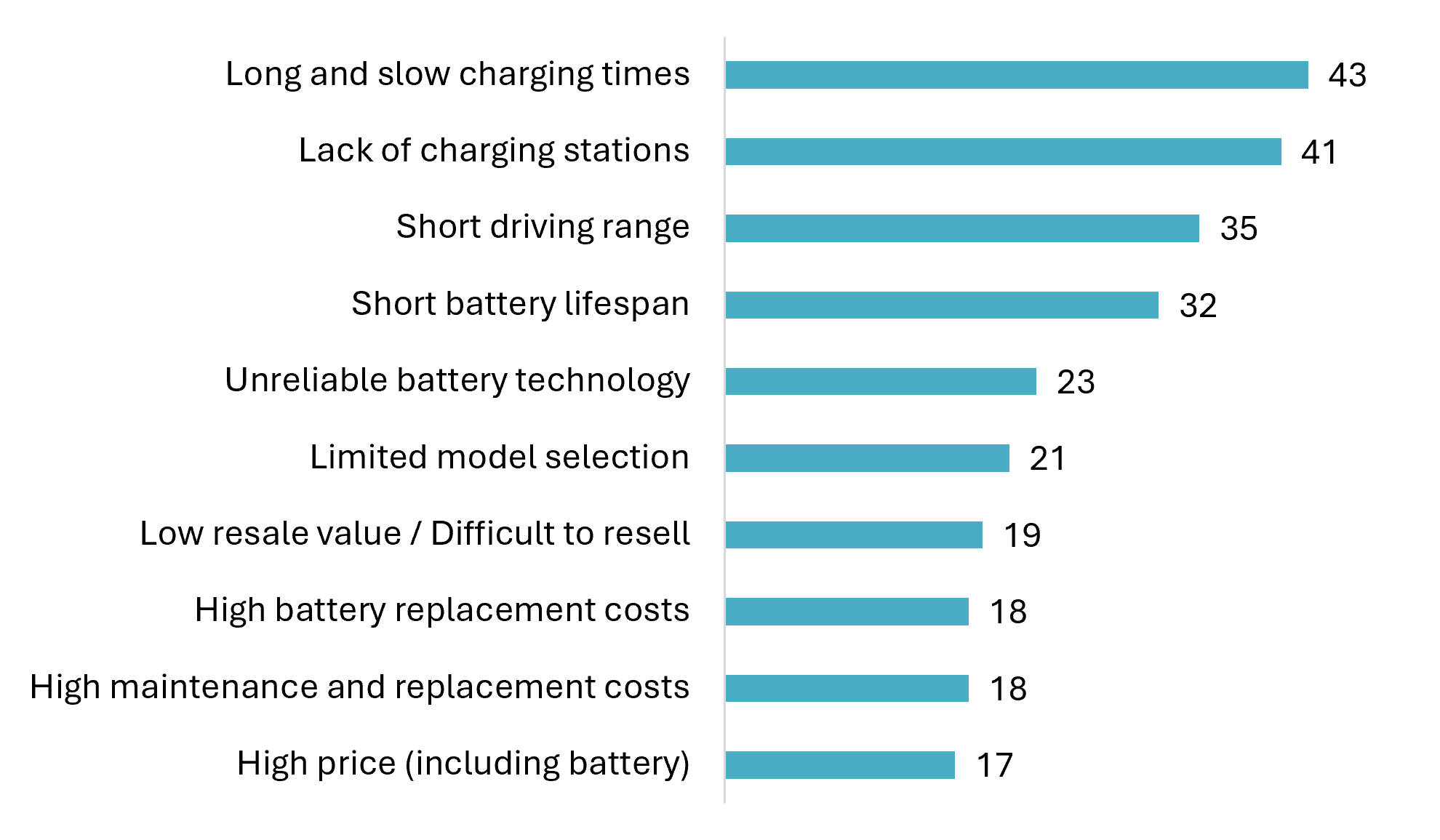
According to a survey on EVs conducted by B&Company in 2025 across the two major cities of Hanoi and Ho Chi Minh City, insufficient charging infrastructure and battery-related concerns are the primary barriers hindering the adoption of electric vehicles in Vietnam. Key concerns cited by users considering a purchase include charging time, driving range, battery lifespan, and unstable battery technology, with consumer trust remaining low. Another survey found that approximately 62% of respondents expressed concerns about battery instability, including degradation, failure, and fire risks during charging.
Concerns when purchasing an electric vehicle
Unit: %
Source: B&Company Survey 2025
Barriers to Imported Electric Vehicles
Imported electric vehicles (both cars and motorcycles) face significant barriers. Import duties and other taxes on non-ASEAN products substantially increase retail prices, reducing competitiveness. The gap widens further as value-added tax and special consumption tax are applied on top of import duties. Domestic manufacturers like VinFast benefit greatly, aided by domestic production, government support, and the national EV development strategy.
Taxes on Imported Electric Vehicles
| Vehicle Type | Country of Origin | Import Duty
(%) |
VAT (%) | Special Consumption Tax (SCT) |
| Electric Vehicles | ASEAN
(40% or more ASEAN-made) |
0 | 10 | 3% (until 2027), 11% (from 2027 onward) |
| Others | 50–70 | 10 | ||
| Electric Motorcycles | ASEAN | 0 | N/A | N/A |
| China | 45 | 10 | N/A | |
| Other | 55 – 82.5 | 10 | N/A |
Source: B&Company analysis
Consumer Reliability
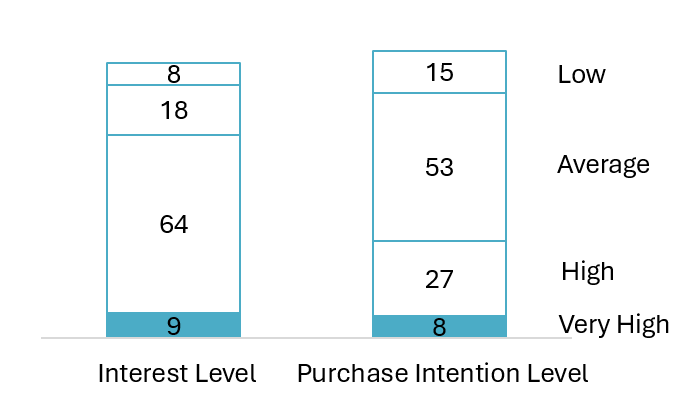
While 73% of consumers express interest in EVs, only half (35%) have purchase intent[11]. Many consumers lack a clear understanding of EV principles, maintenance, and long-term economics. They plan to wait several years to confirm improvements in quality, charging infrastructure, and durability before buying.
Interest in and Purchase Intent for EV
Unit: %
Source: B&Company 2025 Survey
The adoption of electric vehicles is advancing rapidly. If gasoline vehicle restrictions are implemented in major cities, a significant impact is inevitable. Concerns about the substantial effects on related industries- including manufacturing, parts, maintenance, delivery, logistics, and energy are outweighing expectations for business opportunities.
Read more
Southeast Asia EV transition creates new opportunities for regional players
* If you wish to quote any information from this article, please kindly cite the source along with the link to the original article to respect copyright.
| B&Company
The first Japanese company specializing in market research in Vietnam since 2008. We provide a wide range of services including industry reports, industry interviews, consumer surveys, business matching. Additionally, we have recently developed a database of over 1,000,000 companies in Vietnam, which can be used to search for partners and analyze the market. Please do not hesitate to contact us if you have any queries. info@b-company.jp + (84) 24 3978 5165 |
[1] Mordor Intelligence (2025) <Access>
[3] Number & events magazine (2025) <Access>
[6] Vinfast Saigon (2025) <Access>
[9] The Leader (2023) <Access>
[10] B&Company (2025) <Access>
[11] B&Company Survey 2025
Related article













Log in / Register
SUBSCRIBE NEWSLETTER