

 English
  日本語
日本語  Tiếng Việt
  简体中文
简体中文  한국어
한국어 This article examines FPT Group ecosystem, focusing on how its global IT services engine is reinforced by telecommunications and education.

30Mar2026
Latest News & Report / Vietnam Briefing
Comments: No Comments.
This article examines FPT Group’s ecosystem for market research readers, focusing on how its global IT services engine is reinforced by telecommunications and education. It reviews the recent business situation, operating structure, and strategic direction of FPT’s core subsidiaries and affiliates, drawing on official disclosures and selected industry sources.
Introduction to FPT Group
Founded in September 1988, FPT has evolved from one of Vietnam’s earliest private technology companies into a major corporate group with international reach. The company began as the Food Processing Technology Company and adopted the name Corporation for Financing and Promoting Technology in 1990, marking an early shift toward a broader technology-oriented identity. Today, FPT operates in 30 countries and territories and employs 54,154 people as of 2025, underscoring its scale as one of Vietnam’s leading technology and telecommunications groups.[1] [2]
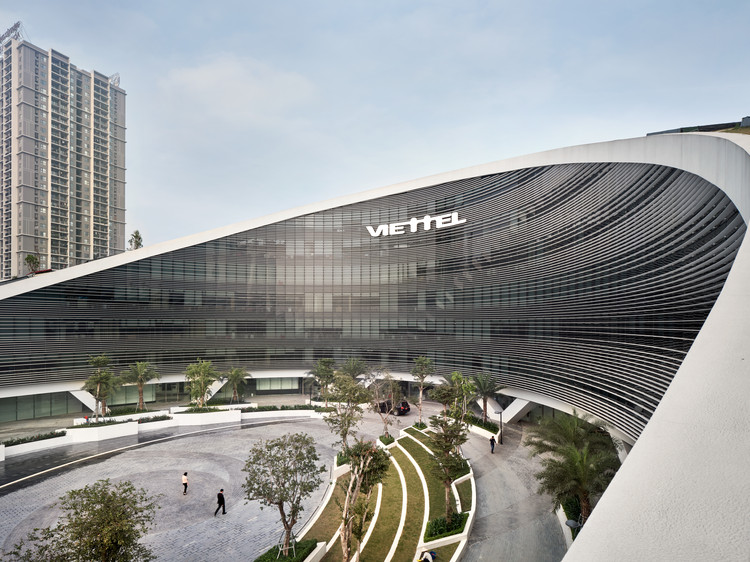
FPT Tower in Hanoi
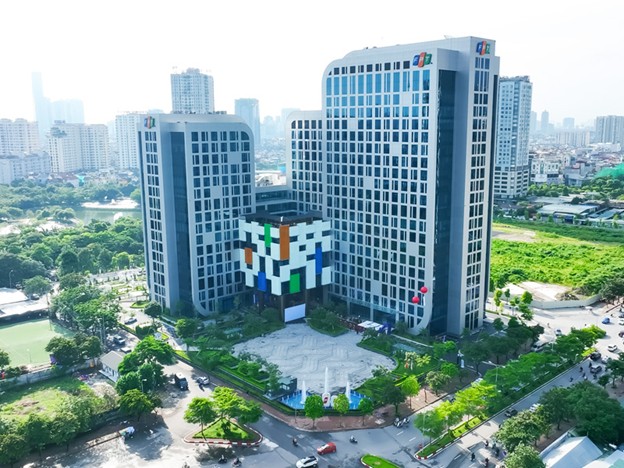
(Source: Maison Office)
As the company expanded, FPT built an ecosystem around three main pillars: technology, telecommunications, and education. Its structure includes core subsidiaries such as FPT Software, FPT IS, and FPT Education, alongside related businesses in media, investment, retail, and distribution. This gives FPT a broader operating base than a typical IT company, combining digital services with supporting infrastructure, talent development, and downstream commercial channels.
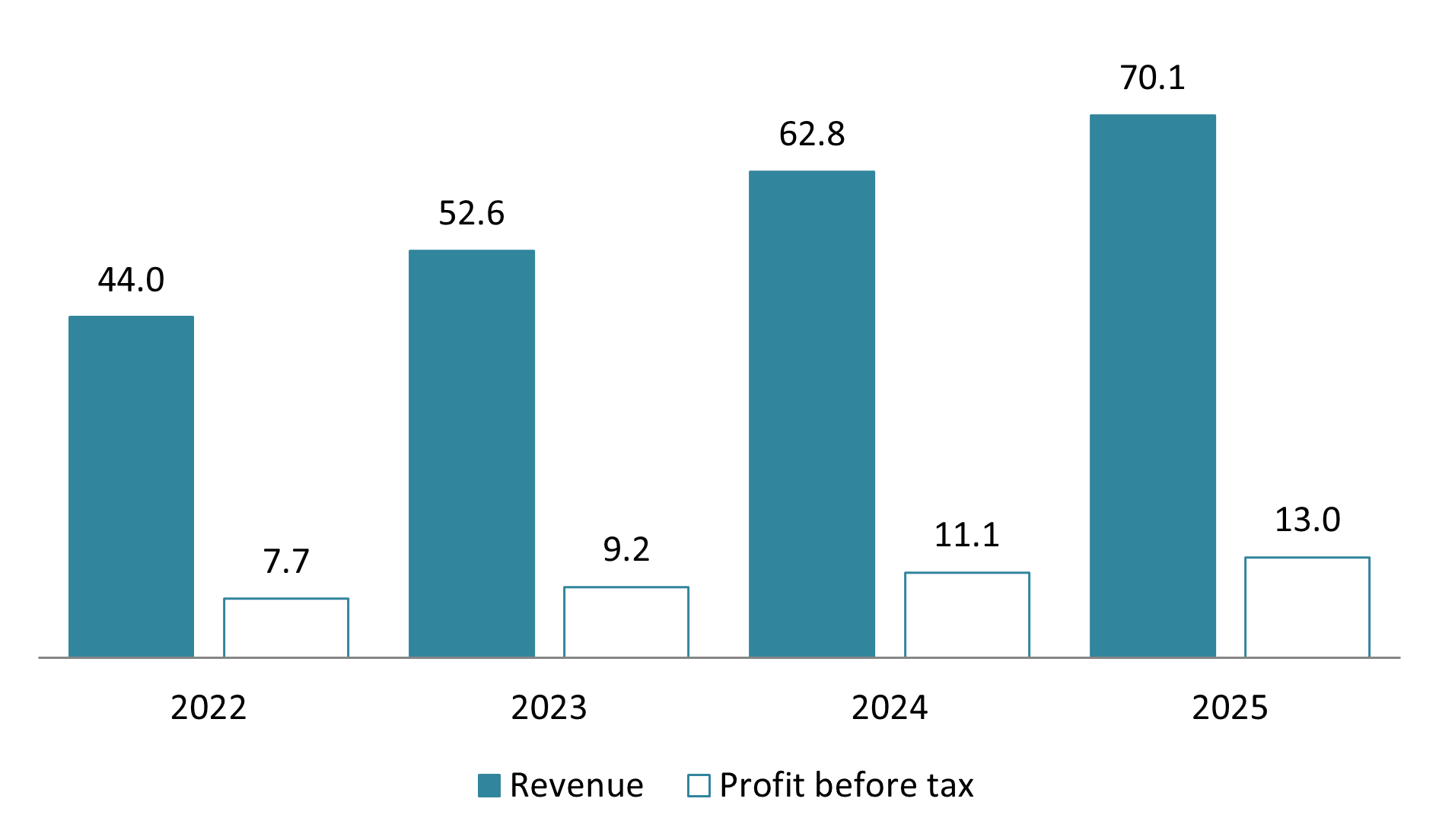
In business terms, 2025 reaffirmed FPT’s position as Vietnam’s leading private-sector technology group. Full-year consolidated revenue reached VND 70,113 billion, while profit before tax rose to VND 13,039 billion. Technology remained the main growth engine, accounting for 63% of consolidated revenue and 45% of profit before tax, while telecommunications continued to provide a solid earnings base and education remained a smaller but strategically important part of the ecosystem. Overall, the latest results suggest that FPT’s performance was supported by balanced growth across its principal pillars, with technology still at the center of value creation.
Revenue and profit before tax of FPT Group, 2022-2025
Unit: trillion VND
Source: B&Company’s synthesis from FPT
Beyond the financial results, 2025 was also a strategically important year. FPT brought its AI Factory into operation in both Vietnam and Japan, reinforcing its push into AI-led growth[3]. In parallel, Reuters reported that Vietnam’s Ministry of Public Security took over the state’s majority stake in FPT Telecom during 2025, highlighting the rising strategic importance of digital infrastructure and cybersecurity-related assets within the broader FPT ecosystem.[4]
Industry analysis and business situation of FPT’s subsidiaries and affiliates
Within the FPT ecosystem, the clearest way to assess the group is through three main operating pillars: software and IT services, telecommunications, and education. Together, these businesses explain how FPT has scaled beyond the profile of a conventional outsourcing company. Software remains the primary growth engine, telecommunications provides recurring earnings and infrastructure depth, and education supports the ecosystem through long-term talent development.
Software and global IT services
FPT’s software ecosystem is anchored by FPT Software, the group’s flagship global delivery arm, and supported by adjacent technology units such as FPT IS. Together, these businesses allow FPT to address a broad value chain, from software outsourcing and systems integration to large-scale digital transformation programs. This structure matters because it gives FPT a wider market position than a pure offshore coding provider, with stronger exposure to enterprise, public-sector, and platform-led work.[5]
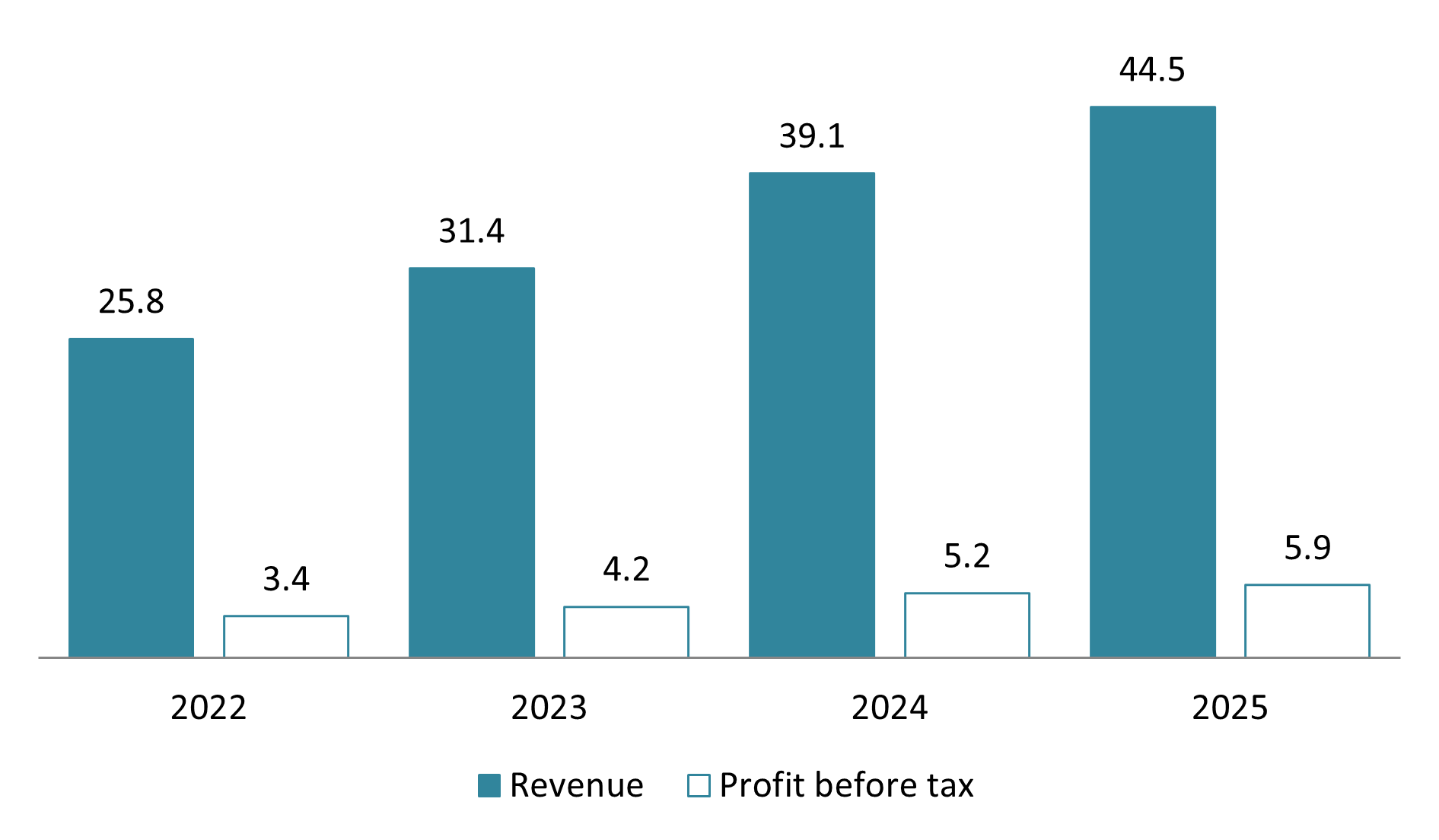
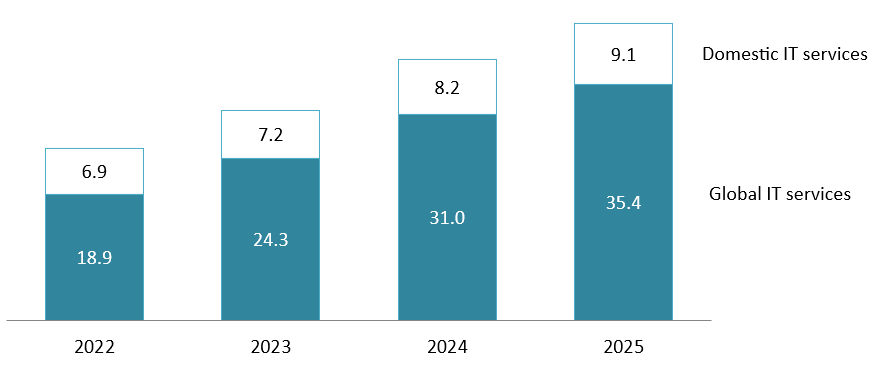
Software and IT services have become the clear center of gravity in the FPT ecosystem. The technology segment accounted for 60% of group revenue and 45% of pre-tax profit in 2023, rose to 62% and 47% in 2024, and reached 63% and 45% in 2025. Within that, global IT services revenue increased from VND 24,288 billion in 2023 to VND 35,382 billion in 2025, while pre-tax profit rose from VND 3,782 billion to VND 5,467 billion. This trajectory shows that FPT’s software business is not only expanding in scale but also sustaining profitability as it moves further into higher-value contracts and transformation work.
Revenue and profit before tax of FPT’s technology sector, 2022-2025
Unit: trillion VND
Source: B&Company’s synthesis from FPT
Revenue of FPT’s technology sector from domestic and global IT services
Unit: trillion VND
Source: B&Company’s synthesis from FPT
Equally important, FPT is winning larger and more strategic mandates rather than merely increasing contract volume. In 2025, signed revenue in global IT services exceeded USD 1.5 billion, and the group secured 26 contracts worth more than USD 10 million each. It also announced a USD 100 million digital transformation contract with a U.S. client, brought its AI Factory into operation in Vietnam and Japan, and by mid-2025 had been ranked among Asia’s 40 largest IT services companies by revenue in Gartner’s market-share data. At the same time, FPT began to extend this technology push into semiconductors through FPT Semiconductor, including the launch of a high-tech and semiconductor R&D center in Da Nang and the group’s broader showcase of a more complete chip ecosystem in 2025. Together, these developments suggest that FPT’s software business is moving further up the value chain, with AI, cloud, semiconductors, and transformation work becoming increasingly central to growth.[6] [7] [8] [9]
Telecommunications
If software is FPT’s growth engine, telecommunications is its stabilizing core. The telecom pillar is centered on FPT Telecom and supported by a broader digital services layer that includes broadband, enterprise connectivity, data-center capacity, pay TV, and content distribution through FPT Play. This matters strategically because it gives the group not only a steady domestic cash flow but also direct exposure to the infrastructure side of Vietnam’s digital economy. In contrast with software, which is more export-oriented and project-driven, telecom provides a more predictable revenue base and a largely installed customer base in the home market.[10]
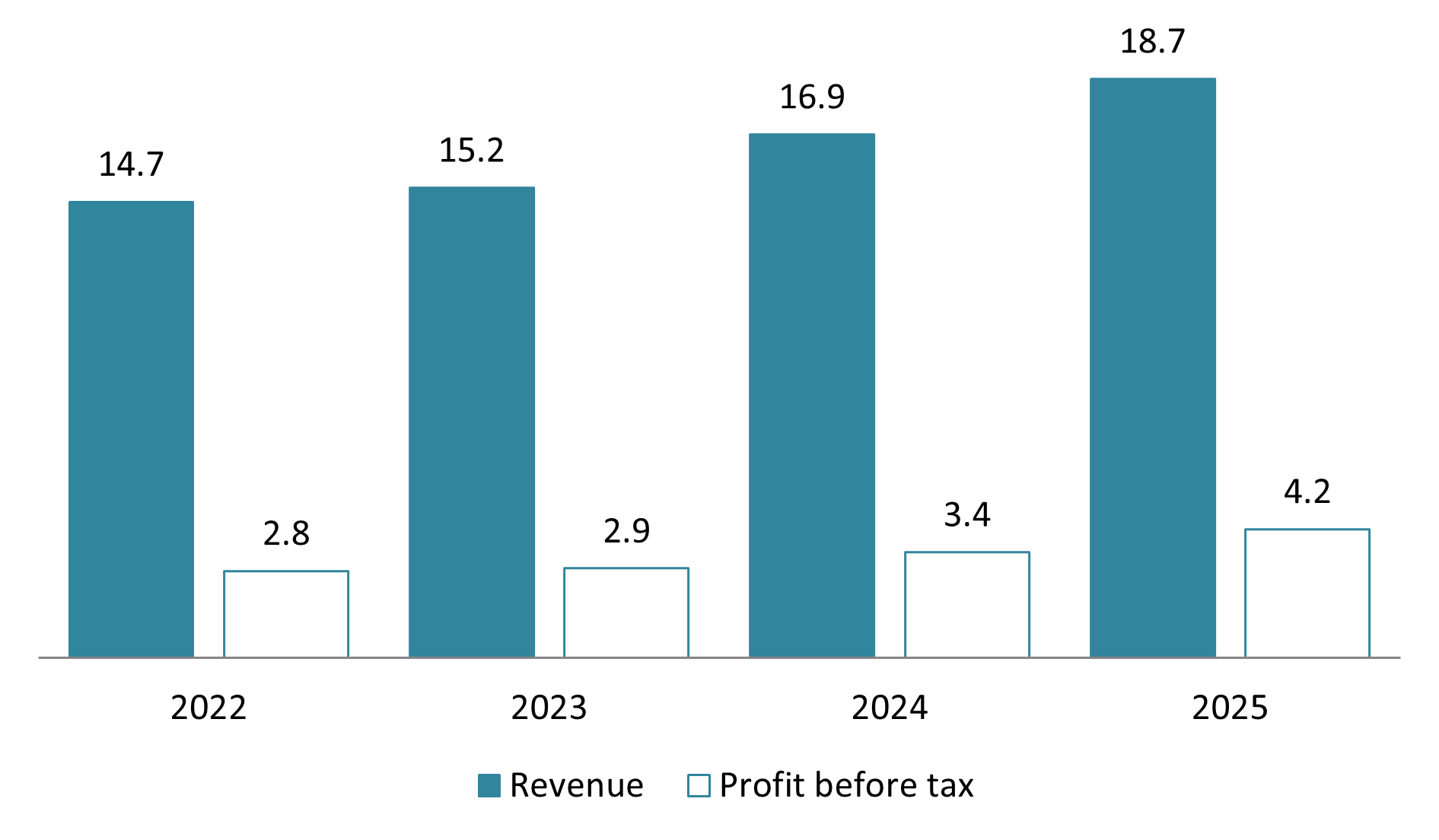
Recent years show that this pillar has remained both resilient and increasingly strategic. Official disclosures show telecommunications services revenue rising from VND 15,186 billion in 2023 to VND 18,702 billion in 2025, while pre-tax profit increased from VND 2,895 billion to VND 4,167 billion over the same period. In other words, telecom has not been the fastest-growing part of FPT, but it has remained a reliable earnings contributor with improving profitability.
Revenue and profit before tax of FPT’s telecommunications sector, 2022-2025
Unit: trillion VND
Source: B&Company’s synthesis from FPT
At the same time, the business has become more strategically visible. In July 2025, Reuters reported that Vietnam’s Ministry of Public Security took over the state’s majority stake in FPT Telecom from SCIC, underscoring the company’s growing importance in network security and critical digital infrastructure. Separately, FPT Play secured exclusive Premier League distribution rights in Vietnam from January 2026, pointing to a further push into premium content monetization and suggesting that FPT’s telecom arm is evolving into a broader digital services platform rather than remaining a pure connectivity provider.[11]
Education
Education is the smallest of FPT’s three core pillars by revenue, but arguably the most distinctive in strategic terms. The system spans university, vocational, international, executive, and school-level education through brands such as FPT University, FPT Polytechnic, FUNiX, FPT School, FSB, Greenwich Vietnam, and Swinburne Vietnam. That breadth gives FPT a presence across multiple stages of workforce development and sets it apart from many regional technology groups, which typically rely on the labor market rather than building talent pipelines internally. In FPT’s case, education is not simply a diversification move; it is part of the operating logic of the ecosystem, designed to reinforce the group’s long-term position in software, AI, semiconductors, and digital transformation.[12] [13]
FPT University Campus in Ho Chi Minh City

(Source: FPT University)
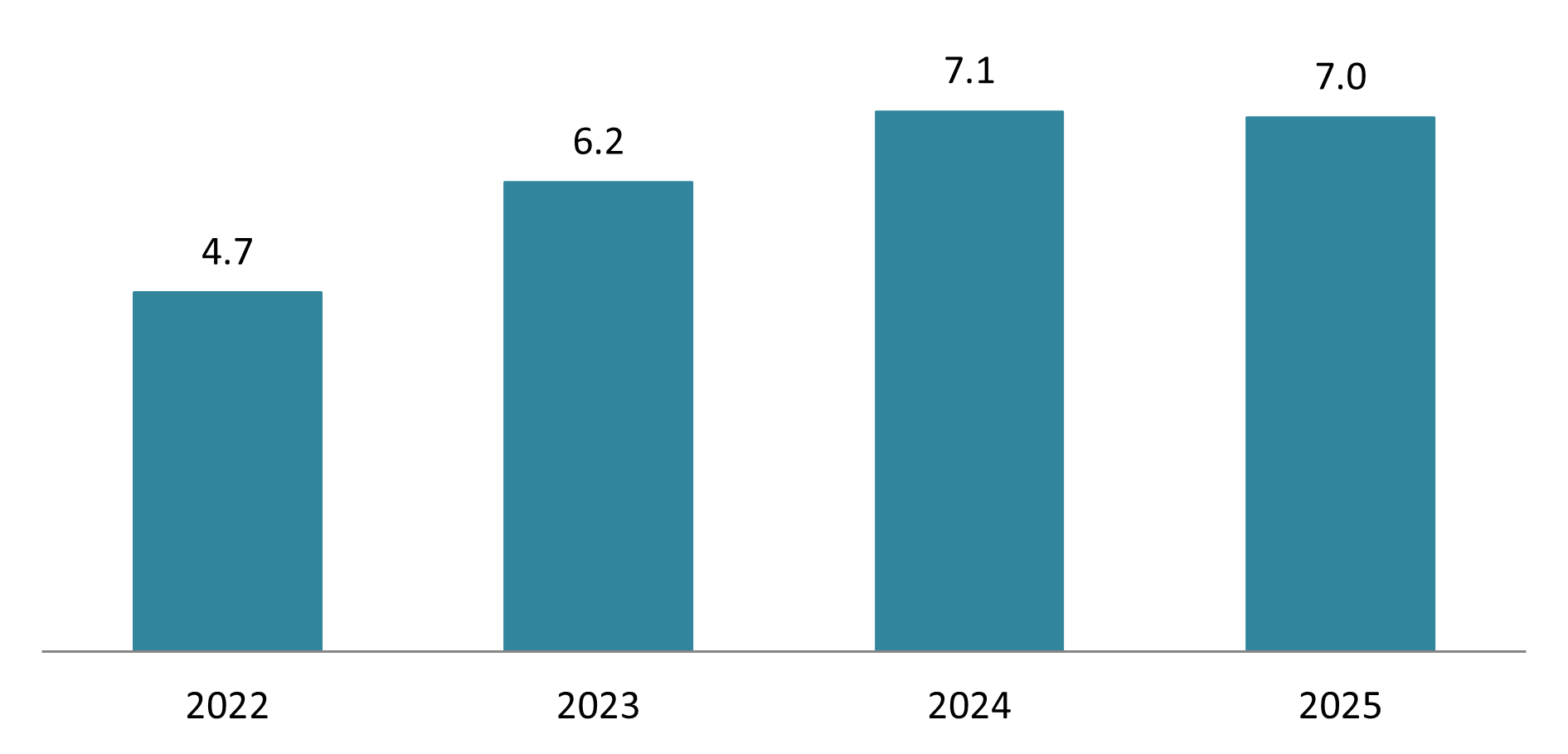
The numbers confirm that education has become a meaningful supporting pillar, even if it remains much smaller than software or telecom. Revenue rose from VND 6,159 billion in 2023 to VND 7,088 billion in 2024, before easing slightly to VND 7,009 billion in 2025. More important than the modest adjustment in 2025 was the segment’s strategic direction. FPT said its education network expanded to 19 provinces and cities in 2025, while more than 3,700 students were trained in AI and semiconductor design and all students from grades 1 to 12 were introduced to AI. The group also continued to expand its physical footprint, including the start of a new integrated school project in Nghe An.[14]
Revenue of FPT’s education sector, 2022-2025
Unit: trillion VND
Source: B&Company’s synthesis from FPT
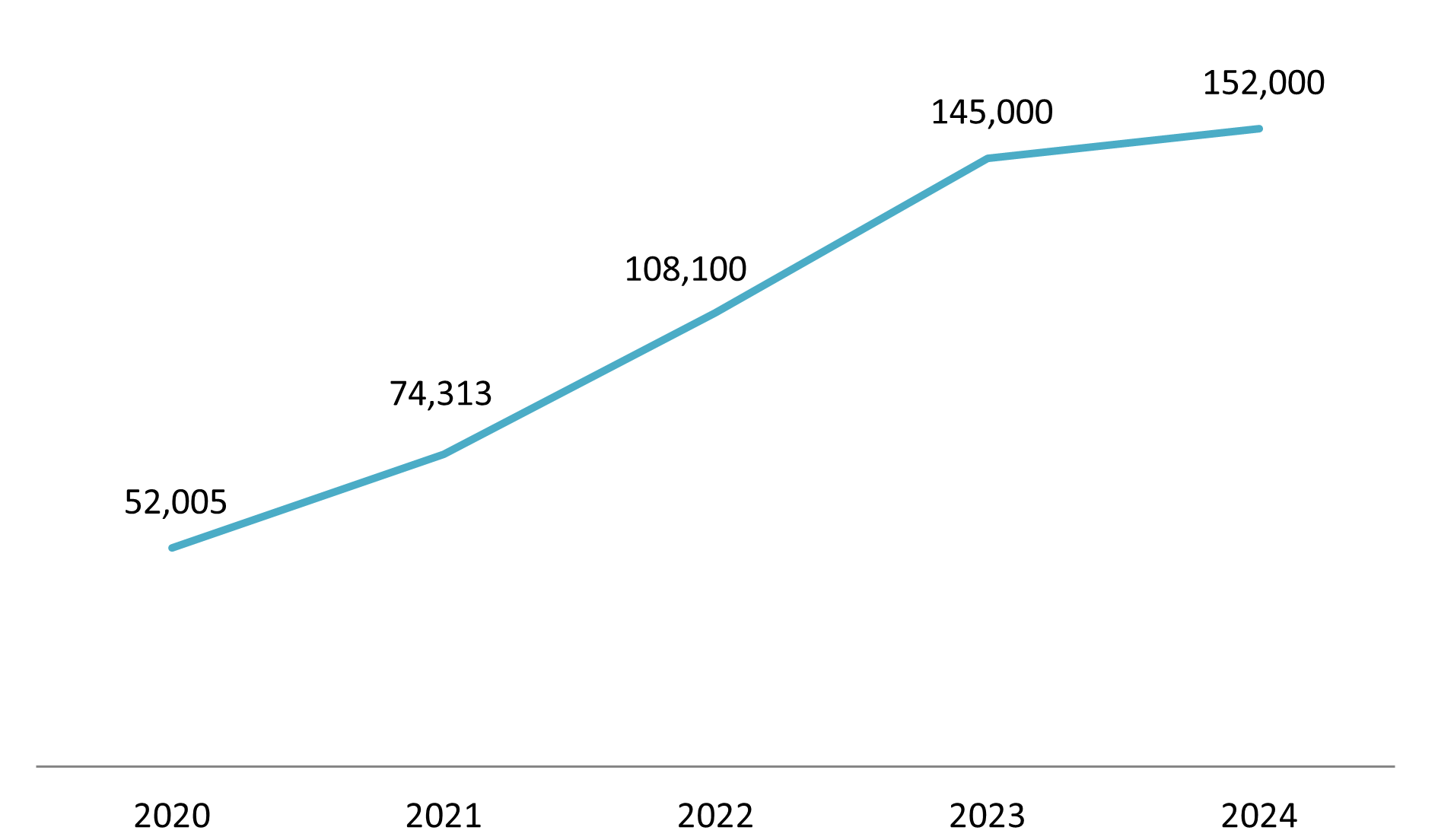
Number of students across FPT’s education system, 2020-2024
Unit: people
Source: B&Company’s synthesis from FPT
As a result, FPT Education is best understood not as a stand-alone education business, but as a long-cycle capability builder for the wider group. From a market research perspective, this is what makes the segment relevant to the investment story: it strengthens FPT’s control over talent formation in exactly the fields where future demand is expected to concentrate.
Other sectors: media, investment, retail, and related businesses
Outside its three main pillars, FPT’s remaining businesses are concentrated in media, investment, retail, and distribution, where they play a supporting rather than defining role in the group’s earnings profile. FPT Online is the clearest media asset in this layer, operating a premium digital publishing and advertising network that reaches more than 50 million users per month and giving group scale in audience access and digital brand visibility.[15]
On the commercial side, associate companies FPT Retail and Synnex FPT extend FPT’s reach into consumer and enterprise channels. FPT Retail, which operates FPT Shop and the Long Chau pharmacy chain, recorded VND 51.08 trillion in revenue and VND 1.22 trillion in pre-tax profit in 2025, with Long Chau remaining the main growth driver.[16]. Meanwhile, Synnex FPT continues to anchor nationwide ICT distribution through a network of more than 3,800 agents and 8,000 points of sale.[17]
Investment activity has also become more visible, as shown by FPT’s 2025 strategic investment in Malaysia’s Daythree to expand business process services across APAC[18]. Together, these businesses are smaller than software or telecom, but they broaden FPT’s market access, deepen customer touchpoints, and add flexibility to the wider ecosystem.
Conclusion
Overall, FPT’s subsidiaries and affiliates form an ecosystem in which each pillar plays a distinct but mutually reinforcing role. Software and global IT services remain the principal growth engine, telecommunications provide a stable earnings and infrastructure backbone, and education strengthens the group’s long-term control over talent development. The remaining businesses in media, retail, distribution, and investment are smaller in scale, but they expand FPT’s market reach and add flexibility to its operating model.
Viewed together, recent developments suggest that FPT is no longer simply a leading Vietnamese outsourcing company. It is increasingly operating as an integrated technology group, combining export-oriented digital services with domestic infrastructure, content, distribution, and human-capital platforms. That combination should help the group remain resilient through changing technology cycles while positioning it to capture rising demand for AI, cloud, cybersecurity, and digital transformation in both Vietnam and overseas markets. For investors and market observers, this integrated model remains one of FPT’s clearest competitive advantages.
Read more
Analysis of the industries and revenues of companies within the Vingroup ecosystem
Industry analysis and Business situation of Masan’s subsidiaries
* If you wish to quote any information from this article, please kindly cite the source along with the link to the original article to respect copyright.
| B&Company
The first Japanese company specializing in market research in Vietnam since 2008. We provide a wide range of services including industry reports, industry interviews, consumer surveys, business matching. Additionally, we have recently developed a database of over 900,000 companies in Vietnam, which can be used to search for partners and analyze the market. Please do not hesitate to contact us if you have any queries. info@b-company.jp + (84) 28 3910 3913 |
[4] Reuters (2025): Vietnam’s public security ministry takes stake in internet firm FPT Telecom <Access>
[5] FPT’s website <Access>
[16] The Investor (2026): FPT Retail targets robust growth after record profit year <Access>
Related article



































Log in / Register
SUBSCRIBE NEWSLETTER