

 English
  日本語
日本語  Tiếng Việt
  简体中文
简体中文  한국어
한국어 Vietnam's retail real estate market continues to evolve rapidly, fueled by economic growth and shifting consumer behavior.

22Jan2025
Latest News & Report / Vietnam Briefing
Comments: No Comments.
Vietnam’s retail real estate market continues to evolve rapidly, fueled by economic growth and shifting consumer behavior. In 2024, the sector faced both opportunities and challenges, shaped by post-pandemic recovery, e-commerce expansion, and increased urbanization. As of 2025, demand for experiential retail spaces and sustainable development is expected to drive growth, presenting a mix of challenges and opportunities for stakeholders.
The Situation of Vietnam’s Retail Real Estate in 2024
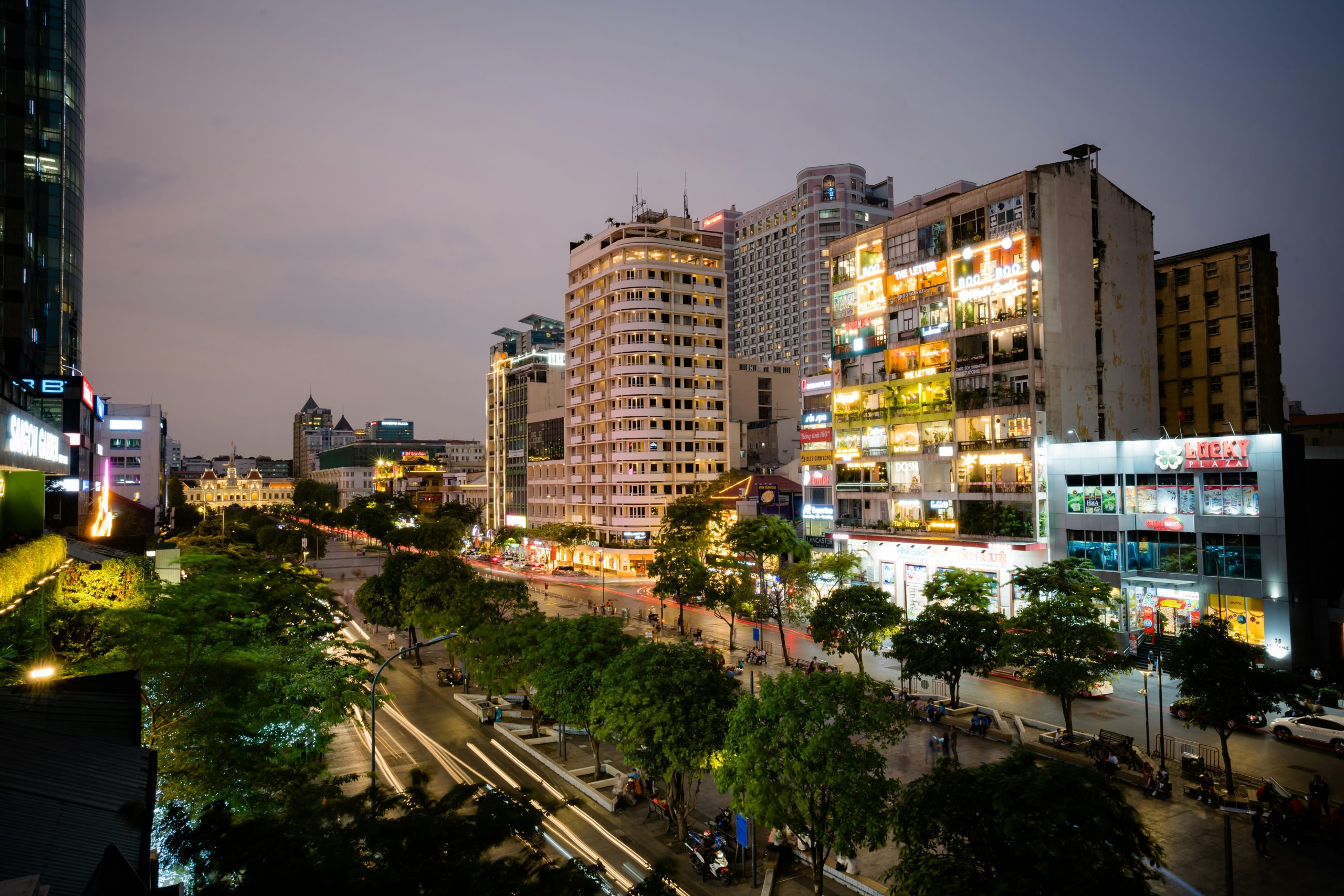
Retail real estate is primarily concentrated in large cities like Hanoi and Ho Chi Minh City, where substantial investments from major corporations align with high economic activity and consumer spending.
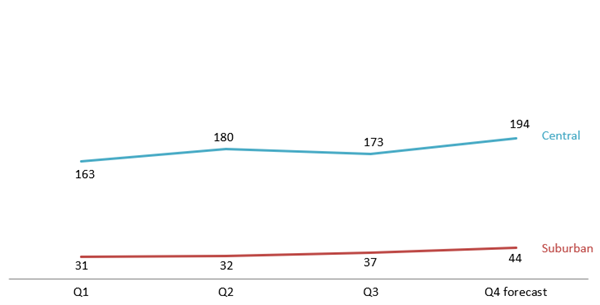
In 2024, rental prices in central locations in Hanoi averaged 178 USD/m²/month, reflecting a 13% increase compared to 2023. Suburban areas experienced a similar trend, with rental prices averaging around 36 USD/m²/month, also up 13% year-on-year. This surge is attributed to the decreasing availability of land in these regions, with vacancy rates dropping to just 2% in central areas and 12% in suburban locations[1].
2024 rental prices in Suburban and Central Areas of Hanoi
Unit: USD/m2/month
Source: CBRE Vietnam
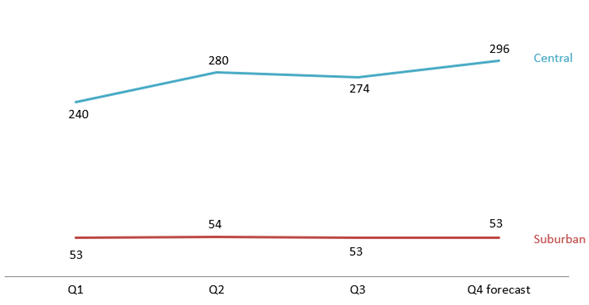
Additionally, average rental prices in central areas of Ho Chi Minh City ranged around 273 USD/m²/month, with significant fluctuations during the year, showing a difference of up to 23%. In contrast, suburban rental prices increased by 10% compared to 2023, reaching 53 USD/m²/month, and remained relatively stable throughout the year[2].
2024 rental prices in Suburban and Central areas of Ho Chi Minh City
Unit: USD/m2/month
Source: CBRE Vietnam
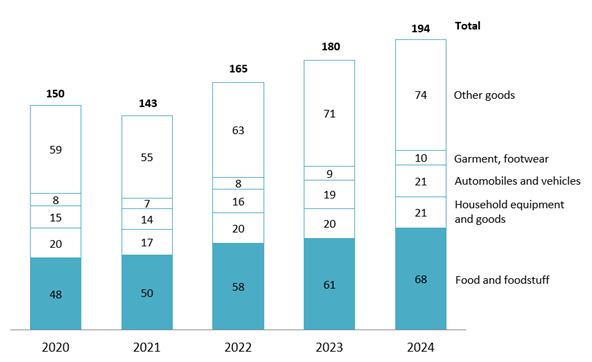
Moreover, the surge of retail real estate in 2024 is supported by the growth in retail market, with retail sales reaching nearly 194 million USD in 2024, reflecting an 8% year-on-year increase[3]. Meanwhile, e-commerce is rapidly transforming the retail sector, achieving a remarkable 20% annual growth rate. Platforms like Tiki, Shopee, TikTok Shop, and Lazada are leading the market, capturing a significant share of consumer spending[4].
Related article





















Log in / Register
Continue without an account
Log in / Register
SUBSCRIBE NEWSLETTER