
2050年までのベトナム半導体産業戦略:目標、機会、課題

ベトナムの半導体産業は、初期の発展と多額の外国投資が融合した極めて重要な局面にある。
Semiconductor Vietnam

2024年10月3日

B&Company

最新ニュース&レポート / ベトナム速報

コメント: コメントはまだありません.

*このコラムでは「“ベトナム情勢概況“B&Companyの若手研究者たちは、ベトナムの産業動向、消費動向、社会運動に関するタイムリーな情報を提供する予定です。.

原文情報の正確性を確保するよう努めておりますが、各情報については個別にご確認ください。解釈および将来展望は、各研究者の個人的な見解です。.

ベトナム半導体産業の現状

Vietnam’s semiconductor industry is at a pivotal juncture, characterized by a blend of nascent development and substantial foreign investment. Currently, the country serves predominantly as an assembly hub for international technology companies, including giants like Intel, Samsung, and Foxconn. These firms have established operations primarily focused on the assembly and packaging of semiconductor components, positioning Vietnam as a vital link in the global supply chain.

Vietnam’s expansion and investment in new projects have led to an increasing number of foreign enterprises investing in the semiconductor sector. In 2024, Vietnam continues to attract many FDI projects in the semiconductor field from various countries around the world. Notable examples include several names as follows:

2024年初頭以降の半導体分野における主なFDI投資プロジェクト

企業名 投資資本 投資先
BEセミコンダクターインダストリーズNV 490万米ドル ホーチミン市
Amkor Technology 16億米ドル バクニン省
Coherent Corp 1億2,700万米ドル ドンナイ省
シグネティクス 1億ドル ビンフック省

出典:B&Company

Statista Market Insights forecasts that Vietnam’s semiconductor revenue will achieve a compound annual growth rate (CAGR) of 11.6% during the period from 2023 to 2027, reaching $31.28 billion by 2027. Among these, integrated circuits—the most important segment in the semiconductor industry—are expected to be valued at $16.44 billion by the end of 2024[1]. The market has expanded significantly due to Vietnam’s strategic location, competitive labor costs, and favorable investment climate. However, while these factors have attracted major players, the country still lags in high-end manufacturing and design capabilities, making it heavily dependent on foreign technology and expertise.

Moreover, the Vietnamese workforce, while abundant, lacks specialized skills in semiconductor design and advanced manufacturing processes. Although there are educational institutions focusing on technology and engineering, the curriculum often does not meet the specific needs of the semiconductor industry. Consequently, the current state of Vietnam’s semiconductor sector can be summarized as an assembly-centric model with limited local R&D and production capabilities.

半導体産業に関する政府の政策と戦略的ビジョン

In response to the challenges and opportunities presented by the semiconductor sector, the Vietnamese government has launched a comprehensive strategy aimed at fostering the growth of the industry. Prime Minister Pham Minh Chinh has just signed Decision No. 1018/QĐ-TTg dated September 21, 2024, issuing the Strategy for the Development of Vietnam’s Semiconductor Industry by 2030 and a Vision for 2050. The strategy outlines the development path for Vietnam’s semiconductor industry from now until 2030, with a vision for 2050, following this formula:

C = SET + 1

このうち、Cは Chip(チップ), Sは Specialized(専門性); ;Eは エレクトロニクス; ;Tは Talent(人材) 、+ 1は Vietnam (ベトナムが世界の半導体サプライチェーンにおける新たな安全な拠点となること).

この戦略では、具体的な目標を掲げた3段階のロードマップが示されている。

The Government’s development goals for the semiconductor industry
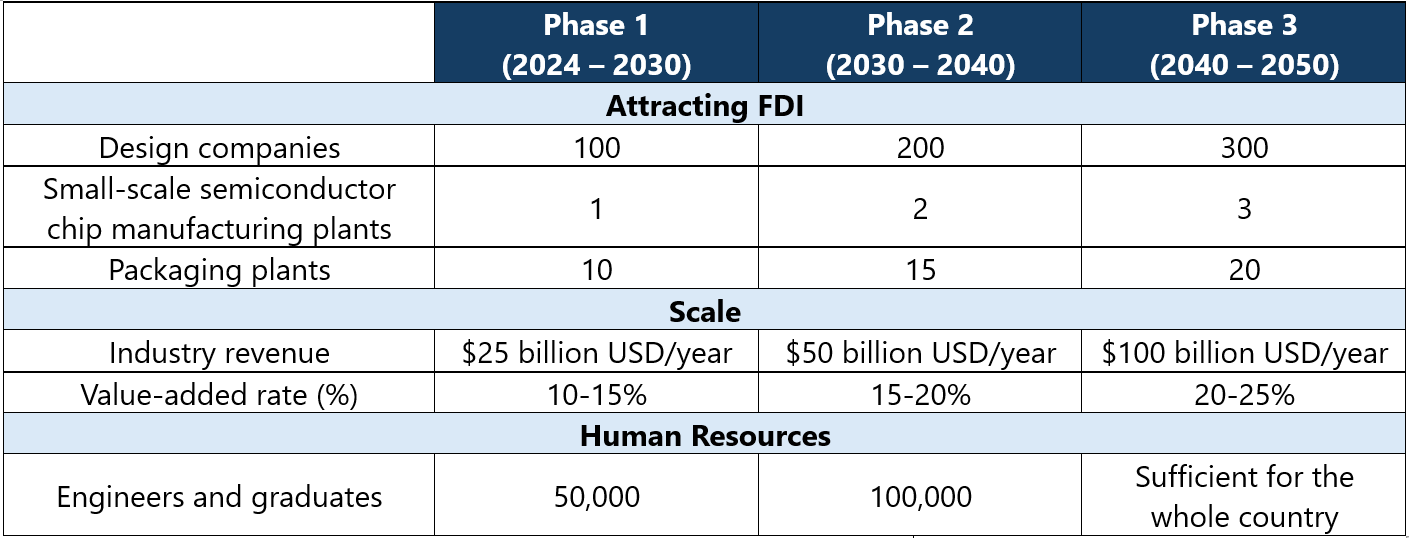
The Government’s development goals for the semiconductor industry

出所:決定第1018/QĐ-TTg号[2]

半導体産業の機会

Vietnam’s strategic vision for the semiconductor industry presents numerous opportunities. One of the most significant opportunities lies in the global demand surge for semiconductors. The market is projected to grow significantly, driven by advances in technology such as artificial intelligence, IoT, and 5G. As companies seek to diversify their supply chains, Vietnam has the potential to become a preferred destination for semiconductor manufacturing.

さらに、主要な多国籍企業の存在は、より強固な半導体エコシステムの基盤をすでに築いている。2023年9月10~11日に米国のジョー・バイデン大統領がベトナムを公式訪問した際、ベトナムと米国の共同声明では、双方が科学技術分野で幅広く協力することが示された。ベトナムで半導体を専門とする最大級の企業の一つであるFPT Corporationは、労働力の能力強化を目的として、FPT Universityへの投資を通じ、米国が3万~5万人の半導体専門人材の育成を支援することを提案した。さらに、FPTは、2023年末までに米国で$100 millionを投資し、約1,000人の人員を配置する計画であることも明らかにした[3].

FPT Chairman discussing with US businessmen

FPT Chairman discussing with US businessmen

FPTプレスリリース、2023年(ソース)

Continued foreign investment can accelerate technology transfer and facilitate the establishment of advanced manufacturing facilities. The Vietnamese government’s commitment to developing the semiconductor industry creates a favorable environment for growth. The combination of strategic infrastructure investment and human resource development can position Vietnam as a key player in the regional semiconductor landscape. Furthermore, as a member of various trade agreements, such as the Comprehensive and Progressive Agreement for Trans-Pacific Partnership (CPTPP) and the Regional Comprehensive Economic Partnership (RCEP), Vietnam has access to a broader market, enabling it to attract more investment and foster collaboration in the semiconductor sector.

半導体産業が直面する課題

However, Vietnam must contend with significant challenges. One major obstacle is the technological gap that the country faces in comparison to more established semiconductor hubs. Vietnam currently lacks advanced manufacturing technology and expertise, which are essential for moving beyond assembly to high-value production. The shortage of skilled labor in semiconductor design and advanced manufacturing remains a pressing issue as well. While educational initiatives are underway, it will take time to cultivate a workforce capable of meeting the industry’s demands.

さらに、工業団地の計画は有望である一方、インフラプロジェクトの実際の実施は遅れる可能性がある。必要な施設の整備の遅れは、半導体分野の成長を阻害しかねない。最後に、ベトナムは台湾や韓国など、確立された半導体主要国・地域との激しい競争にも直面しなければならない。これらの国・地域は、確立されたサプライチェーン、先進技術、高度な技能を有する人材を備えているため、ベトナムは独自のニッチを開拓し、差別化を図ることが不可欠である。.

まとめ

Vietnam’s strategic vision for developing its semiconductor industry by 2030 and beyond represents a critical step toward establishing a sustainable and competitive technological ecosystem. While the current state of the industry is largely assembly-focused, government initiatives aimed at infrastructure development, human resource training, and investment in R&D hold promise for transformative growth. The opportunities presented by a growing global demand for semiconductors and favorable government policies offer a pathway for Vietnam to position itself as a significant player in the semiconductor market.

However, addressing challenges such as technological gaps, talent shortages, and fierce regional competition will be essential to realizing this vision. As Vietnam navigates the complexities of the semiconductor landscape, the outcomes of these efforts will not only influence the country’s economic trajectory but also contribute to the broader technological advancement of Southeast Asia. With a clear vision and determined execution, Vietnam can emerge as a pivotal hub in the global semiconductor industry, fostering innovation and driving economic growth for years to come.


[1] VnEconomy(2024年)。収益$31.28 billionのベトナムは、世界の新たな半導体製造ハブとなる可能性がある。<評価>

[2] Government Document (2024). Issuing the Strategy for the Development of Vietnam’s Semiconductor Industry by 2030 and a Vision for 2050. <評価>

[3] Economic and Forecast Magazine(2024年)。ベトナムにおける半導体産業発展の機会。<評価>


B&Company, Inc.

2008年からベトナムで市場調査を専門とする初の日本企業です。業界レポート、業界インタビュー、消費者調査、ビジネスマッチングなど、幅広いサービスを提供しています。さらに、最近ではベトナム国内の90万社以上のデータベースを開発しており、パートナーを検索したり、市場を分析したりするために利用できます。.

ご不明点がございましたら、お気軽にお問い合わせください。.

info@b-company.jp + (84) 28 3910 3913


他の記事を読む


ログインまたは無料会員登録をして、続きを読むにははこちら。

関連記事

ニュースレターを購読する