

 English
  日本語
日本語  Tiếng Việt
  简体中文
简体中文  한국어
한국어 The seaport system plays a key role in promoting Vietnam's economic development and international integration.
08Apr2025
Latest News & Report / Vietnam Briefing
Comments: No Comments.
Abstract
The seaport system plays a key role in promoting Vietnam’s economic development and international integration. In the context of globalization and the trend of deep integration, upgrading the seaport system and attracting foreign investment has become an urgent task. This article will analyze in detail the current status of Vietnam’s seaport system, the Government’s upgrading orientation, foreign investment movements, and the opportunities and challenges in this process.
Introduction to the seaport system in Vietnam
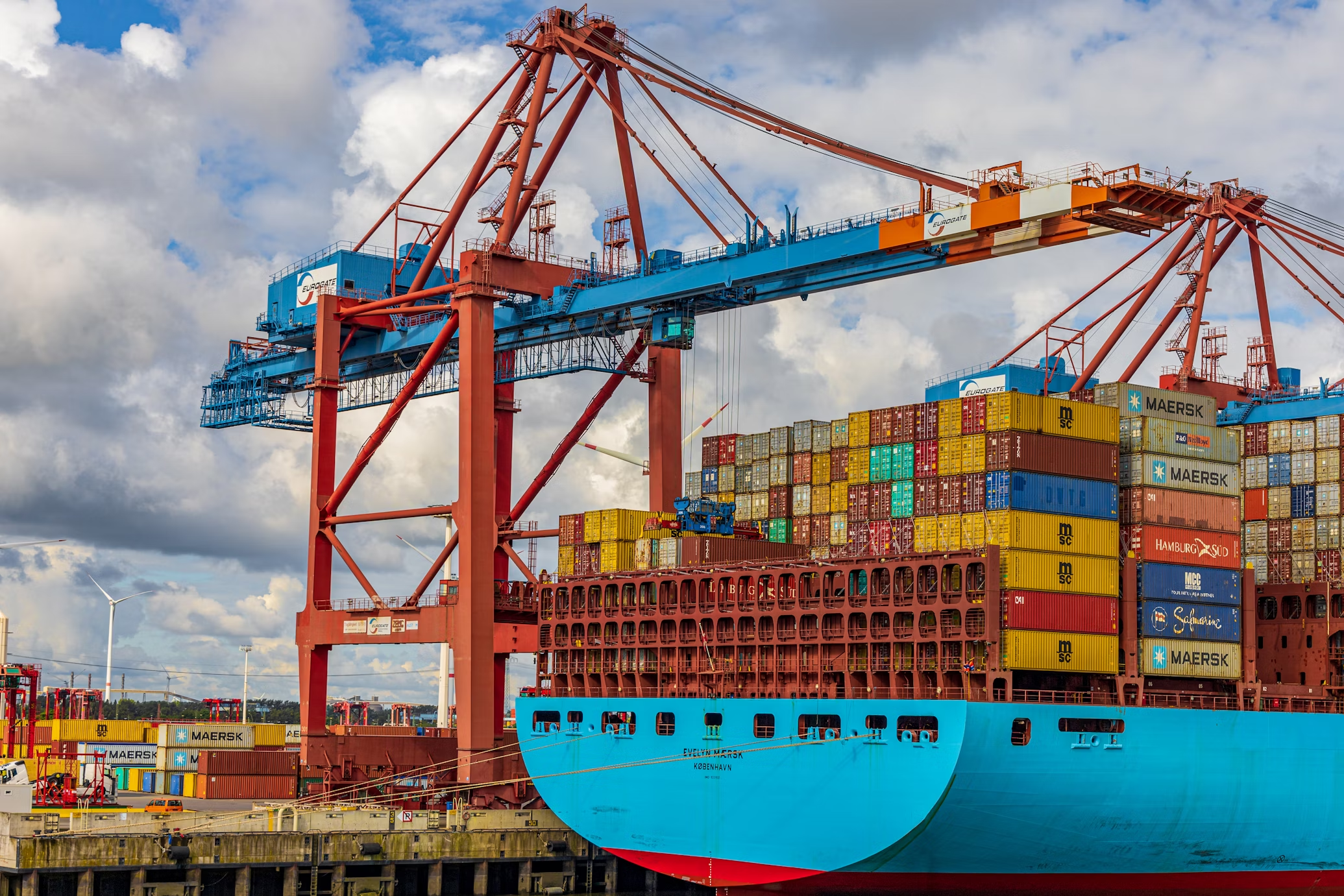
As of October 2023, Vietnam has 296 seaports with a total wharf length of about 107 km[1]. Currently, Vietnam has three ports (Ho Chi Minh City, Hai Phong and Cai Mep – Thi Vai) in the list of 50 container ports with the largest throughput in the world. The seaport system has also been planned synchronously, closely connected with the country’s key economic centers and regions[2]. International gateway ports have been established in the Northern and Southern regions; of which, Cai Mep port (Ba Ria – Vung Tau) can receive ships up to 214,000 DWT; and Lach Huyen port (Hai Phong) can receive container ships up to 145,000 DWT. In addition, large-scale specialized ports associated with industrial zones such as crude oil tankers up to 320,000 DWT, steel mills, petrochemical refineries and coal-fired thermal power plants are capable of receiving cargo ships up to 200,000 DWT, liquid cargo ships up to 150,000 DWT (product carriers).
List of seaports in Vietnam
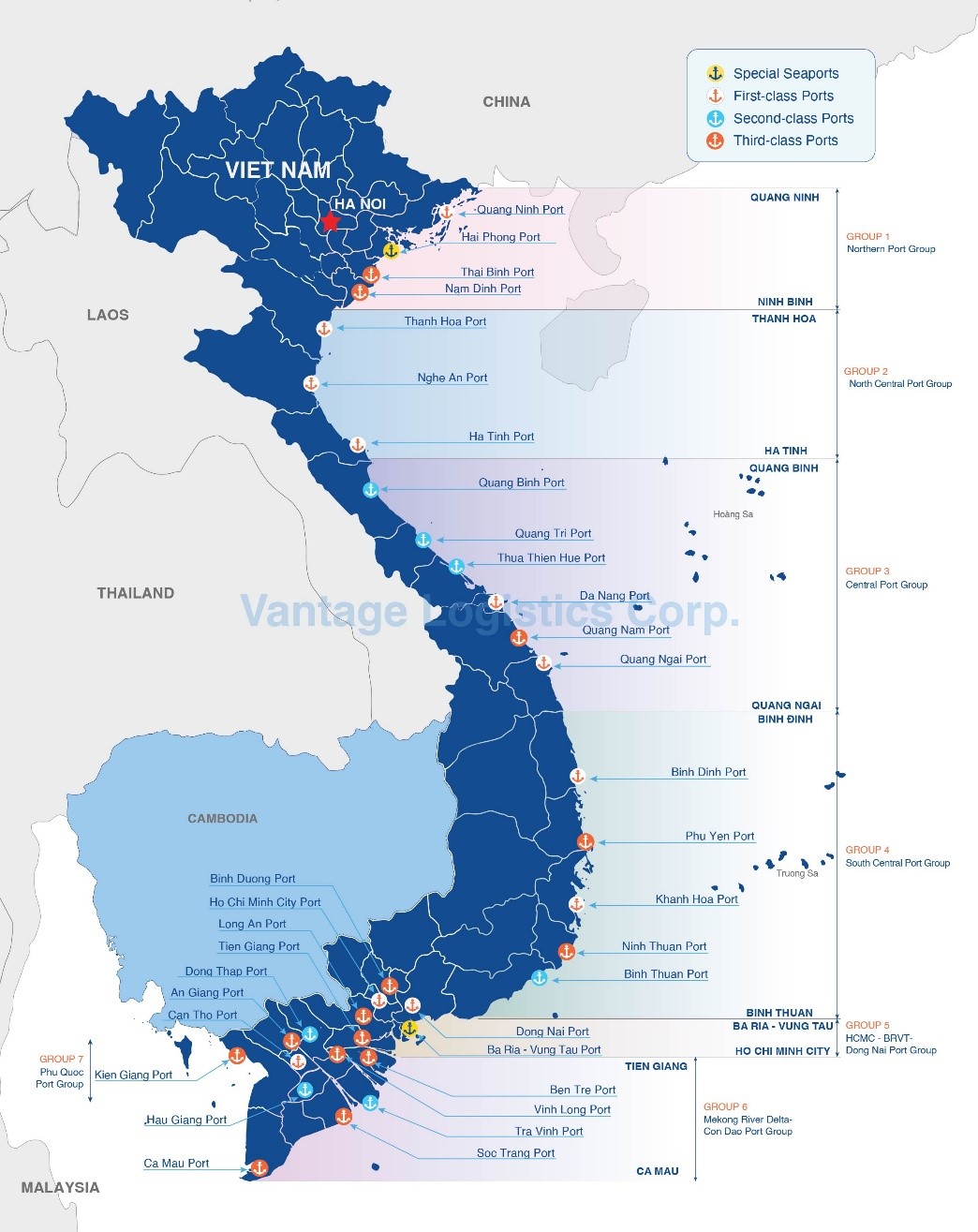
Source: Vantage-logistics.com.vn
Vietnam’s seaport system has not only grown strongly in quantity but also significantly improved in capacity and service quality, thereby promoting an increase in cargo throughput through ports. It is expected that in 2024, the total volume of cargo through seaports will reach about 864.4 million tons, an increase of 14% compared to 2023.
Volume of goods passing through seaports in the period 2020-2024 in Vietnam
Unit: Million tons
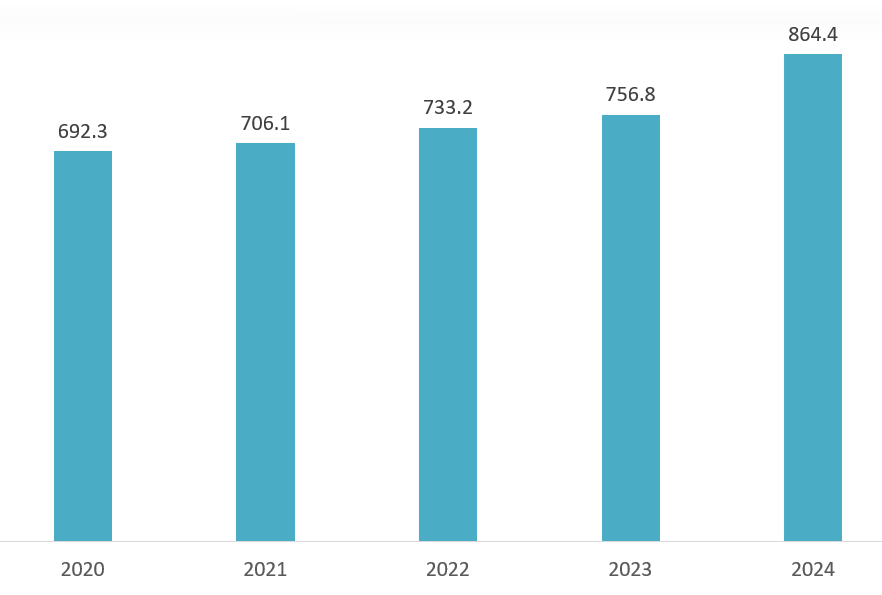
Source: dnse.com.vn
Related article





















Log in / Register
Continue without an account
Log in / Register
SUBSCRIBE NEWSLETTER