

 English
  日本語
日本語  Tiếng Việt
  简体中文
简体中文  한국어
한국어 Vietnam offers relatively low industrial land costs and benefits from its central location within ASEAN, while rental facilities have also been increasing.
18Sep2026
Latest News & Report / Vietnam Briefing
Comments: No Comments.
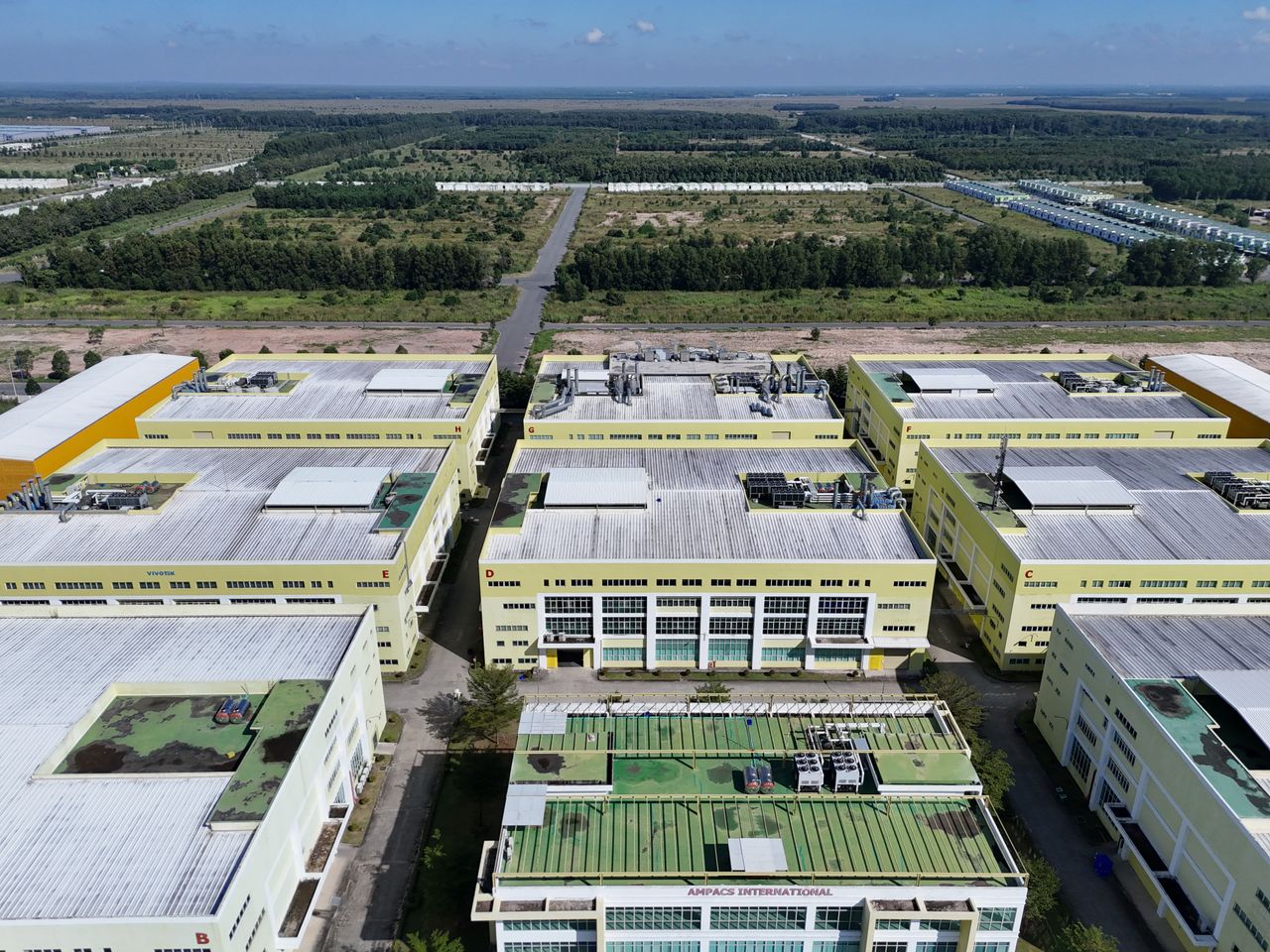
Industrial real estate regulations are clear. Land remains state-owned, and foreign investors secure long-term land use rights through leases. High-tech and export projects also benefit from tax incentives and preferential land rents. Growth is supported by state-owned developers and foreign capital and is being driven by the transfer of manufacturing functions from China+1 and demand for logistics and e-commerce. Major trends include expansion into neighboring provinces and the development of smart/green industrial parks. Although there are challenges such as land acquisition, skilled labor, and interregional competition, the medium-term outlook remains favorable.
Basic Statistics
| Indicator | Unit | 2020 | 2021 | 2022 | 2023 | 2024 |
| Industrial land area | Thousand ha | 73.6 | 82.6 | NA | 98.6 | 89.8 |
| Industrial Park | Number | 369 | 397 | 403 | 414 | 433 |
| Northern Industrial Park Land Lease Price | USD/m²/Lease Term | NA | 109 | 120 | 123 | 133 |
| Southern Industrial Park Land Lease Price | USD/m²/Lease Term | NA | 151 | 166 | 173 | 189 |
| FDI Inflows | Billion USD | 5.0 | 3.6 | 4.5 | 5.3 | 6.3 |
Source: National Statistics Office, Cushman & Wakefield
Regulations
All land belongs to the state, and foreigners cannot own land. Investors typically hold land use rights under leases of up to 50 years, which can be extended with approval, potentially allowing for longer terms. They can also own buildings and facilities constructed on leased land.
In practice, foreign industrial park developers lease land from the state, build infrastructure, and then sublease plots or rent out completed factories and warehouses to tenants. Tenants sublease land from the developer or rent existing facilities, allowing them to construct and own their own factories or equipment on the plot. They handle their own investment approval (IRC/ERC), environmental permits, construction permits (if building themselves), fire safety procedures, and utilities installation. If requirements are met, they can establish as an Export Processing Enterprise (EPE). The sublease period cannot exceed the remaining term of the industrial estate.
Industrial parks and economic zones facilitate smooth entry for manufacturers because developers have already secured all land rights and approvals, making them the primary establishment method for foreign-invested manufacturing. Many developers are joint ventures with foreign capital (e.g., Amata, VSIP). Regarding taxation, the standard corporate income tax rate is 20%. However, projects meeting certain criteria such as high-tech, export-oriented, large-scale, or located within economic zones may qualify for preferential tax rates (e.g., 10–17% for a specified period), tax credits/exemptions, import duty exemptions for machinery not locally producible, and reductions in land rent paid to developers.
Market Overview
The industrial real estate market has shown steady growth and even expanded during the pandemic period. This boom stems from strong FDI inflows and shifts in global supply chains. Stable economic growth and trade agreements are attracting manufacturers of electronics, textiles, machinery, and more. Notably, the “China+1” strategy for production diversification is driving multinational corporations to establish factories in Vietnam. Major electronics players like Samsung, LG, and Foxconn are expanding production, creating demand for millions of square meters of factory land.
As of 2024, there are approximately 89,900 hectares across 435 industrial parks. Most investments are concentrated in key production hubs: Ho Chi Minh City, Dong Nai, Bac Ninh, Hai Phong, and Long An. The national average occupancy rate is around 80%, reaching 88-90% in major regions (northern and southern areas centered on Hanoi and Ho Chi Minh City)[1].
Industrial Zone Area
Unit: Thousand ha
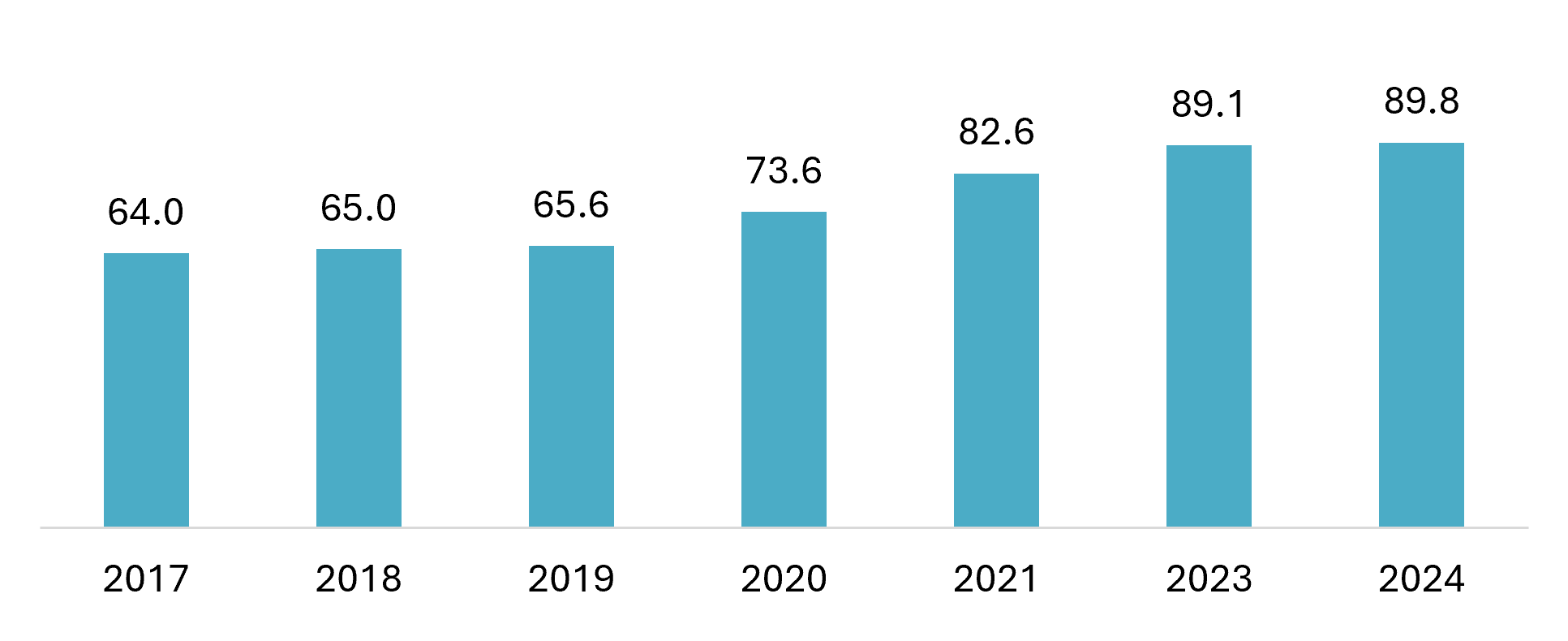
Source: Savills
Vietnam offers relatively low industrial land costs and benefits from its central location within ASEAN. In 2024, average prices are 133 USD/m² in the North and 189 USD/m² in the South. The price gap between North and South has narrowed somewhat, with Haiphong and Hai Duong seeing particularly strong price increases[2].
Since 2018, rental factories and warehouses have also been increasing[3]. In 2024, the floor area of rental factories was 10.3 million m² with an occupancy rate of 76%. Logistics and manufacturing warehouses totaled 7.7 million m² with an occupancy rate of 77%. Driven by robust expansion in manufacturing, rents and occupancy rates are trending upward.
Major Players
The industrial real estate market includes state-owned developers and foreign investment companies. Below are some main industrial park developers/operators.
| No | Company | Country | Established | Headquarters | Overview |
| 1 | Becamex IDC | Vietnam | 1976 | Binh Duong | Vietnam’s leading state-owned industrial developer, formerly a regional trading company. Developed numerous industrial parks (e.g., My Phuoc in Binh Duong Province) and co-founded VSIP |
| 2 | VSIP | Singapore | 1996 | Binh Duong | A joint venture where Becamex holds 49% and Singaporean capital (including Sembcorp) holds approximately 40%. Developed 11 large-scale industrial parks nationwide (including Binh Duong, Quang Ngai, Hai Phong, Bac Ninh, Hai Duong, and Nghe An) |
| 3 | Kinh Bac City Development (KBC) | Vietnam | 2002 | Bac Ninh | A private developer specializing in northern Vietnam. Key locations include Que Vo and Trang Due Industrial Parks (home to Samsung and LG factories) and Quang Chau Industrial Park (Bac Giang) |
| 4 | Viglacera (VGC) | Vietnam | 1974 | Hanoi | Operates over 12 industrial parks (approx. 4,000 hectares) including Bac Ninh, Thai Binh, Phu Tho, and Ha Nam. Samsung is a tenant |
| 5 | Amata | Thailand | 1994 | Dong Nai | A major industrial park developer in Thailand, operating three eco industrial parks: Amata City Bien Hoa (Dong Nai), Amata City Long Thanh (Dong Nai), Amata City Ha Long (Quang Ninh) |
| 6 | DEEP C | Belgium | 1997 | Hai Phong | Developing a large-scale industrial and port-linked cluster spanning Hai Phong and Quang Ninh |
| 7 | BW Industrial Development | Vietnam | 2018 | Ho Chi Minh City | A leading provider of factory and warehouse space in major provinces and cities (Hanoi, Hai Phong, Ho Chi Minh City, Dong Nai, etc.) |
| 8 | WHA | Thailand | 2017 | Nghe An | International standard industrial park in the North Central region. Commencing with Phase 1 of the Dong Nam Economic Zone (498 hectares) |
| 9 | GLP | Singapore | 2020 | Ho Chi Minh City | Specializing in modern warehouses around Hanoi and Ho Chi Minh City. A major logistics real estate developer operating through its own Vietnam development fund. |
| 10 | Core5 | Japan | 2022 | Hanoi | Providing complete Class A factories and warehouses. First project commenced in Haiphong in 2022, expanding nationwide |
Source: B&Company Analysis
Market Trends
By 2024, industrial and logistics real estate attracted significant attention from foreign investors, achieving the highest transaction volume across all real estate sectors. In northern industrial parks, over 400 hectares of land were added due to expanded electronics and electric vehicle production. Meanwhile, the southern region saw approximately 265 hectares (growth was moderate due to limited available properties)[4]. The rapid growth of logistics and e-commerce is also accelerating demand for warehouses and distribution centers. Cold storage and last-mile facilities grew at an annual rate of 25%[5] . E-commerce growth has created a shortage of modern warehouse space (approximately 500,000 m²). Responding to this shortage, many logistics parks are planned for construction in major port cities.
Another trend is the emergence of new industrial zones and models. While traditional manufacturing hubs remain in the south (e.g., Dong Nai, Binh Duong) and north (e.g., Bac Ninh, Hai Phong), investors are also focusing on Tier 2 provinces (e.g., Nghe An, Thai Binh, Dak Lak, Phu Tho). Land is inexpensive (industrial land in some central provinces costs 60-90 USD/m²)[6] , enabling the attraction of large-scale projects (e.g., Foxconn’s multi-billion dollar factory in Nghe An Province). Low land costs allow for rental yields of up to 12-15%.
Construction of Foxconn electronic components factory in Nghe An Industrial Park
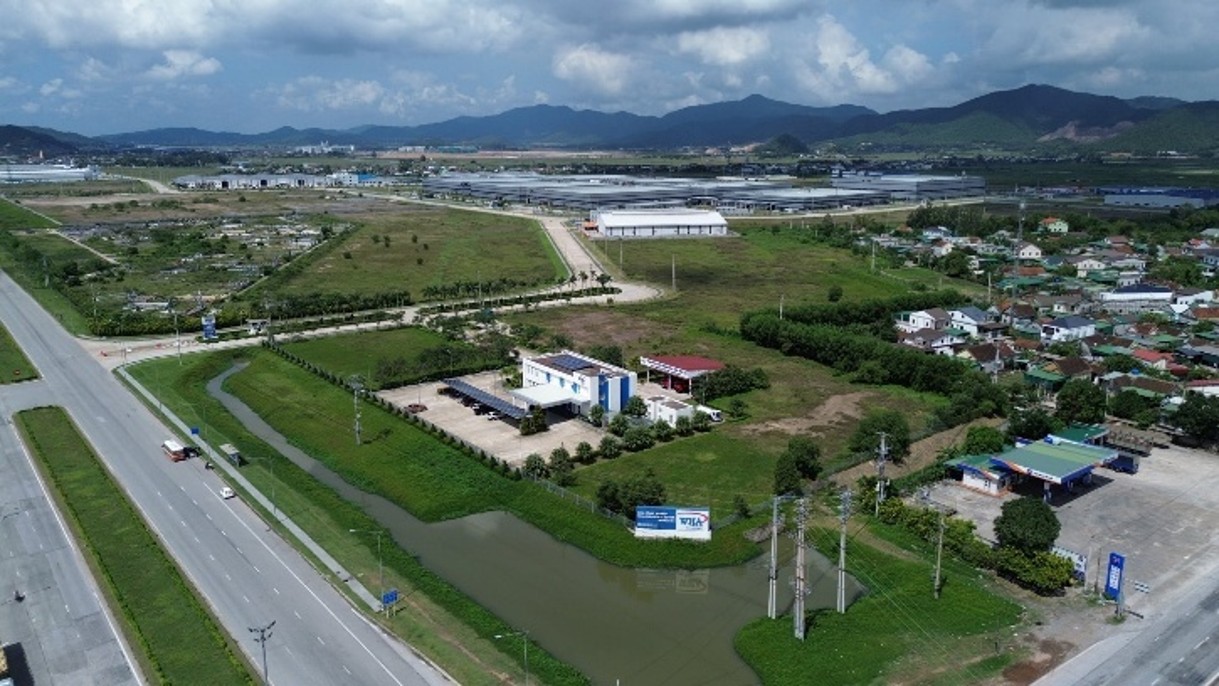
Source: Nhadautu
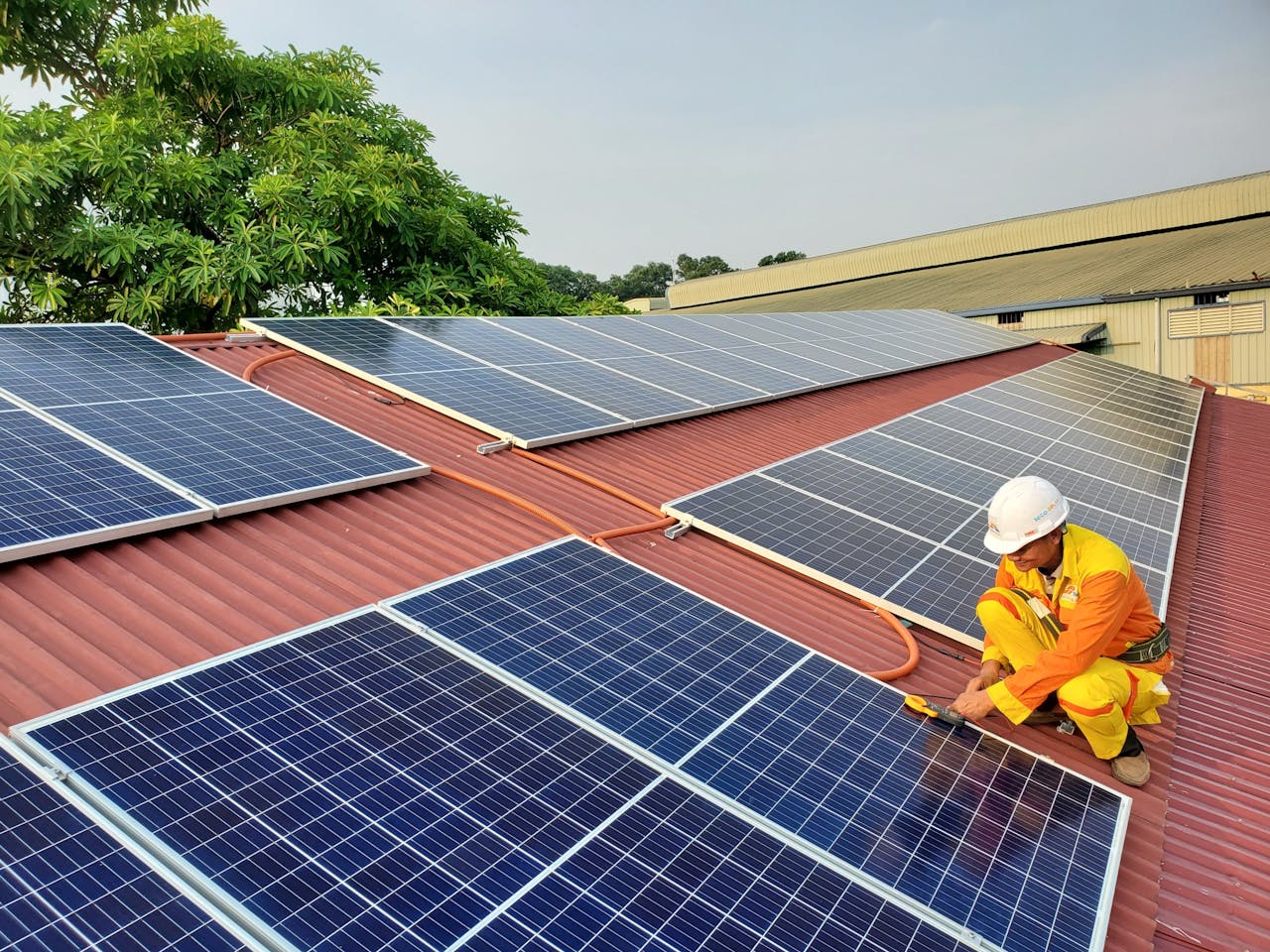
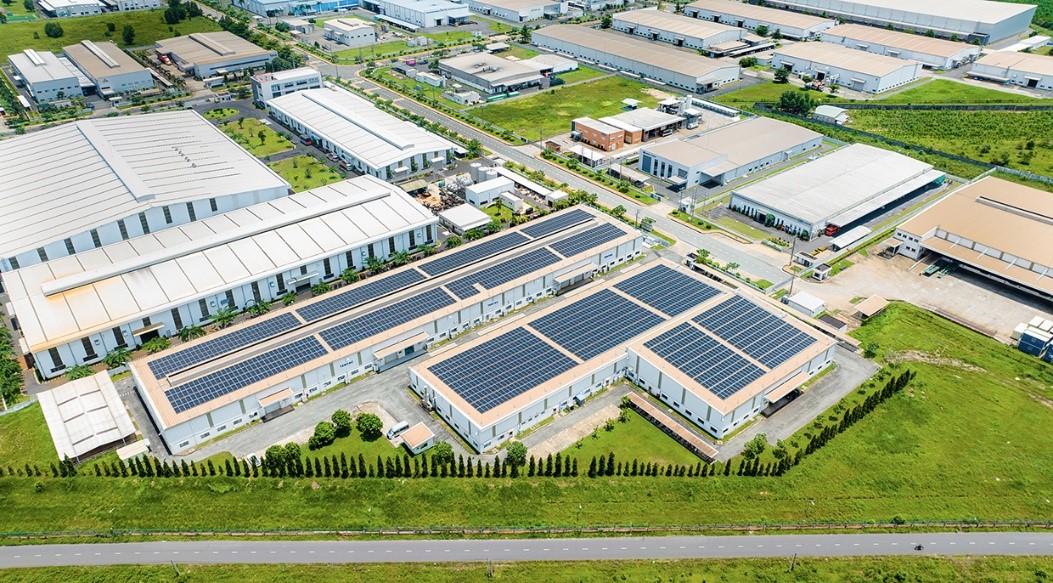
Developers are also modernizing industrial parks using technology. Next-generation industrial parks are equipped with worker housing, R&D centers, and smart infrastructure (IoT, 5G). The government is promoting green industrial development, aiming for 30% of industrial parks to meet environmentally friendly standards by 2030. Solar power generation, the use of recycled materials, and wastewater recycling within the complexes are being promoted. These trends are particularly evident in new industrial parks (e.g., the Korea-Vietnam Green Industrial Park in Hung Yen Province).
Supply will increase as more than 220 new industrial parks are planned by 2030 and existing parks are being expanded. However, demand is also expected to increase accordingly.
Read more
Where do Japanese firms concentrate in Vietnam’s Industrial Park?
* If you wish to quote any information from this article, please kindly cite the source along with the link to the original article to respect copyright.
| B&Company
The first Japanese company specializing in market research in Vietnam since 2008. We provide a wide range of services including industry reports, industry interviews, consumer surveys, business matching. Additionally, we have recently developed a database of over 1,000,000 companies in Vietnam, which can be used to search for partners and analyze the market. Please do not hesitate to contact us if you have any queries. info@b-company.jp + (84) 24 3978 5165 |
[1] Vietnam briefing (2025) <Access>
[2] Vietnam briefing (2025) <Access>
[3] Cushman & Wakefield (2024) <Access>
Related article









Log in / Register
SUBSCRIBE NEWSLETTER