

 English
  日本語
日本語  Tiếng Việt
  简体中文
简体中文  한국어
한국어 This report provides an updated overview of the presence and distribution of Japanese companies in industrial parks across Vietnam.
30Jul2025
Latest News & Report / Vietnam Briefing
Comments: No Comments.
This report provides an updated overview of the presence and distribution of Japanese companies in industrial parks across Vietnam. Despite recent challenges in the investment environment, Vietnam remains a key destination for Japanese foreign direct investment (FDI). Drawing on data from B&Company, this article highlights the concentration of Japanese enterprises within key regions and industrial parks.
Overview of Japanese companies in Vietnam
Despite the global disruptions caused by the COVID-19 pandemic, Japanese companies have continued to maintain and even expand their operations in Vietnam from 2020 through 2023. However, in 2024, Japanese FDI into Vietnam declined by over 48%, totaling approximately USD 3.5 billion. This decline is largely attributed to increased awareness among Japanese investors of certain limitations in Vietnam’s investment environment[1]. Nevertheless, Japan remains a major investor, ranking third in newly registered FDI capital in Vietnam in 2024, accounting for 9.2%, following Singapore (26.7%) and South Korea (18.5%).
Additionally, according to a survey by the Japan External Trade Organization (JETRO), the percentage of Japanese companies planning to expand operations in Vietnam increased from 47% to 57% between 2020 and 2023. This upward trend confirms Vietnam’s continued appeal as a manufacturing and investment hub for Japanese enterprises.
Percentage of Japanese companies planning to expand operations in Vietnam, 2010-2023
Unit: %
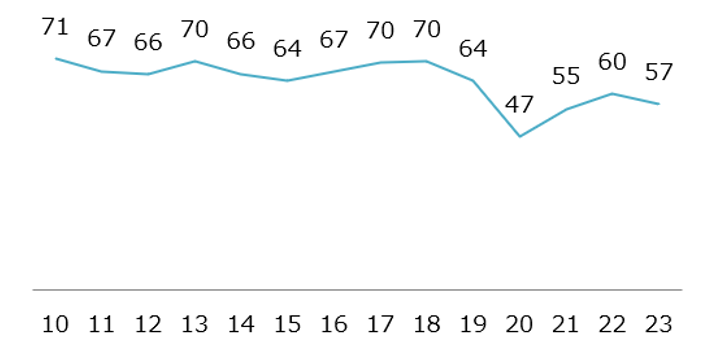
Source: Jetro
30% of Japanese companies are located in industrial parks
B&Company’s enterprise database reveals that by 2023, over 3,200 Japanese companies were operating in Vietnam, making up more than 15% of all FDI enterprises in the country. Notably, around 30% of these Japanese companies are located within industrial parks. Among Japanese companies situated in industrial parks, the majority are concentrated in:
– Southeast Vietnam (48%) – including Ho Chi Minh City, Dong Nai, and Tay Ninh
– Red River Delta (42%) – including Hanoi, Hai Phong, and Hung Yen
These regions offer strategic advantages such as modern infrastructure, proximity to seaports, and access to a skilled labor force—particularly attractive to high-tech manufacturers in electronics, automotive components, and precision engineering.
Japanese companies in the industrial park by region in 2023
100%= 1,069 companies

Source: B&Company enterprise database
Top 10 provinces with the highest concentration of Japanese companies in industrial parks in 2023
Unit: company
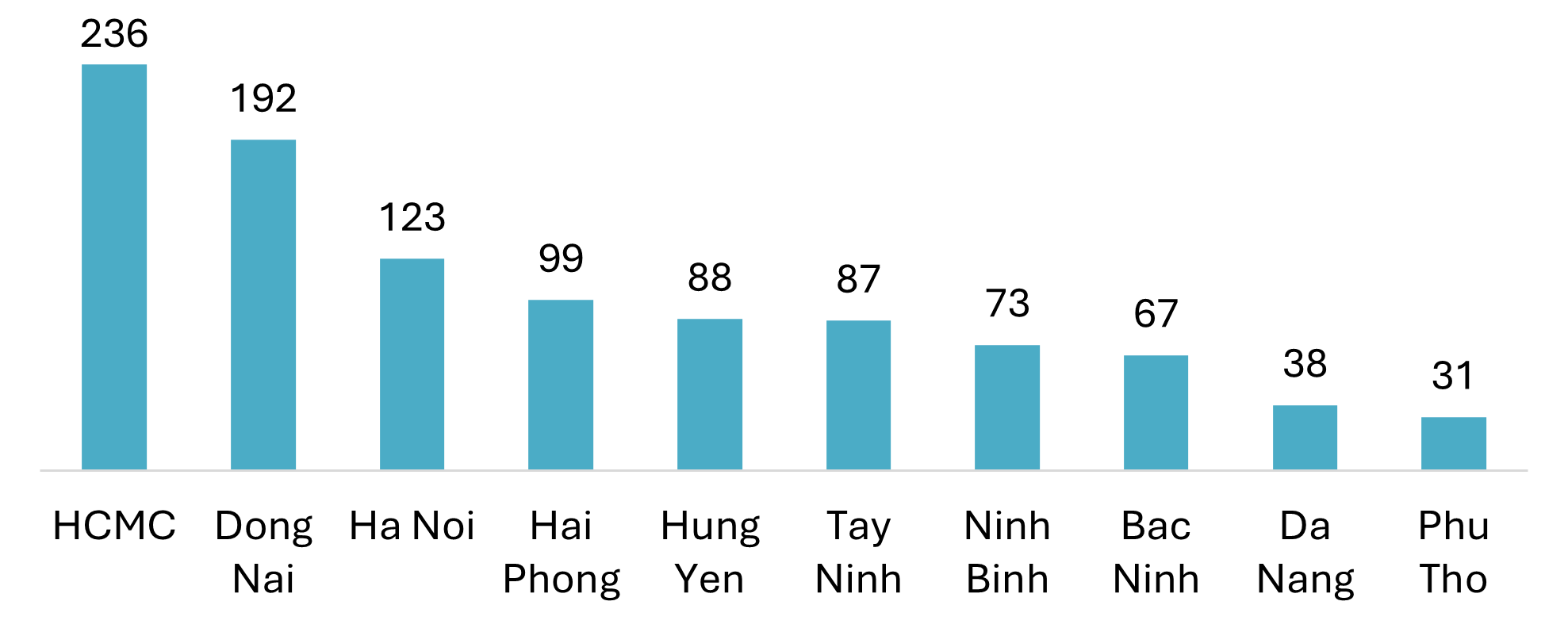
Source: B&Company enterprise database
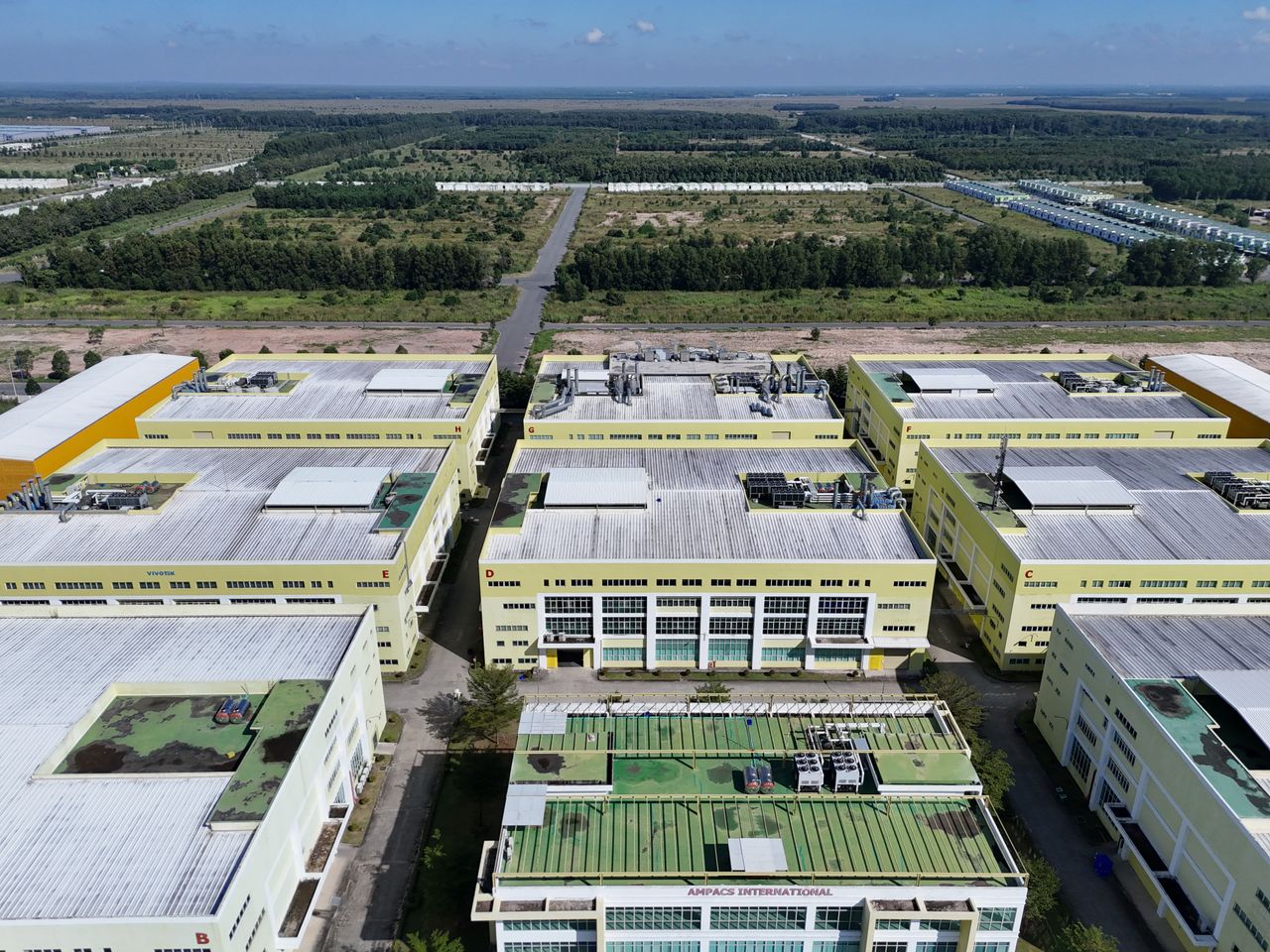
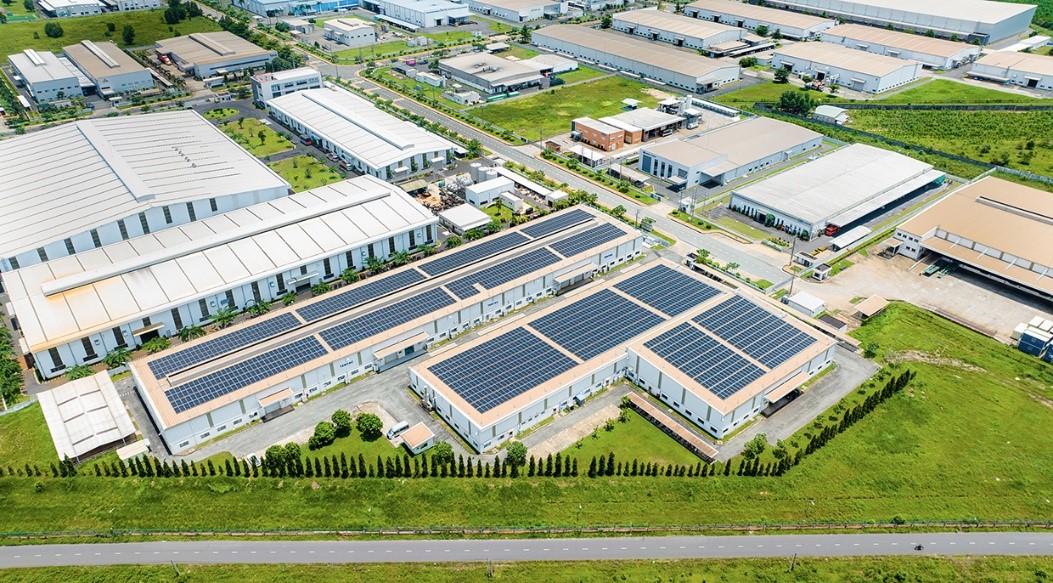
Additionally, Japanese companies often prioritize setting up their facilities in Japanese-invested industrial parks. These industrial parks offer ecosystem advantages and high standards for infrastructure and environmental compliance. Since the 1990s, numerous Japanese-invested industrial parks have been developed, especially in provinces like Hanoi, Hung Yen, and Ho Chi Minh City. Prominent Japanese corporations such as Canon, Panasonic have established major manufacturing bases in these industrial parks.
List of Popular Japanese Industrial Parks in Vietnam for Japanese companies
(for the full list of industrial parks, please contact B&Company)
| No | Industrial park name | Investor | Province | Number of Japanese companies | Name of major Japanese companies |
| 1 | Thang Long 1 | Japan | Ha Noi | 60 | Canon, Panasonic, etc |
| 2 | Thang Long 2 | Japan | Hung Yen | 56 | Hoya Glass Disk, Kyocera, etc |
| 3 | Long Duc | Japan | Dong Nai | 42 | Terumo, Yazaki Eds, etc |
| 4 | My Phuoc 3 | Vietnam | HCMC | 39 | Kraft Vina, Kubota, etc |
| 5 | Japan- Hai Phong | Japan | Hai Phong | 38 | Yazaki, Toyoda Gosei |
| … | … | … | … | … | … |
Source: B&Company enterprise database
Leverage B&Company industrial park data for business success
B&Company is the first Japanese company specializing in market research in Vietnam since 2008. With a database of over 1,000 Japanese companies across 170+ industrial parks in 23 provinces (post-provincial merger updates) in Vietnam, we offer a various kind of services from industrial park reports to business matching services and market entry consulting:
| Service | Description | Purpose |
| Industrial Park Reports | Customized reports analyzing the Japanese company landscape within selected industrial parks. | – Market overview understanding
– Competitive benchmarking – Strategic investment decision-making |
| Business Matching Services | We provide lists of Japanese companies in specific industrial parks or provinces based on client needs. Available data such as:
– Industrial Park name – Company name – Location – Number of employees – Financial situation – … We also facilitate online or on-site meetings with potential Japanese partners |
– Sale list expansion
– Supplier and Manufacturer partner search |
| Market Entry & Strategy Consulting | Advise and develop tailored entry strategies on:
– Industrial Park suitability assessment – Business planning – Legal support – Company registration |
– Develop winning strategies and thrive in the Vietnamese market |
Contact B&Company to gain market insights that unlock growth opportunities within the Japanese companies in industrial parks in Vietnam.
[1] https://vnexpress.net/doanh-nghiep-nhat-than-thu-tuc-o-viet-nam-phuc-tap-4841746.html
* If you wish to quote any information from this article, please kindly cite the source along with the link to the original article to respect copyright.
| B&Company
The first Japanese company specializing in market research in Vietnam since 2008. We provide a wide range of services including industry reports, industry interviews, consumer surveys, business matching. Additionally, we have recently developed a database of over 900,000 companies in Vietnam, which can be used to search for partners and analyze the market. Please do not hesitate to contact us if you have any queries. info@b-company.jp + (84) 28 3910 3913 |
Related article












Log in / Register
SUBSCRIBE NEWSLETTER