
 한국어
한국어  English
  日本語
日本語  Tiếng Việt
  简体中文
简体中文 
베트남의 섬유 및 의류 산업은 국가 수출 수익에 크게 기여하고 전국적으로 수백만 명의 근로자에게 일자리를 제공하는 핵심 경제 부문입니다. 세계 leading 의류 제조 및 수출국 중 하나인 베트남은 제품 품질과 생산 유연성 측면에서 강력한 평판을 구축했으며, 다수의 글로벌 브랜드를 위한 이상적인 생산 거점으로 자리 잡았습니다.
베트남 섬유 및의류 제품 생산 현황
베트남은 세계 주요 패션 브랜드 다수의 핵심 제조 거점입니다. 글로벌 공급망에서 전략적 위치를 차지하고 있는 베트남의 섬유 및 의류 산업에는 주요 기업들의 상당한 투자가 유입되었습니다. 호찌민시는 베트남 최대 항구가 위치한 곳으로 알려져 있으며, 남부 지역은 의류 공장이 밀집한 주요 지역입니다. 수십 년 동안 섬유 및 의류 산업의 허브로 여겨져 온 이 지역은 숙련되고 풍부한 노동력으로 잘 알려져 있습니다. NIKE, ADIDAS, UNIQLO와 같은 브랜드는 베트남을 핵심 생산 거점으로 선택했습니다.
베트남에서 제조되는 브랜드의 예시
| 브랜드 | 활동 (2024년까지) | 주요제품 |
| 나이키 | – 주로 호찌민에 집중된 155개 파트너 공장
– 베트남은 NIKE 전체 생산량의 28%를 차지하며, NIKE 공급업체 중 가장 큰 비중을 차지한다 |
– 신발류
– 의류 – 액세서리 및 스포츠 장비 |
| 아디다스 | – 주로 호찌민시, 동나이 및 빈즈엉에 위치한 51개 파트너 공장.
– 베트남은 전체 신발 생산량의 38%와 전체 의류 생산량의 20%를 차지한다. |
– 신발류
– 의류 – 액세서리 및 스포츠 장비 |
| 유니클로 | – Uniqlo의 모기업인 Fast Retailing은 베트남의 61개 의류 공장과 협력하고 있다
– 베트남은 중국에 이어 Uniqlo의 두 번째로 큰 생산 거점이다. |
- 의류
|
출처: B&Company 편집
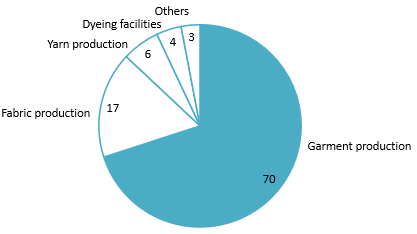
에 따르면 Vitas, 2023년 베트남의 섬유·의류 산업은 약 7,000개의 기업으로 구성되었다. 특히 이 중 80%가 중소기업(SME)이며, 외국인직접투자(FDI) 기업은 10%를 조금 넘는 수준에 불과하다. 이 산업은 300만 명의 근로자를 고용하고 있으며, 생산능력의 70%가 제조에 할당되어 있다. Vitas 통계 에 따르면 3,800개가 넘는 섬유 공장 중 70%가 의류 생산에 종사하는 반면, 방적사를 생산하는 공장은 6%, 원단을 생산하는 공장은 17%, 염색 시설은 4%에 불과합니다.
베트남의 섬유 및 의류 공장 업데이트 기준 2023
100%= 약 3,800개 공장
출처: Vn경제
섬유 및 의류 수출 현황의류 제품 베트남에서
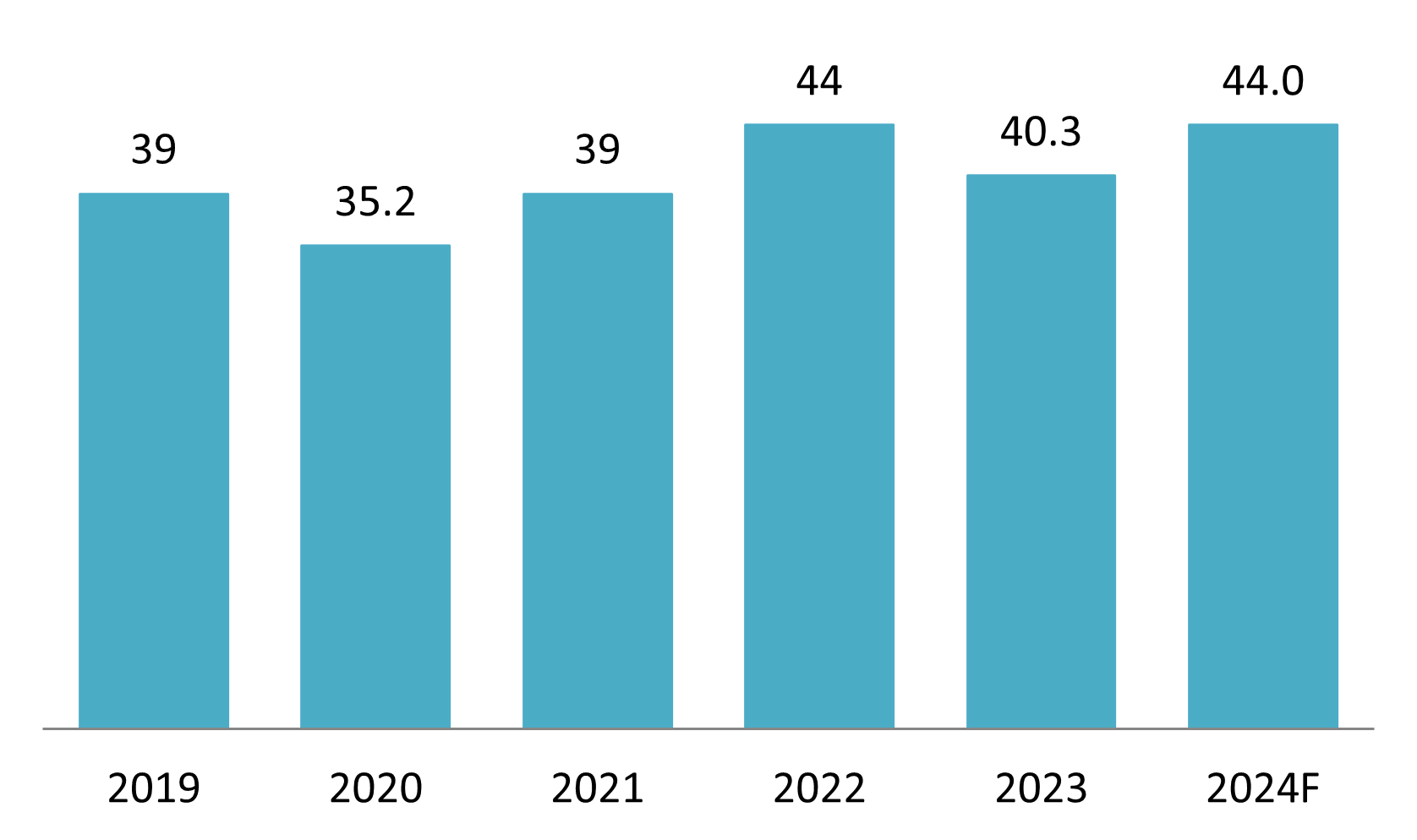
베트남은 섬유 및 의류 산업의 주요 제조 허브로서 섬유 및 의류 수출 분야의 글로벌 선도국으로 부상했습니다. 특히 이 산업은 코로나19 팬데믹 이후 강력하게 회복하며 놀라운 회복력을 보여주었습니다. 베트남 섬유·의류협회(Vitas)와 산업무역부에 따르면, 2023년 수출액은 403억 달러로 추정되며, 이는 전체 수출의 약 12.5%액에 해당하고, 2024년 말까지 440억 US$에 이를 것으로 전망되어 이 중요한 부문의 상당한 성장 잠재력을 보여줍니다.
Export value of Vietnam textiles and garments from 2019 – 2024F
출처: 비타스
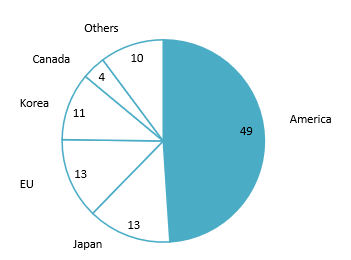
에 따르면 Tradeinmex, 베트남은 2023년 중국과 방글라데시에 이어 세계 3위의 의류 수출국이다. 베트남에서 생산된 의류는 180개 이상의 국가와 지역으로 판매된다. 베트남은 섬유 및 의류 제품의 대부분을 미국으로 수출하며, 그 비중은 거의 50%에 달한다. 이어 일본이 약 13%를 차지하고 EU가 뒤를 잇는다. 이러한 시장은 글로벌 섬유 무역에서 베트남이 강력한 입지를 확보하고 있음을 보여준다. 이들 지역의 높은 수요는 베트남 섬유·의류 산업의 경쟁력과 품질을 뒷받침한다.
Main export market of Vietnam textiles and garments in 2023
100%= 403억 달러
출처: 스타티스타
베트남 섬유 및 의류 제조의 장점과 과제
장점
베트남 섬유·의류 산업의 가장 큰 강점은 유연성과 민첩성에 있다. 베트남은 기본 의류부터 고급 의류까지 광범위한 스타일의 의류를 디자인하고 제조할 수 있는 역량을 보유하고 있어 다양한 고객 수요에 대응할 수 있다. 주로 티셔츠와 청바지 같은 기본 의류에 집중하는 방글라데시와 달리, 베트남은 고도의 장인정신과 기술 전문성이 요구되는 재킷, 스포츠웨어, 수영복 및 맞춤형 정장 등 고부가가치 의류 생산에 강점을 보인다.
두 번째 강점은 시장 출시 속도이다. 베트남은 광범위한 항만 시스템을 보유하고 있어 이 기준에서 높은 평가를 받고 있다. 또한 다수의 자유무역협정(FTA)에 참여하면서 베트남의 섬유·의류 제품이 다양한 시장으로 수출되는 데 기여했다. 이러한 협정의 주요 수혜 분야 중 하나는 환태평양경제동반자협정(CPTPP) 체제하의 섬유·의류 부문이다. 이는 20%를 상회하는 강한 성장세를 보인 주요 수출 산업이다 50%.
에 따르면 베트남 섬유의류협회(VITAS) 회장 Vu Duc Giang에 따르면, 2024년 첫 8개월 동안 전 세계 섬유 및 의류 수출액은 약 320억 달러에 달했으며, CPTPP 시장이 약 16%를 차지했습니다. CPTPP 발효 이후 베트남의 멕시코 섬유 및 의류 수출은 크게 증가했습니다. 2024년 첫 7개월 동안 멕시코 수출액은 1억 1,906만 달러로 사상 최고치를 기록했으며, 이는 CPTPP 발효 이전인 2018년 첫 7개월의 5,422만 달러 대비 119.58% 증가한 수치이고, CPTPP 이행 첫해인 2019년 첫 7개월의 6,947만 달러 대비 71.38% 증가한 수치입니다. 베트남 산업은 EVFTA(유럽연합-베트남 자유무역협정)와 RCEP(역내포괄적경제동반자협정) 등의 FTA에서도 혜택을 받고 있습니다.
도전 과제
베트남의 섬유·의류 산업은 과거 저비용 노동력과 숙련된 인력을 활용하여 고도의 봉제 기술이 필요한 정교한 제품을 생산할 수 있었다. 이러한 강점은 지난 20년 동안 다수의 CMT(재단, 봉제, 마감) 주문을 유치하는 데 기여했으며, Vinatex는 상당한 성과를 거두었다. 그러나 방글라데시, 인도네시아, 인도 및 AGOA 국가와 같은 다른 국가들이 이제 더 우수한 소싱 비용을 앞세워 부상하고 있어, 이러한 강점은 장기적으로 지속 가능하지 않음을 보여준다.
베트남은 친환경 생산 관행의 도입이 제한적이어서 섬유 수출에 어려움을 겪고 있습니다. 많은 기업이 국제 환경 및 사회적 기준을 충족하지 못하면서 시장 접근이 제한되고 기회를 상실하고 있습니다. 베트남의 섬유 산업은 이미 방글라데시에 일부 주문을 빼앗겼습니다, 친환경 공급망 관행을 빠르게 도입한 국가이다. 방글라데시는 친환경 인프라를 선제적으로 관리하고 투자해 왔으며, 2024년 8월 기준 약 230개의 LEED 인증 공장을 보유하고 있다. 이 중 40%는 미국 그린빌딩협의회가 수립한 친환경 생산의 최고 기준인 LEED 플래티넘을 획득했다. 또한 방글라데시의 섬유 공장 500곳이 추가로 LEED 인증 평가를 기다리고 있다. 반면 베트남의 LEED 인증 프로젝트 중 섬유 부문에 해당하는 비중은 10%에 불과해, 산업 전반의 지속가능한 관행 도입 속도에서 베트남이 뒤처져 있음을 보여준다.
결론
베트남의 섬유·의류 산업은 전략적 입지, 숙련된 인력, 주요 글로벌 브랜드의 강력한 진출을 기반으로 글로벌 공급망의 핵심 주체로 자리매김했다. 산업의 유연성과 시장 출시 속도, 다수의 자유무역협정에 대한 접근성은 수출 역량을 더욱 강화했다. 그러나 글로벌 시장에서 지속가능하고 친환경적인 생산 관행에 대한 요구가 높아지면서, 특히 이러한 관행의 도입과 관련해 상당한 과제에 직면해 있다. 이에 따라 베트남 정부는 국제 지속가능성 기준에 부합하도록 섬유·의류 산업의 친환경 전환을 적극적으로 촉진하고 지원하고 있다.
| B&Company, Inc.
2008년부터 베트남에서 시장 조사에 전문화된 최초의 일본 회사입니다. 우리는 산업 보고서, 산업 인터뷰, 소비자 조사, 비즈니스 매칭 등 다양한 서비스를 제공합니다. 또한 최근에는 베트남에 있는 90만 개 이상의 회사가 포함된 데이터베이스를 개발하여 파트너를 검색하고 시장을 분석하는 데 사용할 수 있습니다. 문의 사항이 있으시면 언제든지 저희에게 연락해 주십시오. info@b-company.jp + (84) 28 3910 3913 |
다른 기사도 읽어보세요