2026年9月7日
ハイライトコンテンツ / ハイライトコンテンツJP / ハイライトコンテンツvi / 業界レビュー / 最新ニュースとレポート
コメント: コメントはまだありません.
Vietnam’s M&A market is entering a period of structural change, with the number of deals declining while the average transaction size is increasing. In the first half of 2026, major transactions involving capital restructuring led by domestic investors, as well as large deals in the travel and real estate sectors, highlighted the market’s growing sophistication. Based on the latest data, this article provides practical information for Japanese companies considering market entry or M&A in Vietnam, covering market trends, transaction structure options, due diligence practices, and notable case studies.
Latest Trends in Vietnam’s M&A Market
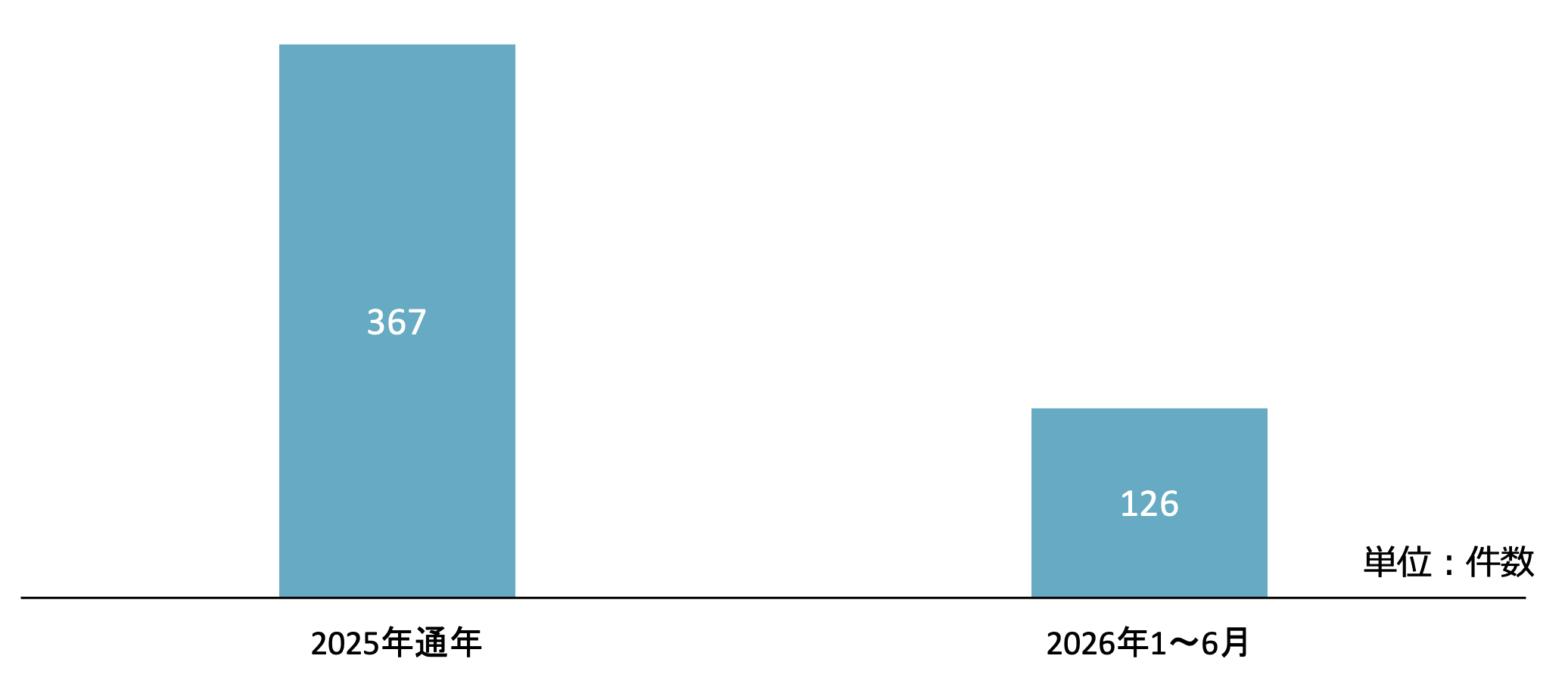
According to Grant Thornton Vietnam’s monthly monitoring, 126 M&A deals were announced in Vietnam between January and June 2026. Of these, transaction values were disclosed or could be estimated for 89 deals, with a combined value of approximately USD 2.43-2.50 billion. Compared with the same period of the previous year, the number of deals decreased by approximately 20%, while total transaction value increased by around 14%. This indicates a shift toward fewer but larger transactions. The average deal size reached approximately USD 27-28 million.
By quarter, the majority of transaction value in the first half of the year was concentrated in the second quarter. May and June alone accounted for approximately 71% of the total value recorded in the first half of 2026. In June, 33 deals were announced, of which values were disclosed or could be estimated for 29 transactions, totaling approximately USD 1 billion.
In terms of deal count, real estate ranked first with six transactions, followed by consumer goods with five. Technology, construction and engineering, finance, and utilities each recorded three deals. By transaction value, real estate, at approximately USD 322.3 million, and travel and hospitality, at approximately USD 313.5 million, stood out. Together, these two sectors accounted for approximately 63% of the total transaction value in June.
These developments are also consistent with the trend seen throughout 2025. According to Grant Thornton, Vietnam recorded 367 M&A transactions in 2025, with a disclosed total value of approximately USD 8.7 billion, up 26% year on year. Domestic investors and regional strategic investors played the leading role, with domestic investors alone accounting for nearly half of the total transaction value.
Several supply-side factors are contributing to this trend, including generational succession pressures at founder-led businesses, exit requirements for private equity funds that invested in 2019-2020, and capital divestment programs involving state-owned enterprises. These factors are expected to create an even broader range of transaction opportunities in the coming years.
Vietnam M&A Market Size Trends: Number and Value of Deals
| 期間 | Announced deals | Deals with disclosed/estimable value | Total transaction value | YoY change: deal count | YoY change: value |
| Jan-Jun 2026 | 126 | 89 | Approx. USD 2.43-2.50 billion | Approx. -20% | Approx. +14% |
| June 2026 | 33 | 29 | Approx. USD 1 billion | – | – |
| Full-year 2025 | 367 | – | Approx. USD 8.7 billion | – | +26% |

出典:B&Company
Benefits and Key Considerations of M&A in Vietnam
Key Benefits of M&A
The greatest advantage of using M&A to enter the Vietnamese market is speed. By acquiring an existing company, an investor can take over its local licenses and permits, customer base, distribution network, and workforce, significantly shortening the time required to launch operations compared with a greenfield investment. In addition, acquiring a company with an established operating history may, in some cases, help avoid the complexity of obtaining new licenses in regulated sectors.
Disadvantages and Risks Specific to M&A
At the same time, investors need to be aware of the risk of inheriting off-balance-sheet liabilities, unpaid taxes, and unresolved labor issues held by the target company. Accounting practices in Vietnam differ from those in Japan in many respects, and financial statements alone may not always provide a complete picture of the company’s actual condition.
Post-acquisition organizational integration can also require more time and cost than initially expected. It is therefore advisable to plan on the assumption that integration may proceed more gradually than originally anticipated.
Differences Between Share Deals, Asset Deals, and Joint Ventures
Characteristics of a Share Deal
A share deal involves acquiring shares in the target company and taking over its management rights together with its existing contracts, licenses, permits, and employees. While the procedure is relatively straightforward, the buyer also assumes the risk of inheriting the company’s liabilities, including off-balance-sheet obligations.
Characteristics of an Asset Deal
An asset deal allows the buyer to selectively acquire only the assets or business operations it needs, making it easier to limit the risk of assuming liabilities. However, licenses, permits, and contractual relationships generally need to be obtained or concluded again individually, which tends to increase the administrative burden.
Characteristics of a Joint Venture
A joint venture is a structure in which a business is operated jointly with a local partner. One advantage is that it allows the investor to make use of the local partner’s knowledge of business practices and networks. On the other hand, the speed of decision-making and alignment on management policies can vary significantly depending on the choice of partner.
Typical Process Leading Up to an M&A Transaction
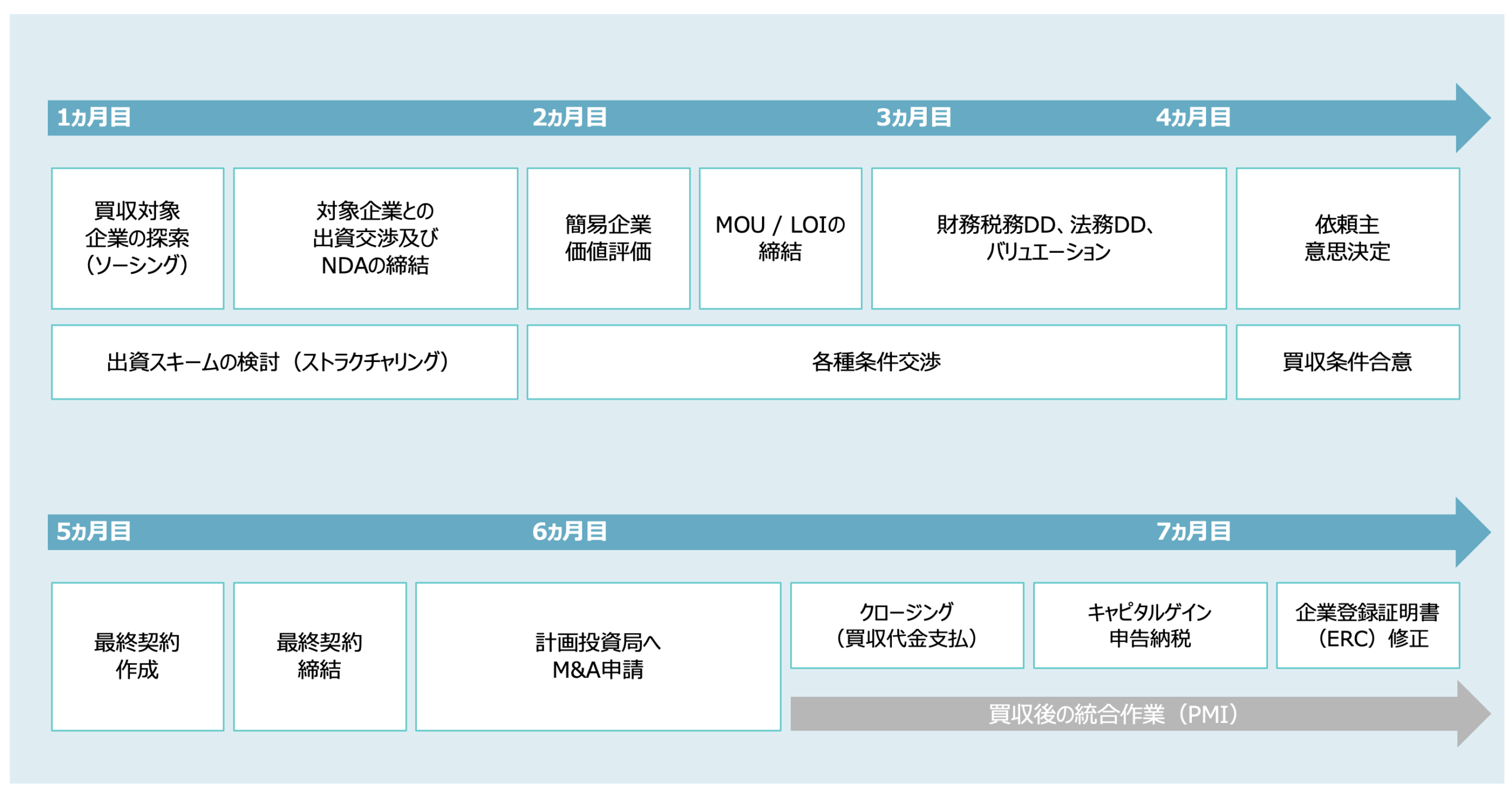
The M&A process in Vietnam generally begins with the execution of an LOI (Letter of Intent), followed by due diligence, execution of an SPA (Share Purchase Agreement) or asset transfer agreement, regulatory filings and approvals, and finally closing.
The time required for the regulatory approval phase can vary considerably depending on the industry, foreign ownership ratio, and size of the investment, making it one of the main causes of schedule delays. In practice, it is therefore important to build a reasonable amount of flexibility into the expected transaction schedule.
Typical Vietnam M&A Process

出典:B&Company
Key Considerations Regarding Foreign Ownership Restrictions and Permits
In Vietnam, foreign ownership limits apply to certain industries, so the starting point is to determine which industry classification applies to the target business.
In many cases, an acquisition of shares or a capital increase also requires amendments to the Investment Registration Certificate (IRC) and Enterprise Registration Certificate (ERC). The practical time required for these procedures may vary depending on the locality and the administrative practices of the relevant authorities. It is therefore advisable to consult local experts at an early stage.
Notable M&A Cases
One notable example from the first half of 2026 is Vinpearl in the travel and hospitality sector. The company successfully raised USD 255 million through the issuance of convertible preferred shares subscribed by SeaTown Private Credit Fund III, the Oman Investment Authority, and the Vietnam-Oman Investment Fund. This transaction brought in capital from foreign investors without a transfer of management control and can be regarded as an application of the share-based transaction structure described above.
In the real estate sector, Phat Dat announced plans to contribute an additional approximately USD 105 million in order to maintain a 35% ownership interest in a related project. In addition, Vingroup founder Pham Nhat Vuong increased his ownership interest in LPBank in the financial sector, contributing to the increase in transaction value in the sector.
A representative example of capital restructuring among domestic companies is the divestment process involving Vinaconex. In May 2026, An Quy Hung Holding acquired a 23% stake in Vinaconex subsidiary Viwaseen, reducing Vinaconex’s ownership from 86.01% to 25%.
In June, BNE and Xuan Cau Holdings subsequently increased their respective stakes to 24.47% and 14.79%. This series of transactions represents a typical example of M&A led by domestic investors, involving group restructuring through the gradual disposal of assets and shares.
Key Due Diligence Practices and Common Pitfalls
Key Items to Review in Legal and Tax Due Diligence
Legal DD should verify the validity of licenses and permits held by the target company, the existence of any disputes or litigation, and the continuity of key contracts.
Tax DD should primarily examine whether past tax filings are consistent with the company’s actual transactions and whether there are any unpaid tax liabilities.
Pitfalls Specific to Vietnam
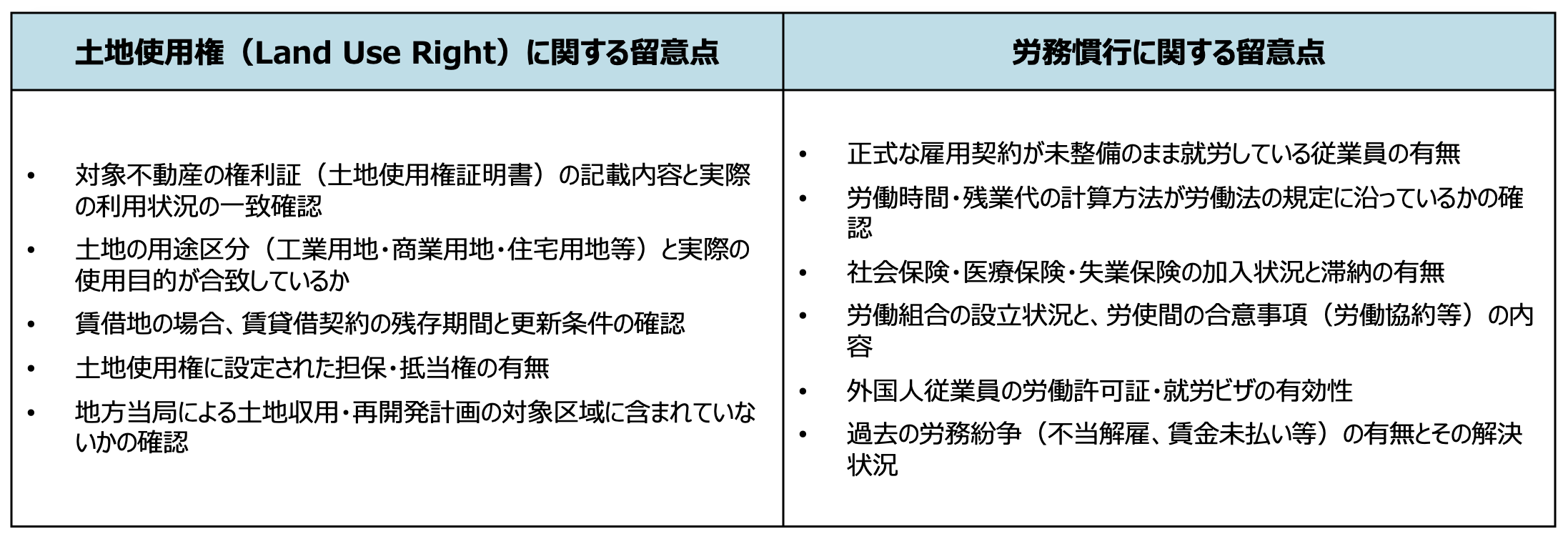
In Vietnam, rights relating to Land Use Rights can be complex. It is therefore essential to confirm whether the information stated in the title documents for the relevant property is consistent with its actual use.
In terms of labor practices, there are also cases where employees work without properly executed formal employment contracts. Labor DD should therefore not be treated lightly and should be conducted carefully.
Pitfalls Specific to Vietnam

出典:B&Company
Latest M&A Trends by Sector
In the first quarter of 2026, from January to March, 51 deals were announced, down 36% year on year. However, total transaction value increased by 24% to USD 659 million, again confirming the trend of “fewer deals, larger transaction sizes.”
By number of deals, industrial manufacturing ranked first with six transactions. By value, real estate, energy, and industrial manufacturing each accounted for more than 30% of the total transaction value.
In the travel and hospitality sector during the same quarter, Singapore-based SC Capital Partners acquired Serenity Holding, the operator of Fusion Hotel Group. The transaction value was not disclosed.
In April, 18 deals were announced. Transaction values were disclosed for 11 of these deals, totaling approximately USD 69.9 million. However, Grant Thornton estimates that the actual market size may have exceeded USD 300 million when undisclosed strategic transactions are included.
By number of deals, construction and engineering and consumer goods ranked first, with three transactions each, while energy, logistics and infrastructure, and healthcare were also active, with two transactions each.
Focusing specifically on the real estate sector, JLL Vietnam reported that the total disclosed value of real estate M&A and project transfer transactions in the first half of 2026 reached approximately USD 250.7 million.
One notable transaction involved DIC Corp’s transfer of four land parcels within the large-scale Dai Phuoc urban development project in Dong Nai Province. Three parcels covering approximately 30.7 hectares were transferred to TNT Phu Hoa for approximately USD 97 million, while a 14.3-hectare parcel was transferred to a company affiliated with Everland Group.
During the same period, registered FDI into Vietnam reached USD 34.65 billion, up 61% year on year. Disbursed FDI reached USD 11.72 billion, the highest first-half level recorded in the past five years.
JLL notes that, although capital inflows into the real estate sector as a whole remain strong, the M&A market itself is entering a phase in which investors are becoming increasingly selective about individual transactions.
Outlook and Implications for Market Entry
The series of data points indicates a transition toward a more selective market in which the number of transactions is declining while deal sizes are increasing.
As supply-side factors continue to build, including strategic capital restructuring by domestic investors, generational succession among founder-led companies, and capital divestment programs involving state-owned enterprises, strong FDI inflows are also supporting demand. Vietnam’s M&A market is therefore expected to continue expanding in depth over the medium to long term.
For Japanese companies, considering local regulatory developments, industry practices, and recent transaction valuations from the initial target-selection stage can help ensure smoother business operations after a transaction is completed.
Careful information gathering during the early stages, including market research and screening of potential targets, will provide an important foundation for successful M&A.
Frequently Asked Questions About M&A in Vietnam
Q1. What is the typical cost of an M&A transaction in Vietnam?
Costs vary significantly depending on the size and complexity of the transaction. The main components generally include DD costs, legal and tax advisory fees, and various fees payable to the relevant authorities.
Q2. How long does the process take?
From execution of the LOI through closing, the process generally takes anywhere from several months to around one year. The timing of regulatory approvals can have a significant impact on the overall schedule.
Q3. What should investors consider when acquiring a minority stake?
Because the investor’s involvement in management is limited, a key practical consideration is the extent to which rights such as access to information and consent rights over important matters can be secured under the shareholders’ agreement.
詳細を読む
*この記事の情報を引用したい場合は、著作権を尊重するために、元の記事へのリンクとともに出典を明記してください。.
| B&Company
2008年からベトナムで市場調査を専門とする最初の日本企業です。業界レポート、業界インタビュー、消費者調査、ビジネスマッチングなど、幅広いサービスを提供しています。さらに、最近ではベトナムの100万社以上の企業のデータベースを開発し、パートナーの検索や市場分析に利用できます。. ご不明な点がございましたら、お気軽にお問い合わせください。. info@b-company.jp + (84) 24 3978 5165 |