

 English
 日本語
 Tiếng Việt
 简体中文
 한국어
This examines how companies can complement Vietnam market research with interviews, partner search, factory visits, and other field-based activities,

30Oct2026
Latest News & Report
Comments: No Comments.
Abstract
Japanese and other foreign companies can now access information on Vietnam more easily through AI, online sources, and market research reports. However, important business decisions may still carry risks when they rely mainly on indirect information without sufficient exposure to actual market conditions. Understanding customers, suppliers, partners, and local business practices often requires direct engagement in the market. This article examines how companies can complement Vietnam market research with interviews, partner search, factory visits, business matching, and other field-based activities, and how B&Company supports this process from market understanding to practical business action.
As Vietnam Attracts More Investment, Market Understanding Becomes More Important
Vietnam continues to attract foreign investment as both a growing domestic market and an important production and business base in Asia. In the first nine months of 2026, total registered foreign investment reached USD 50.36 billion, up 76.4% year-on-year, while disbursed FDI reached USD 21.07 billion, increasing by 12.1% and marking the highest nine-month level in the past five years1.
Japanese companies also continue to show strong interest in expanding their operations in Vietnam. According to JETRO’s FY2025 survey, 56.9% of Japanese companies in Vietnam planned to expand their business over the next one to two years, slightly higher than 56.1% in the previous survey. Vietnam recorded the highest share of companies planning expansion among ASEAN countries for the second consecutive year.
Share of Japanese Companies in Vietnam Planning Business Expansion, 2016 – 2025
Unit: % of surveyed companies
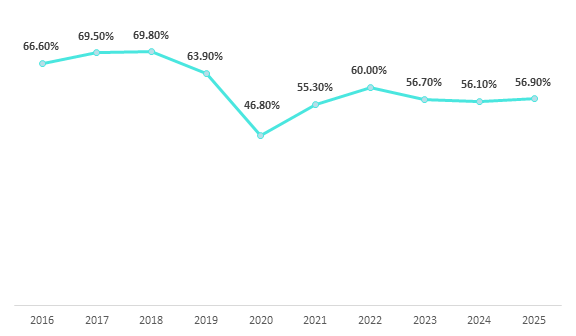
Source: JETRO, Survey on Business Conditions of Japanese Companies Operating Overseas
The continued intention to expand also changes the type of information companies need. Once a company moves from assessing whether Vietnam is an attractive market to deciding how to expand, general information on market size, growth, and competitors becomes only the starting point. Companies need more specific information on potential customers, suppliers, distributors, and the actual conditions required to develop business relationships in the local market.
In JETRO’s 2024 survey of Japanese manufacturers in Vietnam, 60.9% reported difficulty finding local suppliers that met required quality and technical capabilities, while 55.0% cited the absence of suppliers for necessary raw materials. In addition, 20.9% reported difficulties collecting information on potential suppliers, and 9.7% pointed to a lack of opportunities such as exhibitions and business-matching events.
Challenges in Local Procurement for Japanese Manufacturers in Vietnam, 2024
Manufacturing companies only; multiple responses allowed; n = 373
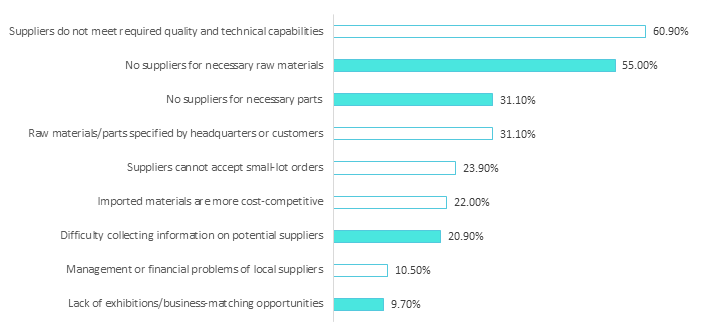
Source: JETRO, 2024 Survey on Business Conditions of Japanese Companies Operating Overseas
A company database or industry report may identify potential suppliers or partners, but it cannot fully determine whether they have the required capabilities, are interested in cooperation, or can meet specific commercial and technical requirements. For foreign companies, deeper market understanding therefore often requires combining conventional Vietnam market research with direct engagement, interviews, partner assessment, and on – site validation.
Turning Market Information into Practical Business Insights
Market research provides an initial understanding of Vietnam’s market size, competitive landscape, regulations, and potential opportunities. However, translating this information into business decisions requires a broader process. Companies need to validate their initial findings through direct market engagement, use the insights gained to refine their business strategies, and maintain communication with relevant stakeholders to support implementation.
From Market Research to Business Implementation

Source: B&Company’s analysis
Direct market engagement can involve different activities depending on a company’s objectives and the information that needs to be verified. The following table outlines common approaches, the insights they provide, and how they can support business decisions at different stages of market development.
Practical Activities to Complement Vietnam Market Research
| Activity | Information gained | Suitable business stage | Business implication |
| Customer and expert interviews | Customer needs, purchasing criteria, decision-making processes, market practices, competitor perceptions, and barriers to adoption | Market validation, product launch preparation, pricing, positioning, or early market-entry assessment | Helps companies verify assumptions and refine target segments, value propositions, and go – to – market decisions |
| Partner and supplier search | Business scope, capabilities, customer base, geographic coverage, scale, and willingness to cooperate | Distributor search, supplier sourcing, customer development, or partnership exploration | Helps companies identify counterparts that fit specific commercial, technical, and strategic requirements |
| Factory and site visits | Production facilities, equipment, capacity, quality-control practices, management systems, and operating conditions | Supplier evaluation, sourcing decisions, or preparation for deeper cooperation | Helps verify whether potential partners can meet operational, technical, and quality requirements |
| Business matching and local coordination | Partner interest, commercial expectations, decision makers, cooperation conditions, communication issues, and next steps | Direct partner engagement, negotiation, and market-entry implementation | Helps test commercial feasibility, clarify cooperation conditions, and move potential relationships toward concrete action |
Source: B&Company analysis
The appropriate combination of these activities depends on the business decision being made. A company at an early exploration stage may require mainly market research and interviews, while a company preparing to source locally or establish partnerships may need supplier screening, site visits, and direct business matching.
Successful Examples of Direct Market Engagement in Vietnam
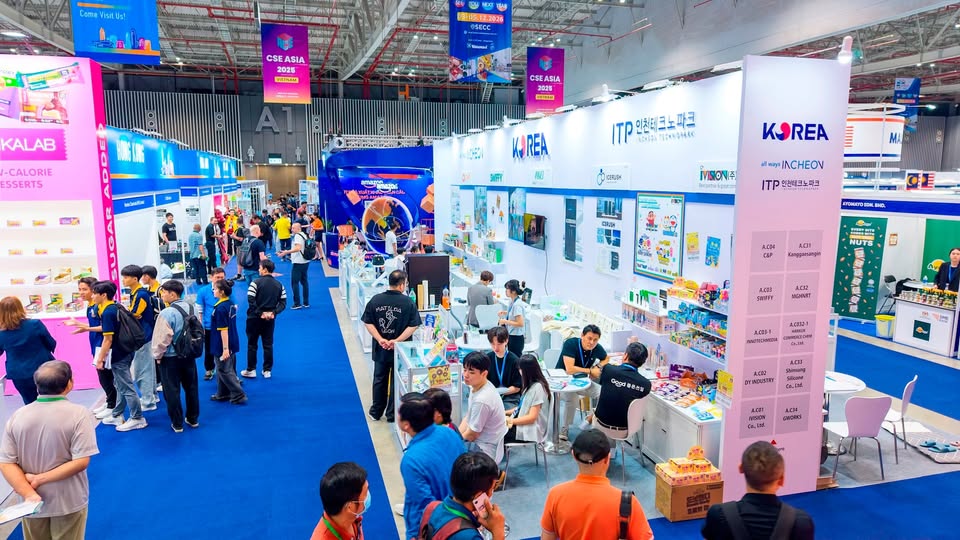
Recent activities involving Japanese companies in Vietnam show how direct market engagement can provide information that is difficult to obtain through secondary research alone. Depending on the business objective, companies can use supplier visits, exhibitions, and business matching not only to identify potential opportunities, but also to assess capabilities, test market response, and establish direct relationships with local companies.
Recent Examples of Direct Market Engagement by Japanese Companies in Vietnam
| Field-based activity | Recent example in Vietnam | Practical Insight | Implication |
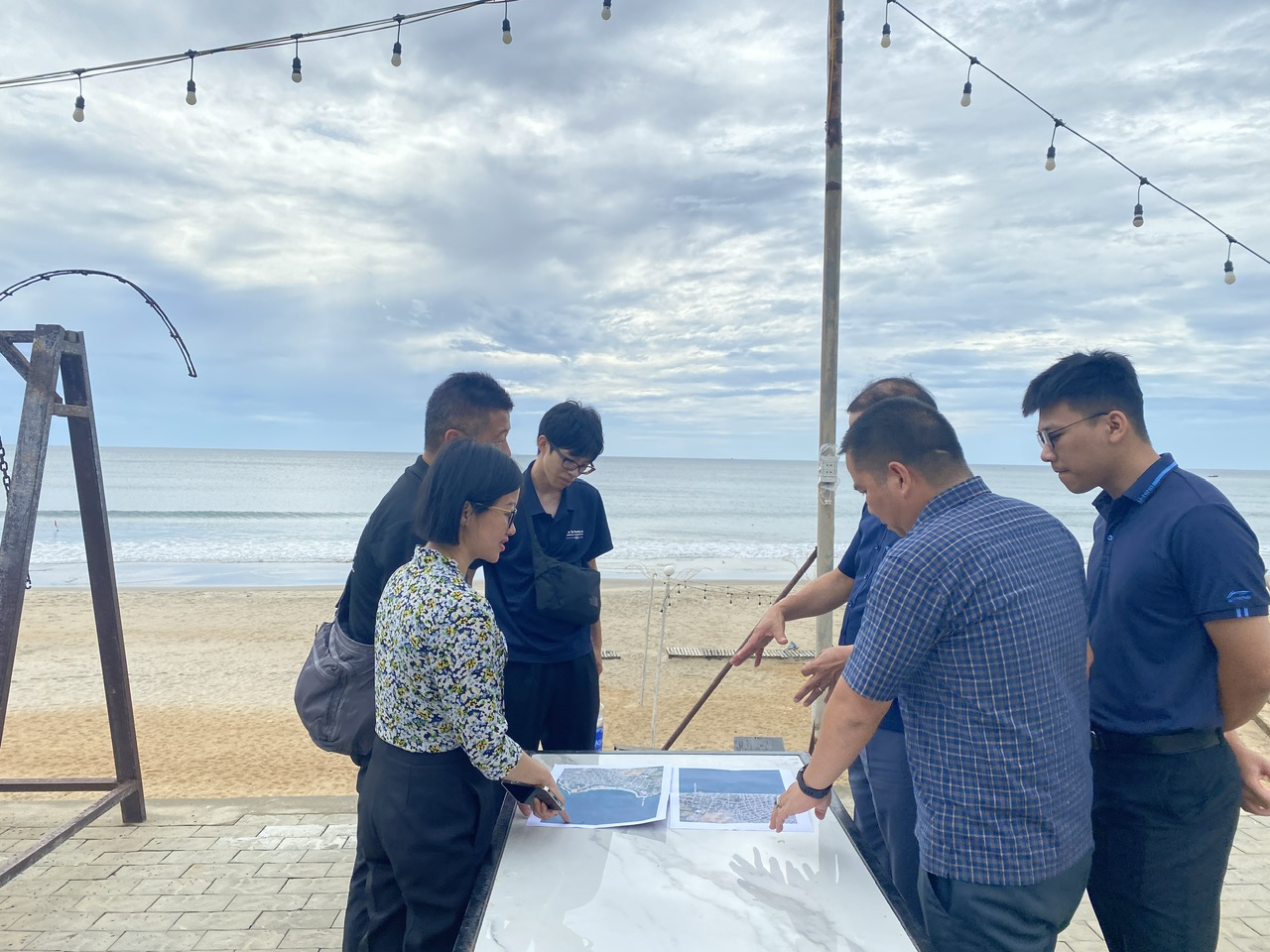
| Supplier screening and site visits | JETRO’s 2026 database of promising suppliers in northern and central Vietnam was developed through company visits, factory and product inspections, and interviews with company managers. Suppliers were assessed on factors including management, 5S, quality assurance, technology, customers, and machinery. |
|
Companies considering local sourcing can use direct verification to narrow potential suppliers before entering more detailed commercial or technical discussions. |
| Exhibitions and direct market interaction | At MTA Vietnam 2025, 16 Japanese SMEs participated in JETRO’s Japan Pavilion and conducted more than 500 business discussions over four days. Feedback from participants provided direct information on local demand, technology levels, and differences in automation needs across Vietnam4. |
|
Companies can use exhibitions and direct discussions to test market interest, refine their offering, and identify areas requiring further market validation. |
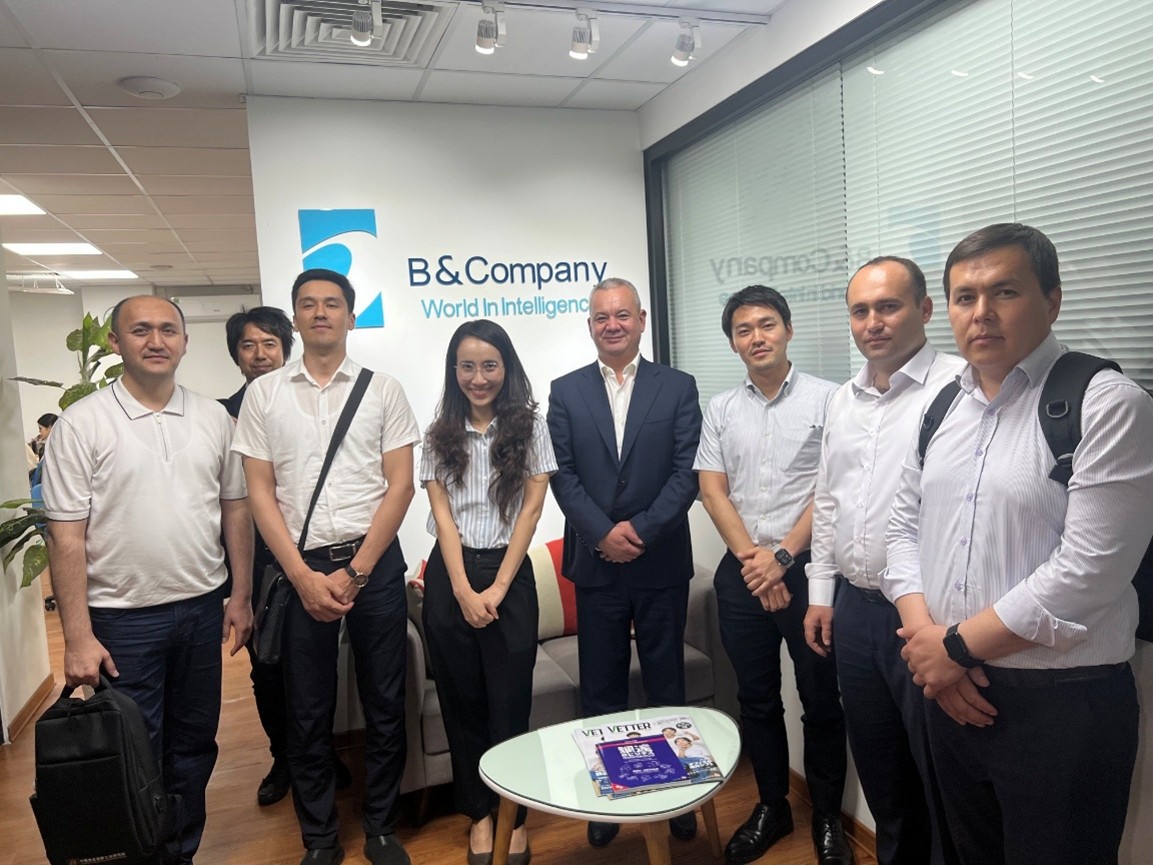
| Business matching | In July 2026, a sourcing and business-matching event in Ho Chi Minh City brought together 22 Japanese buyers and 22 Vietnamese suppliers and generated more than 2,100 business meetings over four days. Japanese participants reported identifying new supplier candidates and expanding their business connections. |
|
Business matching can help companies move from a list of potential partners to concrete discussions and identify candidates for further evaluation. |
Source: B&Company’s synthesis
While these examples demonstrate the value of direct market engagement, interviews, site visits, and initial business meetings are only part of the process. Companies also need to use the information collected to refine their business strategies and determine the next steps. Differences in language, business practices, and decision – making processes may require continued communication beyond a few meetings or short business trips. Ongoing follow – up, supported by local staff or experienced local partners when necessary, can help clarify outstanding issues, maintain relationships, and move initial discussions toward practical business cooperation.
How B&Company Can Support
B&Company combines Vietnam market research with field – based activities and ongoing local support tailored to each project. Rather than applying the same approach to every client, we design the scope based on specific business questions, target stakeholders, required level of validation, and available resources.
Depending on the objective, B&Company’s support may include:
– Customer and business-user interviews: Gathering direct feedback on purchasing behavior, product requirements, selection criteria, unmet needs, and factors affecting business decisions.
– Expert and stakeholder interviews: Obtaining practical perspectives on industry practices, regulations, distribution structures, competitive conditions, and other issues that may not be fully explained by secondary information.
– Partner and supplier identification: Searching for and screening potential distributors, manufacturers, suppliers, customers, and other relevant business counterparts based on the client’s requirements.
– Factory, store, and site visits: Observing actual operating conditions, production capabilities, product assortment, pricing, distribution practices, competitor presence, or other market conditions relevant to the project.
– Business matching and meeting support: Approaching selected companies, identifying relevant contacts, arranging meetings, and facilitating initial discussions between foreign companies and potential Vietnamese partners.
– Strategy refinement and action planning: Using findings from market research, interviews, site visits, and partner discussions to help clients review their initial assumptions, adjust their market-entry or expansion strategies, and identify practical next steps.
– Ongoing follow-up and local coordination: Maintaining communication with Vietnamese stakeholders after initial meetings, clarifying outstanding requirements, arranging further discussions, and supporting negotiations and coordination toward potential business agreements or partnerships.
B&Company supports foreign companies in moving from general market understanding toward information that is more specific to their actual business. This approach can be adjusted from initial market assessment through partner development and market-entry implementation, depending on the client’s needs.
Read more
From Market research to Business support: How companies can enter Vietnam successfully
* If you wish to quote any information from this article, please kindly cite the source along with the link to the original article to respect copyright.
| B&Company
The first Japanese company specializing in market research in Vietnam since 2008. We provide a wide range of services including industry reports, industry interviews, consumer surveys, business matching. Additionally, we have recently developed a database of over 1,000,000 companies in Vietnam, which can be used to search for partners and analyze the market. Please do not hesitate to contact us if you have any queries. info@b-company.jp + (84) 24 3978 5165 |
Related article
























Log in / Register
SUBSCRIBE NEWSLETTER