

 English
  日本語
日本語  Tiếng Việt
  简体中文
简体中文  한국어
한국어 M&A activity in the industrial real estate is increasing, presenting overseas investors with faster and lower-risk investment opportunities than before.
30Jul2026
Latest News & Report / Vietnam Briefing
Comments: No Comments.
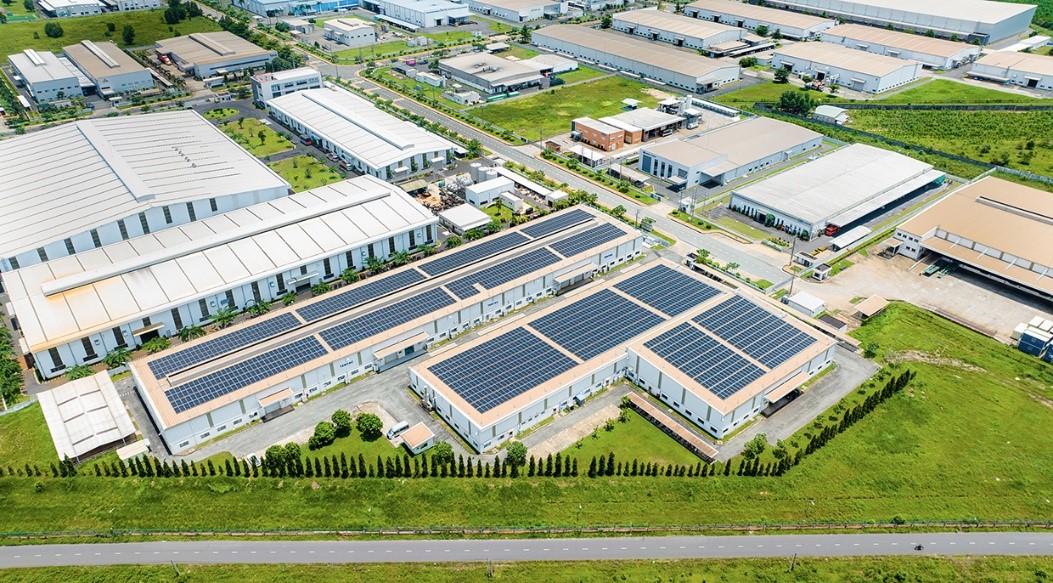
Industrial parks play a central role in Vietnam’s economic development. Commercial buildings and logistics facilities are equally important. M&A activity in these sectors is increasing, presenting overseas investors with faster and lower-risk investment opportunities than before.
Real Estate Investment Amount
Foreign Direct Investment (FDI) shows that manufacturing and real estate consistently rank first and second annually. In 2024, real estate reached 6.3 billion USD, accounting for 16.5% of all industries, an 18.8% increase year on year[1]. While industrial zones near Hanoi and Ho Chi Minh City are reportedly sold out, driving up prices, Vietnam has consistently seen new supply. Currently, 435 industrial zones are established, 72 are planned for expansion, 221 are newly planned, and 23 are under adjustment. Additionally, 299 are planned for development[2].
Top 3 Industries by FDI (Registered Amount)
| Industry | 2023 (Billion USD) | 2024 (USD billion) | Share (%) | Growth Rate (%) |
| Manufacturing and Processing | 253 | 256 | 66.9 | 1.1 |
| Real Estate | 53 | 63 | 16.5 | 18.8 |
| Energy | 24 | 14 | 3.7 | -40.3 |
Source: Foreign Investment Agency
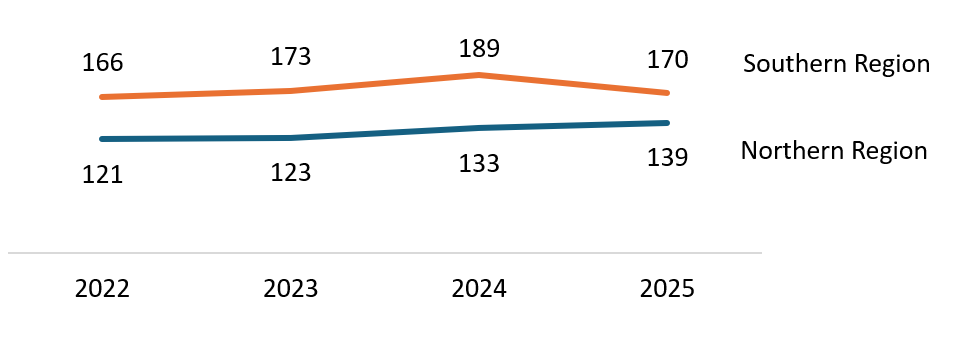
The average occupancy rate of industrial parks nationwide is 86%, reaching 78% in the northern region and 89% in the southern region. Industrial land rents rose by approximately 5% year-on-year in both the north and south during the first quarter, while the year-on-year increase in the Consumer Price Index (CPI) for the first quarter generally remained between 2% and 4%.In the North, Hanoi (171 USD per sqm) and Bac Ninh Province (167 USD per sqm) have the highest industrial land rents, while in the South, Ho Chi Minh City (261 USD per sqm) and Dong Nai Province (186 USD per sqm) are particularly high.
Industrial Real Estate Rental Prices in Q1, 2024
Unit: USD/m², 70-year lease
Source: CBRE
Real estate M&A transactions reached a cumulative total of 2.94 billion USD over the 4 years and 9 months from 2020 to the third quarter of 2024, with industrial real estate- including industrial park land, factories, and logistics facilities- accounting for 40% of this total. Notably, from January to September 2024, the share of industrial real estate reached 91%, with transaction value amounting to 180 million USD.
Investment Trends and Factors
The advantage of M&A lies in its speed. Starting development from scratch involves lengthy, complex procedures like land preparation, compensation, and construction approvals. Acquiring existing projects allows investors to avoid the hassle of land tender offers and negotiations with numerous landowners, saving significant time. Furthermore, in major metropolitan areas, available land is limited, and many existing industrial parks are already established, making it increasingly difficult to find suitable sites. Infrastructure like roads, electricity, and water, access to city centers that determine living environments, and surrounding service industries are all easier to evaluate in existing industrial parks[3].
Here are some examples of M&A involving existing manufacturing facilities.
While there are more numerous cases involving logistics facilities, these are summarized in the logistics section, so please refer to that section.
Examples of Industrial Real Estate M&A
| No | Investment Target | Investor | Investment Amount | Duration | Details |
| 1 | Nomura Haiphong Industrial Park (Haiphong City) | PC1 Group JSC (Vietnam) | Undisclosed | End of 2023 (Announced) | Acquired 70% stake in Nomura Hai Phong via NAIV (Singapore), marking full-scale entry into industrial park development |
| 2 | Industrial land in Ba Ria- Vung Tau Province | Tripod Technology Corporation (Taiwan) | Not disclosed | 2023–2024 (based on media reports) | Large-scale industrial land M&A case involving the acquisition of 18ha of industrial land from Sonadezi Chau Duc |
Source: B&Company’s synthesis from various media reports
Vietnam, located at the heart of Southeast Asia, is an attractive destination for companies pursuing a “China Plus One” strategy, and its appeal is growing with the development of transportation infrastructure. Internationally, major ports and airports are advancing, while domestically, railways and road networks are being developed. In particular, the development of trunk roads is progressing significantly. For example, the area within a few hours’ access from the provinces surrounding Hanoi City to Haiphong Port has expanded considerably.
Major Infrastructure Development
| No | Facility | Type | Current Status | Effect |
| 1 | Long Thanh International Airport | Airport | Phase 1: Opening in 2026
All: By 2035 |
Relieving Ho Chi Minh City’s Air Traffic Burden |
| 2 | North-South Expressway (Eastern Section) | Expressway | Under Construction (2017–2025 Phase: 729 km) | Enhancing North-South Connectivity |
| 3 | North-South High-Speed Railway | Railway | Construction begins in 2027
Operational around 2035 |
A new option for nationwide passenger and freight transportation |
| 4 | Cai Mep-Thi Vai Port Complex | Port | Expansion to be completed by 2030 | Global route connections without transshipment hubs |
Source: B&Company analysis
Provinces such as Dak Lak, Hue, Thai Nguyen, and Binh Phuoc are relatively underdeveloped, yet offer easier land acquisition and greater development flexibility. Tax incentives and infrastructure support often allow for more flexible arrangements in regional areas. In terms of investment efficiency, for example, the Huong Son Industrial Park (313 hectares) and Phase 2 of the Bac Dong Hu Industrial Park offer annual returns of 12-15%, yet their sales prices are up to 40% lower than in major urban areas[4].
Challenges
While better than starting from scratch, complex legal frameworks remain a challenge even for acquisitions or capital participation. Laws such as the Land Law, Real Estate Business Law, Construction Law, and Planning Law lack consistency. Regional differences in interpretation and delays in approvals often prolong transactions. The absence of a nationwide real estate registration system reduces market transparency and makes accurate asset valuation difficult. Securing experienced external advisors for valuation is also generally difficult. Foreign investors and domestic partners often experience operational, governance, and cultural misalignments post-M&A, though this is common across industries[5].
A new trend is environmental compliance. Environmental certification projects, such as Hitachi Energy’s LEED Gold factory (Bac Ninh Province), Mitsubishi Estate’s EDGE warehouse (Hai Phong Province), and LEGO’s carbon-neutral factory (Binh Duong Province, with the administration building and play pavilion LEED Platinum certified, and the molding, packaging, and warehouse buildings LEED Gold certified), are gaining attention for their long-term value. Vietnam’s 2050 net-zero target is driving initiatives like eco-industrial parks and circular economy models, expanding into pilot projects such as the net-zero industrial park in Ninh Thuan Province. However, due to the lack of economic viability, environmental risks cannot be considered adequately managed in the majority of current industrial parks overall.
* If you wish to quote any information from this article, please kindly cite the source along with the link to the original article to respect copyright.
| B&Company
The first Japanese company specializing in market research in Vietnam since 2008. We provide a wide range of services including industry reports, industry interviews, consumer surveys, business matching. Additionally, we have recently developed a database of over 1,000,000 companies in Vietnam, which can be used to search for partners and analyze the market. Please do not hesitate to contact us if you have any queries. info@b-company.jp + (84) 24 3978 5165 |
[1] Ministry of Planning and Investment (2025) <Access>
[2] Vietnam Industrial Real Estate Yearbook 2030 (2025)
[4] Vietnam Industrial Real Estate Yearbook (Through 2030) (2025)
Related article














Log in / Register
SUBSCRIBE NEWSLETTER