

 English
  日本語
日本語  Tiếng Việt
  简体中文
简体中文  한국어
한국어 In 2024, Vietnam's wood products industry continues to showcase remarkable growth, despite challenges in the global market.

03Feb2025
Latest News & Report / Vietnam Briefing
Comments: No Comments.
Vietnam’s wood products industry has long been a pillar of the country’s export-oriented economy, maintaining its position as a leading global supplier. In 2024, this sector continues to showcase remarkable growth, despite challenges in the global market. This article delves into key aspects of the wood products market in Vietnam, including timber output, trade performance, current trends, major players, and prospects.
Wood production in Vietnam and the trend of sustainable forest management
Wood production in Vietnam in 2024 was estimated to reach approximately 23.3 million cubic meters, up from 20.8 million cubic meters in 2023. This growth reflects the country’s continuous investment in forestry and expanding plantation areas.
The wood output from 2020 to 2024[1]
Unit: million cubic meters
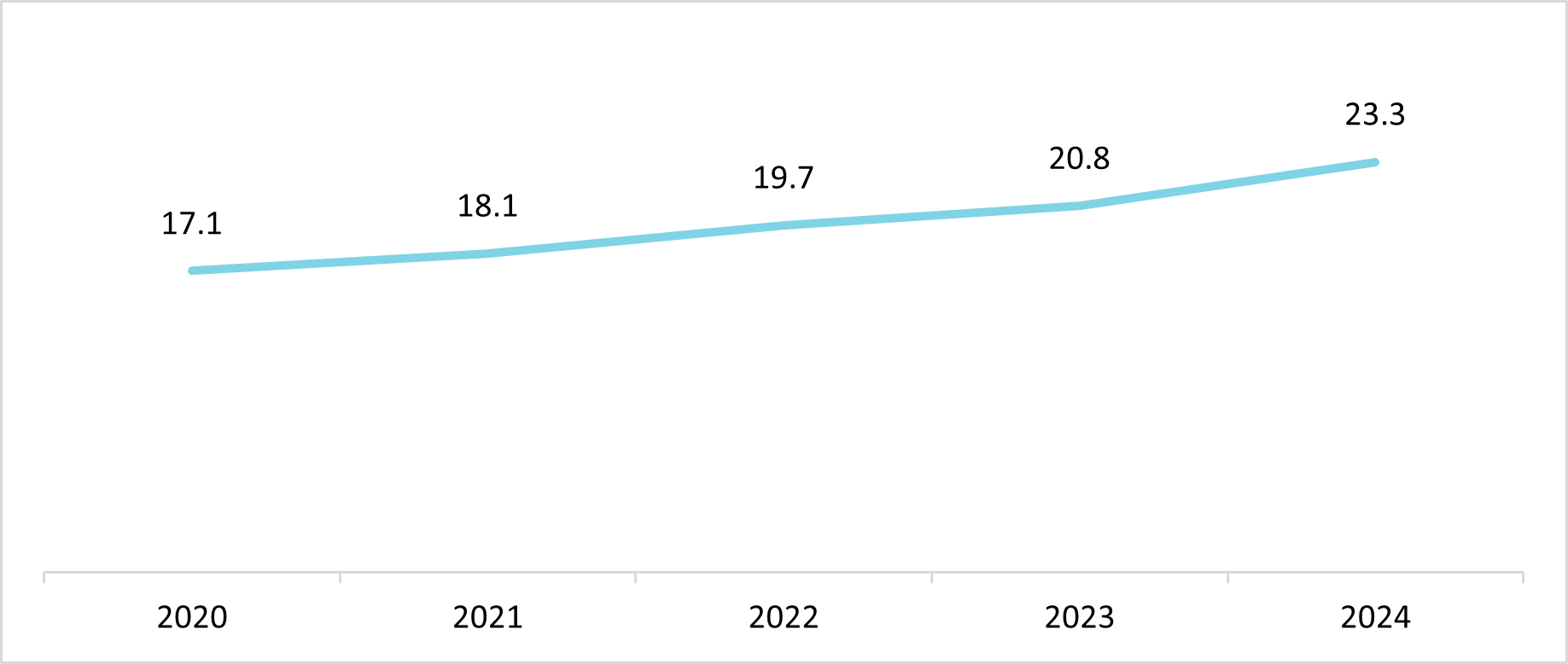
Source: GSO, Vneconomy
A significant portion of the timber harvested in Vietnam comes from plantation forests, which account for over 80% of the total output. The shift towards plantation forestry has been a deliberate strategy aimed at reducing pressure on natural forests while meeting the rising demand for raw materials. The government’s afforestation programs and incentives for private sector participation have contributed significantly to this outcome.
One of the most prominent trends in Vietnam’s wood industry is the focus on sustainable forest management and the use of certified wood. As global consumers increasingly demand environmentally responsible products, Vietnamese manufacturers are adopting international standards such as the Forest Stewardship Council (FSC) certification. By 2024, over 1 million hectares of forests in Vietnam will be FSC-certified, reflecting the country’s commitment to sustainable practices.
Another trend is the rising adoption of technology in wood processing and manufacturing. Many companies are investing in advanced machinery and automation to improve efficiency, reduce waste, and meet the stringent quality requirements of export markets. Additionally, the shift towards high-value-added products, such as custom-designed furniture, has gained momentum as manufacturers seek to enhance their competitiveness.
Wood Export Turnover in Vietnam recorded $17.2 billion
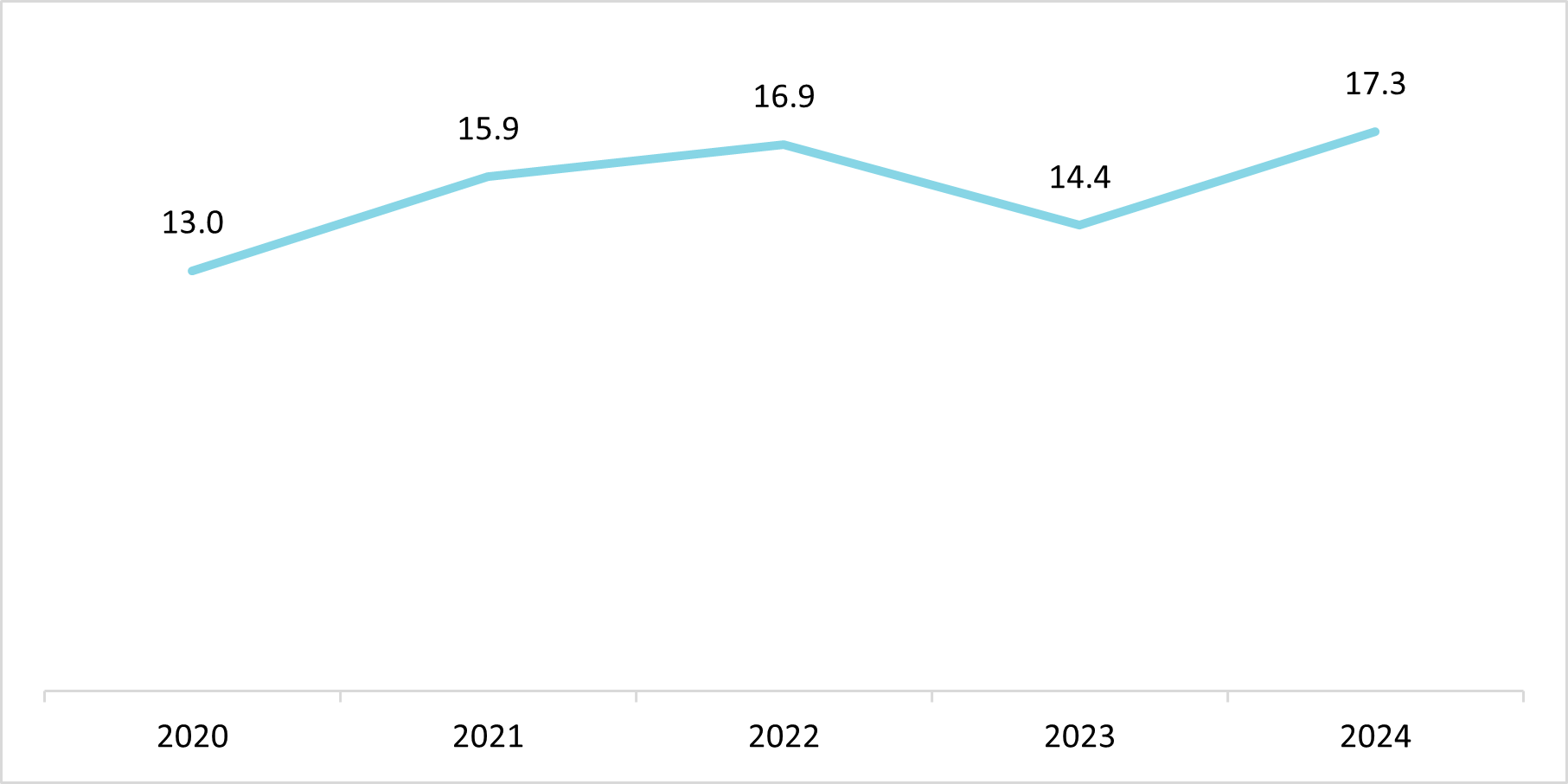
In 2024, the export turnover reached a record $17.3 billion, with wood and wood products accounting for approximately $16.3 billion, and non-wood forest products making up the remaining $1 billion. Wooden furniture continues to dominate Vietnam’s wood product exports, accounting for over 60% of the total export turnover.
Vietnam’s wood industry has export from 2020 to 2024[2]
Related article
















Log in / Register
Continue without an account
Log in / Register
SUBSCRIBE NEWSLETTER