
 English
  日本語
日本語  Tiếng Việt
  简体中文
简体中文  한국어
한국어 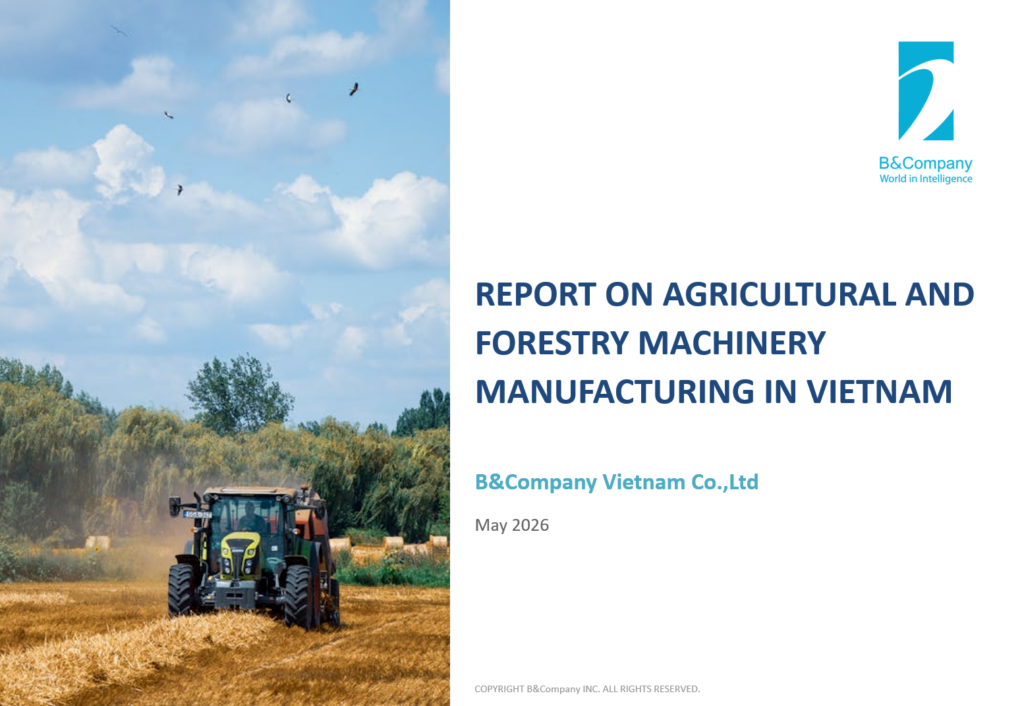
Report on agricultural and forestry machinery manufacturing in Vietnam
This report is designed for foreign investors, machinery manufacturers, agricultural equipment suppliers, forestry equipment companies, etc.
Request VND 15,000,000
VND 15,000,000
Vietnam: Hanoi
Vietnam: Ho Chi Minh
(84) 24 3978 5165
(84) 28 3910 3913
 Free
Free
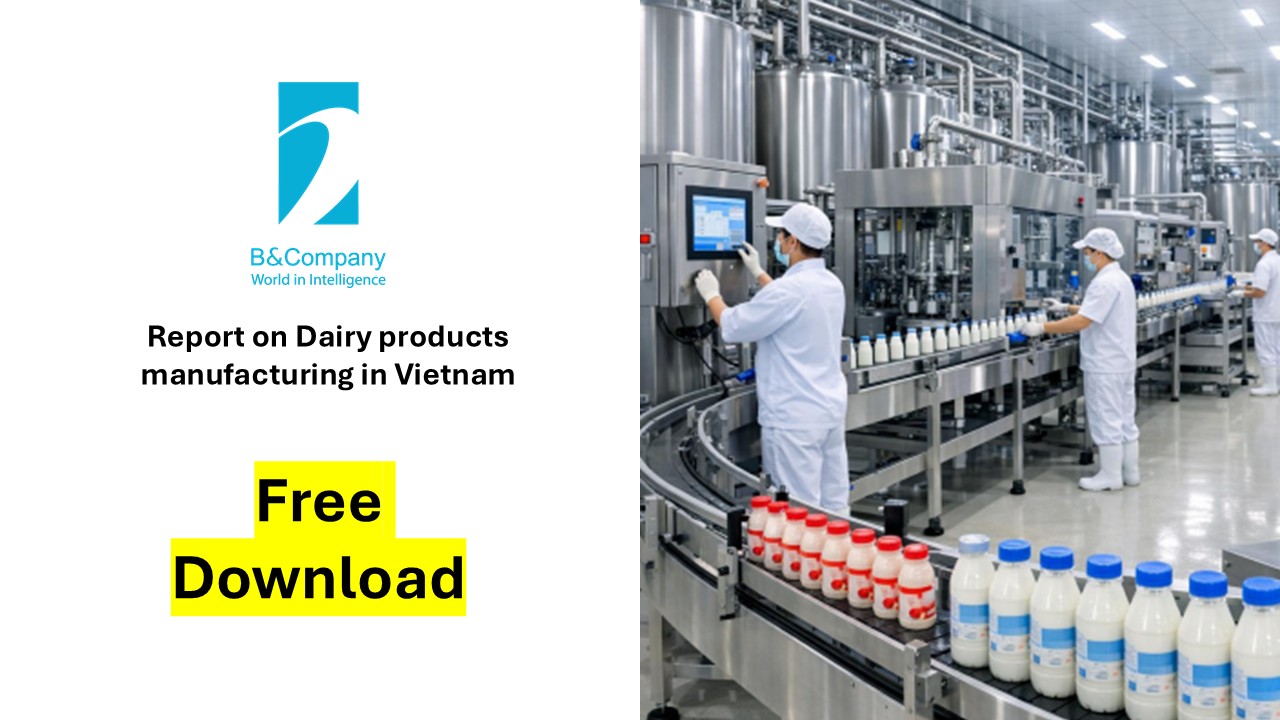
• Vietnam offers favorable demand conditions for dairy products, supported by a population of over 100 million, urbanization of around 39% in 2024, and rising income levels
• Dairy product manufacturing revenue reached approximately USD 5.3 billion in 2024, growing at a CAGR of 6.3% during 2016–2024 • The number of dairy manufacturers more than doubled from XX companies in 2016 to XX companies in 2024, indicating stronger market entry and rising competition
• Industry revenue is highly concentrated in the Southeast, accounting for XX% of total revenue, with Ho Chi Minh City alone contributing XX%
• Vietnamese companies dominate the sector, accounting for XX% of total dairy manufacturing revenue, while FDI players contribute around XX%
• Vietnam’s dairy market still has room to grow, as per-capita milk consumption remains lower than regional peers such as Thailand, Singapore, and Europe
• Domestic raw milk production is expanding, but Vietnam remains dependent on imported milk powder and dairy ingredients, creating exposure to global price and supply fluctuations
• Consumer demand is shifting from basic nutrition toward higher-value products such as low-sugar milk, highprotein milk, organic milk, probiotic yogurt, and specialized nutrition products
• Plant-based beverages and dairy alternatives are emerging from a small base, supported by younger consumers, health awareness, and preference for lighter or more sustainable products
• Dairy manufacturing is generally open to foreign investment, and 100% foreignowned manufacturing companies are allowed in Vietnam
• Foreign investors usually need to obtain an Investment Registration Certificate and Enterprise Registration Certificate before operation
• If a foreign-invested dairy company also conducts distribution or retail activities, additional licensing may be required, such as a Business License and Retail Outlet License
• Dairy products are subject to strict food safety, product declaration, technical standards, labeling, and advertising regulations
• Vietnam’s dairy development strategy to 2030 supports domestic raw milk expansion, higher-value dairy products, traceability, technology adoption, and reduced import dependence
REPORT ON DAIRY PRODUCTS MANUFACTURING IN VIETNAM
• This report and all materials directly related to it are properties of B&Company. All rights reserved. No parts of this report may be reproduced or transmitted in any form or by any means without the prior written permission.
• Should you wish to use this report for any purposes, please kindly contact B&Company through the following given email address for further reference about the terms of use info@b-company.jp
This report is designed for foreign investors, machinery manufacturers, agricultural equipment suppliers, forestry equipment companies, etc.
VND 15,000,000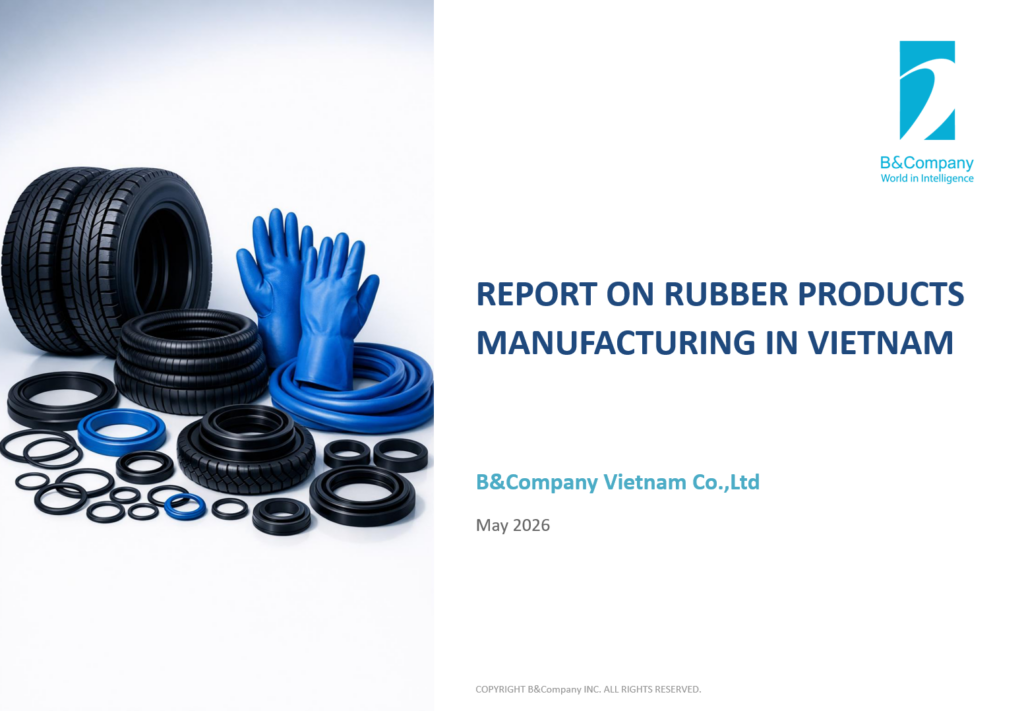
Vietnam’s rubber products manufacturing supports a growing demand from many sectors: automotive, construction, electronics, agriculture, etc.
VND 15,000,000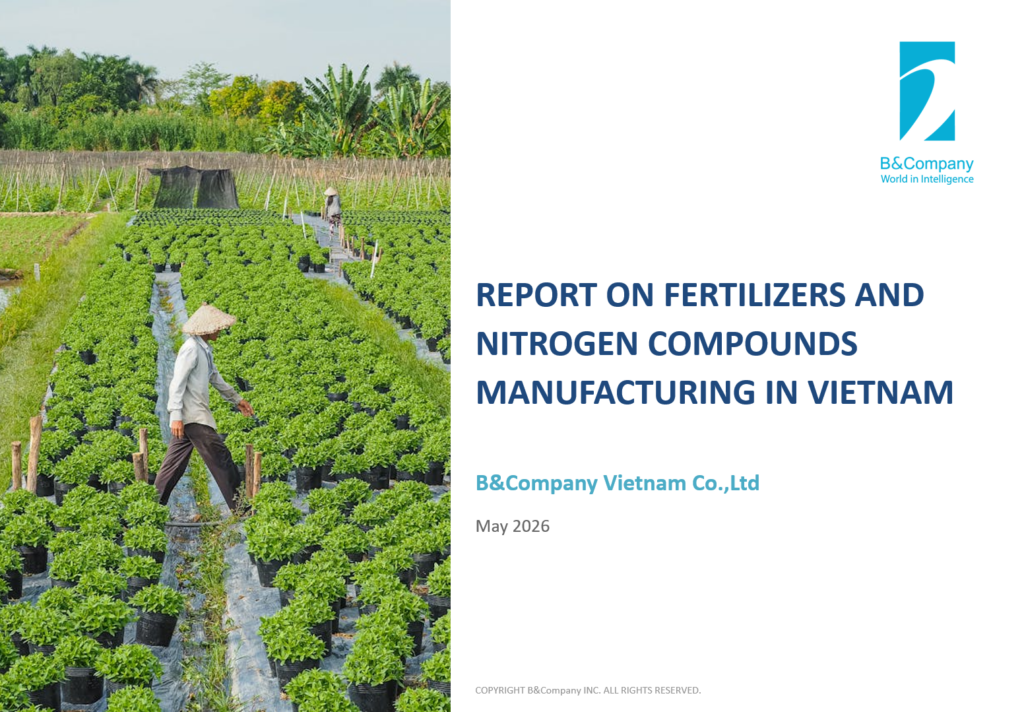
The fertilizers and nitrogen compounds manufacturing supports crop production, food security, and the development of Vietnam’s agriculture.
VND 15,000,000