
 English
  日本語
日本語  Tiếng Việt
  简体中文
简体中文  한국어
한국어 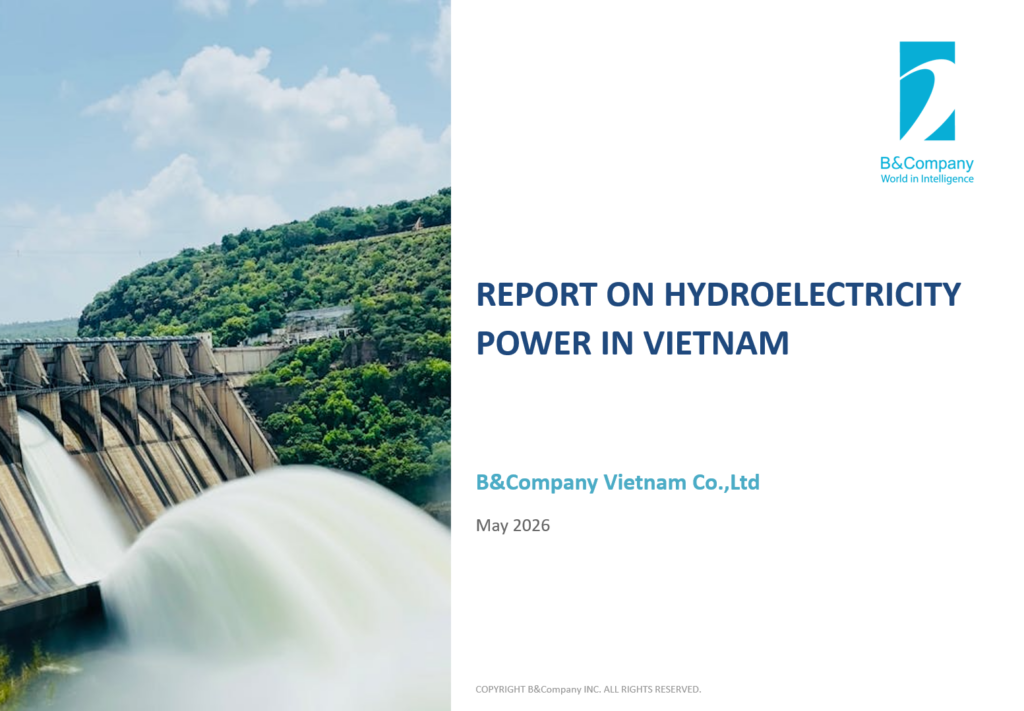
Report on hydroelectricity power in Vietnam
The report provides an overview of Vietnam’s hydroelectricity power industry, primarily for investors, power developers, hydropower equipment suppliers, etc.
Request VND 15,000,000
VND 15,000,000
Vietnam: Hanoi
Vietnam: Ho Chi Minh
(84) 24 3978 5165
(84) 28 3910 3913
 Free
Free
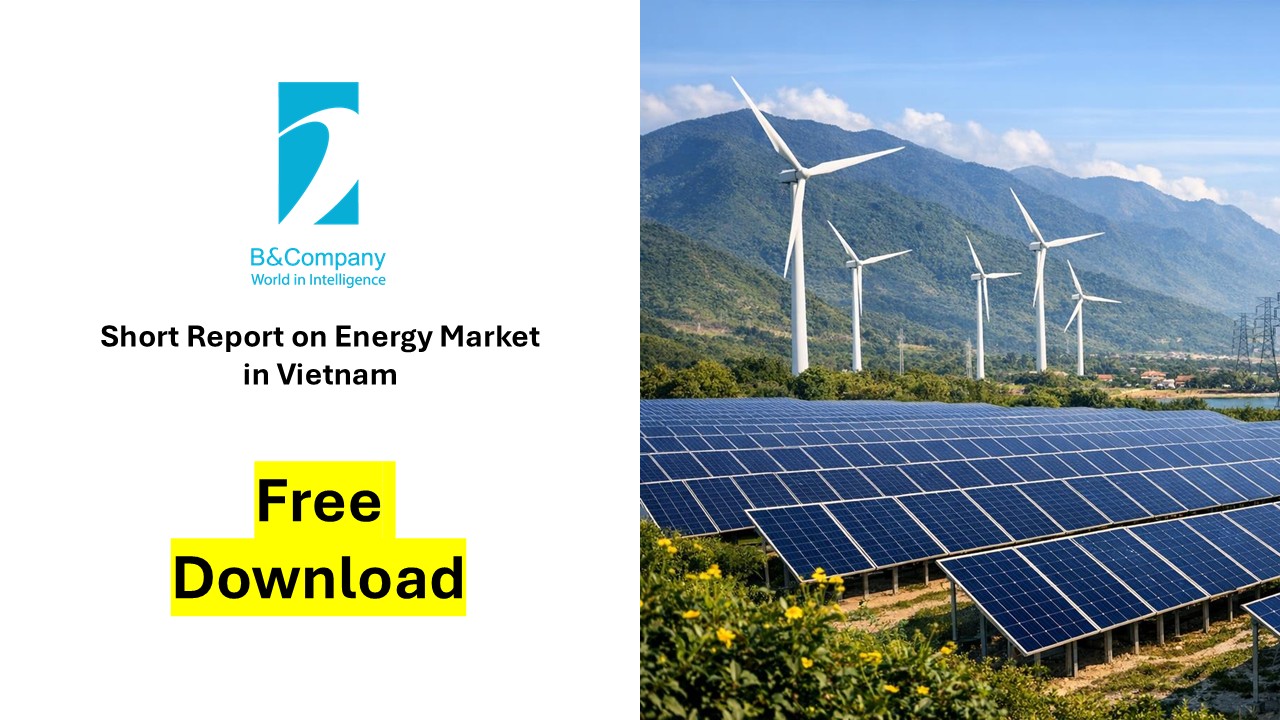
Driven by expanding demand, the transition to a more balanced power system is advancing, with the revised PDP8 serving as the framework. Wind, solar, and gas will play larger roles, while transmission reinforcement, energy storage, and LNG infrastructure development will support stable operations. Private capital is re-entering the market through power purchase agreements (PPAs) and platform transactions, but success hinges on credible scheme design, clear licensing, and flexible grid access.
Indicators Unit 2020 2021 2022 2023 2024 Generation Capacity GW 69.1 76.6 77.8 80.6 82.4 Power Generation Billion kWh 247 268 271 281 309 Coal-fired power % 50 44 39 46 50 Hydroelectric % 30 29 35 29 29 Renewable Energy % 5 11 13 14 13 Other % 16 15 13 11 9 Average Retail Electricity Price (excluding VAT) VND/kWh 1,864 1,864 1,864 2,007 2,103 Electric Power Sector FDI Inflows Billion USD 5.2 8.0 2.3 2.4 1.4 Source: General Statistics Office
The electricity sector is centrally managed through Power Development Plans (PDPs). The latest version is the revised PDP8 through Decision 768/QĐ-TTg dated April 15, 2025. This revision maintains the 2050 net-zero target while raising wind power targets (onshore/coastal 26-38 GW by 2030, offshore approximately 17GW), revising LNG introduction timelines, restricting new coal-fired power plants, and prioritizing grid expansion and energy storage.
Overall, the regulatory environment is in transition. The government balances investment incentives (opening ownership, public-private partnerships (PPP model), clear planning via PDP8) with state oversight (maintaining control over critical infrastructure and pricing). Recent legislation has strengthened alignment with international practices (e.g., grid access, wholesale electricity markets) and expanded private sector participation. Furthermore, the 2020 and 2021 amendments to the Investment Law and Enterprise Law have advanced procedural simplification and regulatory easing, benefiting energy investors.
However, overall, investors remain confused by unclear and frequently changing policies. Progress in separating the roles of generation, purchase, and distribution at the Electricity Corporation (EVN) has been slow, and regulations concerning Direct Power Purchase Agreements (DPPA) and electricity pricing mechanisms remain in the pilot phase. The lack of transparent mechanisms for transmission grid connection approvals and output curtailment compensation, coupled with overlapping authorities among the Ministry of Industry and Trade, EVN, and local governments, creates uncertainty in project development and financial planning.
While bureaucratic barriers and challenges regarding PPA bankability remain, the overall direction aims to foster a more investor-friendly environment to meet the country’s massive energy development needs. As Vietnam pursues its 2050 net-zero target, further regulatory updates are planned, including the enactment of a Renewable
Energy Market
This report and all materials directly related to it are properties of B&Company. All rights reserved. No parts of this report may be reproduced or transmitted in any form or by any means without the prior written permission.
Should you wish to use this report for any purposes, please kindly contact B&Company through the following given email address for further reference about the terms of use: info@b-company.jp
The report provides an overview of Vietnam’s hydroelectricity power industry, primarily for investors, power developers, hydropower equipment suppliers, etc.
VND 15,000,000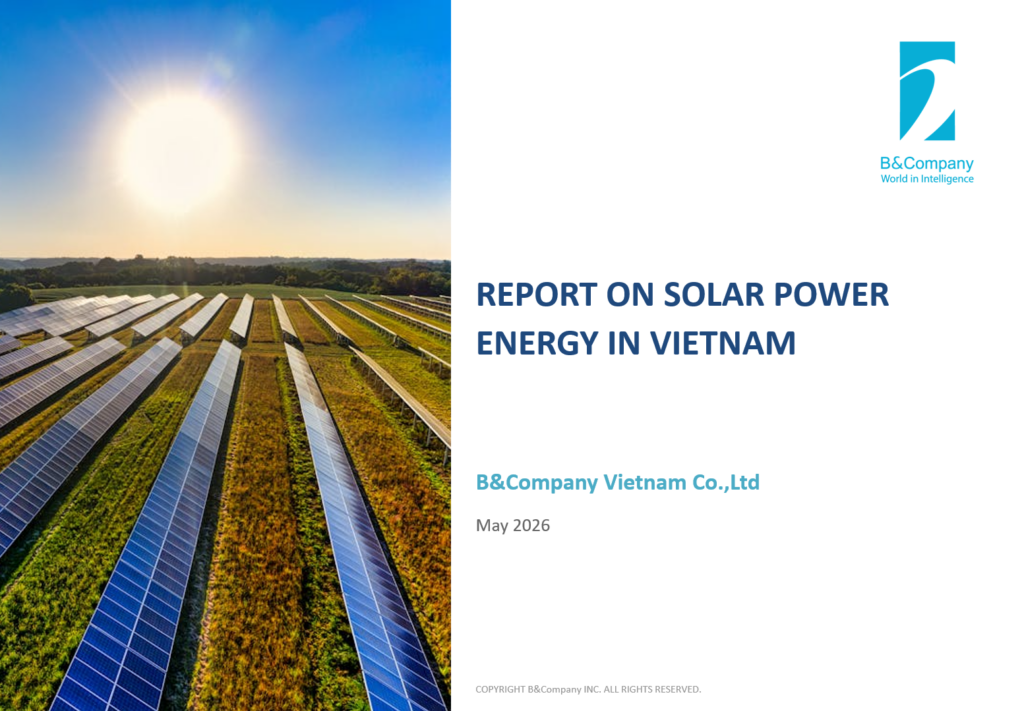
The report provides an overview of Vietnam’s solar power energy industry, covering key aspects such as market size, installed capacity, project pipeline, etc.
VND 15,000,000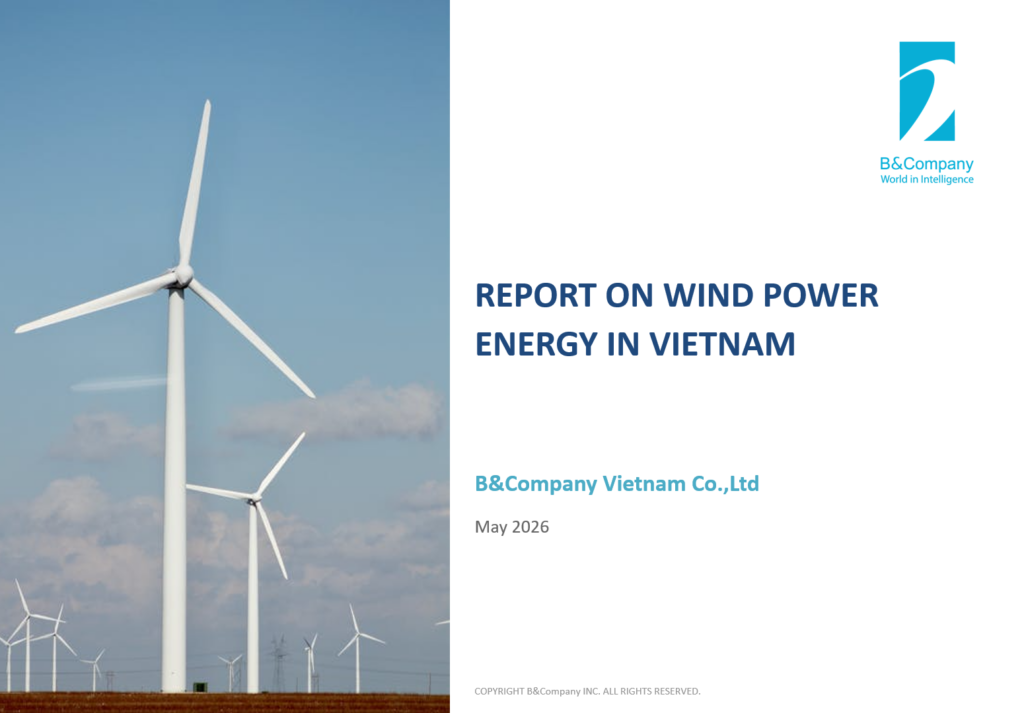
The report provides an overview of Vietnam’s wind power energy industry, designed primarily for renewable energy developers, EPC contractors, etc.
VND 15,000,000