
 English
  日本語
日本語  Tiếng Việt
  简体中文
简体中文  한국어
한국어 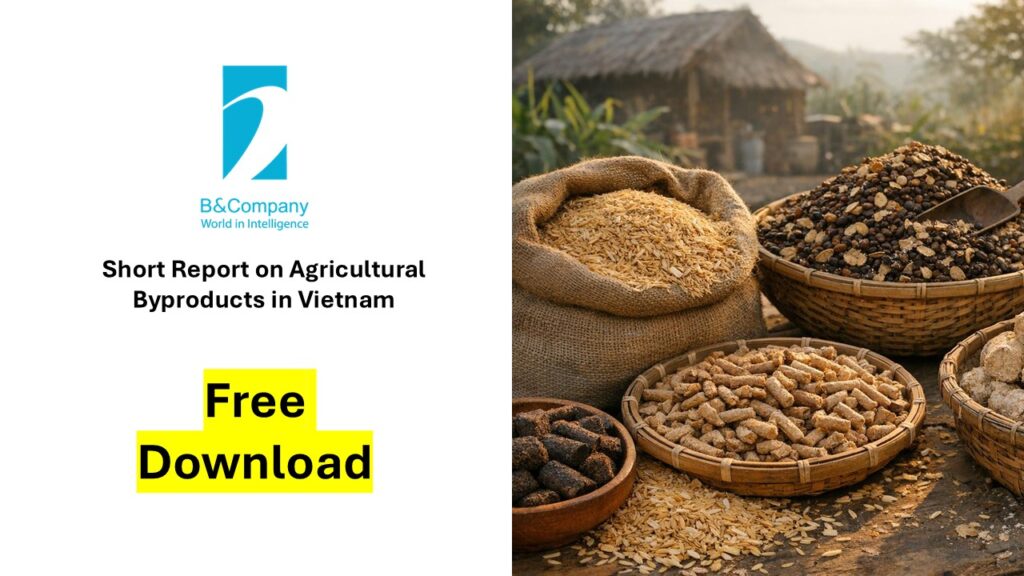
Short Report on Agricultural Byproducts in Vietnam
By-products from agriculture, forestry, and fisheries are a significant resource, and utilizing them can promote sustainable agriculture and environmental protection.
Request Free
Free
Free
Vietnam: Hanoi
Vietnam: Ho Chi Minh
(84) 24 3978 5165
(84) 28 3910 3913
 Free
Free
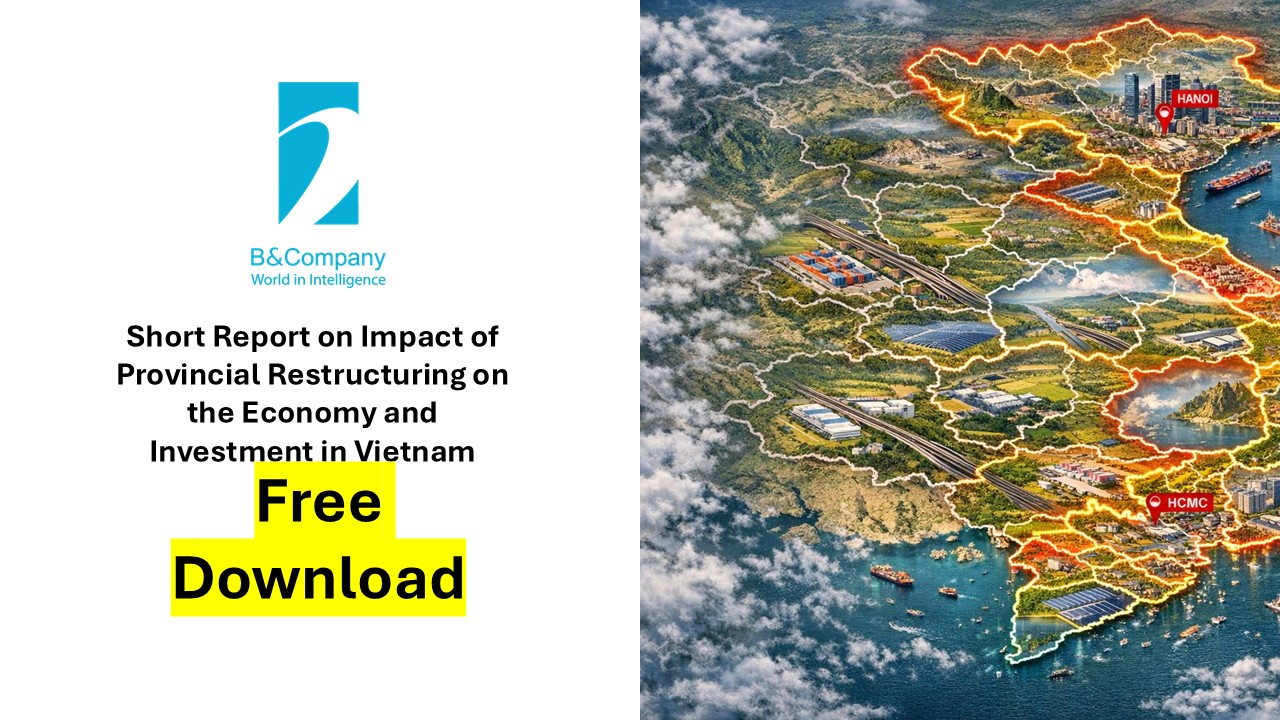
This article examines the impact of the 2025 administrative restructuring on the economic situation and investment environment. The transition to a two-tier administrative system aims to simplify administrative procedures and enhance efficiency. While growth and investment opportunities are anticipated, challenges such as legal inconsistencies and uneven implementation across regions may also arise.
Since the reunification of North and South Vietnam after the Vietnam War, administrative reorganizations have been implemented several times to align with socio-economic development goals. In 1975, approximately 72 provincial-level units existed, but in 1976, they were consolidated into 38 to centralize and streamline administration 26 . Over the following decades, Vietnam adopted a decentralized approach to promote regional development, gradually reestablishing provinces. The number increased to 53 in 1991, 61 in 1997, 64 in 2003, and 63 in 2008. However, throughout this period, the three-tier administrative structure- provinces/ centrally administered cities, districts, and communes- remained unchanged. According to Resolution 18-NQ/TW27 , while the administration has undergone significant reform efforts, it remains limited in efficiency and retains complexity. Key underlying factors are also identified. Political-administrative organizations have not kept pace with modern demands, partly 26 VnExpress (2025) <Access> due to differing perceptions and responsibilities among organizations regarding the need for reform. Furthermore, there is a lack of consistency in organizational structure, personnel management, and decision-making, with room for improvement in situational awareness, leadership, and incentives. Persistent challenges such as legal overlap, inadequate personnel policies, and insufficient audit and evaluation capabilities hinder the simplification of the administrative system. These challenges have prompted the government to adopt more efficient and practical approaches to restructure the public administration system and provide better services to citizens. Local Administration Restructuring: Introduction of a Two-Tier System Overview In early 2025, following multiple rounds of discussion, a reorganization of public administration was decided upon, introducing a two-tier local system to reduce fragmentation and duplication of tasks.
Impact of Provincial Restructuring on the Economy and Investment
This report and all materials directly related to it are properties of B&Company. All rights reserved. No parts of this report may be reproduced or transmitted in any form or by any means without the prior written permission.
Should you wish to use this report for any purposes, please kindly contact B&Company through the following given email address for further reference about the terms of use: info@b-company.jp
By-products from agriculture, forestry, and fisheries are a significant resource, and utilizing them can promote sustainable agriculture and environmental protection.
Free
The semiconductor industry is on a growth trajectory, supported by government initiatives, abundant resources, and labor costs. While still in its early stages, it is establishing itself as a major regional player.
Free
This short report provides an overview of Vietnam’s AI Market, covering key aspects: Government Support, Market Growth, Future Challenges
Free