
 English
  日本語
日本語  Tiếng Việt
  简体中文
简体中文  한국어
한국어 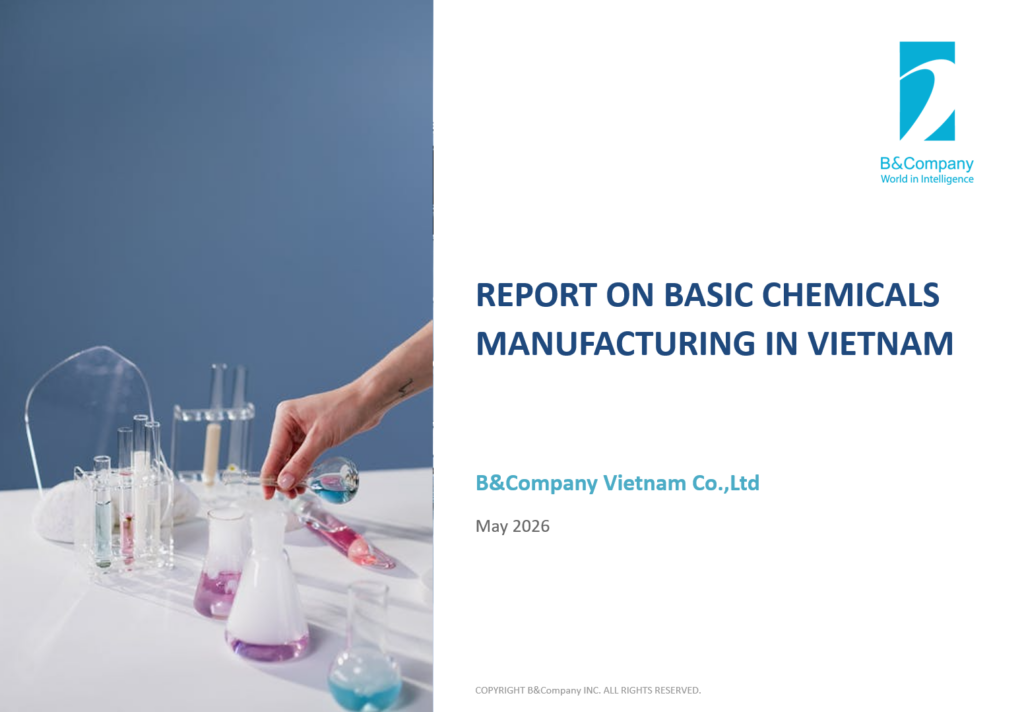
Report on basic chemicals manufacturing in Vietnam
The report provides an overview of basic chemicals manufacturing industry in Vietnam, helping readers understand key aspects
Request VND 15,000,000
VND 15,000,000
Vietnam: Hanoi
Vietnam: Ho Chi Minh
(84) 24 3978 5165
(84) 28 3910 3913
 Free
Free
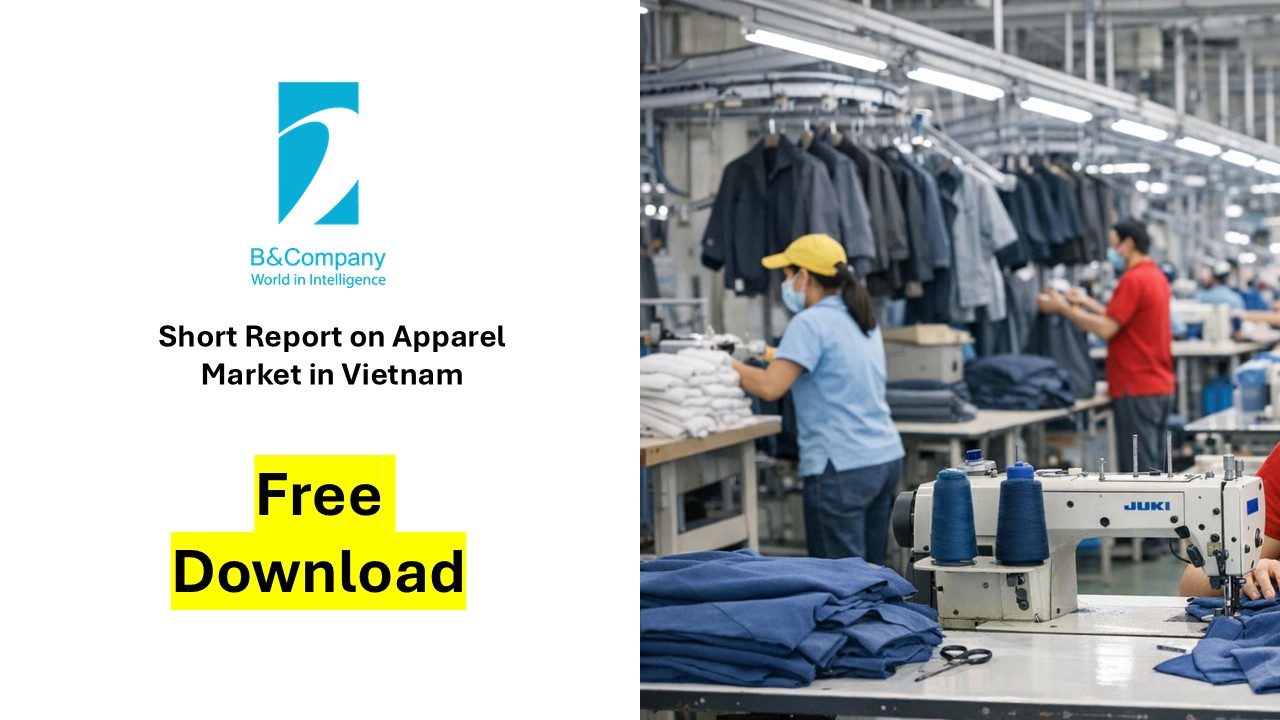
Apparel is a major industry, having long remained among the top three global clothing exporters. Exports in 2024 reached approximately 44 billion USD, with primary destinations being the United States, the EU, Japan, and South Korea. Factories are concentrated around major cities in the north, south, and central regions. However, the production process primarily consists of CMT (Cut, Make, Trim), heavily reliant on imported materials such as fabrics and cotton. To increase added value, challenges include domestic production of materials, environmental compliance in production processes, and technological advancement. Trade agreement rules of origin will also likely become a driving factor in this movement.
The government welcomes investment in the textile and apparel sector. Textile manufacturing allows 100% foreign ownership. The textile industry is classified as a priority investment sector, eligible for support and tax incentives if certain criteria are met. For example, large-scale textile dyeing projects in industrial parks may receive corporate income tax reductions or exemptions from import duties on equipment. The Prime Minister’s Decision No. 1643/QĐ-TTg at the end of 2022, “Strategy for the Development of the Textile and Garment Industry 2030 – Vision 2035,” promotes sustainable growth and high value-added production. One goal is to reduce dependence on imported materials, aiming for 70% domestic production of fabrics and accessories by 2030. To achieve this, investment is required in textile production, high-quality yarn, fabric dyeing and finishing, and especially in businesses utilizing environmentally friendly technologies. 51 Raw Material Production 52 Production of Final Products (Garments) The government is also encouraging the establishment of textile industrial parks equipped with modern wastewater treatment facilities to attract dyeing and fabric-related businesses. Environmental regulations are becoming stricter for highly polluting processes. New dyeing and finishing factories must typically obtain an environmental impact assessment and be located in areas with centralized wastewater treatment facilities. Local authorities (such as Dong Nai Province and Nam Dinh Province) are also restricting or scrutinizing textile projects with potential pollution risks. This aligns with the national goal of pursuing clean production.
The textile and apparel industry is globally strong and a key driver of the country’s growth. Vietnam is currently the world’s third-largest textile and apparel exporter, following China and Bangladesh. Located at the crossroads of major maritime and economic corridors, Vietnam offers direct access to key international shipping routes, enabling efficient and low-cost transportation to major
Apparel Market
1. Basic Statistics
2. Regulations
3. Market Overview
4. Major Players
5. Market Trends
This report and all materials directly related to it are properties of B&Company. All rights reserved. No parts of this report may be reproduced or transmitted in any form or by any means without the prior written permission.
Should you wish to use this report for any purposes, please kindly contact B&Company through the following given email address for further reference about the terms of use: info@b-company.jp
The report provides an overview of basic chemicals manufacturing industry in Vietnam, helping readers understand key aspects
VND 15,000,000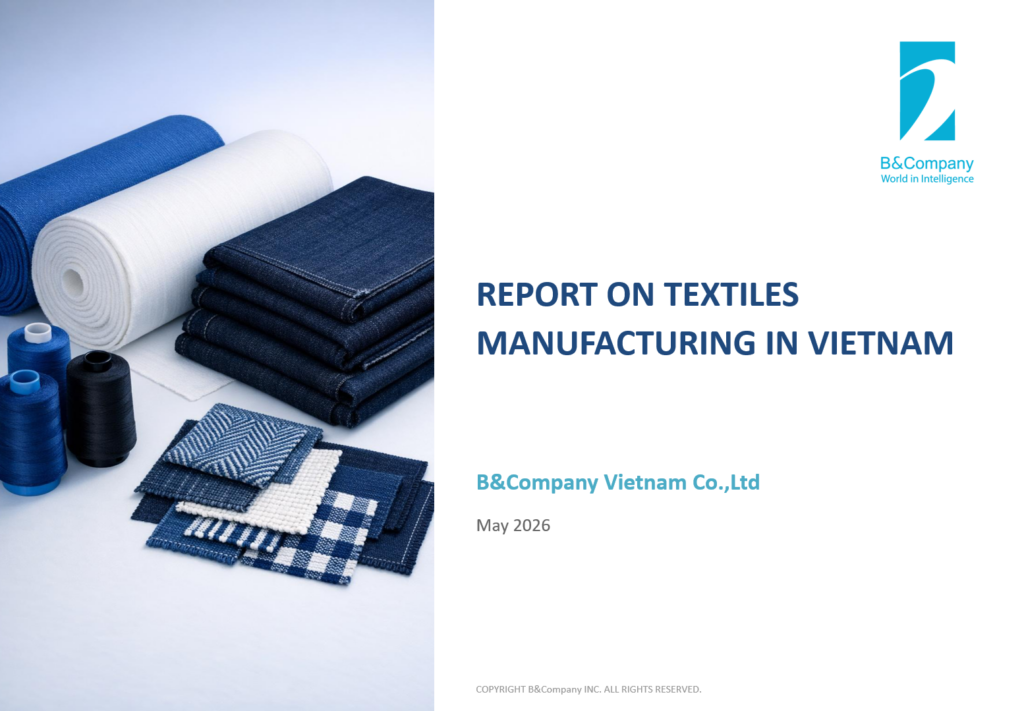
The textiles manufacturing industry in Vietnam has continued to develop, driven by global demand for textile and apparel products, FDI and more.
VND 15,000,000